Telaprevir (TVR) was approved by the FDA in May 2011 for the treatment of hepatitis C. This protease inhibitor converts into two diastereomers with significant difference in antiviral activity. Clinical efficacy has been correlated with serum concentrations. Therefore, a sensitive and selective high-performance liquid chromatographic method for the simultaneous determination of both clinically relevant diastereomers of TVR was developed. Linearity ranged from 20 to 10,000 ng/mL. The coefficients of variation were < 7.3%, and accuracy was between -4.0 and 5.4%. In 105 clinical samples, both diastereomers of TVR had a high degree of correlation to each other, but concentrations showed a broad range and an increase during therapy.Telaprevir (TVR) was approved by the FDA in May 2011 for the treatment of hepatitis C. This protease inhibitor converts into two diastereomers with significant difference in antiviral activity. Clinical efficacy has been correlated with serum concentrations. Therefore, a sensitive and selective high-performance liquid chromatographic method for the simultaneous determination of both clinically relevant diastereomers of TVR was developed. Linearity ranged from 20 to 10,000 ng/mL. The coefficients of variation were < 7.3%, and accuracy was between -4.0 and 5.4%. In 105 clinical samples, both diastereomers of TVR had a high degree of correlation to each other, but concentrations showed a broad range and an increase during therapy.
ABSTRACT For posaconazole, drug monitoring is suggested, but the relevance of timing for the determination of posaconazole concentration (PC) remains unclear. We investigated the variation of PC before and 4 and 8 h after the administration of 400 mg of posaconazole. Mean concentrations were 645, 678, and 616 ng/ml. The differences between trough and maximum concentrations were below 20% in 17 and below 30% in 20 of 25 patients. Hence, untimed posaconazole plasma concentrations give reliable information for most patients.
Postmortem brain tissue has been reported to be suitable to delineate regional pattern of possible disturbances underlying epigenetic functionality. However, from many parameters that have been detected in postmortem brain regions it is noteworthy that an effect of postmortem interval (PMI), storage time and premortem parameters should not be underestimated. Our previous investigation revealed that tryptophan (TRP) levels in postmortem brain tissue is affected by PMI and storage time. Since, alteration in TRP levels are assumed to be due to protein degradation, we further investigated whether TRP correlates to variables such as RNA, proteins and DNA modulators. In addition, we aimed to elucidate whether established postmortem variables may influence epigenetic parameters. These were investigated in well characterized postmortem human brain tissue originating from the European Brain Bank consortium II (BNEII). We could confirm previous findings, in which some protein levels alter because of prolonged PMI. Similarly, we demonstrated an influence of increased storage period on TRP levels, which might indicate degradation of proteins. Still not all proteins degrade in a similar manner, therefore a specific analysis for the protein of interest would be recommended. We found that methyltransferase- and acetyltransferase-activities were relatively preserved with PMI and storage duration. In conclusion, preservation of acetyltransferase- and methyltransferase-activities provides possible evidence of stability for epigenetic studies using postmortem tissue.
Sorafenib is recommended for therapy of advanced hepatocellular carcinoma and renal cell carcinoma. Preclinical data indicate a relation between dose and antitumor efficacy. In clinical trials, adverse events improve after dose reduction suggesting a dose-dependent toxicity. Given dose has a direct impact on the drug serum concentration, but the latter also can be influenced by multiple factors, including interaction and metabolisation. To enable the investigation of concentration-related effects, an easy and sensitive assay for sorafenib drug monitoring is essential.
Many proteomic studies focus on quantitative aspects, using different stable isotope labeling techniques that require specialized software to analyze the generated data. Here we present jTraqX, an easy-to-use tool for processing and visualizing protein quantification data. jTraqX is platform independent and is compatible with all available 4-plex isobaric tags. jTraqX can be freely downloaded at http://sourceforge.net/projects/protms.
ABSTRACT A simple, sensitive, and selective high-performance liquid chromatographic method for the simultaneous determination of voriconazole and posaconazole concentrations in human plasma was developed and validated. Quantitative recovery following liquid-liquid extraction with diethyl ether was achieved. Linearity ranged from 0.10 to 20.0 μg/ml for voriconazole and from 0.05 to 10.0 μg/ml for posaconazole. The intra- and interday coefficients of variation were less than 8.5%, and the lower limits of quantitation were <0.05 μg/ml.
Postmortem human brain tissue is widely used in neuroscience research, but use of tissue originating from different brain bank centers is considered inaccurate because of possible heterogeneity in sample quality. There is thus a need for well-characterized markers to assess the quality of postmortem brain tissue. Toward this aim, we determined tryptophan (TRP) concentrations, phosphofructokinase-1 and glutamate decarboxylase activities in 119 brain tissue samples. These neurochemical parameters were tested in samples from autopsied individuals, including control and pathological cases provided by 10 different brain bank centers. Parameters were assessed for correlation with agonal state, postmortem interval, age and gender, brain region, preservation and freezing methods, storage conditions and storage time, RNA integrity, and tissue pH value. TRP concentrations were elevated significantly (p = 0.045) with increased postmortem interval; which might indicate increased protein degradation. Therefore, TRP concentration might be one useful and convenient marker for estimating the quality of human postmortem brain tissue.
 D Schirmer合作论文数4
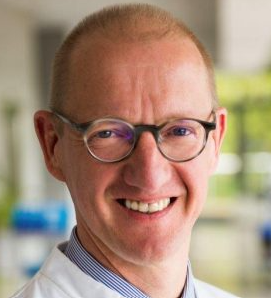 Werner J. Heinz合作论文数Department for Internal Medicine II, Caritas Hospital4Hartwig Klinker合作论文数4Ulrike Lenker合作论文数3Andrea Schmitt合作论文数2safa alsaraj合作论文数2
 Grünblatt Edna合作论文数Univ Zurich, Univ Hosp Psychiat Zurich2
 Isidro Ferrer合作论文数Biomedical Institute of Biomedical Research Bellvitge;Institute of Health Carlos III, Ministry of Economy, Innovation and Compettiveness;Department of Pathology and Experimental Therapeutics, Faculty of Medicine, University of Barcelona;Institute of Neurosciences, University of Barcelona2
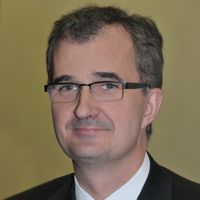 Peter Falkai合作论文数Department of Psychiatry and Psychotherapy, Ludwig-Maximilians-University Munich2Camelia-Maria Monoranu合作论文数2Wolfgang Roggendorf合作论文数2
 Peter Langmann合作论文数2Kathrin Kahle合作论文数2
 Peter Riederer合作论文数Department of Psychiatry, Psychosomatics and Psychotherapy, Medical School, University of Wuerzburg2Tanja M. Michel合作论文数2Manuela Apfelbacher合作论文数2Jürgen Deckert合作论文数Department of Psychiatry, University of Wuerzburg2Janina Zirkel合作论文数1Anna Grau合作论文数1
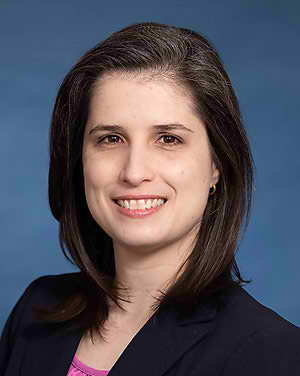 Anna Luisa Kuhn合作论文数University of Massachusetts Memorial Medical Center;University of Massachusetts Chan Medical School1
 Catriona McLean合作论文数Alfred Hospital;The Florey Institute of Neuroscience and Mental Health, Monash University;The University of Melbourne;Department for Health and Wellbeing;Burnet Institute1
 Albert Sickmann合作论文数Rudolf-Virchow-Center for Experimental Biomedicine, Universitaet Wuerzburg1Irina Alafuzoff合作论文数1Annegret Helle-Beyersdorf合作论文数1Kathy Keyvani合作论文数1Jens Schittenhelm合作论文数1Jasmin Bartl合作论文数University of Würzburg Clinical Neurochemistry, National Parkinson Foundation Centre of Excellence Research Laboratory1Lennart Martens合作论文数Department of
Biochemistry, Faculty of Medicine and Health Sciences, Ghent
University, Ghent, Belgium 1
Albert Sickmann合作论文数Rudolf-Virchow-Center for Experimental Biomedicine, Universitaet Wuerzburg1Irina Alafuzoff合作论文数1Annegret Helle-Beyersdorf合作论文数1Kathy Keyvani合作论文数1Jens Schittenhelm合作论文数1Jasmin Bartl合作论文数University of Würzburg Clinical Neurochemistry, National Parkinson Foundation Centre of Excellence Research Laboratory1Lennart Martens合作论文数Department of
Biochemistry, Faculty of Medicine and Health Sciences, Ghent
University, Ghent, Belgium 1 Andrea Hans Meyer合作论文数1Andreas M. Boehm合作论文数Protein Mass Spectrometry and Functional Proteomics Group, Rudolf-Virchow-Center for Experimental Biomedicine, Universitaet Wuerzburg, Versbacher Strasse 9, D-97078 Wuerzburg, Germany1
 Clive Harper合作论文数Bosch Institute, School of Medical Sciences, Faculty of Medicine and Health, The University of Sydney1
 Thilo Muth合作论文数1Annegret Helle合作论文数1




