The sulfur-containing chemical warfare agents sulfur mustard HD and nerve agent VX are highly toxic and persistent in the environment. Therefore, their neutralisation requires harsh oxidation conditions, but also precise selectivity. Here we report the safe and effective detoxification of surrogates CEES and PhX by selective oxidation of the sulfur atom by generating peracetic acid from AcOEt and aq. H2O2 assisted by the supported lipase CALB. Morever, it is possible to perform these neutralisations with safe 'on demand' generation of AcOOH in a flow system by using a packed bed reactor containing the supported biocatalyst.
The bromination of cubane 1,4-diester is described for the first time. The versatility of the C-Br bond for forging C-S and C-C bonds was demonstrated. The fluorosulfonylation reaction allowed the first entry of the cubane in click chemistry illustrated with nucleophiles, electrophiles, and alkynes. The grafting of appendages was illustrated with amino acids and dipeptides, enabling the discrimination of the diesters via cyclization into "fused cubane-lactam" structures.
We develop a nonsolvatochromic comparison method for the determination of the alpha(1) scale of solvent hydrogen-bond acidity by means of F-19 NMR spectrometry. We compare the F-19 chemical shifts of 4-fluoro-2-methylpyridine (as a sensitive hydrogen-bond acceptor probe) and of 4-fluoronitrobenzene (as a chemically similar but less basic reference probe). This so-called F-19 solvatomagnetic comparison method yields the hydrogen-bonding contribution to delta (F-19)(4-fluoro-2-methylpyridine) that is well correlated to alpha(1) values obtained from the solvatochromism of Reichardt's betaine dye. Therefore, this solvatomagnetic comparison method is applied to determine the alpha(1) values of 13 choline chloride-based deep eutectic solvents.
The solvent parameters DI, ES, α1, and β1 are intended for the description of solute–solvent intermolecular forces, i.e., dispersion-induction, electrostatic, hydrogen-bond donation, and hydrogen-bond acceptance, respectively. An up-to-date collection of these parameters is presented for 380 solvents including green solvents, ionic liquids, and deep eutectic solvents. Their determination for additional solvents requires three commercial indicators, betaine dye B(30), 4-F-phenol, and 4-F-anisole (as well as the refractive index). The chemical significance of these parameters is outlined. Their use in the linear solvation energy relationship P = P° + di DI + e ES + a α 1 + b β 1 for 62 physicochemical properties P (reaction rates, equilibrium constants, and IR, UV, and NMR spectra) yields determination coefficients generally greater than 0.90 and regression coefficients whose sign and relative magnitude provide consistent information on the intermolecular forces acting on these properties.
Herein we report an easily accessible supramolecular polymer readily made from polyvinyl butyral (PVB) by cross-linking with non-covalent self-complementary ureido-pyrimidinone (UPy) dimers. The resulting materials exhibit multifunctional properties, not only self-healing and shape memory, but also enhanced thermo-mechanical resistance. The UPy content, which represents the quadruple hydrogen bonding density, shows an important influence on tuning polymer performances. Moderate UPy content (2.5 mol.%) is important to impart the optimal comprehensive properties. Both infrared analyses and dynamic mechanical analyses indicate that the quadruple hydrogen bonding is stable up to 120 degrees C, thus enabling the healing process. The healing efficiency highly depends on the glass transition temperature (T-g) of the final polymer, itself being controlled by the UPy content. A 100% healing efficiency can be achieved at 120 degrees C when the UPy content is controlled up to 2.5 mol. %. Meanwhile, around 90% healing efficiency was achieved in water at 60 degrees C for all materials. All samples exhibit shape memory properties without obvious dependence on the UPy content. This work illustrates that the physical cross-linking, formed by non-covalent hydrogen bonding, cannot only provide a practical strategy to obtain multi-responsive shape memory polymers with self-healing feature but also offers the possibility to tune the polymer thermal and mechanical properties.
1,4-Disubstituted cubyl aryl thioethers were generated from the corresponding iodocubanes and aryl thiolates upon UV irradiation in dimethyl sulfoxide at room temperature. This simple procedure was found to be compatible with a variety of substituted aryl thiolates. This finding paved the way to a synthesis of the monocubyl analogue of dapsone, a key molecule in the treatment of leprosy, also known as Hansen's disease, and of acne.
The synthesis of functionalized polymyrcene, from bio-based myrcene and from carbon dioxide, is performed, thanks to the unique features of microflow systems.
Today, the hydrogen bonding donation (HBD) ability parameter of new solvents, α, is generally determined either by the Kamlet-Taft solvatochromic comparison of two probes, Reichardt betaine dye B(30) and 4-nitroanisole, or by the measurement of a single probe (e.g., solvatochromism of an iron coordination complex). This work highlights the shortcomings of these probes and recommends three replacement methods: (a) the theoretical comparison of the experimental and PCM-TD-DFT calculated transition energies ET(30) of B(30), (b) the semiempirical comparison of the experimental and McRae calculated ET(30), and, (c) for ionic liquids, the experimental comparison of ET(30) and ET(33) lying on the lower basicity of the betaine dye B(33) compared to B(30). These methods yield a new HBD parameter, α1, for 101 molecular solvents and 30 ionic liquids. The novelty is emblematic for water, with α1 = 1.54 instead of α (Kamlet-Taft) = 1.17. The solvent parameter α1 is not equivalent to the solute hydrogen-bond acidity parameter α2H, partly because of the self-association of HBD solvents.
A 19F solvatomagnetic comparison of 4-fluorophenol and 4-fluoroanisole yields a more reliable measurement of the hydrogen-bond acceptance of ionic liquids and green solvents than the solvatochromic comparison method.
A variety of physicochemical properties and several hydrogen-bond donors have been used to define methods and to build scales aiming at measuring the hydrogen-bond acceptance of solvents. There is a great deal of confusion in these scales and methods. Solvatochromic, solvatocalorimetric, solvatovibrational, and 19F solvatomagnetic comparison methods are critically reviewed. Only two methods, the solvatomagnetic and the solvatocalorimetric ones, are able to yield reliable solvent hydrogen-bond acceptance scales. The solvatomagnetic β1 scale defined from the 19F chemical shift of 4-fluorophenol is extended to many solvents including ionic liquids and green solvents. The results for about 240 hydrogen-bond acceptor solvents are organized in a numerical β1 database. The comparison of β1 with solvatochromic scales highlights their shortcomings, in particular for the important class of amphiprotic solvents. Therefore, the use of the 19F solvatomagnetic comparison method and of the solvatomagnetic β1 scale is recommended in solvent effect studies.
A biobased photo-healable thermoset coating has been developed from 4 components in only 2 steps via a solvent-free process involving an epoxy/amine reaction. Its composition includes epoxidized linseed oil and a dynamic molecule (4,4'-diaminodiphenyl disulfide) which, under UV irradiation, can be photolyzed reversibly. Compared to an analogous material without disulfide bond, this coating exhibits a lower crosslinking density and a higher elongation at break. Importantly, a 100 mu m depth scratch has been significantly repaired under UV light: a photo-healable coating having both thermoplastic and thermosetting properties has thus been elaborated.
The generation and reactivity of two model vinyl carbenoids from gem-dibromoalkenes 1 were studied in microflow systems. From substrate 1a (R = Ph, CF3), the lithium-bromine exchange could be simply performed within 30 ms at 20 °C with very good E-selectivity whereas the reaction was unselective under batch conditions, even at −78 °C. Moreover, the unstable carbenoid generated from 1b (R = Ph, H) could be trapped as the major product while only the Fritsch-Buttemberg-Wiechell rearrangement product was obtained in a flask under cryogenic conditions.
The logarithm of heterolysis rates of 4-methoxyneophyl tosylate, Et3CBr,tert-BuCl, andtert-BuBr in a set of 12 to 28 hydrogen-bond (HB) and non-HB donor solvents are correlated to four sets of solvent parameters: (a)E-T(30), (b)pi*,alpha,beta, (c)SP,SdP,SA,SB, and (d)DI,ES,alpha(1),beta(1). Disjointed results are found for Et3CBr because of an insufficient diversity of solvents. For the other solvolyses, the determination coefficientsr(2)are good to excellent, the gas-phase values are fairly predicted, and the contributions of various intermolecular forces to the global solvent effect agree satisfactorily within the four solvent sets. However, the most complete description of the solvent effect is given by the four-parameter sets because their parameters refer to a single intermolecular force, whereasE(T)(30) and pi*correspond to a fixed blend of solute/solvent interactions. For the application of theDI,ES,alpha(1), and beta(1)set to correlatetert-BuCl solvolysis,r(2)= .976, lgk(gas) = -18.6 (experimental -19.3), and the contributions of HB donation (alpha(1)), electrostatic forces (ES), and dispersion-induction (DI) to the solvent effect amounts to 59%, 21%, and 14%, respectively. The dependence of rates on the solvent HB basicity is nearly zero. The inclusion of the solvent cohesive energy density parameter delta H2into the correlation equations does not improve these correlations.
The influence of the mixer shape on the stereoselectivity was measured for lithium-bromine exchange on a gem-dibromoalkene followed by proton trapping. Sixteen passive mixers with eight different angles (135, 120, and 105 degrees (Y mixers); 90 degrees (T mixer); 75, 60, 45, and 30 degrees OAT mixers)) and two internal diameters (500 and 250 mu m) associated with a tubular microflow reactor having an internal diameter of 500 mu m were used. The 45 degrees W-shaped mixer with a smaller internal diameter gave the best selectivity for the monobrominated E product over a range of flow rates without the usual cryogenic conditions (20 degrees C). With methyl benzoylformate as the electrophile, the corresponding polyfunctionalized product was obtained in a space-time yield of 81 kg L-1 h(-1) .
This model study highlights that oxidation of fatty unsaturated esters is beneficial to prepare coatings by photoinitiated thiol–ene process.
Herein, we report the use of the photoinitiated thiol–epoxy chemistry for the preparation of a new biosourced self-healing coating.
Graphene, graphene-based nanomaterials (GBNs), and carbon nanotubes (CNTs) are being investigated as potential substrates for the growth of neural cells. However, in most in vitro studies, the cells were seeded on these materials coated with various proteins implying that the observed effects on the cells could not solely be attributed to the GBN and CNT properties. Here, we studied the biocompatibility of uncoated thermally reduced graphene (TRG) and poly(vinylidene fluoride) (PVDF) membranes loaded with multi-walled CNTs (MWCNTs) using neural stem cells isolated from the adult mouse olfactory bulb (termed aOBSCs). When aOBSCs were induced to differentiate on coverslips treated with TRG or control materials (polyethyleneimine-PEI and polyornithine plus fibronectin-PLO/F) in a serum-free medium, neurons, astrocytes, and oligodendrocytes were generated in all conditions, indicating that TRG permits the multi-lineage differentiation of aOBSCs. However, the total number of cells was reduced on both PEI and TRG. In a serum-containing medium, aOBSC-derived neurons and oligodendrocytes grown on TRG were more numerous than in controls; the neurons developed synaptic boutons and oligodendrocytes were more branched. In contrast, neurons growing on PVDF membranes had reduced neurite branching, and on MWCNTs-loaded membranes oligodendrocytes were lower in numbers than in controls. Overall, these findings indicate that uncoated TRG may be biocompatible with the generation, differentiation, and maturation of aOBSC-derived neurons and glial cells, implying a potential use for TRG to study functional neuronal networks.
 Julien Legros合作论文数Laboratoire BioCIS associé au CNRS, Centre d'Etudes Pharmaceutiques, rue J.B. Clément, F-92296 Chatenay-Malabry, France20Fabrice Burel合作论文数UMR 6270 - FR3038 CNRS, INSA de Rouen10
 Christophe Detrembleur合作论文数Department of Chemistry, Universite de Liege9
 Jean-Michel Thomassin合作论文数9Christian Laurence合作论文数8
 Jérôme Christine合作论文数Faculté des Sciences, Université de Liège;Département de Chimie, Université de Liège;Centre d'études et de Recherches sur les Macromolécules, Université de Liège8
 Michaël Alexandre合作论文数Sappi Maastricht B.V.8
 Isabelle Huynen合作论文数Laboratoire d’Hyperfréquences, Université Catholique de Louvain7Sergui Mansour合作论文数6
 Isabel Molenberg合作论文数6
 Benoit Crousse合作论文数6Laurence Lecamp合作论文数6Danièle Bonnet-Delpon合作论文数5
 Yuhui Zhao合作论文数3Katia Pérez合作论文数3
 Picard Baptiste合作论文数2D Caprau合作论文数2Sébastien Hupin合作论文数2De Paolis Michaël合作论文数2Corinne Loutelier-Bourhis合作论文数2Bruno Linclau合作论文数School of Chemistry, Faculty of Engineering and Physical Sciences, University of Southampton2
 Jacques Maddaluno合作论文数2
 Cosmin Draghici合作论文数Center of Organic Chemistry2
 Isabelle Chataigner合作论文数2
 Carlos Afonso合作论文数Parisian Institute of Molecular Chemistry, University Pierre & Marie Curie2Denisa Dumitrescu合作论文数2Pierre Nicolet合作论文数2Catherine Fressigné合作论文数2
 Florin Dumitrascu合作论文数2Antoine Debuigne合作论文数Center for Education and Research on Macromolecules (CERM),, University of Liège2Maxime Boddaert合作论文数1Seydou Kassamba合作论文数1
 Bernard Nysten合作论文数1
 Valmir Baptista da Silva合作论文数Departamento de Química, Universidade Federal do Paraná (UFPR)1CI Mitan合作论文数1Khadija Sraidi合作论文数1
 Xuelian Liu (刘雪莲)合作论文数School of Advanced Manufacturing and School of Marine Sciences, Fuzhou University1
 Madalina Marina Hrubaru合作论文数Ctr Organ Chem, Romanian Acad1
 fang-fang Tao (陶方方)合作论文数1Planchat Aurélien合作论文数1
 Hector R. Mendez-Gomez合作论文数Instituto Cajal, Consejo Superior de Investigaciones Científicas (CSIC),1
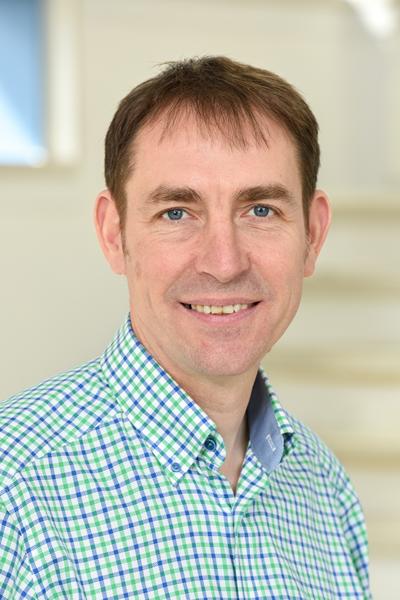 Richard C. D. Brown合作论文数University of Southampton1
 Agisilaos Chantzis合作论文数1Portinha Daniel合作论文数1
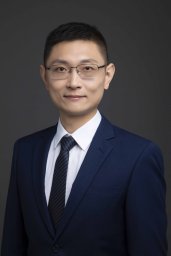 Chen Jing合作论文数INSA Lyon, Université de Lyon1Lebleu Thomas合作论文数1Cagla Defterali合作论文数1Vicario-Abejón Carlos合作论文数1
 Aiichiro Nagaki (永木愛一郎)合作论文数Synthetic Organic Chemistry Lab, Department of Synthetic and Biological Chemistry, Kyoto University1




