The auto-focusing beam based on the circular Airy beam and segmented vortex phase, termed circular Airy segmented vortex beam (CASVB), was generated. During propagation, the focusing properties of the CASVB can be flexibly tunable for multiple degrees of freedom. The results show that the segmentation type of the vortex phase are determined by the number and position of phase jumps, which results in the beam split. Moreover, the number and position of the CASVB gaps coincide with the number and position of the phase jumps. In addition, the edge images can be enhanced by combining the phase of the beam with the phase of the lens. Due to its adjustable number and position of gaps, the CASVB will likely give rise to potential applications in manipulating particles along different segmented intensity trajectories.
The focusing and imaging properties of the beam have attracted considerable attention recently. In this work, we generated an autofocusing beam termed a chirped autofocusing beam (CAFB) by using the phase of multiple chirped two-dimensional Airy beams, which has autofocusing and imaging properties. Through simulation analysis and experimental verification, it was found that the CAFB is endowed with multiple degrees of freedom to control the focusing properties of the CAFB. Specially, in the range of negative and weak chirp, the focal length of the CAFB increases with decreasing chirped factor. Moreover, the imaging property of the CAFB can be controlled by a chirp factor, the transverse displacement of the CAFB, and the transverse scale factor of the CAFB. The larger the transverse displacement and transverse scale factor of the beam, the better the image quality. Due to these properties, the CAFB may broaden the potential applications in optical microscopy imaging.
An approach for edge-enhanced imaging based on the optical element that generates a curvilinear vortex beam with intensity and phase distributions along arbitrary curves was proposed, which is different from the classic edge-enhanced imaging method with a 4f imaging system. It is demonstrated that the image edge can be enhanced by modulating the optical element that generates the curvilinear vortex beam with a ring or ellipse trajectory. By setting the factor that determines the ring or elliptical trajectory of the curvilinear vortex beam, the intensity distribution of the optical element can be controlled, resulting in directional enhancement of the image. Furthermore, by clipping the optical element, the image edge can be enhanced in the selective region. It is helpful for the further applications of the optical element that generates the curvilinear vortex beams in optical imaging, especially higher contrast and resolution images.
The auto-focusing property of the optical beams plays an important role in contemporary optics. In this work, we introduce a method of abruptly auto-focusing multi-focus beam (AAMB) along the optical axis. The simulation results show that the AAMB can flexibly adjust the normalized focusing intensity, focal length, and the number of focus points by controlling different beam parameters. Experimental results show that our proposed method achieved a beam with double equal-intensity focus or three equal-intensity focus during propagation. The AAMB enriches the existing multi-focal beam. In addition, the flexible and controllable focusing properties of the beam may broaden the potential applications.
Beams with auto-focusing property and a controllable number of wave lobes are of special significance. In this work, based on the helical phase-tuning and the Airy beam, we generate a chiral optical light, which focuses with both radial and angular self-accelerations. The light using the three-dimensional (3D) velocity to control the propagation dimension and the auto-rotating property of intensity peak for the two transverse dimensions is termed as 3D auto-focusing-type chiral optical light (ACOL), which can be controlled by multi-parameters theoretically and experimentally for possessing the characteristics of chiral, focusing, acceleration, rotation, etc. Owing to these characteristics, the ACOL has promising applications in optical micro-manipulation and super-resolution imaging.
Additive technology plays an important role in mass customization. Though with high precision and high efficiency, additive technology also has the inevitable defect of high cost. This paper adopts the method of structural equation model (SEM) to explore the influencing factors of additive manufacturing in mass customization. The influence of various factors on the application of additive technology is analyzed in order to know more this technology and customer perception, so that additive manufacturing adoption technology can be better applied to mass customization. The results show that equipment cost has the greatest influence on the extensive application of additive technology in mass customization, followed by production efficiency, material limitation, quality requirements and technical level, while the influence of labor cost, precision level and material cost is not significant.
Understanding the factors driving the adoption of intelligent robots at home is crucial to improve the technology development given the era of Industry 4.0. This study aims to identify the influencing factors on the adoption of home intelligent robots. Eleven factors are recognized and Interpretative Structural Modeling (ISM) method was used to analyze the data that collected through questionnaires. In addition, fuzzy-ISM model is built to extend the experiments. The results found that price is the most dependent influencing factor, and after-sales service and appearance are the fundamental driving factors in regular ISM model, while price and after-sales service remain in the top and bottom levels in the fuzzy-ISM results.
Maintenance scheduling has become an indispensable part of today's industrial technology development. Reasonable arrangement of maintenance tasks can greatly speed up the maintenance process, ensure the quality of maintenance, and improve efficiency. However, as an important branch of maintenance schedule, there is no tasks scheduling of maintenance that dynamically considers the impact of maintenance mode (replacement, overhaul, and minor repair). Therefore, this paper will create a mixed-integer mathematical model to dynamically schedule maintenance tasks considering maintenance mode. Different involvement of maintenance mode is included in the experiments and the experimental results proved that the proposed method can save the maintenance cost.
The generation of vector beams with complex spatial distributions is significant in the field of optical manipulation, optical metrology, optical microscopy, and so on. In this work, we propose a method to generate arbitrary vector beams, which is based on the complex amplitude beam shaping technology and the interferometric optical path configuration. With the method, we can achieve pixel-level control of amplitude, phase, and polarization of an arbitrary vector beam. Furthermore, different polarization states and orientations can be designed to coexist in one beam. The method has been verified with theoretical analysis and experimental results. The proposed method expands the application range of vector beams and provides a conducive way to explore the optical properties of the vector beams.
The performance of equipment in workshop will deteriorate gradually with time. This paper presents a multi-stage preventive maintenance strategy model to solve the problem of maintenance scheduling subjected to the production requirement in the workshop. Two types of preventive maintenance were considered. Taking into account the penalty cost due to maintenance overtime and product quality problems, the model aims to minimize the total maintenance cost. Due to the limited resources, current production and maintenance calls for outsourcing to fulfil the demand. A maintenance scheduling model with partial outsourcing consideration is proposed and particle swarm optimization (PSO) algorithm is applied to obtain the optimal production sequence, outsourcing scheme and the preventive maintenance strategy. A case study is discussed to verify the efficiency and effectiveness of the proposed model. The results revealed that partial outsourcing strategy will save 17% of the total cost.
Nowadays, the facial recognition technology (FRT) is gradually being applied in our life. In order to better serve the campus life, this paper tries to understand and study the influencing factors on the adoption of FRT on campus. A structural equation model (SEM) approach is designed to quantify multiple influencing variables and figure out the relationships among each other. The data collection is obtained through questionnaires, and the representativeness of data is analyzed using SPSS software. After that, the data were modeled using the Amos toolkit. The results reveal that the core factors about the adoption of FRT on campus are privacy and promotion.
The entanglement witness and the entropy uncertainty are investigated by using the pseudomode theory for the open two-atom system under the quantum Zeno effect. The results show that, only when the two spectrums satisfy strong coupling with the atom, the time of entanglement witness can be prolonged and the lower bound of the entropic uncertainty can be reduced, and the entanglement can be witnessed many times. We also gave the corresponding physical explanation by the non-Markovianity. The Zeno effect not only can very effectively prolong the time of entanglement witness and reduce the lower bound of the entropy uncertainty, but also can greatly enhance the time of entanglement witness and reduce the entanglement value of witness.
We proposed an automatic sorting method based on a virtual optical chip, which was formed by a complex-amplitude beam shaping system. The automatic sorting of different micro-particles was realized by the optical forces of the intensity and phase gradients of the reconstructed optical beam. The method was verified with theoretical analysis and experimental results. Compared with the traditional optical sorting methods, the proposed one does not need high-precision mechanical and/or microfluidic devices. The optical chip is flexible in structure and efficient in optical sorting and can be used in the fields of medical detection and material sensing.
We study the non-Markovianity and quantum speedup of a two-level atom (quantum system of interest) in a dissipative Jaynes-Cumming model, where the atom is embedded in a single-mode cavity, which is leaky being coupled to an external reservoir with Ohmic spectral density. We obtain the non-Markovianity characterized by using the probability of the atomic excited state and the negative decoherence rate in the time-local master equation. We also calculate the quantum speed limit time (QSLT) of the evolution process of the atom. The results show that, the atom-cavity coupling is the main physical reasons of the transition from Markovian to non-Markovian dynamics and the transition from no speedup to speedup process, and the critical value of this sudden transition only depends on the Ohmicity parameter. The atom-cavity coupling and the appropriate reservoir parameters can effectively improve the non-Markovianity in the dynamics process and speed up the evolution of the atom. Moreover, the initial non-Markovian dynamics first turns into Markovian and then back to non-Markovian with increasing the atom-cavity coupling under certain condition. Finally, the physical interpretation is provided.
In this work, we investigate quantum Fisher information (QFI) and quantum coherence (QC) of an atom in a dissipative cavity. In a zero-temperature reservoir and with one excitation number, we obtain the analytical solutions of QFI and QC as well as their relationship for Ohmic and Lorentzian reservoirs, respectively. The results show that both the atom-cavity coupling and the cavity-reservoir coupling can effectively protect QFI and QC. In particular, QFI and QC will tend to their stable values when the atom-cavity coupling or cavity-reservoir coupling is larger than a certain value. QC can augment QFI and can effectively improve the quantum metrology. In addition, we give a physical explanation of the dynamic behavior of QFI and QC using the decoherence rate.
We consider the integrated preventive maintenance and spare part ordering strategy problem for age deterioration components in which there are distinguishing critical and non-critical components. The component deterioration process is modeled as a three-stage failure process in which multiple maintenance modes are conducted to restore the machines after periodical inspection. Some spare parts are stored based on historical repair records while certain spare parts are ordered alternatively whenever necessary. The influence of spare parts ordering associated with cost and fulfillment of maintenance mode. Our objective is to minimize the expected total cost per unit time. We formulated the model based on the renew theory and characterize the scenarios of combinations of maintenance mode selection and spare parts ordering strategy. Numerical experiments of a case study showed that the cost-saving obtained by integrated optimization of maintenance mode selection and spare parts ordering decisions are significant.
In this work, we obtain an analytical representation of the density operator of an atom in a dissipative cavity when the reservoir is at zero temperature and the total number of excitations is N = 1. We also investigated the quantum speed limit time (QSLT) of the atom and the non-Markovianity in the dynamics process. The results show that the QSLT and the non-Markovianity can be effectively manipulated by the atom-cavity coupling and the reservoir parameters. Both of the atom-cavity coupling and the detuning can induce a sudden transition from Markovian to non-Markovian dynamics, and this transition is the main physical reason of the quantum speed-up process. The critical value of the sudden transition from no speed-up to speed-up the atom-cavity coupling and the reservoir parameters. The corresponding physical explanation is also provided for our results.
The non-Markovianity and the quantum speed limit time (QSLT) are investigated in Jaynes-Cummings model coupling with the Ohmic reservoir at zero temperature when when $t=0$ and $N=1$. We obtain the non-Markovianity expressed by using the decoherence rate in the time-local master equation. We find that the non-Markovianity in the dynamics process can be witnessed by both of the negative decoherence rate and the positive derivative of the trace distance. The atom-cavity coupling is the main physical reasons of the transition from Markovian to non-Markovian dynamics and the quantum speed-up process of the atom, which the critical value of this sudden transition only depends on the Ohmicity parameter. The atom-cavity coupling and the appropriate reservoir parameters can effectively improve the non-Markovianity in the dynamics process and speed up the evolution of the atom. Moreover, the initial non-Markovian dynamics first turns into Markovian and then back to non-Markovian with increasing the atom-cavity coupling under certain condition. We also provide the physical interpretation.
PurposeThe purpose of this paper is to examine the potential impacts of various variables on product return activities after online shopping. Previous studies on customer behaviour have been predominantly concerned with return on used products and other product-quality-related constructs in the model. This study aims to specially examine the logistics service-related and customer intention–related variables for general products under the e-commerce circumstance.Design/methodology/approachStructured questionnaire data for this study were collected in the two southeast cities of China (162 useable responses). Structural equation modelling was used to examine the latent variables.FindingsThe results confirmed that product return intention has the greatest impact on online shopping returns with a direct effect of 0.63, followed by the flexibility in return (logistics service) with a direct effect of 0.49.Originality/valueSuch a model not only enriches the theoretical understanding of customer behaviour studies but also offers online shopping stores and platforms a quantitative benchmark and new perspective on the design of online shopping supply chains by considering product returns so as to improve the customer satisfaction.
 Carman K. M. Lee (李嘉敏)合作论文数Department of Industrial and Systems Engineering, Faculty of Engineering, The Hong Kong Polytechnic University15
 Jianhe Yang合作论文数Sch Phys & Elect, Cent South Univ9Daofang Chang合作论文数8
 Hongmei Zou (邹红梅)合作论文数School of Physics and Electronics, Hunan Normal University8
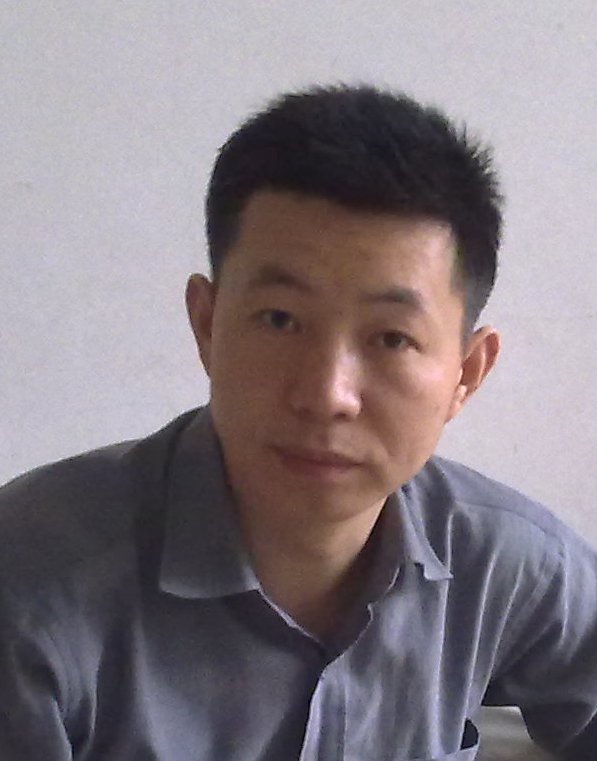 Shaohua Tao (陶少华)合作论文数School of Physics, Central South University;School of Physics and Electronics, Central South University7
 Youfang Huang (黄有方)合作论文数China Institute of Ftz Supply Chain4Liu Rongfang合作论文数3
 Zhang Wu合作论文数3Baoping Jin (金保平)合作论文数2Ting Fang合作论文数Shanghai Maritime Univ, Inst Logist Sci & Engn, 1550 Haigang Ave, Shanghai 201306, Peoples R China2Jilin Yang合作论文数2
 Chee Chong Teo合作论文数School of Civil and Environmental Engineering, College of Engineering, Nanyang Technological University2
 Hejun Liang (梁贺君)合作论文数College of Engineering Science and Technology, Shanghai Ocean University2
 William Ho合作论文数Division of Business and Economics, Department of Management and Marketing, Faculty of Business and Economics, The University of Melbourne2Danni Chang (常丹妮)合作论文数2H. C. W. Lau合作论文数InIS RG & School of Business, University of Western Sydney, Australia | Department of Industrial and System Engineering, The Hong Kong Polytechnic University, Kowloon, Hong Kong2Long Dan合作论文数1Dongjie Bao合作论文数1Wei Liao合作论文数1W.C. Tai合作论文数1Xin Zhou合作论文数1Yu Liu合作论文数1Dan Long合作论文数1Tian Xia合作论文数1Chen Chen (陈晨)合作论文数1
 Yaqiong Lv (吕雅琼)合作论文数School of Transportation and Logistics Engineering, Wuhan University of Technology1Zhijian Chen合作论文数1
 Shiang-Jiun Chen合作论文数1Rohan Pasari合作论文数1
 Houjun Lu合作论文数1
 Wei Yan (严伟)合作论文数上海海事大学物流工程学院1
 Jiann-Liang Chen合作论文数1
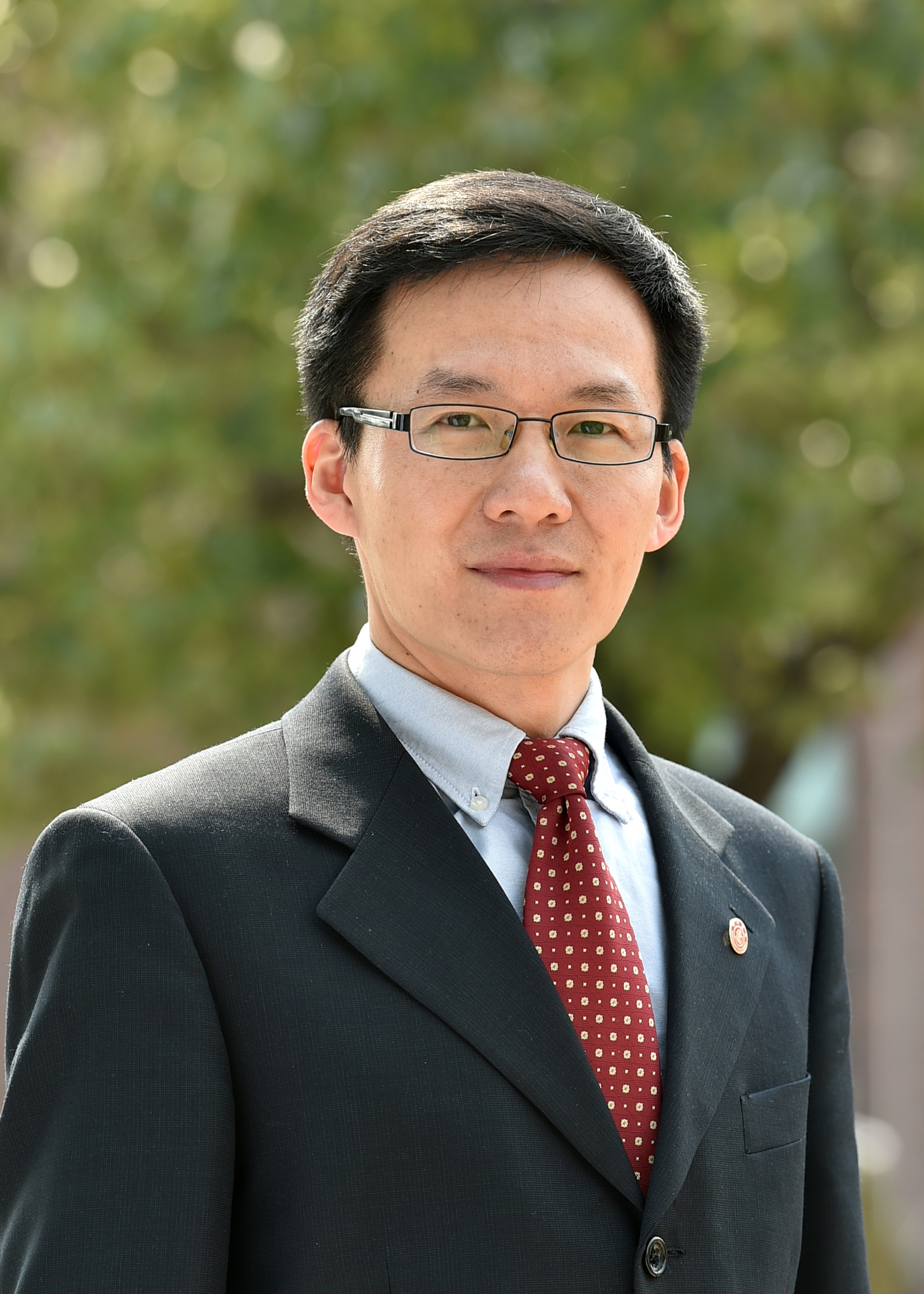 Ting Han (韩挺)合作论文数School of Media and Communication, Shanghai Jiao Tong University1
 Zhen Wang合作论文数School of Computer Science and Technology, University of Science and Technology of China1
 Yi-Wei Ma (马祎玮)合作论文数1
 Linda L. Zhang合作论文数Faculty of Economics & Business, University of Groningen1
 Ali Mortezapour合作论文数1King Lun Choy合作论文数The Hong Kong Polytechnic University1
 Maofa Fang (方卯发)合作论文数Jishou University;Hunan Higher-Education Teacher Training Center, Hunan Normal University1




