Judging others' moral character is a vital and necessary task for navigating the social world. Extending work on the function of emotions, we propose that people use others' emotions to infer their moral character. We focused on anger, an emotion that is often viewed as undesirable. We hypothesized that anger could serve as a signal of moral character, specifically when experienced after observing a third-party moral violation (i.e., when one individual behaves immorally toward another). We first examined this hypothesis by showing that people not only judged the observer who felt angry to be a better person (Studies 1-2), but they also trusted the observer more (Study 3). In Study 4, we found that such inferences can be drawn when anger was displayed, and this effect was much more pronounced for third-party violations compared to when people were treated immorally themselves. Further, we explored whether the positive effect from anger is unique from sympathy (Study 5) and cognitive recognition of the violation (6a, and 6b), and found that anger elicited a similar level of positive moral character judgment as sympathy and cognitive recognition of the violation. However, different from recognition of the violation, anger is associated with a higher expectation of behavioral engagement. These studies not only demonstrate the moral character signaling function of emotions but also contribute to an understanding of the processes by which individuals infer moral character in others.
In six studies, we examined two foundational questions about moral praise. First, what makes an action praiseworthy? In Study 1, participants reported that actions that exceed duties (compared with dutiful actions) deserve greater praise and are perceived as less likely to happen. Second, what do observers infer from praise? Praise may communicate information about local norms. In Study 2, we found that-in general-participants expect praise to increase the likelihood of a behavior. However, in Studies 3-6, participants inferred that moral behavior that receives praise is less common and is less required and expected of people. These inferences led individuals to judge that someone would be less likely to perform a behavior that was praised. These studies provide insight into the lay beliefs and communicative function of moral praise.
Across four studies, we test the hypothesis that people exhibit "slippery slope" thinking in their judgments of moral character-that is, do observers judge that a person who behaves immorally will become increasingly immoral over time? In Study 1, we find that a person who commits an immoral act is judged as more likely to behave immorally and as having a worse character in the future than in the past. In Study 2, we find that it is the commission of an immoral act specifically-rather than merely attempting an immoral act-that drives this slippery slope effect. In Study 3, we demonstrate that observers judge the moral agent as more likely to commit acts of greater severity further in time after the initial immoral act. In Study 4, we find that this effect is driven by an anticipated corrupting of moral character, related to perceptions of the agent's guilt.
Prior work has established that laypeople do not consistently treat moral questions as being objectively true or as merely true relative to different perspectives. Rather, these metaethical judgments vary dramatically across moral issues and in response to different social influences. We offer a potential explanation by examining how objectivists and relativists are evaluated in different contexts. We provide evidence for a novel account of metaethical judgments as signaling tolerance or intolerance of disagreement. The social implications of signaling tolerance or intolerance in different contexts may motivate different metaethical judgments. Study 1 finds that relativists are perceived as more tolerant, empathic, having superior moral character, and as more desirable as social partners than objectivists. Study 2 replicates these findings with a within-participants design and also shows that objectivists are perceived as more morally serious than relativists. Study 3 examines evaluations of objectivists and relativists regarding concrete moral issues, finding these results vary across situations of moral agreement and disagreement. Study 4 finds that participants' metaethical stances likewise vary when responding in the way they think would make a person who agrees or disagrees with them evaluate them more positively. However, in Study 5, we find no effect on metaethical judgment of telling participants they will be evaluated by a person who agrees or disagrees with them, which suggests either a failure to induce reputational concerns or a more limited influence of reputational considerations on metaethical judgments, despite strong effects on social evaluation.
Previous work has reported a relation between pathogen-avoidance motivations and prejudice toward various social groups, including gay men and lesbian women. It is currently unknown whether this association is present across cultures, or specific to North America. Analyses of survey data from adult heterosexuals ( N = 11,200) from 31 countries showed a small relation between pathogen disgust sensitivity (an individual-difference measure of pathogen-avoidance motivations) and measures of antigay attitudes. Analyses also showed that pathogen disgust sensitivity relates not only to antipathy toward gay men and lesbians, but also to negativity toward other groups, in particular those associated with violations of traditional sexual norms (e.g., prostitutes). These results suggest that the association between pathogen-avoidance motivations and antigay attitudes is relatively stable across cultures and is a manifestation of a more general relation between pathogen-avoidance motivations and prejudice towards groups associated with sexual norm violations.
At some point in their lives, most people have told a lie, intentionally hurt someone else, or acted selfishly at the expense of another. Despite knowledge of their moral failings, individuals are often able to maintain the belief that they are moral people. This research explores one mechanism by which this paradoxical process occurs: the tendency to represent one's past immoral behaviors in concrete or mechanistic terms, thus stripping the action of its moral implications. Across five studies, we document this basic pattern and provide evidence that this process impacts evaluations of an act's moral wrongness. We further demonstrate an extension of this effect, such that when an apology describes an immoral behavior using mechanistic terms, it is viewed as less sincere and less forgivable, likely because including low-level or concrete language in an apology fails to communicate the belief that one's actions were morally wrong.
The emotion of disgust has been claimed to affect a diverse array of social judgments, including moral condemnation, inter-group prejudice, political ideology, and much more. We attempt to make sense of this large and varied literature by reviewing the theory and research on how and why disgust influences these judgments. We first describe two very different perspectives adopted by researchers on why disgust should affect social judgment. The first is the pathogen-avoidance account, which sees the relationship between disgust and judgment as resulting from disgust’s evolved function as a pathogen-avoidance mechanism. The second is the extended disgust account, which posits that disgust functions much more broadly to address a range of other threats and challenges. We then review the empirical evidence to assess how well it supports each of these perspectives, arguing that there is more support for the pathogen-avoidance account than the extended account. We conclude with some testable empirical predictions that can better distinguish between these two perspectives.
Across four studies (3 experimental, total n = 199; 1 archival, n = 186,000) we provide evidence that people hold the belief that the world is growing morally worse, and that this belief is consistent across generational, political, and religious lines. When asked directly about which aspects of society are getting better and which are getting worse, people are more likely to list the moral (compared to non-moral) aspects as getting worse (Studies 1-2). When provided with a list of items that are either moral or non-moral, people are more likely to report that moral (compared to non-moral) items are worsening (Study 3). Finally, when asked the question “What is the most important problem facing America today?” participants in a nationally representative survey (Heffington et al., 2019), disproportionately listed problems that fall within the moral domain (Study 4).
Though the study of blame is far from new, little to no research has systematically investigated how perpetrator-blame and victim-blame influence one another. The current series of studies used correlational (Study 1), experimental (Studies 2 and 3), and mediational (Studies 3A and 3B) designs to address this issue. Results indicated that when it comes to perpetrators and victims, blame is zero-sum. Across a diverse set of crimes of varying severity, the more that a victim is seen as playing a causal role in a crime, the less blame is assigned to the perpetrator. In addition, when victim-culpability is experimentally manipulated, having a more causally responsible victim actually mitigates blame for the perpetrator, and this discounting of perpetrator-blame occurs because the victim is seen as more deserving of what happened. Results are discussed in terms of real-world implications.
People often feel guilt for accidents-negative events that they did not intend or have any control over. Why might this be the case? Are there reputational benefits to doing so? Across six studies, we find support for the hypothesis that observers expect "false positive" emotions from agents during a moral encounter - emotions that are not normatively appropriate for the situation but still trigger in response to that situation. For example, if a person accidentally spills coffee on someone, most normative accounts of blame would hold that the person is not blameworthy, as the spill was accidental. Self-blame (and the guilt that accompanies it) would thus be an inappropriate response. However, in Studies 1-2 we find that observers rate an agent who feels guilt, compared to an agent who feels no guilt, as a better person, as less blameworthy for the accident, and as less likely to commit moral offenses. These attributions of moral character extend to other moral emotions like gratitude, but not to nonmoral emotions like fear, and are not driven by perceived differences in overall emotionality (Study 3). In Study 4, we demonstrate that agents who feel extremely high levels of inappropriate (false positive) guilt (e.g., agents who experience guilt but are not at all causally linked to the accident) are not perceived as having a better moral character, suggesting that merely feeling guilty is not sufficient to receive a boost in judgments of character. In Study 5, using a trust game design, we find that observers are more willing to trust others who experience false positive guilt compared to those who do not. In Study 6, we find that false positive experiences of guilt may actually be a reliable predictor of underlying moral character: self-reported predicted guilt in response to accidents negatively correlates with higher scores on a psychopathy scale.
Most people have been both the victim and the perpetrator of a moral transgression at some point in their lives; this article asks whether one set of moral experiences is easier to remember than the other, and why. In Study 1, we documented this basic asymmetry, finding that individuals recalled more instances in which they were the victim of a moral transgression than instances in which they were the perpetrator. In Study 2, we found that this asymmetry in memory arises because experiences of being the victim are perceived more negatively than experiences of being the perpetrator. In Studies 3 and 4, we demonstrated the critical role of intent in this asymmetry, finding that victim memories emphasize perpetrator intent to a greater degree than do perpetrator memories (Study 3), and that the memory asymmetry disappeared when individuals recalled unintentional moral violations (Study 4). Finally, in Study 5, we ruled out a potential alternative mechanism for these effects—that of self-protective motivation on the part of perpetrators. We found that the threat associated with the moral violation moderated victim (but not perpetrator) memories, a finding that is inconsistent with a motivational account for perpetrator memories. This research demonstrates that perceived agency shapes emotional experience and autobiographical memory and speaks to the importance of studying morality as it occurs in everyday contexts. (PsycInfo Database Record (c) 2020 APA, all rights reserved)
Previous research has shown that political attitudes are highly heritable, but the proximal physiological mechanisms that shape ideology remain largely unknown. Based on work suggesting possible ideological differences in genes related to low-level sensory processing, we predicted that taste (i.e., gustatory) sensitivity would be associated with political ideology. In 4 studies (combined N = 1,639) we test this hypothesis and find robust support for this association. In Studies 1-3, we find that sensitivity to the chemicals PROP and PTC-2 well established measures of taste sensitivity-are associated with greater political conservatism. In Study 4, we find that fungiform papilla density, a proxy for taste bud density, also predicts greater conservatism, and that this association is partially statistically mediated by disgust sensitivity. This work suggests that low-level physiological differences in sensory processing may shape an individual's political attitudes. (PsycInfo Database Record (c) 2021 APA, all rights reserved).
How do people judge whether someone deserves moral praise for their actions? In contrast to the large literature on moral blame, work on how people attribute praise has, until recently, been scarce. However, there is a growing body of recent work from a variety of subfields in psychology (including social, cognitive, developmental, and consumer) suggesting that moral praise is a fundamentally unique form of moral attribution and not simply the positive moral analogue of blame attributions. A functional perspective helps explain asymmetries in blame and praise: we propose that while blame is primarily for punishment and signaling one's moral character, praise is primarily for relationship building.
We argue that Tomasello's account overlooks important psychological distinctions between how humans judge different types of moral obligations, such as prescriptive obligations (i.e., what one should do) and proscriptive obligations (i.e., what one should not do). Specifically, evaluating these different types of obligations rests on different psychological inputs and has distinct downstream consequences for judgments of moral character.
Our aim in this chapter is to shed light on the psychological process by which people determine whether another person is worthy of moral praise. To do so, we first define moral praise and consider theoretical backgrounds on the topic, drawing largely on psychological traditions but also incorporating insight from philosophy and theology. In particular, we emphasize how praise is a judgment of moral responsibility directed at agents who have performed acts that exceed the call of duty and obligation. At its core, moral praise is a communicative tool used to highlight noteworthy acts of moral goodness. In this way, moral praise can foster and develop self-transcendence: praise is for when people defeat their selfish tendencies and transcend the self in order to help others. After defining moral praise, we next examine the psychology of blame—the negatively valenced couterpart to praise—since the most influential theories of moral attribution focus on blame at the expense of praise. We directly compare praise to blame and consider situations when the two operate similarly and when the two operate differently. Specifically, research suggests that people use cues like decision speed and affective displays made during moral actions to infer an agent's intentions for assigning both praise and blame. However, the processes of praise and blame also differ such that the severity of an act matters more for blame than praise and that people assume others are motivated to appear moral and thus deviations from that assumption are used as stronger signals of character. Finally, we conclude by linking the function of moral praise to the development of self-transcendence by examining how praise can shape children's behavior. In a practical sense, children lack the duties typically ascribed to others and one function of praise may be to instill these duties. In this way, moral praise can help foster individuals with self-transcendence that act for the benefit of others.
We argue that existing data on folk-economic beliefs (FEBs) present challenges to Boyer & Petersen's model. Specifically, the widespread individual variation in endorsement of FEBs casts doubt on the claim that humans are evolutionarily predisposed towards particular economic beliefs. Additionally, the authors' model cannot account for the systematic covariance between certain FEBs, such as those observed in distinct political ideologies.
Visceral states like thirst, hunger, and fatigue can alter motivations, predictions, and even memory. Across 3 studies, we demonstrate that such "hot" states can also shift moral standards and increase dishonest behavior. Compared to participants who had just eaten or who had not yet exercised, hungry and thirsty participants were more likely to behave dishonestly to win a prize. Consistent with the specificity of motivation that is characteristic of visceral states, participants were only more likely to cheat for a prize that could alleviate their current deprived state (such as a bottle of water). Interestingly, this increase in dishonest behavior did not seem to be driven by an increase in the perceived monetary value of the prize. (PsycINFO Database Record
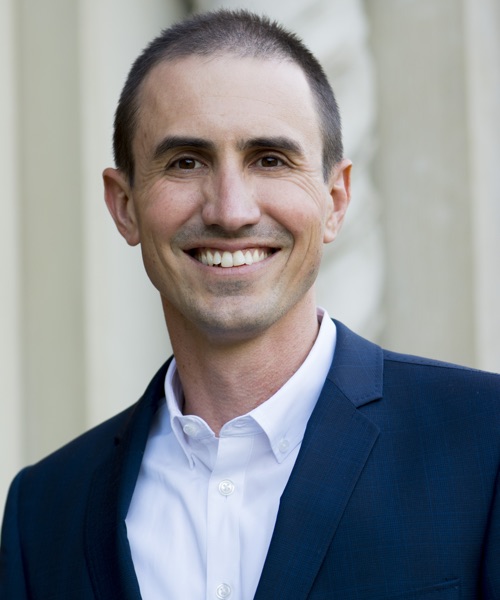 Yoel Inbar合作论文数Department of Psychology, Faculty of Arts and Science, University of Toronto, Scarborough25
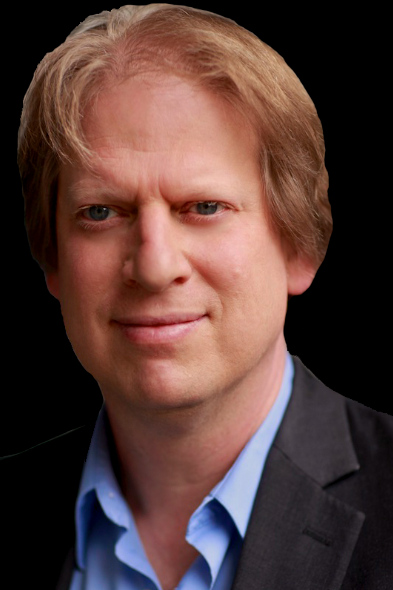 Paul Bloom合作论文数University of Toronto;Yale University10
 David Tannenbaum合作论文数Dept Management, Univ Utah9
 Rajen A. Anderson合作论文数Dept Psychol, Cornell Univ9
 Helzer Erik G合作论文数The Johns Hopkins University Carey Business School8
 Eric Luis Uhlmann合作论文数Management and Human Resources Department, HEC Paris8
 Chelsea Helion合作论文数Sackler Institute, Weill Cornell Medical College7
 Peter Salovey合作论文数Department of Psychology, Yale University7
 Peter H Ditto合作论文数Department of Psychology and Social Behavior, University of California, Irvine6
 Benjamin Ruisch合作论文数Ohio State Univ5
 Dan Ariely合作论文数The Fuqua School of Business, Duke University;Center for Advanced Hindsight, Duke University;Accumulator;Irrational Capital;Kayma Labs;Epilog;BEworks;Shapa Health;Genie4
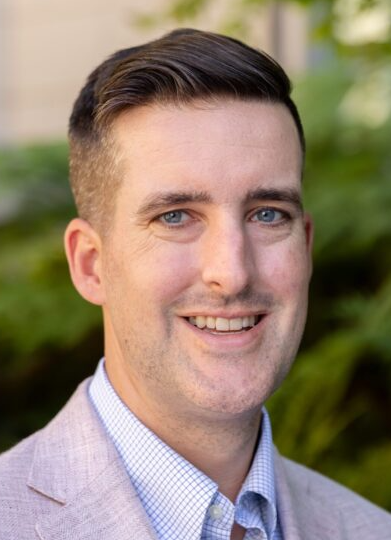 Clayton R. Critcher合作论文数Haas School of Business, University of California, Berkeley4
 Linda Levine合作论文数University of California4
 Fiery Cushman合作论文数Department of Psychology, Harvard University;Moral Psychology Research Lab, Harvard University4
 Jonathan Haidt合作论文数Leonard N. Stern School of Business, New York University3
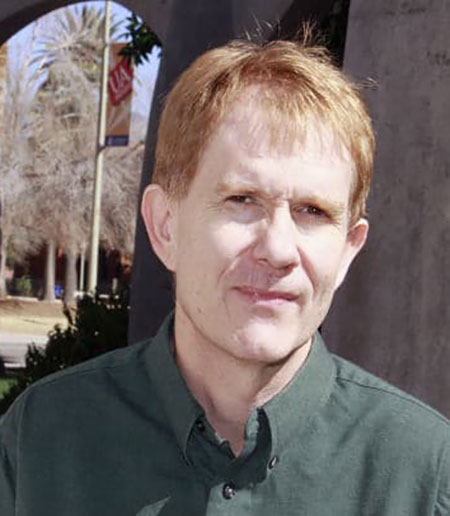 Shaun Nichols合作论文数Department of Philosophy, Sage School of Philosophy, Cornell University3
 M.J. Crockett合作论文数Department of Psychology, Princeton University;University Center for Human Values, Princeton University3
 Lisa Reynolds合作论文数Centre for Addiction Research, School of Population Health, Faculty of Medical and Health Sciences, The University of Auckland3
 Nathan Consedine合作论文数Department of Psychological Medicine, School of Medicine, Faculty of Medical and Health Sciences, The University of Auckland3
 Diogo Ferreira合作论文数2
 Norman P Li合作论文数2
 Jane Rebecca Conway合作论文数2
 Ivana Jaksic合作论文数Univ Belgrade2
 Leah Israelevich Borovoi合作论文数Natl Inst Testing & Evaluat2
 Barış Sevi合作论文数Univ Connecticut2
 Jose C Yong合作论文数Northumbria Univ2
 D. Vaughn Becker合作论文数Dept Cognit Sci & Engn, Arizona State Univ2
 Narayanan Srinivasan合作论文数Department of Cognitive Science, Indian Institute of Technology Kanpur2
 Fiona Barlow合作论文数School of Psychology, Faculty of Health and Behavioural Sciences, The University of Queensland2
 Daniel Bartels合作论文数Chicago Booth School of Business, The University of Chicago2
 Brian Nosek合作论文数Department of Psychology, University of Virginia;Center for Open Science2
 de Barra Mícheál合作论文数Faculty of Infectious and Tropical Diseases, London School of Hygiene and Tropical Medicine2
 Ishii Keiko合作论文数2
 Fernandez Ana Maria合作论文数Escuela de Psicología, Universidad de Santiago de Chile2
 McIntyre Jason C合作论文数The University of Queensland2
 Lene Aarøe合作论文数Department of Political Science and Government, Aarhus University2
 Tingting Ji (纪婷婷)合作论文数School of Psychology, Nanjing Normal University2
 Shruti Tewari合作论文数Centre of Behavioural and Cognitive Sciences, University of Allahabad2Eric Uhlmann合作论文数2
 A. Peter Mcgraw合作论文数Leeds School of Business, University of Colorado at Boulder2
 Gerasimos Prodromitis合作论文数Panteion University of Athens2
 Sumitava Mukherjee合作论文数2
 Christopher W. Bauman合作论文数Resolution Research Center;Kellogg School of Management;Resolution Research Center, Kellogg School of Management2
 Florian Van Leeuwen合作论文数2
 Pat Barclay合作论文数Department of Neurobiology and Behavior, Cornell University2
 Justin H. Park合作论文数Department of Psychology, University of Groningen2
 Pavol Prokop合作论文数Department of Environmental Ecology, Comenius University2
 Bonifacio Sandin合作论文数Facultad de Psicologia, Universidad Nacional de Educacion a Distancia (UNED),2
 Michael Bang Petersen合作论文数Department of Political Science, Aarhus University2




