Event Abstract Back to Event Diffusion Modeling of Task Adaption and Lexical Processing Impairments in Aphasia William S. Evans1, 2*, Jeffrey J. Starns3, William Hula1 and David N. Caplan4 1 VA Pittsburgh Healthcare System, Geriatric Research Education and Clinical Center, United States 2 University of Pittsburgh, Department of Communication Science and Disorders, United States 3 University of Massachusetts, Amherst, Department of Psychology, United States 4 Massachusetts General Hospital, Department of Neurology, United States Given the co-occurrence and correlation of cognitive and linguistic impairments following stroke (Murray, 2012), it is important to understand how general cognitive processes contribute to language performance in aphasia. To address this, the current study used a computational model of the decision-making process (the diffusion model; Ratcliff, 1978) to look at the relation between domain-general decision processes and lexical deficits in aphasia. The model integrates both accuracy and response time information to describe response time distributions. Two key parameters in the model are drift rate and response boundary separation. Drift rate is an index of how quickly and efficiently information is accumulated during the decision process, and is sensitive to effects such as word frequency (Ratciff et al., 2004). In contrast, boundary separation is a measure of how much information is allowed to accumulate before a response is initiated (i.e., a measure of “response caution”), and is sensitive to individual differences and task effects related to speed-accuracy tradeoffs (Wagenmakers et al., 2008, Starns & Ratcliff, 2010). In the current study, we tested 20 people with aphasia (PWA) and 23 matched controls (MCs) on lexical decision and a matched nonlinguistic numerosity task, in which participants had to make a high/low classification based on the number of presented asterisks. In both tasks, we manipulated lower-level domain-specific aspects via stimuli properties (word frequency and numbers of asterisks), and control-level aspects via task focus, with shifting speed/accuracy demands. We predicted a) that PWA would present with domain-general task adaption deficits, with difficulty adjusting boundary separation in response to changing speed/accuracy task demands, and b) that PWA would present with domain-specific lexical impairments, with disproportionately low drift rates in lexical decision compared to numerosity. The diffusion model was fit to individual participants and used the chi-square fitting method (Ratcliff & Tuerlinckx, 2002). Group differences were assessed via repeated-measures ANOVA. On boundary separation, there was a 2-way group-by-task focus interaction in both lexical decision and numerosity, F(1, 41) = 6.397, p =.015, ηG2 =.030, such that PWA were less able to adjust boundaries compared to controls (Figure, panel A). On drift rates, there was a 2-way group-by-domain interaction, F(1, 41) = 5.696, p =.022, ηG2 =.039, such that drift rates were disproportionately low for PWA in lexical decision compared to numerosity compared to controls (Figure, panel B). There was also an unexpected 2-way group-by-stimuli type interaction, F(1, 41) = 11.960, p <.001, ηG2 =.031, such that PWA showed smaller drift rate differences between easier and harder stimuli in both lexical decision and numerosity. Overall, predictions were confirmed: PWA showed domain-specific deficits on drift rates in lexical decision, and domain-general deficits in adjusting boundary separation to meet task demands. The additional unexpected domain-general effect in drift rates may reflect a deficit in stimulus-response binding. Results support a hybrid cognitive-linguistic model of language performance deficits in aphasia, and demonstrate the feasibility and applicability of diffusion modeling in aphasia research. Results will be further discussed in terms of additional model parameters and case series analyses. Figure 1 Acknowledgements This research was funded by the National Institute of Health (NIDCD-F31DC013489), the Boston University Dudley Allen Sargent Research Fund, and the VA Pittsburgh Healthcare System Geriatric Research Education and Clinical Center. References Morey, R. D. (2008). Confidence Intervals from Normalized Data: A correction to Cousineau ( 2005 ). Tutorials in Quantitative Methods for Psychology, 4(2), 61–64. Murray, L. (2012). Attention and Other Cognitive Deficits in Aphasia: Presence and Relation to Language and Communication Measures. American Journal of Speech-Language Pathology, 21(May), 51–65. Ratcliff, R. (1978). A Theory of Memory Retrieval. Psychological Review, 85(2), 59–108. Ratcliff, R., Gomez, P., & McKoon, G. (2004). A diffusion model account of the lexical decision task. Psychological Review, 111(1), 159–82. Ratcliff, R., & Tuerlinckx, F. (2002). Estimating parameters of the diffusion model: approaches to dealing with contaminant reaction times and parameter variability. Psychonomic Bulletin & Review, 9(3), 438–81. Starns, J. J., & Ratcliff, R. (2010). The effects of aging on the speed-accuracy compromise: Boundary optimality in the diffusion model. Psychology and Aging, 25(2), 377–90. Wagenmakers, E.-J., Ratcliff, R., Gomez, P., & McKoon, G. (2008). A Diffusion Model Account of Criterion Shifts in the Lexical Decision Task. Journal of Memory and Language, 58(1), 140–159. Keywords: Aphasia, diffusion model, cognitive control, lexical decision, Speed-accuracy tradeoff Conference: Academy of Aphasia 55th Annual Meeting , Baltimore, United States, 5 Nov - 7 Nov, 2017. Presentation Type: oral presentation Topic: Consider for student award Citation: Evans WS, Starns JJ, Hula W and Caplan DN (2019). Diffusion Modeling of Task Adaption and Lexical Processing Impairments in Aphasia. Conference Abstract: Academy of Aphasia 55th Annual Meeting . doi: 10.3389/conf.fnhum.2017.223.00046 Copyright: The abstracts in this collection have not been subject to any Frontiers peer review or checks, and are not endorsed by Frontiers. They are made available through the Frontiers publishing platform as a service to conference organizers and presenters. The copyright in the individual abstracts is owned by the author of each abstract or his/her employer unless otherwise stated. Each abstract, as well as the collection of abstracts, are published under a Creative Commons CC-BY 4.0 (attribution) licence (https://creativecommons.org/licenses/by/4.0/) and may thus be reproduced, translated, adapted and be the subject of derivative works provided the authors and Frontiers are attributed. For Frontiers’ terms and conditions please see https://www.frontiersin.org/legal/terms-and-conditions. Received: 21 Apr 2017; Published Online: 25 Jan 2019. * Correspondence: Prof. William S Evans, VA Pittsburgh Healthcare System, Geriatric Research Education and Clinical Center, Pittsburgh, PA, United States, oddsorevans@gmail.com Login Required This action requires you to be registered with Frontiers and logged in. To register or login click here. Abstract Info Abstract The Authors in Frontiers William S Evans Jeffrey J Starns William Hula David N Caplan Google William S Evans Jeffrey J Starns William Hula David N Caplan Google Scholar William S Evans Jeffrey J Starns William Hula David N Caplan PubMed William S Evans Jeffrey J Starns William Hula David N Caplan Related Article in Frontiers Google Scholar PubMed Abstract Close Back to top Javascript is disabled. Please enable Javascript in your browser settings in order to see all the content on this page.
This article critically reviews recent papers that use functional neuroimaging to localize syntactic representations, Universal Grammar, parsing operations, and the working memory system that supports parsing. It is concluded that greater control over experimental conditions is needed for studies to provide convincing evidence about the neural basis for these cognitive functions.
Syntactic structures relate the meanings of the individual words in sentences to one another, thus allowing sentences to express propositions that can be entered into memory, used in reasoning and planning, and serve as the basis for much of human thought and expression. Syntactic structures are abstract, unique types of representations that are not found in non-humans. How the brain is organized to support syntactic processing is thus of neurobiological interest. Functional neuroimaging studies of the neural basis for syntactic processing have resulted in a number of theoretical positions, but the data supporting these positions is generally weak. This review presents a selective and critical review of important recent contributions to this literature. We focus on psychological methodology and interpretation of results and suggest several new approaches to the study of syntactic processing that might avoid some of the problems with existing work.
Sixteen subjects made plausibility judgments regarding auditorily presented cleft object and cleft subject sentences (It was the actress that the award thrilled; It was the award that thrilled the actress). rCBF increased in Broca's area, pars triangularis, when subjects processed the syntactically more complex cleft object sentences. The results are consistent with previous experiments using written materials and suggest that an increase in rCBF in Broca's area is associated with processing syntactically more complex sentences.
Reply from the Authors: Mr. Goulet questions the interpretation of the correlation between MR lesions and disorders of phoneme processing that we reported. [1] He raises the possibility that correlations of metabolic or physiologic aspects of lesions with phoneme discrimination and identification might provide evidence for a more diffuse neural system underlying these functions. We agree that this is a possibility …
The functional architecture of the verbal processing resource system was studied by testing aphasic patients for their abilities to use syntactic structure in sentence comprehension in isolation and under dual-task conditions. Patients who showed evidence for a reduction in the resources available for syntactic processing in sentence comprehension were tested on a sentence-picture matching task that required syntactic processing in an o-interference condition and while recalling a series of digits that was one less than or equal to their span. Patients showed equivalent effects of syntactic complexity in comprehension in the three conditions; that is, the effect of syntactic complexity did not increase under digit load conditions. This result supports the conclusion that the processing resource system that underlies syntactic processing is substantially separate from the one that is used for some other verbally mediated functions.
These fifteen contributions by well-known linguists, psychologists, and neuroscientists explore the new concepts and themes that extend and revise previously held ideas about the biology of cognition.
 Gloria Sydna Waters合作论文数Department of Speech, Language & Hearing Sciences, College of Health & Rehabilitation Sciences, Boston University8
 David Gow合作论文数2
 Swathi Kiran合作论文数Aphasia Research Laboratory, Sargent College, Boston University;Department of Speech Language and Hearing Sciences, Sargent College, Boston University;Aphasia Resource Center, Boston University;Center for Systems Neuroscience, Boston University;Center For Brain Recovery, Boston University2
 John Frederiksen合作论文数1Dan Broadbent合作论文数1
 Alexander Berardino合作论文数NYU, Ctr Neural Sci, New York, NY 10003 USA1Paul Johnson合作论文数1Philip R. Cohen合作论文数1
 Yufen Chen合作论文数Department of Radiology, Feinberg School of Medicine, Northwestern University1
 Todd Parrish合作论文数Biomedical Engineering, McCormick School of Engineering and Applied Science, Northwestern University1
 Douglas Medin合作论文数Institute of Adolescent Mental Health and Well-Being, Department of Psychology, Northwestern University;School of Education and Social Policy, Northwestern University1
 Akram Bakkour合作论文数Department of Psychology, The University of Chicago1
 Joshua Levy合作论文数1
 Chaleece Wyatt Sandberg合作论文数Department of Speech and Hearing Sciences, Boston University1Hoover Elizabeth合作论文数1
 Kevin Kelly合作论文数1
 Cynthia K. Thompson合作论文数Department of Communication Sciences and Disorders, School of Communication, Northwestern University1
 Green James A合作论文数School of Pharmacy, University of Otago1
 Mark Johnson合作论文数Centre for Brain and Cognitive Development, School of Psychology, Birkbeck College, University of London1
 Laura R. Novick合作论文数Department of Psychology and Human Development, Vanderbilt University1
 William Streicher Evans合作论文数Department of Speech, Language, and Hearing Sciences, Boston University1
 Brenda C. Rapp合作论文数Department of Psychological & Brain Sciences, Johns Hopkins University/Department of Cognitive Science, Krieger College of Arts & Sciences, Johns Hopkins University1
 Lyn Frazier合作论文数Department of Linguistics, College of Humanities & Fine Arts, University of Massachusetts Amherst1
 Robert Lindsay合作论文数BHF Glasgow Cardiovascular Research Centre, University of Glasgow;School of Cardiovascular & Metabolic Health, University of Glasgow1
 Jeffrey Locke Elman合作论文数Department of Cognitive Science, University of California-San Diego1
 Kaitlyn A Litcofsky合作论文数1
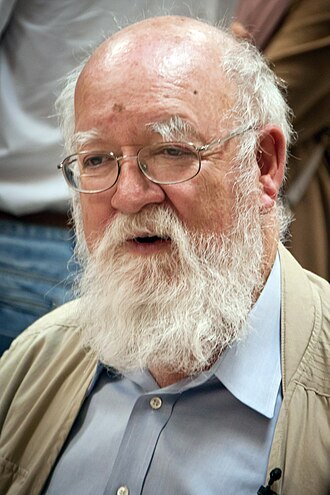 Daniel C. Dennett合作论文数Philosophy Dept, Tufts University1
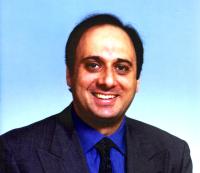 Petros Maragos合作论文数Division of Signals, Control and Robotics, School of Electrical and Computer Engineering, National Technical University of Athens;Hellenic Robotics Center of Excellence;Athena Research Center1
 Mark H. Burstein合作论文数SIFT, Inc.1
 Andy Clark合作论文数School of Cognitive and Computing Sciences University of Sussex1
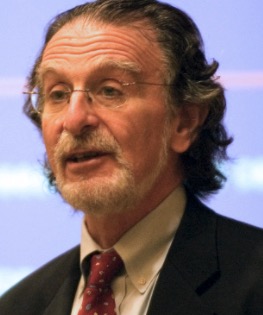 David Klahr合作论文数Department of Psychology, Dietrich College of Humanities and Social Sciences, Carnegie Mellon University1Sandra Weintraub合作论文数1Bradford C. Dickerson合作论文数1
 Rochel Gelman合作论文数Department of Psychology, School of Arts and Sciences, Rutgers, The State University of New Jersey1Yumi Iwasaki合作论文数1
 David D. Mcdonald合作论文数University of Massachusetts at Amherst1
 Michael C. Mozer合作论文数Institute of Cognitive Science, University of Colorado, Boulder;Google DeepMind;Department of Computer Science, College of Engineering & Applied Science, University of Colorado, Boulder1
 Diane J. Litman合作论文数Department of Computer Science, School of Computing and Information, University of Pittsburgh;Learning Research and Development Center, University of Pittsburgh1
 Thomas G. Dietterich合作论文数School of Electrical Engineering and Computer Science, Oregon State University;Institute for Collaborative Robotics and Intelligence Systems, College of Engineering, Oregon State University;BigML1
 Graeme Hirst合作论文数Department of Computer and Mathematical Sciences, University of Toronto;Department of Computer Science, University of Toronto;Schwartz Reisman Institute for Technology and Society1
 Michael J. Pazzani合作论文数Department of Information and Computer Science, University of California1
 Carolyn Kieran合作论文数Portland State University1
 Robert Nosofsky合作论文数Department of Psychological and Brain Sciences, The College of Arts & Sciences, Indiana University Bloomington1William D. Hula合作论文数Department of Communication Sciences and Disorders, University of Pittsburgh1Janet Kolodner合作论文数School of Interactive Computing1
 Gary S Dell合作论文数Department of Psychology, College of Liberal Arts & Sciences, University of Illinois at Urbana-Champaign1
 Nathaniel M. Alpert合作论文数Department of Radiology, Massachusetts General Hospital1A Negreira合作论文数1D. Sapolsky合作论文数1




