This paper describes work in progress to develop an information broker of engineering parts that enables the user to describe his/her goal in terms of the function to be achieved. The desired function is described in the form of "to do X" with any number of qualifying terms. The system assists the user in incremental refinement of search goals. It uses explicit ontologies of functional terms and a knowledge of typical functions in order to map from the given functional specification to actual products.
Reformulation is ubiquitous in problem solving and is especially common in modeling physical systems. In this paper we examine reformulation techniques in the context of reasoning about physical systems. This paper does not present a general theory of reformulation, but it studies a number of known reformulation techniques to achieve a broad understanding of the space of available reformulations. In doing so, we present a practical framework for specifying, classifying, and evaluating various reformulation techniques applicable to this class of problems. Our framework provides the terminology to specify the conditions under which a particular reformulation technique is applicable, the cost associated with performing the reformulation, and the effects of the reformulation with respect to the problem encoding.
ion Framework for Compositional Modeling Diane Chi and Yumi Iwasaki KnowledgeSystemsLaboratory Stanford University 701 Welch Road, Bldg. C, Palo Alto, CA 94304 chi@ksl.stanford.edu and iwasaki©ksl .stanford .edu
This document describes a compositional modeling language, CML, which is a general declarative modeling language for logically specifying the symbolic and mathematical properties of the structure and behavior of physical systems . CML is intended to facilitate model sharing between research groups, many of which have long been using similar languages . These languages are based primarily on the language originally defined by Qualitative Process theory [Forbus 1984] and include the languages used for the Qualitative Physics Compiler (QPC) [Crawford 1990 ; Farquhar 1993 ; Farquhar 1994], compositional model formulation [Falkenhainer 1991 ], and the Device Modeling Environment (DME) [Low and Iwasaki 1993] . CML is an attempt to synthesize and provide a clean redesign of these languages . 12 QR-96 1 . Introduction Compositional modeling is an effective paradigm for formulating a behavior model of physical system by composing descriptions of symbolic and mathematical properties of individual system components . This paper describes Compositional Modeling Language (CML), which is a general declarative modeling language for representing physical knowledge required for compositional modeling . CML is intended to facilitate model sharing between research groups, many of which has long been using A Compositional Modeling Language **Xerox Wilson Center 800 Philips Rd., M/S 128-51E Webster, NY 14580 falken@ wrc.xerox.com $Qualitative Reasoning Group The Institute for the Learning Sciences Northwestern University 1890 Maple Avenue Evanston, IL 60201 forbus@ ils.nwu.edu %University of Texas at Austin Department of Computer Science Austin, TX 78712 kuipers@ cs.utexas.edu similar languages . These languages are based primarily on the language originally defined by Qualitative Process Theory [Forbus 1984] and include the languages used for the Qualitative Physics Compiler [Farquhar 1994], compositional model formulation [Falkenhainer 1991], and the Device Modeling Environment [Low and Iwasaki 1993] . CML is an attempt to synthesize and provide a clean redesign of these languages . The specification of CML has been formulated by researchers involved in those projects . CML was designed with efficiency, expressiveness and ease of use in mind . The language is restricted enough to allow efficient implementation of procedures to predict behavior. The syntax is simple and readable so that a person familiar with the domain will be able to read and easily understand an expression of knowledge of the domain in the language . The language supports lumped parameter ordinary differential equations that are common in engineering modeling. Finally, the language supports a variety of different approaches to representing physical phenomena ; it allows the definition and use of domain theories that use components, process, bond graphs, kinematic pairs, etc ., and also supports both relational and object-oriented specification styles . CML specifies a set of top-level forms for defining models and an ontology of primitive functions, relations, and constants . CML is intended to be an open, evolving language, of which this document describes the base language . Various extensions will undoubtedly be defined as they naturally arise in the course of its use by different people . An important goal in designing the base language is to support as much sharing as is reasonably possible . Also, to facilitate sharing the content of CML knowledge bases, CML is filly translatable to the knowledge interchange format (KIF)[Genesereth and Fikes 1992], and we have adopted conventions established by KIF wherever possible. 1 .1 . Patterns of Use A typical implementation supporting CML might be used as follows : To predict the behavior of a physical system in some domain, knowledge about the physics of the domain is captured in a general purpose domain theory that describes classes of relevant objects, phenomena and systems . The domain theory of chemical processing plants, for example, might include physical phenomena such as mass and heat flows, boiling, evaporation, and condensation ; it would also include chemical reactions, the effects of catalysts, and models of components such as reaction vessels, pumps, controllers, and filters . A domain theory in CML consists of a set of quantified definitions, called model fragments, each of which describes some partial piece of the domain's physics, such as processes (e.g ., liquid flows), devices (e.g ., transistors), and objects (e .g ., containers) . Each definition applies whenever there exists a set of participants for whom the stated conditions are satisfied . A specific system or situation being modeled is called a scenario . A model of the scenario consists of fragments that logically follow from the domain theory and the scenario definition . For example, consider the situation depicted in Figure 1 . A scenario representing this situation would state that there is a can containing some water placed over a gas heater . In addition, the scenario may also state whether or not the gas heater is initially on, the initial temperature and volume of the water and so on . In order to reason about this situation, the domain theory must contain the definitions of a can, contained water, a gas heater, as well as the definitions of relevant physical processes such as heat flow and evaporation . The definitions of these objects and processes must specify their numeric and non-numeric attributes, such as water-level and fame-lit-p . The types of values such attributes take, for example "a numeric, timedependent quantity whose dimension is length" must also be specified in the domain theory . Once the domain theory has been constructed, it can be used to model many different physical devices under a variety of different conditions . The user specifies a scenario that defines an initial configuration of the device, the initial values of some of the parameters that are relevant to modeling it, and perhaps conditions that further 1 KIF provides a standard encoding and semantics for a first order logic with set theory and some minor extensions such as a restricted quote and the ability to refer to relations directly . characterize the system . The CML implementation would automatically identify model fragments that are applicable in the scenario . These model fragments would be composed into a single model that comprises both a symbolic description as well as a set of governing equations . The equations may be solved or simulated to produce a behavioral description . Because the conditions under which the model fragments hold are explicit in the domain theory, the system would be able to construct automatically additional models that describe the device as it moves into new operating regions . Figure 1 : An example situation with a can of water and a heater 1.2 . Notation and Syntax The CML syntax is based on the Common Lisp standard [Steele 1990] ; a sequence of characters is a legal CML expression only if it is acceptable to the Common Lisp reader with standard settings . In this document, we will adopt the following notational conventions : Variables are marked with a ? prefix, to distinguish them from object and relation constants . Where the syntax allows for a finite series of items indexed from 1 to n, the first item of the sequence is given with the subscript 1 and the remaining n1 items are abbreviated by " . . . n " . For example, ( ( participant L :type t 1) . . . n)
伊豆大島を対象地に250mメッシュを解析単位として、絶滅危惧種カラスバトの分布と生息環境の関係性を検討した。まずカラスバトの分布と8つのランドスケープパターンとの対応関係を明らかにした。繁殖期、越冬期ともに、8つのランドスケープパターンのうち森林優占域、森林 (照葉樹林を含む) 農地域とカラスバトの分布に関係があった。繁殖期と越冬期を比べて農地-集落地域では結びつきの関係に大きな変化が見られた。次に判別分析によりカラスバトの分布確認の有無がどの土地利用単位と結びついているのか判定した。判別に一番貢献した土地利用単位は繁殖期、越冬期ともに、照葉樹林だった。次に判別に貢献した土地利用単位は繁殖期、越冬期とに植林だった。
This paper describes a computational approach, based on the theory of causal ordering, for inferring causality from an acausal, formal description of a phenomena. Causal ordering is an asymmetric relation among the variables in a selfcontained equilibrium and dynamic structure, which seems to reflect people’s intuitive notion of causal dependency relations among variables in a system. This paper extends the theory to cover models consisting of mixture of dynamic and equilibrium equations. When people’s intuitive causal understanding of a situation is based on a mixed description, the causal ordering produced by the extension reflects this intuititve understanding better than that of an equilibrium description. The paper also discusses the view of a mixed model as an approximation to a completely dynamic model. Much of sciences and engineering is concerned with characterizations of processes by equations that describe the relations that hold among parameters of objects and that govern their behavior over time. Formal treatment of the foundations of sciences have avoided notations of causation and spoke only of functional relations among variables. Nevertheless, the notion of causality plays an important role in our understanding of phenomena. Even when a formal description of a situation is given in terms of acausal, mathematical relations, informal explanations of the form, “A causes B” are exceedingly common. People are able to explain the behavior in causal terms while using an acausal formal description of a situation. This paper describes a computational approach, based on the theory of causal ordering, for inferring causality from an acausal, formal description of a phenomena. Causal ordering, first presented by Simon [Simon 521, is an asymmetric relation among the variables in a self-contained equilibrium or dynamic model, which seems to reflect people’s intuitive notion of causal dependency relations among variables. This ‘This research was sponsored by the Defense Advanced Research Projects Agency (DOD), ARPA Order No. 4976 under contract F33615-87-C-1499. tie author’s current address is: Knowledge Systems Laboratory, Department of Computer Science, Stanford University, 701 Welch Rd., Palo Alto, CA 94304 intuitive causal understanding of a situation is based on a mixed description, the causal ordering produced by the extension reflects this intuitive understanding better than that of an equilibrium description. The paper also discusses the view of a mixed model as an approximation to a completely dynamic model. ordermg was mm equilibrium structure consisting of equilibrium equations [Simon 521. First, we define an equilibrium structure: eflnition 1: Self-contained equilibrium structure A self-contained equilibrium structure is a system of n equilibrium equations in pz variables that possesses the following special properties: 1. That in any subset of k equations taken from the structure at least k different variables appear with nonzero coefficients in one or more of the equations of the subset. 2. That in any subset of k equations in which m 2 k variables appear with nonzero coefficients, if the values of any (m k) variables are chosen arbitrarily, then the equations can be solved for unique values of the remaining k variables. The condition (1) above ensures that no part of the structure is over-determined. The condition (2) ensures that the equations are not dependent because if they are the equations cannot be solved for unique values of the variables. The idea of causal ordering in a self-contained equilibrium structure can be described roughly as follows. A system of n equations is called self-contained if it has exactly n unknowns. Given a self-contained system, S, if there is a proper subset, s, of S that is also self-contained and that does not contain a proper self-contained subset, s is called a minimal complete subset. Let So be the union of all such minimal complete subsets of S; then So is called the set of minimal complete subsets of zero order. Since So is self-contained, the values of all the variables in So can, in general, be obtained by solving the equations in So By substituting these values for all the occurrences of these variables in the equations of the set (S S& one obtains a new self-contained structure, which is called the derived structure offirst order. Let S, be the set of minimal complete subsets of this derived structure. It is lwasaki 313 From: AAAI-88 Proceedings. Copyright ©1988, AAAI (www.aaai.org). All rights reserved.
In this paper, we provide a practical framework for characterizing, evaluating and selecting reformulation techniques for reasoning about physical systems, with the long-term goal of automating the selection and application of these techniques. We view reformula- tion as a mapping from one encoding of a problem to another. A problem solving task is in turn accom- plished by the application of a sequence of reformula- tions to an initial problem encoding to produce a final encoding that addresses the task. Our framework pro- vides the terminology to specify the conditions under which a particular reformulation technique is applica- ble, the cost associated with performing the reformula- tion, and the effects of the reformulation with respect to the problem encoding. As such it provides the vo- cabulary to characterize the selection of a sequence of reformulation techniques as a planning problem. Our framework is sufficiently flexible to accommodate pre- viously proposed properties and metrics for reformu- lation. We have used the framework to characterize a variety of reformulation techniques, three of which are presented in this paper.
In this paper, we propose a practical framework forcharacterizing, evaluating and selecting reformulationtechniques for reasoning about physical systems, withthe long-term goal of automating the selection andapplication of these techniques. We view reformulationas a mapping from one encoding of a problemto another. A problem-solving task is in turn accomplishedby the application of a sequence of reformulationsto an initial problem encoding to produce a finalencoding that addresses the...
In this paper, we provide a practical framework for characterizing, evaluating and selecting reformulation techniques for reasoning about physical systems, with the long-term goal of automating the selection and application of these techniques. We view reformulation as a mapping from one encoding of a problem to another. A problem solving task is in turn accomplished by the application of a sequence of reformulations to an initial problem encoding to produce a final encoding that addresses the task. Our framework provides the terminology to specify the conditions under which a particular reformulation technique is applicable, the cost associated with performing the reformulation, and the effects of the reformulation with respect to the problem encoding. As such it provides the vocabulary to characterize the selection of a sequence of reformulation techniques as a planning problem. Our framework is sufficiently flexible to accommodate previously proposed properties and metrics for reformulation. We have used the framework to characterize a variety of reformulation techniques, three of which are presented in this paper.
This paper describes an approach developed to support the early stages of designing multidisciplinary products. In the design of such products it is important for various specialists to share representations of the engineering models they use in making trade-off studies. Sharing information among diverse engineering tools at the data level is notoriously difficult and inflexible. When any of the modeling details, assumptions or constraints change, the translation must usually be rewritten. Our solution to this problem is to formalize the exchange of information among engineering specialists and their tools as a problem in communication among agents. The agents share a common ontology and a compositional modeling language (CML) in which models can be created such that conventions, constraints, and assumptions are defined formally and ultimately grounded in logic. We have applied CML in the context of a pick-up head design problem for DVD (digital versatile disc / digital video disc) players. We describe the pick-up head design problem, the CML models we have created to address early stages of pick-up head design, and the use of the CML models by a team of specialists, each participating as an agent in a concurrent engineering exercise.
While much progress has been made on verification of discrete systems such as computer programs, work on formal verification of continuous, physical systems has been limited. We present a technique for verification of safety properties of such systems. Our algorithm treats safety as a reachability problem, and attempts to prove that a system cannot evolve from an abstract initial state into a state in which the safety condition does not hold. This approach is inspired by qualitative simulation techniques and makes use of trajectories comprised of a sequence of qualitative states and state transitions. The applicability of the technique, however, is not limited to qualitative problems, as we can use any amount of quantitative mathematics in the system description. This paper describes the technique, presents example problems, and discusses its limitations as well as potential for use in device engineering.
I face the assignment of writing an “expert opinion” on design and qualitative reasoning with considerable trepidation. I have been engaged in research on qualitative reasoning for some time now, but am not an expert on design. Having been schooled in mathematics and computer science, about the only things I have ever designed are mathematical proofs and computer programs. As far as I can recall, the only physical artifact I have ever built that required serious premedication worth being called design was the little digital circuit I constructed for the hardware portion of my PhD qualifying exam
This paper describes a compositional modeling system called CDME (Collaborative Device Modeling Environment) for constructing domain theories of physical systems, composing models of devices, and simulating their behavior. We have implemented the system with the goal of encouraging sharing as well as the collaborative construction of knowledge bases describing physical domains, To maximize the chance of sharing and reuse of knowledge, CDME is implemented as a collection of network services on the World Wide Web. Knowledge is represented at three distinct levels: the physical, ontological, and logical. We describe the levels of representation, and how the system enables knowledge. sharing at each level.
Constructing an appropriate model is a crucial step in performing the reasoning required to successfully answer a query about the behavior of a physical situation. In the compositional modeling approach of Falkenhainer and Forbus (1991), a system is provided with a library of composable pieces of knowledge about the physical world called model fragments. The model construction problem involves selecting appropriate model fragments to describe the situation. Model construction can be considered either for static analysis of a single state or for simulation of dynamic behavior over a sequence of states. The latter is significantly more difficult than the former since one must select model fragments without knowing exactly what will happen in the future states.
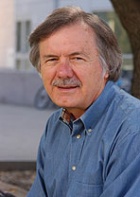 Richard Fikes合作论文数Department of Computer Science, Stanford University15
 Adam Farquhar合作论文数Digital Lifecycle Management LLP11
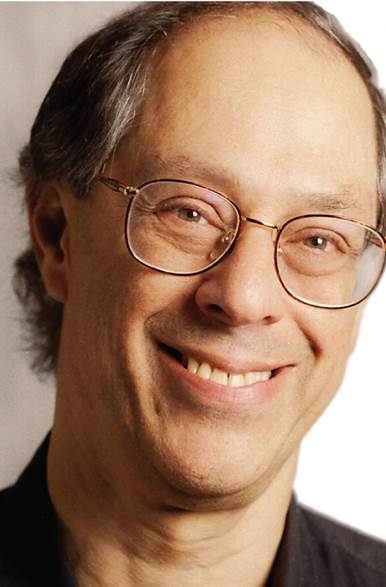 Daniel G. Bobrow合作论文数System Sciences Laboratory, Palo Alto Research Center5
 HA Simon合作论文数4
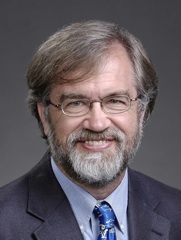 Benjamin Kuipers合作论文数Department of Computer Science and Engineering, University of Michigan4Tony Loeser合作论文数4
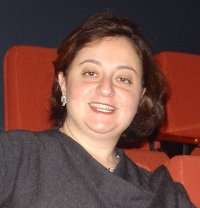 Berthe Y. Choueiry合作论文数Department of Computer Science & Engineering, University of Nebraska-Lincoln4
 Thomas R. Gruber合作论文数Sherpa.ai;TRU LUV;Video.io;Cognixion;Deep HOPE;Humanistic AI;Center for Humane Technology;LifeScore Music;Ocean Elders;Robin Healthcare;Mindstrong 4Marcos Vescovi合作论文数3Alon Y. Levy合作论文数3
 Todd W. Neller合作论文数Department of Computer Science, Gettysburg College3
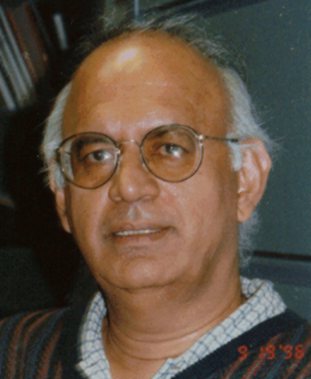 B. Chandrasekaran合作论文数Department of Computer and Information Science, The Ohio State University3
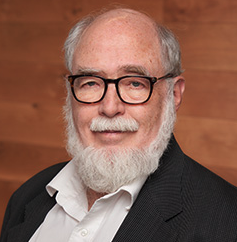 Kenneth D. Forbus合作论文数School of Education and Social Policy, Northwestern University;Department of Computer Science, McCormick School of Engineering, Northwestern University3Robert S. Engelmore合作论文数3
 Kincho H. Law合作论文数Department of Civil and Environmental Engineering, School of Engineering, Stanford University3Peter Friedland合作论文数3
 Sheila McIlraith合作论文数Department of Computer Science, University of Toronto;Vector Institute for Artificial Intelligence;Schwartz Reisman Institute for Technology and Society3Shirley Tessler合作论文数2
 Vineet Kumar Gupta合作论文数2
 Jayant Kalagnanam合作论文数IBM T.J. Watson Research Center;IBM Research2Pandurang Nayak合作论文数2Brian Falkenhainer合作论文数2
 Vijay A. Saraswat合作论文数Fidelity Quantitative Investment Research2R. Bach合作论文数2B CHANDRASEKARAN合作论文数1M VESCOVI合作论文数1barbara j fox合作论文数1John Frederiksen合作论文数1hiroyuki imaizumi合作论文数1Masanori Ozawa合作论文数1Nh Narayanan合作论文数1Yamamoto, T.合作论文数1Sheila A. McIlraith合作论文数1Dan Broadbent合作论文数1Paul Johnson合作论文数1Philip R. Cohen合作论文数1
 Kevin Kelly合作论文数1
 Green James A合作论文数School of Pharmacy, University of Otago1Hayashi, K.合作论文数1
 Mark Johnson合作论文数Centre for Brain and Cognitive Development, School of Psychology, Birkbeck College, University of London1
 Kentaro Oguchi合作论文数1
 Laura R. Novick合作论文数Department of Psychology and Human Development, Vanderbilt University1
 Lyn Frazier合作论文数Department of Linguistics, College of Humanities & Fine Arts, University of Massachusetts Amherst1
 Robert Lindsay合作论文数BHF Glasgow Cardiovascular Research Centre, University of Glasgow;School of Cardiovascular & Metabolic Health, University of Glasgow1
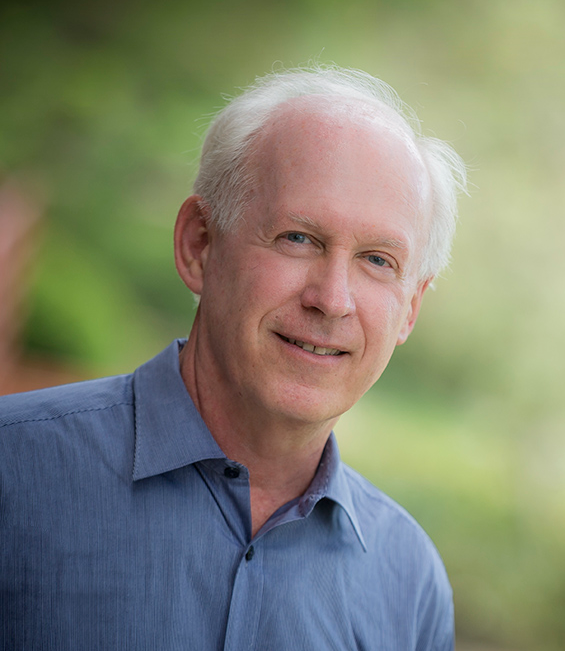 Jeffrey Locke Elman合作论文数Department of Cognitive Science, University of California-San Diego1
 James Rice合作论文数Department of Applied Ecology, North Carolina State University1
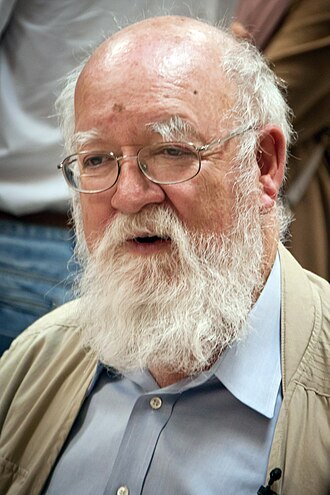 Daniel C. Dennett合作论文数Philosophy Dept, Tufts University1
 Mark H. Burstein合作论文数SIFT, Inc.1




