Many of the energy systems functioning across the developing world are poorly designed and largely inadequate to meet a country's commercial and domestic energy needs. This is especially so in Latin America, where poverty trends have been exacerbated by limited access to energy, which could be used towards supporting industrial and small-scale commercial activities. This has characterised the widespread trend of energy poverty. This phenomenon poses a major barrier towards achieving the UN Sustainable Development Goals (SDGs) and addressing climate change, since lack of access to reliable energy generation systems hinders the development of economic activities and limits the comfort of living conditions. This paper reports on a study aimed at catering to a better understanding of the challenges related to energy poverty in Latin America and identifying some of the tools that may be deployed to address them. The methodological procedures used were bibliometric analysis and survey. The main findings of this research evidence that reducing energy poverty in Latin American countries is crucial to alleviating household costs since a considerable part of family income is used to pay the energy needs. Less use of coal, greater access to electricity—including those from renewable generation—as well as the use of technologies and programs subsidized by governments would significantly contribute to increasing the Latin American citizens' quality of life and achieving the SDGs.
The data to construct the missing wind-speed value in the weather station record at “Collado de Yuste”, between the years 2002 to 2012, was calculated using wind speed data recorded in two other nearby weather stations, those in “Solana del Zapatero” and “Calar Alto”. The three mentioned stations are located in the mountain range of the province of Almeria, Autonomous Community of Andalusia, Spain. After calculating the degree of association using the correlation coefficient [1] and Wavelet Transform Scalogram [2], the data was successfully constructed. This paper refers to another study: Wind missing data arrangement using wavelet based techniques for getting maximum likelihood [3].
Automatic speaker recognition is drastically degraded in presence of noise. This paper focuses on the application of the cubic law and histogram mapping for the text-independent speaker recognition task. Our aim of this study is the application of these two methods in the feature extraction stage of the Power-Normalized Cepstral Coefficients (PNCC) and the conventional Mel Frequency Cepstral Coefficients (MFCC) techniques. Recognition results show that the cubic law combined with the histogram mapping improve the recognition rates.
Many cities across the world are facing many problems climate change poses to their populations, communities and infrastructure. These vary from increased exposures to floods, to discomfort due to urban heat, depending on their geographical locations and settings. However, even though some cities have a greater ability to cope with climate change challenges, many struggle to do so, particularly in cities in developing countries. In addition, there is a shortage of international studies which examine the links between climate change adaptation and cities, and which at the same time draw some successful examples of good practice, which may assist future efforts. This paper is an attempt to address this information need. The aim of this paper is to analyse the extent to which cities in a sample of developing countries are attempting to pursue climate change adaptation and the problems which hinder this process. Its goal is to showcase examples of initiatives and good practice in transformative adaptation, which may be replicable elsewhere. To this purpose, the paper describes some trends related to climate change in a set of cities in developing countries across different continents, including one of the smallest capital cities (Georgetown, Guyana) and Shanghai, one the world's most populous cities. In particular, it analyses their degree of vulnerability, how they manage to cope with climate change impacts, and the policies being implemented to aid adaptation. It also suggests the use of transformative approaches which may be adopted, in order to assist them in their efforts towards investments in low-carbon and climate-resilient infrastructure, thereby maximizing investments in urban areas and trying to address their related poverty issues. This paper addresses a gap in the international literature on the problems many cities in developing countries face, in trying to adapt to a changing climate.
Invitamos a tres profesionales de distintas areas del conocimiento de nuestra Universidad para responder a la pregunta planteada, y aqui sus opiniones:
 Walter Leal合作论文数Department of Health Sciences, Faculty of Life Sciences, Hochschule Angewandte Wissenschaft Hamburg;School of Science and the Environment, Manchester Metropolitan University2
 Paulette Bynoe合作论文数1Matthew Lovett合作论文数1
 Andrea Gatto合作论文数1
 Andres Solano-Escorcia合作论文数1
 Alejandro Cama-Pinto合作论文数Dept Comp Sci & Elect, Univ Costa1
 Joao Henrique Paulino Pires Eustachio合作论文数Sch Econ Business Adm & Accounting Ribeirao Preto, Univ Sao Paulo1
 Nelson Amaro合作论文数1A. S. A. Ferdous Alam合作论文数1Otienoh Oguge合作论文数1Desalegn Yayeh Ayal合作论文数1Dora Cama-Pinto合作论文数Dept Comp Architecture & Technol, Univ Granada1
 Amanda Salvia合作论文数European School of Sustainability Science and Research (ESSSR),, Hamburg University of Applied Sciences1
 Izabela Simon Rampasso合作论文数PNPD CAPES Program, Fed Fluminense Univ1
 Abdul-Lateef Balogun合作论文数Univ Teknol PETRONAS1
 Halima Begum合作论文数Sch Econ Finance & Banking SEFB, Univ Utara Malaysia1
 Anacleto, H.合作论文数Centre for Telecommun. Studies of the PUC-Rio(CETUC),, Pontifi''cia Univ. Cato''lica do Rio de Janeiro;c1
 Ayyoob Sharifi合作论文数The IDEC Institute, Hiroshima University;The University of Queensland;Center for Peaceful and Sustainable Futures1
 Luis Velázquez合作论文数1
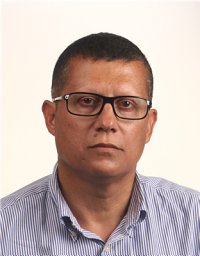 Ulisses Miranda Azeiteiro合作论文数IMAR—Institute of Marine Research, University of Coimbra1
 Olawale Olayide合作论文数Department of Agricultural Economics;University of Ibadan;Department of Agricultural Economics, University of Ibadan1
 Osvaldo Quelhas合作论文数federal fluminense university1
 Luciana Brandli合作论文数Engenheira Civil;Departamento de Tecnologia;Departamento de Tecnologia, Engenheira Civil1
 Rosley Anholon合作论文数1
 Mustafa Saroar合作论文数School of Environment, Resources and Development (SERD),, Asian Institute of Technology (AIT),1Gustavo J. Nagy合作论文数1




