Based on work by Dubochet and others in the 1980s and 1990s, samples for single-particle cryo-electron microscopy (cryo-EM) have been vitrified using ethane, propane or ethane/propane mixtures. These liquid cryogens have a large difference between their melting and boiling temperatures and so can absorb substantial heat without formation of an insulating vapor layer adjacent to a cooling sample. However, ethane and propane are flammable, they must be liquified in liquid nitrogen immediately before cryo-EM sample preparation, and cryocooled samples must be transferred to liquid nitrogen for storage, complicating workflows and increasing the chance of sample damage during handling. Experiments over the last 15 years have shown that cooling rates required to vitrify pure water are only ∼250 000 K s−1, at the low end of earlier estimates, and that the dominant factor that has limited cooling rates of small samples in liquid nitrogen is sample precooling in cold gas present above the liquid cryogen surface, not the Leidenfrost effect. Using an automated cryocooling instrument developed for cryocrystallography that combines high plunge speeds with efficient removal of cold gas, we show that single-particle cryo-EM samples on commercial grids can be routinely vitrified using only boiling nitrogen and obtain apoferritin datasets and refined structures with 2.65 Å resolution. The use of liquid nitrogen as the primary coolant may allow manual and automated workflows to be simplified and may reduce sample stresses that contribute to beam-induced motion.
Serial synchrotron crystallography (SSX) is enabling the efficient use of small crystals for structure–function studies of biomolecules and for drug discovery. An integrated SSX system has been developed comprising ultralow background-scatter sample holders suitable for room and cryogenic temperature crystallographic data collection, a sample-loading station and a humid `gloveless' glovebox. The sample holders incorporate thin-film supports with a variety of designs optimized for different crystal-loading challenges. These holders facilitate the dispersion of crystals and the removal of excess liquid, can be cooled at extremely high rates, generate little background scatter, allow data collection over >90° of oscillation without obstruction or the risk of generating saturating Bragg peaks, are compatible with existing infrastructure for high-throughput cryocrystallography and are reusable. The sample-loading station allows sample preparation and loading onto the support film, the application of time-varying suction for optimal removal of excess liquid, crystal repositioning and cryoprotection, and the application of sealing films for room-temperature data collection, all in a controlled-humidity environment. The humid glovebox allows microscope observation of the sample-loading station and crystallization trays while maintaining near-saturating humidities that further minimize the risks of sample dehydration and damage, and maximize working times. This integrated system addresses common problems in obtaining properly dispersed, properly hydrated and isomorphous microcrystals for fixed-orientation and oscillation data collection. Its ease of use, flexibility and optimized performance make it attractive not just for SSX but also for single-crystal and few-crystal data collection. Fundamental concepts that are important in achieving desired crystal distributions on a sample holder via time-varying suction-induced liquid flows are also discussed.
Protein crystallography enables atomic-level structure determination from crystalline specimens. Due to the rapid onset of radiation damage at room temperature, the vast majority of protein crystal structures are done at cryogenic temperatures. While cryocooling alleviates much of the practical issues of radiation damage, it also restricts the energy landscapes in which proteins normally exist, which can lead to inaccurate pictures on the room temperature dynamics of conformation, allostery, and substrate binding. We have developed a scalable, portable fixed-target delivery system for serial crystallography that enables rapid data collection with minimized background. Ultrathin Kapton platforms are photopatterned to create wells that can localize crystals into a regular grid, and remaining mother liquor can be removed by vacuum or wicking with a paper towel to minimize background. For sensitive or difficult crystals, these platforms are also highly amenable to in-situ crystallization methods. The platform design allows crystal growth to be localized around well spaces, which simplifies data collection by rastering. We have demonstrated the utility of our new design on a number of novel drug-binding proteins.
In biomolecular structure determination by X-ray crystallography, crystals are cooled to cryogenic temperatures, typically by manual plunge cooling in liquid nitrogen or by manual insertion in a cold nitrogen gas stream. Internal ice formation can destroy or severely degrade protein lattice diffraction. Ice forms rapidly in surface solvent, from moisture in ambient air that condenses on crystals during handling, and in the liquid nitrogen used for cooling and storage. Roughly 20% of PDB deposited data sets – and presumably a much larger fraction of all data sets show structure factor errors consistent with ice contamination. Even when ice does not form, crystal mosaicities always worsen and diffraction resolution sometimes degrades.
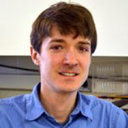 Benjamin Apker合作论文数5
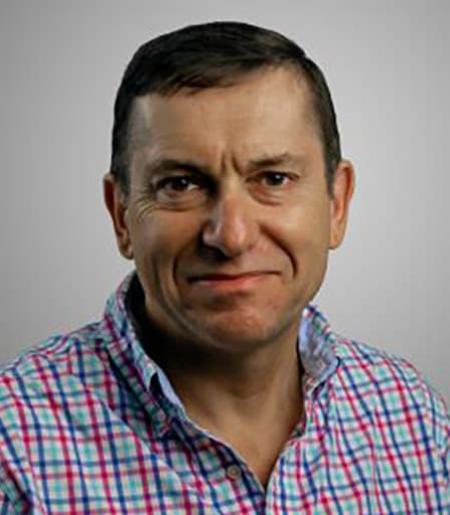 Robert E. Thorne合作论文数Department of Physics, Cornell University5
 Shawn K Milano合作论文数3
 Gabrielle Illava合作论文数3
 Aaron D Finke合作论文数Department of Chemistry, University of Illinois, Urbana-Champaign3I.A. Kriksunov合作论文数3Richard Jayne合作论文数2Q. Huang合作论文数2
 Jonathan A Clinger合作论文数1
 T. A. Engstrom合作论文数MiTeGen LLC1
 Katherine A. Spoth合作论文数Cornell Ctr Mat Res, Cornell Univ1
 Pavel Sidorenko合作论文数1
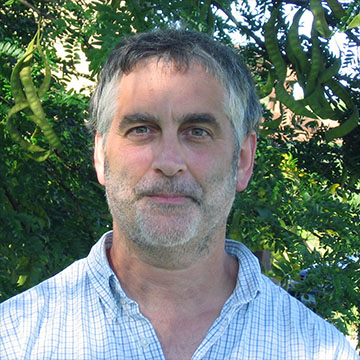 Warren R. Zipfel合作论文数Meinig School of Biomedical Engineering, College of Engineering, Cornell University1
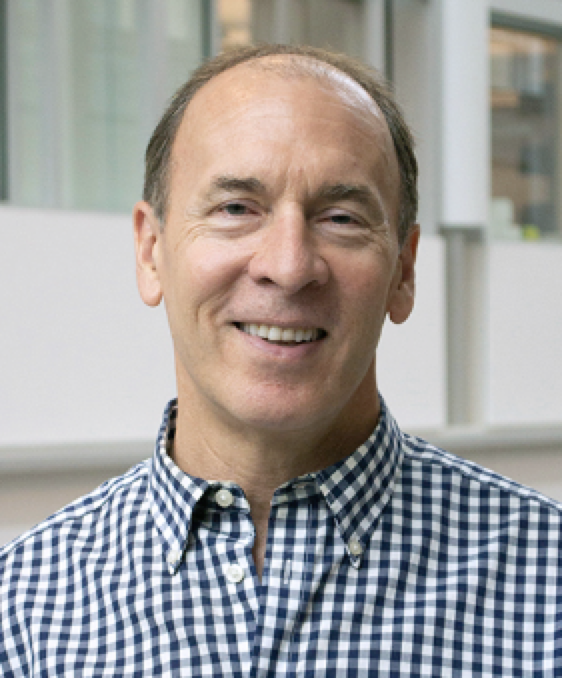 Frank Wise合作论文数School of Applied and Engineering Physics, Cornell University1
 Oliver Biggs Clarke合作论文数Department of Medical Biology, The University of Melbourne1David J. Schuller合作论文数1Qingqiu Huang合作论文数1




