In her research, she aims to understand how students' motivation
The broad deployment of phasor measurement units has enabled effective wide-area damping control for enhancing small-signal stability of large and interconnected power systems. However, this requires networked communication between systems that may be subjected to intermittent, noisy, and delayed feedback measurements. In this paper, we present a distributed wide-area damping controller that applies local power injections via a sample-and-hold mechanism to synchronize the states of the interconnected power systems, thereby damping inter-area oscillations. We model the nominal closed-loop system as a hybrid system. Then, leveraging analytical hybrid systems tools, we apply sufficient conditions that guarantee that the set characterizing synchronization is globally exponentially stable. Moreover, due to the hybrid system construction, we show that this set is robust to certain classes of perturbations, which include both perturbations and delays on the communication between the power systems. We demonstrate the damping controller's performance in a numerical example that considers interconnected heterogeneous nonlinear systems with intermittent communication that is subjected to significant noise and time-delays.
In this work in progress (WIP), we investigated the benefits that faculty members gained from mentoring undergraduate students in a National Science Foundation (NSF) Scholarships in Science, Technology, Engineering and Mathematics (S-STEM) funded program. This particular NSF S-STEM program aims to support low-income, transfer students pursuing their baccalaureate of science degree in engineering fields. One component of the S-STEM program is to mentor these students through their degree completion. To study the mentoring aspect of this program, we performed one-on-one interviews with S-STEM faculty mentors and asked questions that were divided into four subcategories related to: (1) how the mentors' identity and past experiences shaped their mentor-mentee interactions; (2) how diversity and equity factors influenced their mentor-mentee interactions; (3) what strategies they used to become successful mentors; and (4) what personal and professional outcomes the S-STEM mentors obtained from their mentoring interactions. Through qualitative coding and thematic analysis of these interview responses, we identified important characteristics and approaches mentors used to build effective mentor-mentee relationships, and benefits and skills that faculty mentors developed through these interactions. This work in progress will be presented as a lighting talk on the ASEE conference platform.
In this work in progress paper, we present our research on the teaming experiences of undergraduate engineering students in an engineering design projects ecosystem. The ecosystem consists of projects that vary in size, student-level, and goals. We present a literature review on team formation and function and the role of psychological safety on students' experiences. We then present foundational results from our survey data which we will use to inform a subsequent interview study. Our current results illuminate how student roles are assigned on the teams and show that students report strong psychological safety with their fellow team members, with student team leaders, and with project advisors. We perform pairwise statistical tests to determine if significant differences in responses exist between different groups of students and if correlations exists between responses to different questions or the grade students' receive in the course. Finally, we propose an interview study that aims to examine details and descriptions of the teaming experience in the students' voices.
We use statistical methods to evaluate the coincidence, variability, alignment, and predictability of California offshore wind power production with electricity demand and onshore renewable resources in the United States Western Interconnection region. We consider previously reported benefits, and evaluate possible advantages of deploying offshore wind as compared to onshore wind or solar power generation, such as coincidence with peak power demand and complementarity with other renewable power resources. Additionally, we use the Fast Fourier Transform and linear regression to assess the predictability of power with onshore wind and solar. The Pearson correlation reveals that onshore wind and solar are the most complementary renewable power generation resources, while there is no consistent correlation or anti-correlation between the offshore wind sites and the demand, solar, or onshore wind. Using a demand-based value metric, we find that the six potential offshore wind sites are more valuable than all other renewable resources during peak hours in the summer in California. Finally, the Fourier analysis reveals that offshore wind may be a highly variable resource.
Engineering transfer students experience diverse pathways and unique challenges on their way to earning a degree. Some of these challenges include phenomena like transfer shock and fewer opportunities to build community and receive support. In this work in progress, we explore differences in learning strategies between engineering transfer students and non transfer students with particular focus on transfer students who are part of an NSF-funded S-STEM program. The S-STEM program supports low income engineering transfer students from diverse backgrounds through co-curriculum cohort activities and peer and faculty mentoring with the goal of reducing the negative impact of transfer shock and improving their academic success and persistence. We analyze self-reported quantitative survey data from students in three upper division mechanical engineering courses, comparing the learning strategies of transfer students, S-STEM scholars, and non transfer students. Generally, non transfer students report better learning strategies than transfer students, and S-STEM scholars report better strategies in some areas of peer learning and effort regulation than other transfer students.
This package is a companion tool for exploring dynamics, control, and machine learning for the canonical cart-and-pendulum system.It includes a software simulation of the cart-and-pendulum system, a visualizer tool to create animations of the simulated system, and sample implementations for controllers and state estimators.The user can use any platform or the browser to run the pendsim Python package.It gives the user a plug-and-play sandbox to design and analyze controllers for the inverted pendulum, and is compatible with Python's rich landscape of third-party scientific programming and machine learning libraries.The package is useful for a wide range of curricula, from introductory mechanics to graduate-level control theory.The inverted pendulum is a canonical example in control theory (See, e.g.(Aström & Murray, 2008)).A set of example notebooks provide a starting point for introductory and graduate-level topics.
The displacement of rotational generation and the consequent reduction in system inertia is expected to have major stability and reliability impacts on modern power systems.Fast-frequency support strategies using energy storage systems (ESSs) can be deployed to maintain the inertial response of the system, but information regarding the inertial response of the system is critical for the effective implementation of such control strategies.In this paper, a moving horizon estimation (MHE)-based approach for online estimation of inertia constant of low inertia microgrids is presented.Based on the frequency measurements obtained in response to a non-intrusive excitation signal from an ESS, the inertia constant was estimated using local measurements from the ESS's phase-locked loop.The proposed MHE formulation was first tested in a linearized power system model, followed by tests in a modified microgrid benchmark from Cordova, Alaska.Even under moderate measurement noise, the technique was able to estimate the inertia constant of the system well within ±20% of the true value.Estimates provided by the proposed method could be utilized for applications such as fast-frequency support, adaptive protection schemes, and planning and procurement of spinning reserves.
High levels of intermittent renewable sources will lead to large swings in demand for other generation resources, increasing the risk of overgeneration. Rooftop solar installations exacerbate the potential issues as well. Energy storage systems can mitigate these problems but need to be properly sized to reach network wide goals. This paper presents a method to estimate the necessary energy capacity and power for storage systems to align intermittent resources with network ramp-rate limitations. Case studies for the California Independent System Operator in 2017 and projecting to the renewable portfolio standard target of 60% in 2030 are presented. The effect of curtailment on storage requirements is also analyzed. Lastly, the impact of behind-the-meter solar installations in the Los Angeles area is estimated. These analyses show that significant amounts of storage and some curtailment will be necessary to reach the RPS targets given current network ramping limits unless other dispatchable renewable resources are deployed. This is the first step to develop grid-level planning tools by estimating storage needs with consideration of the demand, renewable generation characteristics, and curtailment levels. (C) 2020 Published by Elsevier Ltd.
The lack of inertial response from non-synchronous, inverter-based generation in microgrids makes the power system vulnerable to a large rate of change of frequency (ROCOF) and frequency excursions. Energy storage systems (ESSs) can be utilized to provide fast-frequency support to prevent such large excursions in the system. However, fast-frequency support is a power-intensive application that has a significant impact on the ESS lifetime. In this paper, a framework that allows the ESS operator to provide fast-frequency support as a service is proposed. The framework maintains the desired quality-of-service (limiting the ROCOF and frequency) while taking into account the ESS lifetime and physical limits. The framework utilizes moving horizon estimation (MHE) to estimate the frequency deviation and ROCOF from noisy phase-locked loop (PLL) measurements. These estimates are employed by a model predictive control (MPC) algorithm that computes control actions by solving a finite-horizon, online optimization problem. Additionally, this approach avoids oscillatory behavior induced by delays that are common when using low-pass filters as with traditional derivative-based (virtual inertia) controllers. MATLAB/Simulink simulations on a test system from Cordova, Alaska, show the effectiveness of the MHE-MPC approach to reduce frequency deviations and ROCOF of a low-inertia microgrid.
In isolated power systems with low rotational inertia, fast-frequency control strategies are required to maintain frequency stability. Furthermore, with limited resources in such isolated systems, the deployed control strategies have to provide the flexibility to handle operational constraints so the controller is optimal from a technical as well as an economical point-of-view. In this paper, a model predictive control (MPC) approach is proposed to maintain the frequency stability of these low inertia power systems, such as microgrids. Given a predictive model of the system, MPC computes control actions by recursively solving a finite-horizon, online optimization problem that satisfies peak power output and ramp-rate constraints. MATLAB/Simulink based simulations show the effectiveness of the controller to reduce frequency deviations and the rate-of-change-of-frequency (ROCOF) of the system. By proper selection of controller parameters, desired performance can be achieved while respecting the physical constraints on inverter peak power and/or ramp-rates.
A generic constant-efficiency energy flow model is commonly used in techno-economic analyses of grid energy storage systems. In practice, charge and discharge efficiencies of energy storage systems depend on state of charge, temperature, and charge/discharge powers. Furthermore, the operating characteristics of energy storage devices are technology specific. Therefore, generic constant-efficiency energy flow models do not accurately capture the system performance. In this work, we propose to use technology-specific nonlinear energy flow models based on nonlinear operating characteristics of the storage devices. These models are incorporated into an optimization problem to find the optimal market participation of energy storage systems. We develop a dynamic programming method to solve the optimization problem and perform two case studies formaximizing the revenue of a vanadium redox flow battery (VRFB) and a Li-ion battery system in Pennsylvania New Jersey Maryland (PJM) interconnection's energy and frequency regulation markets.
As batteries become more prevalent in grid energy storage applications, the controllers that decide when to charge and discharge become critical to maximizing their utilization. Controller design for these applications is based on models that mathematically represent the physical dynamics and constraints of batteries. Unrepresented dynamics in these models can lead to suboptimal control. Our goal is to examine the state-of-the-art with respect to the models used in optimal control of battery energy storage systems (BESSs). This review helps engineers navigate the range of available design choices and helps researchers by identifying gaps in the state-of-the-art. BESS models can be classified by physical domain: state-of-charge (SoC), temperature, and degradation. SoC models can be further classified by the units they use to define capacity: electrical energy, electrical charge, and chemical concentration. Most energy based SoC models are linear, with variations in ways of representing efficiency and the limits on power. The charge based SoC models include many variations of equivalent circuits for predicting battery string voltage. SoC models based on chemical concentrations use material properties and physical parameters in the cell design to predict battery voltage and charge capacity. Temperature is modeled through a combination of heat generation and heat transfer. Heat is generated through changes in entropy, overpotential losses, and resistive heating. Heat is transferred through conduction, radiation, and convection. Variations in thermal models are based on which generation and transfer mechanisms are represented and the number and physical significance of finite elements in the model. Modeling battery degradation can be done empirically or based on underlying physical mechanisms. Empirical stress factor models isolate the impacts of time, current, SoC, temperature, and depth-of-discharge (DoD) on battery state-of-health (SoH). Through a few simplifying assumptions, these stress factors can be represented using regularization norms. Physical degradation models can further be classified into models of side-reactions and those of material fatigue. This article demonstrates the importance of model selection to optimal control by providing several example controller designs. Simpler models may overestimate or underestimate the capabilities of the battery system. Adding details can improve accuracy at the expense of model complexity, and computation time. Our analysis identifies six gaps: deficiency of real-world data in control literature, lack of understanding in how to balance modeling detail with the number of representative cells, underdeveloped model uncertainty based risk-averse and robust control of BESS, underdevelopment of nonlinear energy based SoC models, lack of hysteresis in voltage models used for control, lack of entropy heating and cooling in thermal modeling, and deficiency of knowledge in what combination of empirical degradation stress factors is most accurate. These gaps are opportunities for future research.
Different Federal Energy Regulator Commission (FERC) orders have provided the opportunity for battery energy storage systems (ESSs) to participate in markets. The ability to be a fast-ramping generator or load allows ESSs to provide different grid services. This paper discusses opportunities for ESSs to participate in multiple existing and future electricity markets. The economic value of ESSs can be further increased by pragmatically participating in markets and services considering operational and degradation aspects. The impact of ESS on grid resilience is discussed, including resilience-as-a -service. ESSs can restore the grid to its 100% resilient state during system events, and may also reduce the resilience degradation time during extreme events.
Energy storage systems are flexible and controllable resources that can provide a number of services for the electric power grid. Many technologies are available, and corresponding models vary greatly in level of detail and tractability. In this work, we propose an adaptive optimal control and estimation approach for real-time dispatch of energy storage systems that neither requires accurate state-of-energy measurements nor knowledge of an accurate state-of-energy model. Specifically, we formulate an online optimization problem that simultaneously solves moving horizon estimation and model predictive control problems, which results in estimates of the state-of-energy, estimates of the charging and discharging efficiencies, and future dispatch signals. We present a numerical example in which the plant is a nonlinear, time-varying Lithium-ion battery model and show that our approach effectively estimates the state-of-energy and dispatches the system without accurate knowledge of the dynamics and in the presence of significant measurement noise.
We propose a distributed output-feedback model predictive control approach for achieving consensus among multiple agents. Each agent computes a distributed control action based on an output-feedback measurement of a local neighborhood tracking error and communicates information only to its neighbors, according to a communication network modeled as a directed graph. Each agent computes its distributed control action by solving a local min–max optimization problem that simultaneously computes a local state estimate and control input under worst-case assumptions on unmeasured input disturbances and measurement noise. Under easily verified controllability and observability assumptions, this distributed output-feedback model predictive control approach provides an upper bound on the group consensus error, thereby ensuring practical consensus in the presence of unmeasured disturbances and noise. A numerical example with four agents connected in a directed graph is given to illustrate the results.
In this work, we maximize the revenue of utility's energy storage system (ESS) providing resilience improvement, Transmission and Distribution (T&D) upgrade deferral and energy arbitrage. A Mixed Integer Linear Programming (MILP) problem is formulated to find the ESS charging/discharging schedule that minimizes the utility's peak load with least energy cost during normal operation and minimize the utility's load curtailment during outages. The linear constraints of this problem are based on an ESS linear energy-flow model and an investment tax credit requirement. Case studies are conducted for an electric cooperative in California. Based on the analysis results, we propose general recommendations for the utility to size the ESS for these applications.
 Joao Pedro Hespanha合作论文数Department of Electrical and Computer Engineering, College of Engineering, University of California, Santa Barbara;Department of Mechanical Engineering, University of California, Santa Barbara;Center for Control, Dynamical Systems and Computation, University of California, Santa Barbara12
 Tu Nguyen合作论文数10
 Raymond H. Byrne合作论文数Electric Power Systems Research Department, Sandia National Laboratories8
 Anna-Lena Dicke合作论文数University of California6
 Felipe Wilches Bernal合作论文数5Lorenzo Valdevit合作论文数5
 Kameryn Denaro合作论文数Div Teaching Excellence & Innovat, Univ Calif Irvine5
 Reinaldo Tonkoski合作论文数5
 Hye Rin Lee合作论文数Sch Educ, Univ Calif Irvine4
 Ujjwol Tamrakar合作论文数Sandia National Laboratories,Albuquerque,NM,USA4
 David A. Schoenwald合作论文数4
 Timothy M. Hansen合作论文数Colorado State University;c;Colorado State University4Imre Gyuk合作论文数3Alejandra Hormaza Mejia合作论文数3Mark Walter合作论文数3
 Natascha Buswell合作论文数Univ Calif Irvine, Irvine, CA 92717 USA3
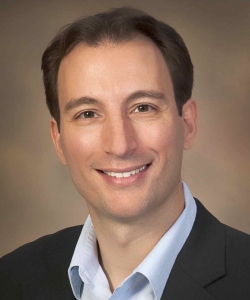 Ricardo G. Sanfelice合作论文数Department of Electrical and Computer Engineering, University of California Santa Cruz3
 Babu Chalamala合作论文数Sandia National Laboratories, National Technology and Engineering Solutions of Sandia, LLC.3Deniz Nikkhah合作论文数2Pablo Nanez合作论文数2
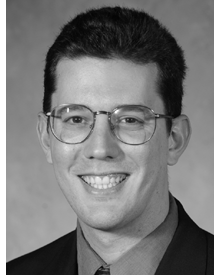 Ian A. Gravagne合作论文数Baylor University2
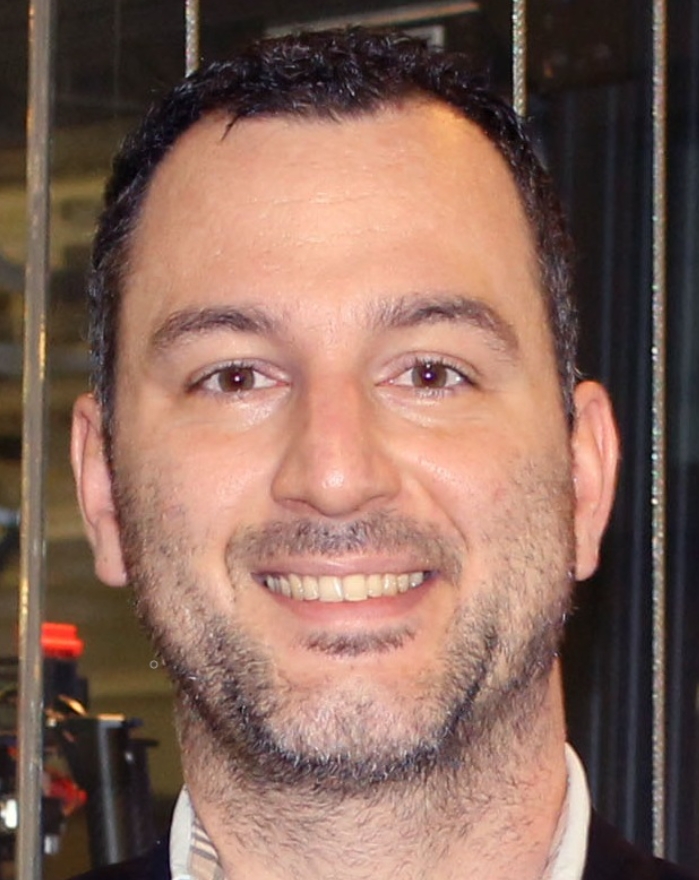 Kyriakos G. Vamvoudakis合作论文数The Daniel Guggenheim School of Aerospace Engineering, College of Engineering, Georgia Institute of Technology;School of Electrical and Computer Engineering, Georgia Institute of Technology2
 Andre Luna合作论文数1
 Ricky Concepcion合作论文数Sandia National Laboratories1
 Niranjan Bhujel合作论文数Department of Electrical Engineering and Computer Science, South Dakota State University1
 Brian J. Pierre合作论文数Sandia National Laboratories, Albuquerque, NM, USA1
 Aravind Ingalalli合作论文数ABB GISPL, Bangalore, India1
 David Rosewater合作论文数Energy Storage Technologies and Systems Department, Sandia National Laboratories1
 Venkat Durvasulu合作论文数South Dakota State Univ, Dept Elect Engn & Comp Sci, Brookings, SD 57007 USA1Alexander Headley合作论文数University of Memphis1
 Netzahualcoyotl Arroyo-Curras合作论文数Department of Otolaryngology-Head and Neck Surgery, School of Medicine, Johns Hopkins University1
 Ortega Gabriel合作论文数Dept Chem & Biochem, Univ Calif Santa Barbara1
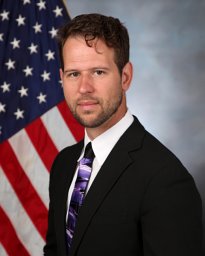 Sean Phillips合作论文数1
 Steven A. P. Quintero合作论文数1Ploense Kyle L合作论文数Neuroscience Research Institute, University of California1
 Giorgio Bacelli合作论文数National University of Ireland Maynooth;Department of Electronic Engineering;Department of Electronic Engineering, University of Ireland Maynooth1Tod E. Kippin合作论文数Department of Psychology, University of California (Santa Barbara),1
 Jacob Brouwer (Jack)合作论文数Department of Mechanical and Aerospace Engineering, School of Engineering, University of California, Irvine1
 Kevin W. Plaxco合作论文数Department of Chemistry & Biochemistry, University of California, Santa Barbara1
 Ravi Gondhalekar合作论文数Osaka University1
 Surya Santoso合作论文数Laboratory for Advanced Studies in Electric Power and Integration of Renewable Energy Systems, Department of Electrical and Computer Engineering, Cockrell School of Engineering, The University of Texas at Austin1
 Jason T. Isaacs合作论文数1
 Frank Doyle合作论文数Harvard John A. Paulson School of Engineering and Applied Sciences, Harvard University1




