In this work in progress paper, we present our research on the teaming experiences of undergraduate engineering students in an engineering design projects ecosystem. The ecosystem consists of projects that vary in size, student-level, and goals. We present a literature review on team formation and function and the role of psychological safety on students' experiences. We then present foundational results from our survey data which we will use to inform a subsequent interview study. Our current results illuminate how student roles are assigned on the teams and show that students report strong psychological safety with their fellow team members, with student team leaders, and with project advisors. We perform pairwise statistical tests to determine if significant differences in responses exist between different groups of students and if correlations exists between responses to different questions or the grade students' receive in the course. Finally, we propose an interview study that aims to examine details and descriptions of the teaming experience in the students' voices.
Studies have demonstrated students' resistance to active learning, despite evidence illustrating that their learning is improved relative to students in lectures. Specifically, while active learning and group work are effective at engaging students in their learning process, studies report that students' perceptions of active learning approaches are not always positive. What remains underexplored is whether students' perceptions of active learning improve with effective instructor facilitation and whether there exists differential perceptions between racially minoritized students and represented students. Here, we estimate students' perceptions of effective instructor facilitation as the mediator in the relationship between active learning and perceptions of learning and perceived utility for class activities (task value). Then, we examine differences by racial identification. We collected classroom observation data to empirically categorize courses as active learning or lecture-based and surveyed 4,257 college students across 25 STEM classrooms at a research-intensive university. We first examined the relationship between active learning on student perceptions and found a negative relationship between active learning and perceptions of learning and task value for both racially minoritized students and represented students. Next, we assessed whether students' perceptions of instructor effectiveness in facilitating group activities mediate these negative relationships. We found that, on average, students of all races were more likely to positively perceive instructor facilitation in active learning classes relative to lectures. In turn, the positive perceptions of instructor facilitation partially suppressed the negative relationship between active learning and perceptions of learning and task value. These results demonstrate that effective instructor facilitation can influence both students' self-assessment of learning and perceived utility of the learning activities, and underscores the importance of developing pedagogical competence among college instructors.
To supplement classroom learning and prepare students to transition from school to industry, many undergraduate engineering students participate in team-based design projects, both in design-focused courses and as extracurricular activities. These projects can be largely organized and run by students, and there is a wide range of projects with different team sizes, objectives, and organization. Then, it is not surprising that student expectations and experiences vary significantly across the different projects. In this work, to inform best practices for student-organized design project teams, we investigate students' perspectives on how their team is organized, the relationships among team members, conflict resolution methods, and psychological safety. We interviewed five students at a four-year, research-intensive, public university about their involvement in undergraduate engineering team projects that are student-organized outside of their regular coursework. We asked each student four background questions regarding their major, years involved in projects, and how their role on the team was chosen or assigned. We asked another fifteen questions related to their team's organization, relationship with other students, conflicts and resolutions, and psychological safety within the team. The students interviewed played different roles within their projects (e.g., project manager, technical lead, general team member, etc.) and participated on teams with different goals; some aimed to participate in international design competitions while others set internal goals, perhaps with a faculty advisor. From thematic analysis of interview responses, despite no two projects being organized the same way, some patterns surfaced. Students tended to enjoy working in smaller groups compared to bigger ones because they were more efficient at problem-solving. Additionally, to address both technical and personal disagreements, interviewees said they were comfortable speaking openly in meetings and after incidents occurred, indicating good psychological safety with teammates. We hope to use the results of this work to develop recommendations and best practices for student-organized engineering design project teams to provide a welcoming and effective learning environment for all students involved.
Project-based learning is a popular way for students to gain hands-on experience in engineering curriculums. Curriculum in the Department of Mechanical and Aerospace Engineering at the University of California, Irvine, allows students to participate in a variety of engineering design projects as early as the second quarter of their freshman year through their senior year. The projects ecosystem typically serves around 400 students, with the majority in mechanical engineering. These projects are largely student organized and run with the support of faculty advisors, and the number of students on each project varies from three students to over 100. With so much variability in the projects, we aim to better understand the differences in student experiences in our projects ecosystem. In particular, we comparatively study the experiences of low income, first generation, transfer, female, and underrepresented minority students. We similarly study the experiences of students on teams that have the goal of participating in a national or international competition versus those of students on non-competition teams. Using survey data from students in the project ecosystem, paired with institutional data on student demographics, we conduct an exploratory analysis to understand whom our projects ecosystem is serving.
This paper examines the mechanical engineering senior projects ecosystem at the University of California, Irvine, which has one of the top-20 largest mechanical engineering undergraduate programs in the US. We report on the evolution, changes, and future plans of our senior projects experience. In particular, we describe the historical viewpoint of our design ecosystem and why we believe changes were and still are necessary. Next, we present a literature review that provides an overview of best practices in engineering design education. We then describe the changes that we made which are based in part on the literature and our program’s needs and limitations, and we present the results of two anonymous surveys of our students. After outlining the specific challenges and opportunities in our program, we describe our plans for future data collection and evaluation of our students. This paper would likely interest colleagues at institutions with large numbers of mechanical engineering students, as well as programs that have various student-initiated projects, team-sizes, and faculty involvement in their project ecosystems.
 Natascha Buswell合作论文数Univ Calif Irvine, Irvine, CA 92717 USA4
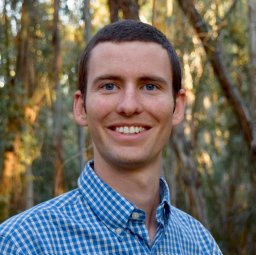 David A. Copp合作论文数3
 Alejandra Hormaza Mejia合作论文数2Jennifer Wong-Ma合作论文数1
 Audrey Chen合作论文数1Ashley Harlow合作论文数1Alessandra Pantano合作论文数1Rachel Lehman合作论文数1Darren Denenberg合作论文数1Brigette Baldi合作论文数1
 Joel Lanning合作论文数Civil and Environmental Engineering, University of California1Andrew D Geragotelis合作论文数Department of Chemistry, University of California Irvine, Irvine, California1Amanda J. Holton合作论文数Univ Calif Irvine, Dept Chem, Irvine, CA 92697 USA1
 Roderic Crooks合作论文数Department of Informatics, Donald Bren School of Information & Computer Sciences, University of California Irvine1Rinehart Jenny K合作论文数1
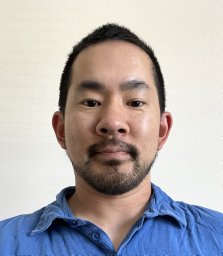 Sato Brian K合作论文数*Department of Molecular Biology and Biochemistry, University of California1
 Park Elizabeth合作论文数University of Pennsylvania School of Nursing1Burley Nancy Tyler合作论文数1
 Michael Yassa合作论文数School of Biological Sciences, Charlie Dunlop School of Biological Sciences, University of California, Irvine;Center for the Neurobiology of Learning and Memory, University of California, Irvine1
 Adrienne Williams合作论文数Developmental and Cell Biology, University of California1
 Peter H Ditto合作论文数Department of Psychology and Social Behavior, University of California, Irvine1
 Amir Aghakouchak合作论文数Department of Civil and Environmental Engineering, Samueli School of Engineering, University of California, Irvine;Center for Hydrometeorology and Remote Sensing, University of California, Irvine1




