This study investigates the effect of the glycoprotein IIb/IIIa receptor antagonist CRL42796 in a canine model of carotid artery thrombosis. Both carotid arteries developed occlusive thrombosis in each of the five control animals (time to occlusion: right carotid artery, 92.6 minutes; left carotid artery, 89.0 minutes). A single oral dose of CRL42796 (3 mg/kg) prevented occlusive thrombosis in 4 of 6 vessels and increased time to thrombosis, albeit not significantly (right carotid artery, 134.1 minutes; left carotid artery, 145.0 minutes). When the initial dose of CRL42796 was followed by a second oral dose (3 mg/kg) 2 hours later, 10 of 10 carotid arteries remained patent throughout the period of electrolytic injury. CRL42796 reduced thrombus weight in both treatment protocols. Ex vivo platelet aggregation with arachidonic acid (AA) or adenosine diphosphate (ADP) was reduced at 120, 240, and 360 minutes after two doses of CRL42796. A single oral dose reduced ADP-induced responses at 240 and 360 minutes, but significant effects were not observed with AA. Bleeding time increased 360 minutes after two oral doses of CRL42796, but not at 120 minutes. Bleeding time was unchanged with the single dose of CRL42796. The results demonstrate that oral administration of CRL42796 prevents carotid artery thrombosis in response to deep vessel wall injury and may have potential value to be characterized in extended preclinical and clinical study.
The antithrombotic effect of the glycoprotein IIb/IIIa receptor antagonist, CRL42796, was examined in canine models of carotid and coronary artery thrombosis. In the carotid artery thrombosis model, occlusion occurred in all control vessels (time to thrombosis 47.6±8.9 min). After treatment with low dose CRL42796 (15 μg kg−1 loading dose +0.31 μg kg−1 min−1 i.v.), two of five vessels occluded. Time to thrombosis increased significantly to 155.2±23.1 min. When the drug infusion was increased (0.69 μg kg−1 min−1), each of five vessels remained patent. Ex vivo platelet aggregation in response to arachidonic acid (AA) and ADP was examined in platelet rich plasma (PRP) prepared from citrate or heparin anticoagulated blood. CRL42796 reduced platelet reactivity at low and high doses in PRP from citrate anticoagulated blood. However, in PRP from heparin anticoagulated blood, only the higher infusion dose produced a significant reduction in ex vivo platelet responses. A combination of oral aspirin (4.6 mg kg−1 −41, −17 h) and the low infusion dose of CRL42796 did not produce an additional benefit beyond that provided by CRL42796 alone. Coronary artery thrombosis was inhibited in four of five vessels treated with the lower infusion dose of CRL42796 and in five of five vessels treated with the higher infusion. Time to thrombosis increased with both doses (Control, 90.8±10.4 min; low dose, 165.8±14.2 min; high dose, >180.0±0 min). The results indicate that CRL42796 is an effective in vivo antithrombotic agent against experimentally‐induced carotid and coronary artery thrombosis. British Journal of Pharmacology (2002) 136, 927–937. doi:10.1038/sj.bjp.0704744
Background-Prostanoid synthesis via the action of cyclooxygenase-2 (COX-2) is a component of the inflammatory response. Prostacyclin, a product of COX-2 in vascular endothelium, has important physiological roles, such as increasing blood flow to injured tissues, reducing leukocyte adherence, and inhibiting platelet aggregation. We examined the possibility that selective COX-2 inhibition could suppress the protective effects of prostacyclin, resulting in an alteration of the hemostatic balance and vascular tone.Methods and Results-Circumflex coronary artery thrombosis was induced in dogs by vascular electrolytic injury. Orally administered celecoxib (COX-2 inhibition) or high-dose aspirin (HDA) (COX-1 and COX-2 inhibition) did not alter time to occlusive thrombus formation compared with controls (celecoxib 77.7 +/-7.2 minutes, HDA 72.0 +/- 18.5 minutes, control 93.0 +/- 21.8 minutes). Oral HDA with an endothelial recovery period (HDA-ER) (COX-1 inhibition) produced a significant increase in time to vessel occlusion (257.0 +/- 41.6 minutes). The observed increase in time to occlusion was abolished when celecoxib was administered to animals dosed with HDA-ER (80.7 +/- 20.6 minutes). The vasomotor effect of endothelium-derived prostacyclin was examined by monitoring coronary flow during intracoronary administration of arachidonic acid or acetylcholine. In celecoxib -treated animals, vasodilation in response to arachidonic acid was reduced significantly compared with controls.Conclusions-The results indicate important physiological roles for COX-2-derived prostacyclin and raise concerns regarding an increased risk of acute vascular events in patients receiving COX-2 inhibitors. The risk may be increased in individuals with underlying inflammatory disorders, including coronary artery disease.
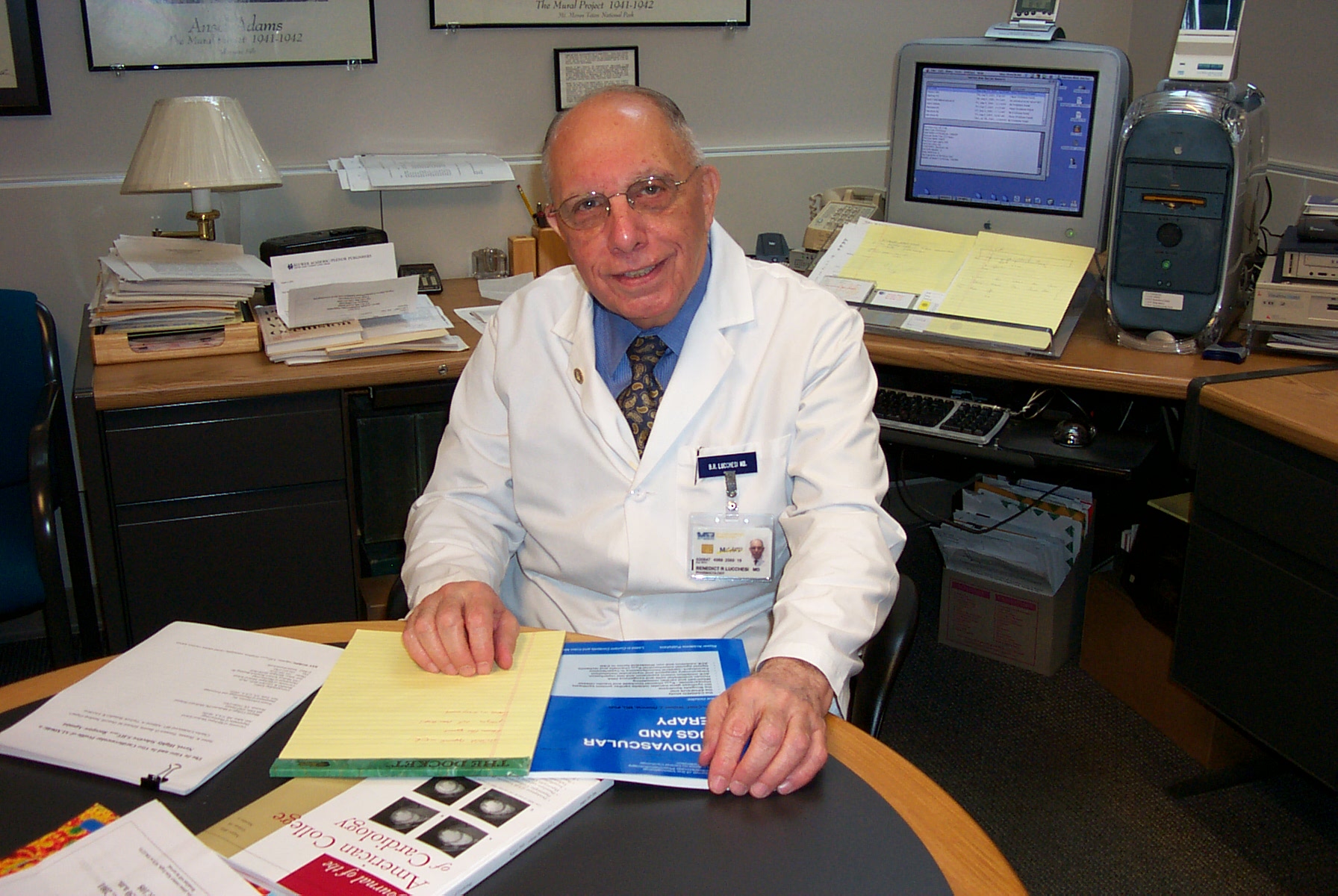 Benedict R. Lucchesi合作论文数The University of Michigan Medical School, Department of Pharmacology5
 Jk Hennan合作论文数4E.M. Driscoll合作论文数4Tt Hong合作论文数3Ta Giboulot合作论文数2Leslie J. Crofford合作论文数2Terrance D. Barrett合作论文数2Jb Huang合作论文数1Jinbao Huang合作论文数1Giboulot Thierry合作论文数1Park A M合作论文数1Edward M. Driscoll合作论文数1James K. Hennan合作论文数1




