Describing a scene in terms of primitives - geometrically simple shapes that offer a parsimonious but accurate abstraction of structure - is an established and difficult fitting problem. Different scenes require different numbers of primitives, and these primitives interact strongly. Existing methods are evaluated by comparing predicted depth, normals, and segmentation against ground truth. The state of the art method involves a learned regression procedure to predict a start point consisting of a fixed number of primitives, followed by a descent method to refine the geometry and remove redundant primitives. CSG (Constructive Solid Geometry) representations are significantly enhanced by a set-differencing operation. Our representation incorporates negative primitives, which are differenced from the positive primitives. These notably enrich the geometry that the model can encode, while complicating the fitting problem. This paper presents a method that can (a) incorporate these negative primitives and (b) choose the overall number of positive and negative primitives by ensembling. Extensive experiments on the standard NYUv2 dataset confirm that (a) this approach results in substantial improvements in depth representation and segmentation over SOTA and (b) negative primitives improve fitting accuracy. Our method is robustly applicable across datasets: in a first, we evaluate primitive prediction for LAION images.
The primary axes of interest in low-light image enhancement (LLIE) are color constancy—ensuring consistent outputs across inputs of the same scene under varying illumination and noise—and generalization across diverse datasets. Existing methods, whether supervised, unsupervised, or zero-shot, rely on auxiliary loss functions and empirically selected hyperparameters, which yield strong results on the datasets used for evaluation but often exhibit limited generalization. To overcome these constraints, we propose MR. Illuminate (pronounced "Mister Illuminate"), the first deep learning-based solution for LLIE that requires no optimization and no degradation assumption. "MR." emphasizes our Modulate–Refine design: global illuminance and color are modulated via Adaptive Instance Normalization (AdaIN), while local structure and color are refined through self-attention features within a pre-trained diffusion model, taking a unique approach from prior methods. Extensive quantitative evaluations show that our approach surpasses SOTA methods on standard LLIE benchmarks, while qualitative results demonstrate improved color fidelity. Moreover, without any modification to our framework, our method achieves competitive results on the auto white balance (AWB) task, underscoring its strong generalization capability.
We describe Generative Blocks World to interact with the scene of a generated image by manipulating simple geometric abstractions. Our method represents scenes as assemblies of convex 3D primitives, and the same scene can be represented by different numbers of primitives, allowing an editor to move either whole structures or small details. Once the scene geometry has been edited, the image is generated by a flow-based method which is conditioned on depth and a texture hint. Our texture hint takes into account the modified 3D primitives, exceeding texture-consistency provided by existing key-value caching techniques. These texture hints (a) allow accurate object and camera moves and (b) largely preserve the identity of objects depicted. Quantitative and qualitative experiments demonstrate that our approach outperforms prior works in visual fidelity, editability, and compositional generalization.
Underwater image restoration consists of recovering an image which looks like there is no water present. To date, evaluation has not been systematic. This paper describes a systematic evaluation pipeline for underwater reconstruction, which can be used to assess a method for accuracy; consistency of reconstruction over camera moves; and the effect of water parameters. We use this pipeline to evaluate a range of current procedures, from models constructed using explicit but approximate physical models of scattering to Vision-Language Models (VLMs which are not currently trained with explicit physical models). Overall, VLMs wholly and significantly outperform physically based models in our evaluation, likely because of the importance of a strong image prior. Results on images of real underwater scenes strongly confirm the evaluation.
It is extremely hard for an underwater agent to know where it is. Satellite signals disappear within centimeters of the surface; acoustic baselines require heavy infrastructure to instrument small regions. The polarization of the sky, visible underwater, reveals the elevation of the sun. The pattern of elevation over the day reveals location to an agent with a clock. However, recovering elevation from polarization images is very difficult. SOTA geolocalization methods can localize well for locations where they have seen data, but accuracy collapses when the data comes from a new location. Our physics-guided synthesis pipeline expands a huge library of polarization images from a small set of sites to 2.8~million solar-elevation–matched training sequences spanning latitudes, seasons, and water types. A compact two-stage transformer reconstructs the solar-elevation curve and predicts geolocation. Under leave-one-site-out tests, the site averaged median geodesic error is ~500km—about an eightfold improvement over previous deep-learning baselines; with limited target-site data, the median error contracts to single-digit kilometers.
We tackle the problem of forecasting bimanual 3D hand motion & articulation from a single image in everyday settings. To address the lack of 3D hand annotations in diverse settings, we design an annotation pipeline consisting of a diffusion model to lift 2D hand keypoint sequences to 4D hand motion. For the forecasting model, we adopt a diffusion loss to account for the multimodality in hand motion distribution. Extensive experiments across 6 datasets show the benefits of training on diverse data with imputed labels (14% improvement) and effectiveness of our lifting (42% better) & forecasting (16.4% gain) models, over the best baselines, especially in zero-shot generalization to everyday images.
We present InvRGB+L, a novel inverse rendering model that reconstructs large, relightable, and dynamic scenes from a single RGB+LiDAR sequence. Conventional inverse graphics methods rely primarily on RGB observations and use LiDAR mainly for geometric information, often resulting in suboptimal material estimates due to visible light interference. We find that LiDAR's intensity values-captured with active illumination in a different spectral range-offer complementary cues for robust material estimation under variable lighting. Inspired by this, InvRGB+L leverages LiDAR intensity cues to overcome challenges inherent in RGB-centric inverse graphics through two key innovations: (1) a novel physics-based LiDAR shading model and (2) RGB-LiDAR material consistency losses. The model produces novel-view RGB and LiDAR renderings of urban and indoor scenes and supports relighting, night simulations, and dynamic object insertions, achieving results that surpass current state-of-the-art methods in both scene-level urban inverse rendering and LiDAR simulation.
Physically-based renderings contain Monte Carlo noise, with variance that increases as the number of rays per pixel decreases. This noise, while zero-mean for good modern renderers, can have heavy tails (most notably, for scenes containing specular or refractive objects). Learned methods for restoring low fidelity renders are highly developed, because suppressing render noise means one can save compute and use fast renders with few rays per pixel. We demonstrate that a diffusion model can denoise low fidelity renders successfully. Furthermore, our method can be conditioned on a variety of natural render information, and this conditioning helps performance. Quantitative experiments show that our method is competitive with SOTA across a range of sampling rates. Qualitative examination of the reconstructions suggests that the image prior applied by a diffusion method strongly favors reconstructions that are "like" real images - so have straight shadow boundaries, curved specularities and no "fireflies."
We demonstrate an image dequantizing diffusion model that enables novel edits on natural images. We propose operating on quantized images because they offer easy abstraction for patch-based edits and palette transfer. In particular, we show that color palettes can make the output of the diffusion model easier to control and interpret. We first establish that existing image restoration methods are not sufficient, such as JPEG noise reduction models. We then demonstrate that our model can generate natural images that respect the color palette the user asked for. For palette transfer, we propose a method based on weighted bipartite matching. We then show that our model generates plausible images even after extreme palette transfers, respecting user query. Our method can optionally condition on the source texture in part or all of the image. In doing so, we overcome a common problem in existing image colorization methods that are unable to produce colors with a different luminance than the input. We evaluate several possibilities for texture conditioning and their tradeoffs, including luminance, image gradients, and thresholded gradients, the latter of which performed best in maintaining texture and color control simultaneously. Our method can be usefully extended to another practical edit: recoloring patches of an image while respecting the source texture. Our procedure is supported by several qualitative and quantitative evaluations.
Reference-guided face restoration can have better identity preservation than non-reference-based methods. However, existing methods can (a) easily produce artifacts, possibly attributable to inefficient facial priors and (b) do not well preserve finegrained facial details crucial for identity, such as freckles, tattoos, and scars. In this work, we propose solutions for these problems. (1) We incorporate a stronger facial prior, generative facial prior (GFP), for reference-based face image restoration. (2) We identify an ambiguity and point out that traditional loss prevents the network from heavily copying facial features from the reference. To address this, we set a new goal and come up with a new loss to realize the new goal. More specifically, when the ground truth and reference are different (e.g., differences in wrinkles, makeup, facial hair, etc.), which one should the output look like? As a simple example, ground truth does not have a mole while reference has one. Traditional loss chose the ground truth, which seems natural, but then the network also learns to ignore reference's facial features; during testing, the network often hesitates. Our new goal is to copy features from the reference as much as possible while maintaining semantic consistency with the degraded input. We propose to use spatial minimum loss and cycle consistency loss to realize the new goal and make the network copy features without hesitation. Using only a single reference image, our proposed method is able to restore highly degraded images while accurately capturing finegrained facial details. To our knowledge, we are the first face restoration framework that is able to restore faces at this granularity. Code and data are available at https://github.com/RefineFIR/RefineFIR.
We propose the notion of empirical privacy variance and study it in the context of differentially private fine-tuning of language models. Specifically, we show that models calibrated to the same (epsilon, delta)-DP guarantee using DP-SGD with different hyperparameter configurations can exhibit significant variations in empirical privacy, which we quantify through the lens of memorization. We investigate the generality of this phenomenon across multiple dimensions and discuss why it is surprising and relevant. Through regression analysis, we examine how individual and composite hyperparameters influence empirical privacy. The results reveal a no-free-lunch trade-off: existing practices of hyperparameter tuning in DP-SGD, which focus on optimizing utility under a fixed privacy budget, often come at the expense of empirical privacy. To address this, we propose refined heuristics for hyperparameter selection that explicitly account for empirical privacy, showing that they are both precise and practically useful. Finally, we take preliminary steps to understand empirical privacy variance. We propose two hypotheses, identify limitations in existing techniques like privacy auditing, and outline open questions for future research.
We present UrbanIR (Urban Scene Inverse Rendering), a new inverse graphics model that enables realistic, free-viewpoint renderings of scenes under various lighting conditions with a single video. It accurately infers shape, albedo, visibility, and sun and sky illumination from wide-baseline videos, such as those from car-mounted cameras, differing from NeRF's dense view settings. In this context, standard methods often yield subpar geometry and material estimates, such as inaccurate roof representations and numerous 'floaters'. UrbanIR addresses these issues with novel losses that reduce errors in inverse graphics inference and rendering artifacts. Its techniques allow for precise shadow volume estimation in the original scene. The model's outputs support controllable editing, enabling photorealistic free-viewpoint renderings of night simulations, relit scenes, and inserted objects, marking a significant improvement over existing state-of-the-art methods.
This paper shows how to impose rendering policies on a virtual try-on (VTON) pipeline. Our rendering policies are lightweight procedural descriptions of how the pipeline should render outfits or render particular types of garments. Our policies are procedural expressions describing offsets to the control points for each set of garment types. The policies are easily authored and are generalizable to any outfit composed of garments of similar types. We describe a VTON pipeline that accepts our policies to modify garment drapes and produce high-quality try-on images with garment attributes preserved.Layered outfits are a particular challenge to VTON systems because learning to coordinate warps between multiple garments so that nothing sticks out is difficult. Our rendering policies offer a lightweight and effective procedure to achieve this coordination, while also allowing precise manipulation of drape. Drape describes the way in which a garment is worn (for example, a shirt could be tucked or untucked).Quantitative and qualitative evaluations demonstrate that our method allows effective manipulation of drape and produces significant measurable improvements in rendering quality for complicated layering interactions.
Virtual Try-on (VTON) involves generating images of a person wearing selected garments. Diffusion-based methods, in particular, can create high-quality images, but they struggle to maintain the identities of the input garments. We identified this problem stems from the specifics in the training formulation for diffusion. To address this, we propose a unique training scheme that limits the scope in which diffusion is trained. We use a control image that perfectly aligns with the target image during training. In turn, this accurately preserves garment details during inference. We demonstrate our method not only effectively conserves garment details but also allows for layering, styling, and shoe try-on. Our method runs multi-garment try-on in a single inference cycle and can support high-quality zoomed-in generations without training in higher resolutions. Finally, we show our method surpasses prior methods in accuracy and quality.
Polarization-based underwater geolocalization presents an innovative method for positioning unmanned autonomous devices beneath the water surface, in environments where GPS signals are ineffective. While the state-of-the-art deep neural network (DNN) method achieves high-precision geolocalization based on sun polarization patterns in same-site tasks, its learning-based nature limits its generalizability to unseen sites and subsequently impairs its performance on cross-site tasks, where an unavoidable domain gap between training and test data exists. In this paper, we present an advanced Deep Neural Network (DNN) methodology, which includes a neural network built on a Transformer architecture, similar to the core of large language models such as ChatGPT, and integrates an unscented Kalman filter (UKF) for estimating underwater geolocation using polarization-based images. This combination effectively simulates the sun’s daily trajectory, yielding enhanced performance across different locations and quicker inference speeds compared to current benchmarks. Following thorough analysis of over 10 million polarization images from four global locations, we conclude that our proposed technique significantly boosts cross-site geolocalization accuracy by around 28% when contrasted with traditional DNN methods.
Retail photography imposes specific requirements on images. For instance, images may need uniform background colors, consistent model poses, centered products, and consistent lighting. Minor deviations from these standards impact a site's aesthetic appeal, making the images unsuitable for use. We show that Stable Diffusion methods, as currently applied, do not respect these requirements. The usual practice of training the denoiser with a very noisy image and starting inference with a sample of pure noise leads to inconsistent generated images during inference. This inconsistency occurs because it is easy to tell the difference between samples of the training and inference distributions. As a result, a network trained with centered retail product images with uniform backgrounds generates images with erratic backgrounds. The problem is easily fixed by initializing inference with samples from an approximation of noisy images. However, in using such an approximation, the joint distribution of text and noisy image at inference time still slightly differs from that at training time. This discrepancy is corrected by training the network with samples from the approximate noisy image distribution. Extensive experiments on real application data show significant qualitative and quantitative improvements in performance from adopting these procedures. Finally, our procedure can interact well with other control-based methods to further enhance the controllability of diffusion-based methods.
Trojan attacks can pose serious risks by injecting deep neural networks with hidden, adversarial functionality. Recent methods for detecting whether a model is trojaned appear highly successful. However, a concerning and relatively unexplored possibility is that trojaned networks could be made harder to detect. To better understand the scope of this risk, we develop a general method for making trojans more evasive based on several novel techniques and observations. In experiments, we find that our evasive trojans reduce the efficacy of a wide range of detectors across numerous evaluation settings while maintaining high attack success rates. Surprisingly, we also find that our evasive trojans are substantially harder to reverse-engineer despite not being explicitly designed with this attribute in mind. These findings underscore the importance of developing more robust monitoring mechanisms for hidden functionality and clarifying the offense-defense balance of trojan detection.
Generative models can produce impressively realistic images. This paper demonstrates that generated images have geometric features different from those of real images. We build a set of collections of generated images, prequalified to fool simple, signal-based classifiers into believing they are real. We then show that prequalified generated images can be identified reliably by classifiers that only look at geometric properties. We use three such classifiers. All three classifiers are denied access to image pixels, and look only at derived geometric features. The first classifier looks at the perspective field of the image, the second looks at lines detected in the image, and the third looks at relations between detected objects and shadows. Our procedure detects generated images more reliably than SOTA local signal based detectors, for images from a number of distinct generators. Saliency maps suggest that the classifiers can identify geometric problems reliably. We conclude that current generators cannot reliably reproduce geometric properties of real images.
We present Sim-on-Wheels, a safe, realistic, and vehicle-in-loop framework to test autonomous vehicles' performance in the real world under safety-critical scenarios. Sim-on-wheels runs on a self-driving vehicle operating in the physical world. It creates virtual traffic participants with risky behaviors and seamlessly inserts the virtual events into images perceived from the physical world in real-time. The manipulated images are fed into autonomy, allowing the self-driving vehicle to react to such virtual events. The full pipeline runs on the actual vehicle and interacts with the physical world, but the safety-critical events it sees are virtual. Sim-on-Wheels is safe, interactive, realistic, and easy to use. The experiments demonstrate the potential of Sim-on-Wheels to facilitate the process of testing autonomous driving in challenging real-world scenes with high fidelity and low risk.
As the prevalence of data analysis grows, safeguarding data privacy has become a paramount concern. Consequently, there has been an upsurge in the development of mechanisms aimed at privacy-preserving data analyses. However, these approaches are task-specific; designing algorithms for new tasks is a cumbersome process. As an alternative, one can create synthetic data that is (ideally) devoid of private information. This paper focuses on privacy-preserving data synthesis (PPDS) by providing a comprehensive overview, analysis, and discussion of the field. Specifically, we put forth a master recipe that unifies two prominent strands of research in PPDS: statistical methods and deep learning (DL)-based methods. Under the master recipe, we further dissect the statistical methods into choices of modeling and representation, and investigate the DL-based methods by different generative modeling principles. To consolidate our findings, we provide comprehensive reference tables, distill key takeaways, and identify open problems in the existing literature. In doing so, we aim to answer the following questions: What are the design principles behind different PPDS methods? How can we categorize these methods, and what are the advantages and disadvantages associated with each category? Can we provide guidelines for method selection in different real-world scenarios? We proceed to benchmark several prominent DL-based methods on the task of private image synthesis and conclude that DP-MERF is an all-purpose approach. Finally, upon systematizing the work over the past decade, we identify future directions and call for actions from researchers.
 Andrew Zisserman合作论文数Department of Engineering Science, University of Oxford28
 Derek Hoiem合作论文数Department of Electrical & Computer Engineering, The Grainger College of Engineering, University of Illinois at Urbana-Champaign;Reconstruct Inc19
 Anand Bhattad合作论文数Department of Computer Science, Johns Hopkins University;Data Science and AI Institute, Johns Hopkins University18
 Kobus Barnard合作论文数Department of Electrical & Computer Engineering, College of Engineering, The University of Arizona16
 Pinar Duygulu Sahin合作论文数Computer Vision Lab, Department of Computer Engineering, Hacettepe University14
 Ali Farhadi合作论文数Reasoning, AI, and Vision Lab, Paul G. Allen School of Computer Science & Engineering, University of Washington;Microsoft14
 Deva Ramanan合作论文数Center for Autonomous Vehicle Research, Robotics Institute, School of Computer Science, Carnegie Mellon University13
 JL Mundy合作论文数12
 Minjin Chong合作论文数University of Illinois at Urbana-Champaign11
 Michael Wang (王刚)合作论文数CenoBots11
 Jitendra Malik合作论文数Department of Electrical Engineering and Computer Sciences, University of California, Berkeley11
 Okan Arikan合作论文数ImageSpace LLC11
 Kevin Karsch合作论文数Amazon Devices10
 Sergey Ioffe合作论文数xAI9Jiajun Lu合作论文数9Ryan White合作论文数8
 Vaibhav Vavilala合作论文数University of Illinois at Urbana-Champaign8
 James F. O'Brien合作论文数Computer Science Division, Department of Electrical Engineering and Computer Sciences, University of California, Berkeley;Klothed;Juice Labs8
 Jean Ponce合作论文数Courant Institute of Mathematical Sciences, New York University;Center for Data Science, New York University;Department of Computer Science, Ecole Normale Supérieure;Enhance Lab;Prairie 3IA Institute8
 Alexander Schwing合作论文数Coordinated Science Laboratory, Computer Science Department, University of Illinois in Urbana-Champaign;Department of Electrical and Computer Engineering, The Grainger College of Engineering, University of Illinois in Urbana-Champaign8
 Ian Endres合作论文数Department of Computer Science, University of Illinois at Urbana-Champaign8
 Li Kedan合作论文数7
 Bo Li合作论文数Department of Computer Science, Siebel School of Computing and Data Science, The Grainger College of Engineering, University of Illinois Urbana-Champaign;Virtue AI7
 Yuxiong Wang合作论文数Department of Computer Science, Siebel School of Computing and Data Science, The Grainger College of Engineering, University of Illinois at Urbana-Champaign7
 Zicheng Liao (廖子承)合作论文数College of Computer Science and Technology, Zhejiang University7Leslie Ikemoto合作论文数7
 Aditya Deshpande合作论文数Apple7Nicolas Loeff合作论文数UC, University of Illinois7
 Tamara L. Berg合作论文数AIAIO7Charlie Rothwell合作论文数7Mundy, J.L.合作论文数6
 Mantas Mazeika合作论文数Center for AI Safety6
 Stephen Chenney合作论文数University of Wisconsin at Madison;Computer Sciences Department6
 Andy Zou合作论文数Computer Science Department, Carnegie Mellon University5
 Shenlong Wang (王申龙)合作论文数Department of Computer Science, The Grainger College of Engineering, University of Illinois at Urbana-Champaign5
 Dawn Song (宋晓东)合作论文数Department of Electrical Engineering and Computer Science, University of California, Berkeley5
 Joseph L. Mundy合作论文数Division of Engineering, School of Engineering, Brown University;Vision Systems Inc.5
 Nando de Freitas合作论文数Microsoft AI;Canadian Institute for Advanced Research5
 Duan Tran合作论文数Dept. of Comput. Sci., Univ. of Illinois at Urbana-Champaign5
 Jeffrey Zhang合作论文数XAI5
 Alexander Sorokin合作论文数Khristianovich Institute of Theoretical and Applied Mechanics SB RAS, 630090 Novosibirsk, Russian Federation5
 Varsha Hedau合作论文数NVIDIA5
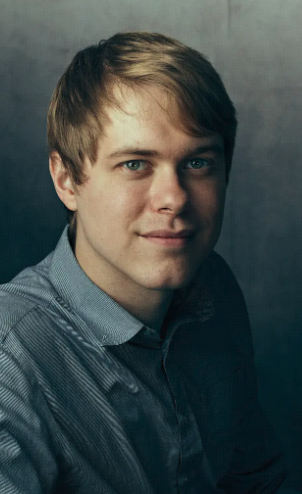 Dan Hendrycks合作论文数Center for AI Safety5
 Jason Rock合作论文数Department of Cell Biology, Duke University Medical Center5L Ikemoto合作论文数4Shao-Yu Chang合作论文数4O Arikan合作论文数4
 Robert Wilensky合作论文数Department of Electrical Engineering and Computer Sciences, University of California, Berkeley;School of Information, University of California, Berkeley4