Autism Spectrum Disorder (ASD) is a neurodevelopmental condition marked by impairments in social interaction and delayed language acquisition. Early and accurate identification is crucial for timely interventions that support cognitive and social development. Motivated by the subjectivity of traditional behavior-based assessments, computational methodologies offer more objective and cost-effective alternatives. Among these, eye-tracking stands out for capturing subtle attentional and perceptual patterns. This paper investigates the use of eye-tracking data for automatic ASD detection in children during audio-visual storytelling interactions, emphasizing traditional yet explainable machine learning methods. Although performance remains modest, our analyses reveal that fixation duration and revisit patterns to facial regions may serve as potential biomarkers. Further analyses highlight the impact of stimulus modality, suggesting that the inclusion of visual speech cues provides valuable discriminative information. These findings have the potential to support and guide the work of psychologists in the assessment of ASD within speech comprehension contexts.
Automatic analysis of multimodal speech has shown strong potential for computationally detecting and monitoring a wide range of neurological, psychiatric, and respiratory conditions. However, progress in this field is limited by existing publicly accessible datasets, which are often small in scale, focused on a single condition or disease, and primarily speech focused. Moreover, if key confounding variables such as education, medication use, comorbidities, or mood state are insufficiently documented, the reliability and interpretability of computational analyses are further compromised. To address these limitations, we introduce CARE v1.0, a curated multimodal English dataset of approximately 144 hours of short video interviews collected from 612 individuals across 12 medical conditions plus a control cohort. For each video, a comprehensive set of clinically relevant multimodal descriptors is provided, alongside structured metadata covering factors such as medication, life impacts, and expressed emotions. The corpus's breadth and heterogeneity support a wide range of applications, including automatic disease and symptom detection, multimodal modelling of speech and non-verbal behaviour under emotionally charged contexts, and studies of disease trajectories and coping processes.
Women are twice as likely as men to face online harassment due to their gender. Despite recent advances in multimodal content moderation, most approaches still overlook the social dynamics behind this phenomenon, where perpetrators reinforce prejudices and group identity within like-minded communities. Graph-based methods offer a promising way to capture such interactions, yet existing solutions remain limited by heuristic graph construction, shallow modality fusion, and instance-level reasoning. In this work, we present MemeWeaver, an end-to-end trainable multimodal framework for detecting sexism and misogyny through a novel inter-meme graph reasoning mechanism. We systematically evaluate multiple visual–textual fusion strategies and show that our approach consistently outperforms state-of-the-art baselines on the MAMI and EXIST benchmarks, while achieving faster training convergence. Further analyses reveal that the learned graph structure captures semantically meaningful patterns, offering valuable insights into the relational nature of online hate.
Speech restoration through silent speech interfaces (SSIs) has emerged as a promising assistive technology for individuals with impaired or absent laryngeal voice production. Among non-invasive SSI modalities, surface electromyography (sEMG) and video-based lipreading provide complementary articulatory information, yet their integration for continuous speech synthesis remains underexplored. Moreover, existing multimodal approaches rarely address robustness to modality degradation or temporary sensor failure, limiting their applicability in realistic scenarios. In this work, we propose a masked multimodal speech synthesis framework that jointly leverages sEMG and lipreading signals through modality masking during training. Under multispeaker settings, the proposed approach reduces word error rate by up to 14 absolute percentage points compared to the strongest unimodal baseline. Experimental results not only show that masking strategies are critical for these performance gains and robustness under low-bitrate conditions, but also that they generalize better than degradation-specific data augmentations in the presence of modality absence conditions. Phone-level analyses further reveal complementary contributions across modalities, with particularly strong benefits for vowels and for specific consonant groups. Overall, these findings demonstrate the effectiveness and robustness of masked multimodal integration for silent speech synthesis, although adaptation to laryngectomized speakers remains an open research challenge.
Visual speech recognition remains an open research problem where different challenges must be considered by dispensing with the auditory sense, such as visual ambiguities, the inter-personal variability among speakers, and the complex modeling of silence. Nonetheless, recent remarkable results have been achieved in the field thanks to the availability of large-scale databases and the use of powerful attention mechanisms. Besides, multiple languages apart from English are nowadays a focus of interest. This paper presents noticeable advances in automatic continuous lipreading for Spanish. First, an end-to-end system based on the hybrid CTC/Attention architecture is presented. Experiments are conducted on two corpora of disparate nature, reaching state-of-the-art results that significantly improve the best performance obtained to date for both databases. In addition, a thorough ablation study is carried out, where it is studied how the different components that form the architecture influence the quality of speech recognition. Then, a rigorous error analysis is carried out to investigate the different factors that could affect the learning of the automatic system. Finally, a new Spanish lipreading benchmark is consolidated. Code and trained models are available at https://github.com/david-gimeno/evaluating-end2end-spanish-lipreading.
Recent works in pathological speech analysis have increasingly relied on powerful self-supervised speech representations, leading to promising results. However, the complex, black-box nature of these embeddings and the limited research on their interpretability significantly restrict their adoption for clinical diagnosis. To address this gap, we propose a novel, interpretable framework specifically designed to support Parkinson's Disease (PD) diagnosis. Through the design of simple yet effective cross-attention mechanisms for both embedding- and temporal-level analysis, the proposed framework offers interpretability from two distinct but complementary perspectives. Experimental findings across five well-established speech benchmarks for PD detection demonstrate the framework's capability to identify meaningful speech patterns within self-supervised representations for a wide range of assessment tasks. Fine-grained temporal analyses further underscore its potential to enhance the interpretability of deep-learning pathological speech models, paving the way for the development of more transparent, trustworthy, and clinically applicable computer-assisted diagnosis systems in this domain. Moreover, in terms of classification accuracy, our method achieves results competitive with state-of-the-art approaches, while also demonstrating robustness in cross-lingual scenarios when applied to spontaneous speech production.
Recent advances in Audio-Visual Speech Recognition (AVSR) have led to unprecedented achievements in the field, improving the robustness of this type of system in adverse, noisy environments. In most cases, this task has been addressed through the design of models composed of two independent encoders, each dedicated to a specific modality. However, while recent works have explored unified audio-visual encoders, determining the optimal cross-modal architecture remains an ongoing challenge. Furthermore, such approaches often rely on models comprising vast amounts of parameters and high computational cost training processes. In this paper, we aim to bridge this research gap by introducing a novel audio-visual framework. Our proposed method constitutes, to the best of our knowledge, the first attempt to harness the flexibility and interpretability offered by encoder architectures, such as the Branchformer, in the design of parameter-efficient AVSR systems. To be more precise, the proposed framework consists of two steps: first, estimating audio-and video-only systems, and then designing a tailored audio-visual unified encoder based on the layer-level branch scores provided by the modality-specific models. Extensive experiments on English and Spanish AVSR benchmarks covering multiple data conditions and scenarios demonstrated the effectiveness of our proposed method. Even when trained on a moderate scale of data, our models achieve competitive word error rates (WER) of approximately 2.5% for English and surpass existing approaches for Spanish, establishing a new benchmark with an average WER of around 9.1%. These results reflect how our tailored AVSR system is able to reach state-of-the-art recognition rates while significantly reducing the model complexity w.r.t. the prevalent approach in the field. Code and pre-trained models are available at https://github.com/david-gimeno/tailored-avsr.
This work describes a comprehensive approach for the automatic assessment of cognitive decline from spontaneous speech in the context of the PROCESS Challenge 2025. Based on our previous experience on the use of speech and text-derived biomarkers for disease detection, we evaluate here the use of knowledge-based acoustic and text-based feature sets, as well as LLM-based macro-descriptors, and multiple neural representations (e.g., Longformer, ECAPA-TDNN, and Trillsson embeddings). The combination of these feature sets with different classifiers resulted in a large pool of systems, from which, those providing the best balance between train, development, and individual class performance were selected for model ensembling. Our final best-performing systems correspond to combinations of models that are complementary to each other, relying on acoustic and textual information from the three clinical tasks provided in the challenge dataset.
The automatic identification of medication states of Parkinson's disease (PD) patients can assist clinicians in monitoring and scheduling personalized treatments, as well as studying the effects of medication in alleviating the motor symptoms that characterize the disease. This paper explores speech as a non-invasive and accessible biomarker for identifying PD medication states, introducing a novel approach that addresses this task from a speaker-independent perspective. While traditional machine learning models achieve competitive results, self-supervised speech representations prove essential for optimal performance, significantly surpassing knowledge-based acoustic descriptors. Experiments across diverse speech assessment tasks highlight the relevance of prosody and continuous speech in distinguishing medication states, reaching an F1-score of 88.2%. These findings may streamline clinicians' work and reduce patient effort in voice recordings.
This work describes our group's submission to the PROCESS Challenge 2024, with the goal of assessing cognitive decline through spontaneous speech, using three guided clinical tasks. This joint effort followed a holistic approach, encompassing both knowledge-based acoustic and text-based feature sets, as well as LLM-based macrolinguistic descriptors, pause-based acoustic biomarkers, and multiple neural representations (e.g., LongFormer, ECAPA-TDNN, and Trillson embeddings). Combining these feature sets with different classifiers resulted in a large pool of models, from which we selected those that provided the best balance between train, development, and individual class performance. Our results show that our best performing systems correspond to combinations of models that are complementary to each other, relying on acoustic and textual information from all three clinical tasks.
El Aprendizaje Basado en Retos ha demostrado ser una metodología efectiva para fomentar el aprendizaje activo y el desarrollo de competencias transversales. En este trabajo, exploramos su aplicación en la enseñanza del Procesamiento del Lenguaje Natural (PLN) a nivel de máster, mediante la simulación de challenges en entornos de aprendizaje práctico. Nuestro enfoque busca fortalecer la motivación intrínseca del alumnado, fomentar el trabajo en equipo y potenciar su autonomía. Para ello, proponemos tareas centradas en la detección automática de contenido sexista en internet, un problema de creciente interés en la comunidad investigadora de PLN por su impacto social y ético. Basados en esta innovación docente, analizamos sus efectos en el aprendizaje del alumnado, observando que, si bien el componente competitivo podía incrementar el nivel de estrés, la evaluación general de la metodología fue positiva, destacándose un impacto en la confianza del estudiantado para afrontar nuevos desafíos en su carrera.
Visual speech recognition (VSR) is a challenging task that has received increasing interest during the last few decades. Current state of the art employs powerful end-to-end architectures based on deep learning which depend on large amounts of data and high computational resources for their estimation. We address the task of VSR for data scarcity scenarios with limited computational resources by using traditional approaches based on hidden Markov models. We present a novel learning strategy that employs information obtained from previous acoustic temporal alignments to improve the visual system performance. Furthermore, we studied multiple visual speech representations and how image resolution or frame rate affect its performance. All these experiments were conducted on the limited data VLRF corpus, a database which offers an audio-visual support to address continuous speech recognition in Spanish. The results show that our approach significantly outperforms the best results achieved on the task to date.
Depression, a prominent contributor to global disability, affects a substantial portion of the population. Efforts to detect depression from social media texts have been prevalent, yet only a few works explored depression detection from user-generated video content. In this work, we address this research gap by proposing a simple and flexible multi-modal temporal model capable of discerning non-verbal depression cues from diverse modalities in noisy, real-world videos. We show that, for in-the-wild videos, using additional high-level non-verbal cues is crucial to achieving good performance, and we extracted and processed audio speech embeddings, face emotion embeddings, face, body and hand landmarks, and gaze and blinking information. Through extensive experiments, we show that our model achieves state-of-the-art results on three key benchmark datasets for depression detection from video by a substantial margin. Our code is publicly available on GitHub ( https://github.com/cosmaadrian/multimodal-depression-from-video ).
Thanks to the rise of deep learning and the availability of large-scale audio-visual databases, recent advances have been achieved in Visual Speech Recognition (VSR). Similar to other speech processing tasks, these end-to-end VSR systems are usually based on encoder-decoder architectures. While encoders are somewhat general, multiple decoding approaches have been explored, such as the conventional hybrid model based on Deep Neural Networks combined with Hidden Markov Models (DNN-HMM) or the Connectionist Temporal Classification (CTC) paradigm. However, there are languages and tasks in which data is scarce, and in this situation, there is not a clear comparison between different types of decoders. Therefore, we focused our study on how the conventional DNN-HMM decoder and its state-of-the-art CTC/Attention counterpart behave depending on the amount of data used for their estimation. We also analyzed to what extent our visual speech features were able to adapt to scenarios for which they were not explicitly trained, either considering a similar dataset or another collected for a different language. Results showed that the conventional paradigm reached recognition rates that improve the CTC/Attention model in data-scarcity scenarios along with a reduced training time and fewer parameters.
 Carlos-D Martinez-Hinarejos合作论文数Departament de Sistemes Informatics i Computaci;Institut Tecnologic d'Inform;Departament de Sistemes Informatics i Computaci, Institut Tecnologic d'Inform20
 Alberto Abad合作论文数5
 Catarina Botelho合作论文数4
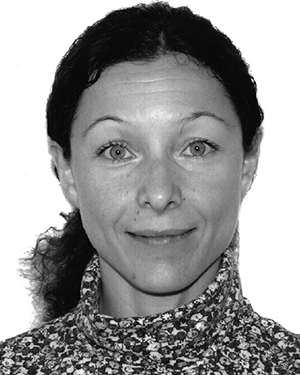 Anna Pompili合作论文数F - Spoken Language Systems Lab, INESC-ID/IST4
 Paolo Rosso合作论文数Departamento de Sistemas Informáticos y Computación, Escuela Técnica Superior de Ingeniería Informática, Universitat Politècnica de València;Natural Language Engineering Lab, Pattern Recognition and Human Language Technologies Research Center, Universitat Politècnica de València3
 Rubén Solera-Ureña合作论文数Department of Signal Theory and Communications, EPS-Universidad Carlos III de Madrid3
 Isabel Trancoso合作论文数Instituto Superior Tecnico, University of Lisbon3
 Patrícia Pereira合作论文数2Diogo A. P. Nunes合作论文数2
 Rolland Thomas合作论文数2
 Francisco Teixeira合作论文数Univ Lisbon, Inst Super Tecn, INESC ID, Lisbon, Portugal2
 Elisabetta Fersini合作论文数University of Milano-Bicocca2
 David Martins de Matos合作论文数Department of Computer Science and Engineering, Universidade de Lisboa Instituto Superior Técnico;Spoken Language Systems Lab, Instituto de Engenharia de Sistemas e Computadores Investigação e Desenvolvimento em Lisboa;Human Language Technology Lab, INESC-ID Lisboa2Ana-Maria Bucur合作论文数1Carlos-D. Martínez-Hinarejos合作论文数1
 John Daniel Fidalgo Mendonça合作论文数Human Language Technologies Laboratory;Instituto Superior Técnico1
 Adrian Cosma合作论文数IDSIA USI-SUPSI1Eder del Blanco合作论文数1
 Rita Cardoso合作论文数1
 Isabel Cristina Ramos Peixoto Guimaraes合作论文数1
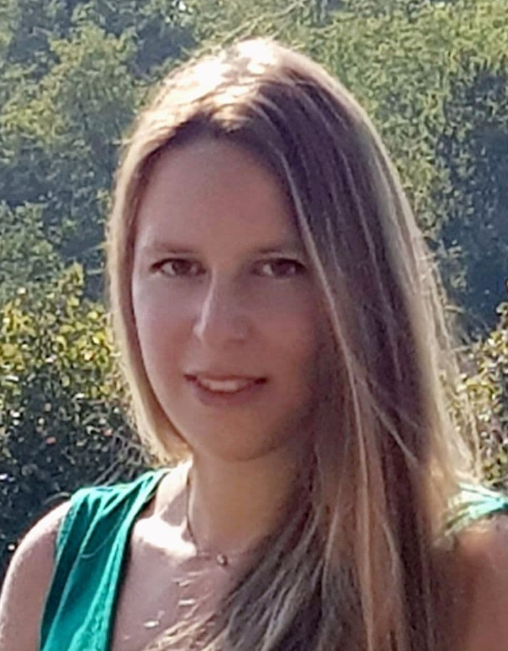 Giulia Rizzi合作论文数Pattern Recognition and Human Language Technology Research Center, Universitat Politècnica de València1
 Nadina Gomez-Merino合作论文数Reading Research Unit/Devel & Educ. Psy., University of Valencia, Valencia Spain1Eva Navas合作论文数Univ Basque Country, UPV EHU, AHOLAB, Bilbao, Spain1
 Antonio Ferrer合作论文数ERI Lectura, University of Valencia1
 Vicenta Avila Clemente合作论文数ERI Lectura, University of Valencia1
 Gianluca Moro合作论文数Italian Minister of University;Department of Computer Science and Engineering, University of Bologna1
 Francisco Casacuberta合作论文数Pattern Recognition and Human Language Technology Research Center, Universitat Politecnica de Valencia1
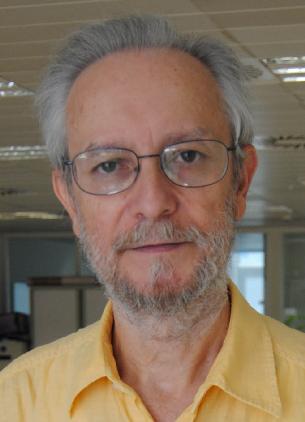 Enrique Vidal合作论文数Pattern Recognition and Human Language Technology Research Center, Universitat Politècnica de València1
 Emilio Granell合作论文数1
 Roberto Paredes合作论文数Pattern Recognition and Human Language Technology Research Center, Universidad Politécnica de Valencia1Moises Pastor合作论文数1
 Inma Hernáez合作论文数Dept . of Electronics and Telecommunications;University of the Basque Country;Dept . of Electronics and Telecommunications, University of the Basque Country1
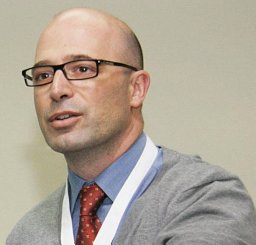 Joaquim Ferreira合作论文数Instituto de Medicina Molecular, Universidade de Lisboa;Faculty of Medicine, University of Lisbo1




