Here, we quantify the effect of an external magnetic field (β) on the oxygen evolution reaction (OER) for a cobalt oxide|fluorine-doped tin oxide coated glass (CoOx|FTO) anode. A bespoke apparatus enables us to precisely determine the relationship between magnetic flux density (β) and OER activity at the surface of a CoOx|FTO anode. The apparatus includes a strong NdFeB magnet (βmax = 450 ± 1 mT) capable of producing a magnetic field of 371 ± 1 mT at the surface of the anode. The distance between the magnet and the anode surface is controlled by a linear actuator, enabling submillimeter distance positioning of the magnet relative to the anode surface. We couple this apparatus with a finite element analysis magnetic model that was validated by Hall probe measurements to determine the value of β at the anode surface. At the largest tested magnetic field strength of β = 371 ± 1 mT, a 4.7% increase in current at 1.5 V vs the normal hydrogen electrode (NHE) and a change in the Tafel slope of 14.5 mV/dec were observed. We demonstrate through a series of OER measurements at sequential values of β that the enhancement consists of two distinct regions. The possible use of this effect to improve the energy efficiency of commercial water electrolyzers is discussed, and major challenges pertaining to the accurate measurement of the phenomenon are demonstrated.
本刊曾在7年前发表了一篇文章,题为《如何才能真正逆转气候变化》(What It Would Really Take to Reverse Climate Change).在文中,我们介绍了谷歌工程师出于善意从事削减可再生能源成本工作,但最终以失败告终的经验教训.我们认为,渐进式改进的现有能源技术不足以逆转气候变化,我们倡导结合传统的、前沿的和看似疯狂的研发工作,找到真正的颠覆性解决方案.我们写道:"虽然人类目前正处于严峻的气候变化轨道上,但如果研究人员力争实现看似不可能的目标,这场灾难是能够避免的.我们充满希望,因为有时工程师和科学家确实能实现不可能的目标."
Operando calorimetry has previously been utilized to study electrochemical reactions and degradation in electrochemical cells such as batteries. Calorimetric data can provide important information on the lifetime and thermal properties of electrochemical cells in practical engineering applications such as thermal management. High temperature electrochemical cells such as solid oxide fuel cells or electrolyzers can also benefit from operando calorimetry, but to the authors’ knowledge such capabilities have not been commercially developed. Herein, an operando calorimeter is reported that is capable of simultaneous calorimetry and electrochemistry at temperatures up to 1000 °C and in both oxidizing and reducing atmospheres. The calorimeter is constructed by modifying a commercial apparatus originally designed to study high temperature electrochemical cells in various gas environments. A grey-box, nonlinear system identification model is utilized to analyze both electrochemical and calorimetric data of BaZr 0.8 Ce 0.1 Y 0.1 O 3 based electrochemical cells and achieve a calorimeter electrochemical cell power sensitivity of 16.1 ± 11.7 mW. This operando calorimeter provides the capability to study thermal behaviour of electrochemical cells at elevated temperatures.
Seven years ago, we published an article in IEEE Spectrum titled “What It Would Really Take to Reverse Climate Change.” We described what we had learned as Google engineers who worked on a well-intentioned but ultimately failed effort to cut the cost of renewable energy. We argued that incremental improvements to existing energy technologies weren't enough to reverse climate change, and we advocated for a portfolio of conventional, cutting-edge, and might-seem-crazy R&D to find truly disruptive solutions. We wrote: “While humanity is currently on a trajectory to severe climate change, this disaster can be averted if researchers aim for goals that seem nearly impossible. We're hopeful, because sometimes engineers and scientists do achieve the impossible.”
Calorimetry of reactions involving nanomaterials is of great current interest, but requires high-resolution heat flow measurements and long-term thermal stability. Such studies are especially challenging at elevated reaction pressures and temperatures. Here, we present an instrument for measuring the enthalpy of reactions between gas-phase reactants and milligram scale nanomaterial samples. This instrument can resolve the net change in the amount of gas-phase reactants due to surface reactions in an operating range from room temperature to 300 °C and reaction pressures of 10 mbar to 30 bar. The calorimetric resolution is shown to be <3 μW/√Hz, with a long-term stability <4 μW/hour. The performance of the instrument is demonstrated via a set of experiments involving H2 absorption on Pd nanoparticles at various pressures and temperatures. For this specific reaction, we obtained a mass balance resolution of 0.1 μmol/√Hz. Results from these experiments are in good agreement with past studies establishing the feasibility of performing high resolution calorimetry on milligram scale nanomaterials, which can be employed in future studies probing catalysis, phase transformations, and thermochemical energy storage.
Crystallization of amorphous silicon thin films by various methods has fostered enhancements in the electrical characteristics over their amorphous counterparts. For example, carrier mobilities ranging from 10 to >100 cm2/V·sec have been reported for laser crystallized films. The rather large variability of the transport characteristics with crystallization processing conditions is not well understood and, as a result, greatly complicates device process debugging. In addition, while it is generally believed that defects inherent in the grain boundaries provide the primary barriers degrading transport properties relative to single crystal silicon, the specific nature of these defects is not known. In this paper, we present data on the temperature dependence of the Hall mobility of thin silicon films crystallized by thermal and excimer laser processing. Hall data for the laser-crystallized phosphorus-doped material show a temperature dependence which differs dramatically from that for thermally crystallized materials, while the effects of hydrogenation are similar, reducing the barriers at the grain boundaries.REFERENCES
Ferroelectric PbZr0.2Ti0.8O3/YBa2Cu3O7 heterostructures have been grown on single crystal LaAlO3 and on buffered [100] Si. The cuprate superconductors are used as metal-like bottom electrodes for the subsequent growth of the ferroelectric PZT thin film. Structural studies using x-ray diffraction, and transmission electron microscopy show that the PZT layer is free of large angle grain boundaries (i.e., single crystal-like). Rutherford backscattering studies reveal the composition of the PZT layer to be close to that of the target. Ferroelectric hysteresis measurements using both pulsed measurements and a variable frequency Sawyer-Tower circuit yield remnant polarization values (at 5V) in the range of 15–45μC/cm2 (depending on deposition conditions) with a coercive field in the range of 80–120kV/cm. At a cycling voltage of 5V, these heterostructures exhibit a fatigue lifetime of better than 2x10¹⁰ at 40kHz (the polarization decays by only 20% of the initial value). Pulsed poling experiments before and after show that the loss of polarization is reversible. These heterostructures also show excellent aging and logic state retention characteristics.
We report herein that sulfuric acid electrolyte affects the kinetics of hydrogen sorption and desorption, the amount of absorbed hydrogen, and the electrocatalytic activity of palladium using X-ray photoelectron spectroscopy (XPS) and in situ temperature-programmed desorption (TPD). This study utilized a custom TPD instrument tailored to the in situ characterization of palladium films electrochemically saturated with absorbed hydrogen (PdHx for x > 0.6), and we present the first experimental data for the formation of sulfates on palladium hydride at E < 0 V (vs RHE). The surface adsorption of sulfates leads to a retardation of hydrogen sorption and desorption kinetics by increasing the desorption energy of absorbed hydrogen by 92 kJ mol(-1) relative to a clean palladium surface. Although previous studies have reported that the SO42- anions of H2SO4 only adsorb on palladium under oxidative potentials E > 0.5 V (vs RHE), the differing chemistry of hydrogen-free and hydrided palladium was not considered. The sulfate adsorbates affect the reaction chemistry through both a competitive binding of surface sites and by altering the electronic structure of surface atoms. The influence of the electrolyte is evidenced by a sluggish kinetics of H absorption and desorption in H2SO4 electrolyte relative to HCl, concomitant with a lower hydrogen uptake in H2SO4 (x = 0.64 +/- 0.01) versus HCl (x = 0.697 +/- 0.007). The findings of this study emphasize the critical and often overlooked role of the electrolyte utilized in electrochemical studies of the palladium-hydrogen system.
Strain engineering can increase the activity and selectivity of an electrocatalyst. Tensile strain is known to improve the electrocatalytic activity of palladium electrodes for reduction of carbon dioxide or dioxygen, but determining how strain affects the hydrogen evolution reaction (HER) is complicated by the fact that palladium absorbs hydrogen concurrently with HER. We report here a custom electrochemical cell, which applies tensile strain to a flexible working electrode, that enabled us to resolve how tensile strain affects hydrogen absorption and HER activity for a thin film palladium electrocatalyst. When the electrodes were subjected to mechanically-applied tensile strain, the amount of hydrogen that absorbed into the palladium decreased, and HER electrocatalytic activity increased. This study showcases how strain can be used to modulate the hydrogen absorption capacity and HER activity of palladium.
This paper describes new results on the relationship between the grain size, mobility, and Si (111) x-ray peak intensity of laser crystallized amorphous silicon as a function of the laser fluence, shot density, substrate temperature, and film thickness. These observations include an unexpected narrow peak found in the silicon (111) x-ray peak intensity, which occurs at a specific laser fluence for a given film thickness and substrate temperature. Amorphous silicon materials processed at laser energy densities defined by this peak exhibit exceptionally large grain sizes and electron mobilities that cannot be obtained at any other energy and shot density combination above or below the energy at which the Si (111) x-ray peak intensity maximum occurs.ACKNOWLEDGMENT
We report a model-based method for quantifying heat flow and storage in thermal systems using data from multiple thermal sensors. This approach avoids stringent requirements on the system geometry and sensor positions and enables calorimetry to be performed under a broader range of circumstances than is accessible with existing calorimeters, such as when nonlinear heat transfer occurs, when spatially separated heat sources are active or when multiple thermal masses participate. Using experimental data from a model thermal system, this paper provides a tutorial on the construction of nonlinear lumped-element heat transfer models and the use of system identification to estimate the parameters of these models from calibration data. The calibrated models are then used to estimate unknown energy inputs to the thermal system from sensor data. Our best model enabled the measurement of the total input energy with 0.02% accuracy; the instantaneous input power could be measured with a root-mean-square error of 10% of the average input power.
Crystal facets, vertices and edges govern the energy landscape of metal surfaces and thus the chemical interactions on the surface 1 , 2 . The facile absorption and desorption of hydrogen at a palladium surface provides a useful platform for defining how metal–solute interactions impact properties relevant to energy storage, catalysis and sensing 3 – 5 . Recent advances in in operando and in situ techniques have enabled the phase transitions of single palladium nanocrystals to be temporally and spatially tracked during hydrogen absorption 6 – 11 . We demonstrate herein that in situ X-ray diffraction can be used to track both hydrogen absorption and desorption in palladium nanocrystals. This ensemble measurement enabled us to delineate distinctive absorption and desorption mechanisms for nanocrystals containing exclusively (111) or (100) facets. We show that the rate of hydrogen absorption is higher for those nanocrystals containing a higher number of vertices, consistent with hydrogen absorption occurring quickly after β-phase nucleation at lattice-strained vertices 9 , 10 . Tracking hydrogen desorption revealed initial desorption rates to be nearly tenfold faster for samples with (100) facets, presumably due to the faster recombination of surface hydrogen atoms. These results inspired us to make nanocrystals with a high number of vertices and (100) facets, which were found to accommodate fast hydrogen uptake and release.
The 1989 claim of 'cold fusion' was publicly heralded as the future of clean energy generation. However, subsequent failures to reproduce the effect heightened scepticism of this claim in the academic community, and effectively led to the disqualification of the subject from further study. Motivated by the possibility that such judgement might have been premature, we embarked on a multi-institution programme to re-evaluate cold fusion to a high standard of scientific rigour. Here we describe our efforts, which have yet to yield any evidence of such an effect. Nonetheless, a by-product of our investigations has been to provide new insights into highly hydrided metals and low-energy nuclear reactions, and we contend that there remains much interesting science to be done in this underexplored parameter space.
We report herein in situ X-ray diffraction experiments that show that surface ligands affect the rates of hydrogen absorption and desorption in octahedral palladium nanoparticles. This observation was made possible by: (i) using a UV-driven photolysis and ozonolysis treatment to convert the ligand-stabilized palladium nanoparticles to pristine (i.e., ligand-free) nanoparticles while maintaining the size and shape of the core; and (ii) tracking in situ the phase transformation under a hydrogen environment. Our experiments revealed that pristine nanoparticles absorb and desorb hydrogen 10-fold faster than the corresponding ligated samples. This finding is supported by comparing octahedral nanoparticles stabilized by two different types of ligand coatings that both show faster hydrogen absorption and desorption after ligand removal. The data indicate that in addition to nanoparticle shape, surface structuring, and size, the ligand shell must be taken into account when examining hydrogen absorption and desorption in palladium nanoparticles.
We report here an electrochemical method for precise and accurate quantification of hydrogen absorption in palladium materials. We demonstrate that conventional chronocoulometry over-reports adsorbed hydrogen due to charge from the accompanying hydrogen oxidation reaction (HOR). We designed and built a bespoke electrochemical flow cell that mitigates the concurrent HOR reaction and consequently provides improved accuracy and reproducibility relative to other existing electrochemical techniques. The efficacy of this technique is demonstrated experimentally for a series of palladium sample types: a 100 nm electron-beam deposited thin film, a 20 μm electrodeposited palladium film, a casting of 21 nm edge-length cubic nanoparticles, and a casting of 27 nm edge-length octahedral nanoparticles. We contend that this method is the most effective for measuring hydrogen uptake in different palladium samples.
We present an apparatus that allows for the simultaneous measurement of mass change, heat evolution, and stress of thin film samples deposited on quartz crystal microbalances (QCMs). We show device operation at 24.85 ± 0.05 °C under 9.31 ± 0.02 bars of H2 as a reactive gas. Using a 335 nm palladium film, we demonstrate that our apparatus quantifies curvature changes of 0.001 m−1. Using the QCM curvature to account for stress induced frequency changes, we demonstrate the measurement of mass changes of 13 ng/cm2 in material systems exhibiting large stress fluctuations. We use a one-state nonlinear lumped element model to describe our system with thermal potentials measured at discrete positions by three resistance temperature devices lithographically printed on the QCM. By inputting known heat amounts through lithographically defined Cr/Al wires, we demonstrate a 150 μW calorimetric accuracy and 20 μW minimum detectable power. The capabilities of this instrument will allow for a more complete characterization of reactions occurring in nanoscale systems, such as the effects of hydrogenation in various metal films and nanostructures, as well as allow for direct stress compensation in QCM measurements.
We present an instrument for measuring pressure changes and heat flows of physical and chemical processes occurring in gram-scale solid samples under high pressures of reactive gases. Operation is demonstrated at 1232 °C under 33 bars of pure hydrogen. Calorimetric heat flow is inferred using a grey-box non-linear lumped-element heat transfer model of the instrument. Using an electrical calibration heater to deliver 900 J/1 W pulses at the sample position, we demonstrate a dynamic calorimetric power resolution of 50 mW when an 80-s moving average is applied to the signal. Integration of the power signal showed that the 900 J pulse energy could be measured with an average accuracy of 6.35% or better over the temperature range 150-1100 °C. This instrument is appropriate for the study of high-temperature metal hydride materials for thermochemical energy storage.
We propose Powernet as an end-to-end open source technology for economically efficient, scalable and secure coordination of grid resources. It offers integrated hardware and software solutions that are judiciously divided between local embedded sensing, computing and control, which are networked with cloud-based high-level coordination for real-time optimal operations of not only centralized but also millions of distributed resources of various types. Our goal is to enable penetration of 50% or higher of intermittent renewables while minimizing the cost and address security and economical scalability challenges. In this paper we describe the basic concept behind Powernet and illustrate some components of the solution.
We describe a novel inverter control method that solves an optimization problem during each switching interval to closely follow a virtual impedance control law. We report droop behavior over a wide range of applied loads and power sharing among multiple inverters.
 J. B. Boyce合作论文数43
 Theodore Geballe合作论文数Department of Materials Science and Engineering, School of Engineering, Stanford University;Stanford Institute for Materials and Energy Sciences, Stanford University38G.A.N. Connell合作论文数28
 Gregory B Anderson合作论文数28
 Thomas Hantschel合作论文数IMEC28Christopher L Chua合作论文数25P. Mei合作论文数21R.I. Johnson合作论文数17
 David Fenner合作论文数14Eugene M Chow合作论文数14J. J. Kingston合作论文数13
 Fernando Ponce合作论文数Department of Physics, Arizona State University13Koenraad Van Schuylenbergh合作论文数12Julia M. Phillips合作论文数10dave weinerth合作论文数9f armanileplingard合作论文数9
 Curtis P. Berlinguette合作论文数Department of Chemistry, Faculty of Science, The University of British Columbia;Department of Chemical & Biological Engineering, Faculty of Science, The University of British Columbia9
 Kookrin Char合作论文数Department of Physics & Astronomy, Seoul National University9
 Steve E. Ready合作论文数9
 Qingfeng Huang合作论文数9
 Luke Plurkowski合作论文数9Scott Solberg合作论文数8patrick y maeda合作论文数7eric peeters合作论文数7Jurgen H Daniel合作论文数7K. Van Schuylenbergh合作论文数7Michel A. Rosa合作论文数7A.M. Viano合作论文数6
 Karl Littau合作论文数6stephen j horne合作论文数6j c tramontana合作论文数6Rd Bringans合作论文数6VG KERAMIDAS合作论文数6john s fitch合作论文数6
 Ross Koningstein合作论文数6
 Michael Hack合作论文数6
 Suresh K. Sitaraman合作论文数6
 R. Ramesh合作论文数Department of Physics, University of California, Berkeley;Department of Materials Science and Engineering, University of California, Berkeley6
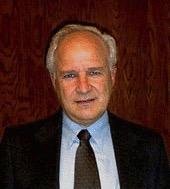 Frank G Bridges合作论文数Department of Physics, University of California, Santa Cruz6
 Shuichi Tahara合作论文数6s s laderman合作论文数5L. Wong合作论文数5Jp Lu合作论文数5
 Brian Lam合作论文数Dept Chem, Univ British Columbia5Taber, R.C.合作论文数5
 Cary Y. Yang合作论文数Department of Electrical Engineering, Santa Clara University5Eric M. Ajimine合作论文数5
 Malcolm R. Beasley合作论文数The Applied Physics Department, Stanford University5
 Chang-beom Eom合作论文数Department of Materials Science & Engineering, College of Engineering, University of Wisconsin-Madison;Pittsburgh Quantum Institute5




