The VLDB Endowment is a non-profit foundation whose objective is to promote scientific and educational activities in the area of large-scale data, information, and knowledge management. The Endowment serves as the steering committee for the VLDB conference series. The Endowment also sponsors various scholarly activities. It has established a program that supports summer schools, tutorials, and other training activities of this kind, in countries that could otherwise not afford the expenses for such events. The Endowment is also the main sponsor of the biennial Conference on Innovative Data Systems Research (CIDR), and it runs the VLDB Journal, one of the most successful journals in the database area. On various activities, the Endowment closely cooperates with ACM SIGMOD. The VLDB Endowment has a board of 21 elected trustees, who are the legal guardians of the Endowments charter and activities. Trustees are elected for a six-year period; the election procedure is document in the code of regulations available on the Endowments Web site. The board is continuously renewed, with one third of its members being replaced every two years. The trustees are elected among internationally distinguished researchers and professionals in the field of database and information systems who have contributed to the objectives of the Endowment with dedication and distinction. All trustees provide voluntary service.
Demands for more effective information management, coupled with advances in computer hardware and software technology, have resulted in the emergence of the information utility concept, whereby database computers specialized for information storage and processing can serve as information nodes. Such database computers can provide high-performance and high-reliability information management services to both conventional and "personal" computers. In this paper key advances in information technology, both hardware and software, are described. Special attention is devoted to three approaches to the development of more specialized information processing architectures: (1) firmware enhancement, (2) "intelligent" controllers, and (3) minicomputer "back-end" processors. These approaches are preliminary to the development of truly specialized high-performance, high-reliability database machine architectures. The DBC and INFOPLEX functional modular database machine architectures are presented as examples.
Dr. David K. Hsiao is a professor of computer science at the Naval Postgraduate 1982. From 1982 to 1984, he was also the chairman of the school’s computer science department. From 1972 to 1982 he was first an associate and then a full professor of computer and information sciences at the Ohio State University. In 197 1 and 1972 he was first a senior scientist at the Honeywell Information Science Research Center in Cambridge, Massachusetts, and then a senior engineer at the Honeywell Information systems in Wortham Massachusetts.
The issues and solutions for the interoperability of a class of heterogeneous databases and their database systems are expounded in two parts. Part I presented the data-sharing issues in federated databases and systems (Hsiao, 1992). The present article explores resource-consolidation issues. Interoperability in this context refers to data sharing among heterogeneous databases, and to resource consolidation of computer hardware, system software, and support personnel. Resource consolidation requires the presence of a database system architecture which supports the heterogeneous system software, thereby eliminating the need for various computer hardware and support personnel. The class of heterogeneous databases and database systems expounded herein is termed federated, meaning that they are joined in order to meet certain organizational requirements and because they require their respective application specificities, integrity constraints, and security requirements to be upheld. Federated databases and systems are new. While there are no technological solutions, there has been considerable research towards their development. This tutorial is aimed at exposing the need for such solutions. A taxonomy is introduced in our review of existing research undertakings and exploratory developments. With this taxonomy, we contrast and compare various approaches to federating databases and systems.
The issues and solutions for the interoperability of a class of heterogeneous databases and their database systems are expounded in two parts. Part I presents the data-sharing issues in federated databases and systems. Part II, which will appear in a future issue, explores resource-consolidation issues. Interoperability in this context refers to data sharing among heterogeneous databases, and to resource consolidation of computer hardware, system software, and support personnel. Resource consolidation requires the presence of a database system architecture which supports the heterogeneous system software, thereby eliminating the need for various computer hardware and support personnel. The class of heterogeneous databases and database systems expounded herein is termed federated, meaning that they are joined in order to meet certain organizational requirements and because they require their respective application specificities, integrity constraints, and security requirements to be upheld. Federated databases and systems are new. While there are no technological solutions, there has been considerable research towards their development. This tutorial is aimed at exposing the need for such solutions. A taxonomy is introduced in our review of existing research undertakings and exploratory developments. With this taxonomy, we contrast and compare various approaches to federating databases and systems.
Overviews the architecture of a new kind of database management system (DBMS) that facilitates data sharing and resource consolidation in heterogeneous database environments without compromising the autonomy of the individual databases. The architecture of the DBMS is based on the multimodel multilingual approach
The authors describe a performance evaluation study of an experimental database computer with a variable number of parallel database backends. They first discuss the performance measures employed for this type of database computer. Next, they describe the benchmarks and interpret the results. Preliminary test results indicate the viability and promise of this type of parallel database computer in performance gain and capacity growth. During the overhead-intensive portion of the performance evaluation, MDBS demonstrated good levels of response-time reduction and response-time invariance
The presence of large numbers of heterogeneous databases in a given organization is prompted by the replacement of traditional data processing with modern database management systems (DBMS) for traditional applications, such as record keeping, product assemblies and inventory control, as well as for new applications, such as expert-system support, design automation and manufacturing engineering. These heterogeneous databases form a federation in the organization due to the desire to facilitate data sharing and resource consolidation while maintaining the local autonomy of individual databases, which are dictated by their particular security requirements, integrity constraints and application specificities. This paper outlines an architecture for the federated databases, based on the multimodel, multilingual, and multibackend approach, that facilitates data sharing and resource consolidation in a heterogeneous database environment without compromising the autonomy of individual databases.
: In this paper, three new directions in database-systems research and development are indicated. One new direction is the emergence of the multilingual database systems where a single database system can execute many transactions written respectively in different data languages and support many databases structured correspondingly in various data models. Thus, a multi-lingual database system allows the old transactions and existing databases to be migrated to the new system, the user to explore the strong features of the various data languages and data models in the same system, the hardware upgrade to be focused on a single system instead of a heterogeneous collection of database systems, and the database application to cover wider types of transactions and interaction in the same environment. One other new direction is the emphasis of the multi-backend database systems where the database system is configured with a number of microprocessor-based processing units and their disk subsystems. These processing units and disk subsystems are called database backends. The unique characteristics of the backends are that the number of the backends is variable, the system software in all of the backends is identical, and the multiplicity of the backends is proportional to the performance and capacity of the system. Thus, for the first time, a multi-backend database system enables the user to relate the amount of hardware used (i.e., the number of the backends) to the degree of performance gain and capacity growth of the system. The third new direction is the possibility of the multi-host database systems where a single database system can communicate with a variable number and heterogeneous collection of mainframes in several different data languages and allow the mainframes to share the common database store and access.
To improve the precision of full-text database search, an equivalence relation of keywords of full texts is proposed. The equivalence relation effectively clusters the texts into mutually exclusive sets of texts so that each cluster of texts is characterised by a unique combination of keywords. The construction of a directory of these keyword combinations enables any query of the texts to be processed against the directory. As a result of this query processing strategy, the clusters of texts which are relevant to the query can be determined prior to any database search for the texts. Thus, the subsequent search will be confined to these and only these clusters, resulting in an improvement in the precision of full-text database search. Although not discussed due to length restrictions, the attribute-based data model discussed in this paper has been implemented on running database systems at the Naval Postgraduate School (NPS) and at Ohio State University. At NPS, it is currently used for database research on a multi-backend system using workstation technology.
The study of the relationship of the database system and the operating system can best be characterized in terms of their issues on resource management and language support. In this paper the similarities and differences of these two types of systems (i.e., database systems and operating systems) on resource management and language support are articulated. It is hoped that this articulation can point out the new and future database-system research and development areas.
In this paper a computer-aided benchmarking methodology for a new kind of database computers is introduced. The emergence of this new kind of parallel database computers (known as the multiple-backend database computers) in the research community and in the commercial world, where each computer system is configured with two or more identical processors and their associated stores for concurrent execution of transactions and for parallel processing of a centralized database spread over separate stores, is evident. The need and lack of a methodology for benchmarking the new database computer with a variable number of backends for the same database or with a fixed number of backends for different database capacities is pronounced. The measures (benchmarks) of the new database computer are articulated and established and the design of the methodology for conducting the measurements is then given in this paper. The computer-aided benchmarking system (CABS), which computerizes the benchmarking methodology for systematically assisting the design of test databases and test-transaction mixes, for automatically tallying the design data and workloads, and for completely generating the test databases and test-transaction mixes, is reported also herein.
This paper introduces a new and unconventional approach to the design and implementation of a database system, the multi-lingual database system (MLDS). The multi-lingual database system is a single database system that can execute many transactions written respectively in different data languages and support many databases structured correspondingly in various data models, i.e., DL/I transactions on hierarchical databases, CODASYL-DML transactions on network databases, SQL transactions on relational databases and Duplex transactions on functional databases. Thus, a multi-lingual database system allows the old transactions and existing databases to be migrated to the new environment, the experienced user to continue to utilize certain favorite features of existing data languages and data models, the new user to explore the strong features of the various data languages and data models, the hardware upgrade to be focused on a single system instead of a heterogeneous collection of database systems, and the database application to cover wider types of transactions and different modes of interactions.
 Douglas S. Kerr合作论文数24Steven Demurjian, Sr.合作论文数CS&E
Graduate Program16
Douglas S. Kerr合作论文数24Steven Demurjian, Sr.合作论文数CS&E
Graduate Program16 Stuart E. Madnick合作论文数MIT Sloan School of Management;MIT Institute for Data, Systems, and Society12Vincent Y. Lum合作论文数6Paula R. Strawser合作论文数6C. Thomas Wu合作论文数5ali orooji合作论文数5M. Jaishankar Menon合作论文数5Richard I. Baum合作论文数4
 David DeWitt合作论文数Department of Electrical Engineering and Computer Science, Massachusetts Institute of Technology4
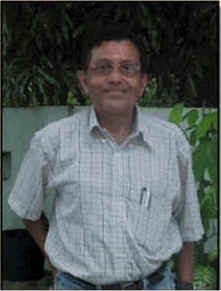 Jayanta Banerjee合作论文数Mechanical Engineering Department, University of Puerto Rico4Jai Menon合作论文数3jaishankar menon合作论文数3Magdi N. Kamel合作论文数Naval Postgraduate School3Roger G. Marshall合作论文数3
 Kannan Krishnamurthi合作论文数Environmental Health Division, National Environmental Engineering Research Institute (NEERI),3Dina Friedland合作论文数2dana e madison合作论文数2Xin-gui He合作论文数2Robert J. Watson合作论文数2Frank Manola合作论文数2
 Zhongzhi Shi (史忠植)合作论文数Key Laboratory of Intelligent Information Processing, Institute of Computing Technology, Chinese Academy of Sciences2Marvin Denicoff合作论文数2Masanobu Higashida合作论文数2
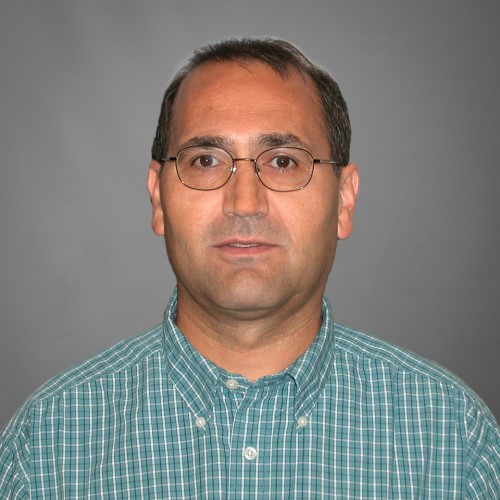 Ali Orooji合作论文数Department of Computer Science, University of Central Florida2
 M. Tamer Özsu合作论文数Data Systems Research Group, David R. Cheriton School of Computer Science, University of Waterloo;Tsinghua University2Gregory S. Hoppenstand合作论文数2Robert C. Tekampe合作论文数2R. D. Boyne合作论文数2Joel Trimble合作论文数1Alain Pirotte合作论文数1S Ceri合作论文数1jaishankar m menon合作论文数1R. Stockton Gaines合作论文数1Gunter Schlageter合作论文数1Frederick W. Weingarten合作论文数1Masaru Kitsuregawa合作论文数1neal kaffen合作论文数1william a wulf合作论文数1
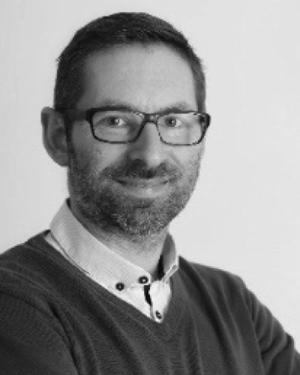 Robert Bogdanowicz合作论文数1R Sacksdavis合作论文数1Edward A. Feustel合作论文数1Hall, J.E.合作论文数1
 David B. Lomet合作论文数DB Engine Perf LLC1
 Hans-Jörg Schek合作论文数Department of Computer Science, Eidgenössische Technische Hochschule Zürich1
 Antonio L. Furtado合作论文数Departamento de Informática, Pontifícia Universidade Católica do Rio de Janeiro1
 Stan Zdonik合作论文数Department of Computer Science, Brown University1
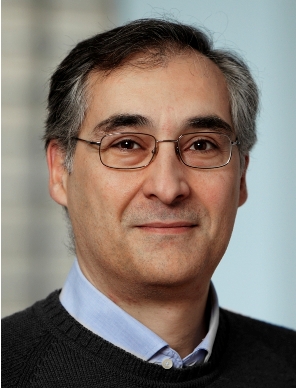 Gustavo Alonso合作论文数Systems Group, Department of Computer Science, ETH Zurich1




