Disorder-induced phenomena in quantum many-body systems pose significant challenges for analytical methods and numerical simulations at relevant time and system scales. To reduce the cost of disorder-sampling, we investigate quantum circuits initialized in states tunable to superpositions over all disorder configurations. In a translationally-invariant lattice gauge theory (LGT), these states can be interpreted as a superposition over gauge sectors. We observe localization in this LGT in the absence of disorder in one and two dimensions: perturbations fail to diffuse despite fully disorder-free evolution and initial states. However, Rényi entropy measurements reveal that superposition-prepared states fundamentally differ from those obtained by direct disorder sampling. Leveraging superposition, we propose an algorithm with a polynomial speedup in sampling disorder configurations, a longstanding challenge in many-body localization studies.
Quantum error correction (QEC) is the primary strategy for protecting a quantum computer from the environment1,2. The prerequisite of QEC is that errors must remain sufficiently rare, which requires perpetually adapting the control parameters of the computer to the drifting environmental conditions. The current solution to this problem is to terminate the entire quantum computation for recalibration, but it is incompatible with the long runtimes of future quantum algorithms3,4. Here we address this challenge by unifying calibration with computation. We grant the QEC process5-11 a dual role: its error-detection events are not only used to correct the logical quantum state but are also repurposed as a learning signal, teaching a reinforcement learning agent12-16 to continuously steer the control parameters and stabilize the quantum system during computation. We experimentally demonstrate this framework on a Willow superconducting processor, improving the logical stability of the surface code 3.5-fold against injected drift. By synthesizing our full suite of technological advances, we achieve record performance of the surface and colour codes, with average logical error per cycle of 7.72(9) × 10-4 and 8.19(14) × 10-3, respectively. Numerical simulations of large codes with tens of thousands of control parameters confirm the scalability of our RL framework, revealing an optimization speed that is independent of system size. This work thus enables a new paradigm: a quantum computer that learns from its errors and never stops computing.
The prevailing view is that quantum phenomena can be harnessed to tackle certain problems beyond the reach of classical approaches. Quantifying this capability as a quantum-classical separation and demonstrating it on current quantum processors has remained elusive. Using a superconducting qubit processor, we show that quantum contextuality enables certain tasks to be performed with success probabilities beyond classical limits. With a few qubits, we illustrate quantum contextuality with the magic square game, as well as quantify it through a Kochen–Specker–Bell inequality violation. To examine many-body contextuality, we implement the N-player GHZ game and separately solve a 2D hidden linear function problem, exceeding classical success rate in both. Our work proposes novel ways to benchmark quantum processors using contextuality-based algorithms.
Quantum observables in the form of few-point correlators are the key to characterizing the dynamics of quantum many-body systems. In dynamics with fast entanglement generation, quantum observables generally become insensitive to the details of the underlying dynamics at long times due to the effects of scrambling. In experimental systems, repeated time-reversal protocols have been successfully implemented to restore sensitivities of quantum observables. Using a 103-qubit superconducting quantum processor, we characterize ergodic dynamics using the second-order out-of-time-order correlators, OTOC^(2). In contrast to dynamics without time reversal, OTOC^(2) are observed to remain sensitive to the underlying dynamics at long time scales. Furthermore, by inserting Pauli operators during quantum evolution and randomizing the phases of Pauli strings in the Heisenberg picture, we observe substantial changes in OTOC^(2) values. This indicates that OTOC^(2) is dominated by constructive interference between Pauli strings that form large loops in configuration space. The observed interference mechanism endows OTOC^(2) with a high degree of classical simulation complexity, which culminates in a set of large-scale OTOC^(2) measurements exceeding the simulation capacity of known classical algorithms. Further supported by an example of Hamiltonian learning through OTOC^(2), our results indicate a viable path to practical quantum advantage.
The promise of fault-tolerant quantum computing is challenged by environmental drift that relentlessly degrades the quality of quantum operations. The contemporary solution, halting the entire quantum computation for recalibration, is unsustainable for the long runtimes of the future algorithms. We address this challenge by unifying calibration with computation, granting the quantum error correction process a dual role: its error detection events are not only used to correct the logical quantum state, but are also repurposed as a learning signal, teaching a reinforcement learning (RL) agent to continuously steer the physical control parameters and stabilize the quantum system during the computation. We experimentally demonstrate this framework on a Willow superconducting processor, improving the logical stability of the surface code 3.5-fold against injected drift. By synthesizing our full suite of technological advances, including RL fine-tuning of the entire system and near-optimal decoding, we achieve record performance of the surface and color codes, with average logical error per cycle of ε_L=7.72(9)×10^-4 and ε_L=8.19(14)×10^-3 respectively. Simulations of surface codes up to distance-15 with tens of thousands control parameters confirm the scalability of our RL framework, revealing an optimization speed that is independent of the system size. This work thus enables a new paradigm: a quantum computer that learns from its errors and never stops computing.
A remarkable characteristic of quantum computing is the potential for reliable computation despite faulty qubits. This can be achieved through quantum error correction, which is typically implemented by repeatedly applying static syndrome checks, permitting correction of logical information. Recently, the development of time-dynamic approaches to error correction has uncovered new codes and new code implementations. In this work, we experimentally demonstrate three time-dynamic implementations of the surface code, each offering a unique solution to hardware design challenges and introducing flexibility in surface code realization. First, we embed the surface code on a hexagonal lattice, reducing the necessary couplings per qubit from four to three. Second, we walk a surface code, swapping the role of data and measure qubits each round, achieving error correction with built-in removal of accumulated non-computational errors. Finally, we realize the surface code using iSWAP gates instead of the traditional CNOT, extending the set of viable gates for error correction without additional overhead. We measure the error suppression factor when scaling from distance-3 to distance-5 codes of Λ_35,hex = 2.15(2), Λ_35,walk = 1.69(6), and Λ_35,iSWAP = 1.56(2), achieving state-of-the-art error suppression for each. With detailed error budgeting, we explore their performance trade-offs and implications for hardware design. This work demonstrates that dynamic circuit approaches satisfy the demands for fault-tolerance and opens new alternative avenues for scalable hardware design.
A remarkable characteristic of quantum computing is the potential for reliable computation despite faulty qubits. This can be achieved through quantum error correction, which is typically implemented by repeatedly applying static syndrome checks, permitting correction of logical information. Recently, the development of time-dynamic approaches to error correction has enabled different codes and implementations that do not rely on static syndrome measurements. Here we experimentally demonstrate three time-dynamic implementations of the surface code, each offering a distinct solution to hardware design challenges faced by surface code realizations. First, we embed the surface code on a hexagonal lattice, reducing the necessary couplings per qubit from four to three. Second, we walk a surface code, swapping the role of data and measure qubits each round, achieving error correction with built-in removal of accumulated non-computational errors. Finally, we realize the surface code using iSWAP gates instead of the traditional CNOT, extending the set of viable gates for error correction without additional overhead. We measure the error suppression factor when scaling from distance-3 to distance-5 codes of Lambda 35,hex = 2.15(2), Lambda 35,walk = 1.69(6) and Lambda 35,iSWAP = 1.56(2), achieving state-of-the-art error suppression for each. Our work demonstrates that dynamic circuit approaches meet the demands for fault tolerance and enable alternative strategies for scalable hardware design.
Lattice gauge theories (LGTs)1-4 can be used to understand a wide range of phenomena, from elementary particle scattering in high-energy physics to effective descriptions of many-body interactions in materials5-7. Studying dynamical properties of emergent phases can be challenging, as it requires solving many-body problems that are generally beyond perturbative limits8-10. Here we investigate the dynamics of local excitations in a Z 2 LGT using a two-dimensional lattice of superconducting qubits. We first construct a simple variational circuit that prepares low-energy states that have a large overlap with the ground state; then we create charge excitations with local gates and simulate their quantum dynamics by means of a discretized time evolution. As the electric field coupling constant is increased, our measurements show signatures of transitioning from deconfined to confined dynamics. For confined excitations, the electric field induces a tension in the string connecting them. Our method allows us to experimentally image string dynamics in a (2+1)D LGT, from which we uncover two distinct regimes inside the confining phase: for weak confinement, the string fluctuates strongly in the transverse direction, whereas for strong confinement, transverse fluctuations are effectively frozen11,12. We also demonstrate a resonance condition at which dynamical string breaking is facilitated. Our LGT implementation on a quantum processor presents a new set of techniques for investigating emergent excitations and string dynamics.
Quantum error correction1-4 is essential for bridging the gap between the error rates of physical devices and the extremely low error rates required for quantum algorithms. Recent error-correction demonstrations on superconducting processors5-8 have focused primarily on the surface code9, which offers a high error threshold but poses limitations for logical operations. The colour code10 enables more efficient logic, but it requires more complex stabilizer measurements and decoding. Measuring these stabilizers in planar architectures such as superconducting qubits is challenging, and realizations of colour codes11-19 have not addressed performance scaling with code size on any platform. Here we present a comprehensive demonstration of the colour code on a superconducting processor8. Scaling the code distance from three to five suppresses logical errors by a factor of Λ3/5 = 1.56(4). Simulations indicate this performance is below the threshold of the colour code, and the colour code may become more efficient than the surface code following modest device improvements. We test transversal Clifford gates with logical randomized benchmarking20 and inject magic states21, a key resource for universal computation, achieving fidelities exceeding 99% with post-selection. Finally, we teleport logical states between colour codes using lattice surgery22. This work establishes the colour code as a compelling research direction to realize fault-tolerant quantum computation on superconducting processors in the near future.
Abstract Measurement has a special role in quantum theory1: by collapsing the wavefunction it can enable phenomena such as teleportation2 and thereby alter the "arrow of time" that constrains unitary evolution. When integrated in many-body dynamics, measurements can lead to emergent patterns of quantum information in space-time3-10 that go beyond established paradigms for characterizing phases, either in or out of equilibrium11-13. On present-day NISQ processors14, the experimental realization of this physics is challenging due to noise, hardware limitations, and the stochastic nature of quantum measurement. Here we address each of these experimental challenges and investigate measurement-induced quantum information phases on up to 70 superconducting qubits. By leveraging the interchangeability of space and time, we use a duality mapping9,15-17 to avoid mid-circuit measurement and access different manifestations of the underlying phases—from entanglement scaling3,4 to measurement-induced teleportation18—in a unified way. We obtain finite-size signatures of a phase transition with a decoding protocol that correlates the experimental measurement record with classical simulation data. The phases display sharply different sensitivity to noise, which we exploit to turn an inherent hardware limitation into a useful diagnostic. Our work demonstrates an approach to realize measurement-induced physics at scales that are at the limits of current NISQ processors.
We demonstrate a high dynamic range Josephson parametric amplifier (JPA) in which the active nonlinear element is implemented using an array of rf-SQUIDs. The device is matched to the 50 Ω environment with a Klopfenstein-taper impedance transformer and achieves a bandwidth of 250-300 MHz, with input saturation powers up to -95 dBm at 20 dB gain. A 54-qubit Sycamore processor was used to benchmark these devices, providing a calibration for readout power, an estimate of amplifier added noise, and a platform for comparison against standard impedance matched parametric amplifiers with a single dc-SQUID. We find that the high power rf-SQUID array design has no adverse effect on system noise, readout fidelity, or qubit dephasing, and we estimate an upper bound on amplifier added noise at 1.6 times the quantum limit. Lastly, amplifiers with this design show no degradation in readout fidelity due to gain compression, which can occur in multi-tone multiplexed readout with traditional JPAs.
The leakage of quantum information out of the two computational states of a qubit into other energy states represents a major challenge for quantum error correction. During the operation of an error-corrected algorithm, leakage builds over time and spreads through multi-qubit interactions. This leads to correlated errors that degrade the exponential suppression of the logical error with scale, thus challenging the feasibility of quantum error correction as a path towards fault-tolerant quantum computation. Here, we demonstrate a distance-3 surface code and distance-21 bit-flip code on a quantum processor for which leakage is removed from all qubits in each cycle. This shortens the lifetime of leakage and curtails its ability to spread and induce correlated errors. We report a tenfold reduction in the steady-state leakage population of the data qubits encoding the logical state and an average leakage population of less than 1 × 10 −3 throughout the entire device. Our leakage removal process efficiently returns the system back to the computational basis. Adding it to a code circuit would prevent leakage from inducing correlated error across cycles. With this demonstration that leakage can be contained, we have resolved a key challenge for practical quantum error correction at scale.
Leakage of quantum information out of computational states into higher energy states represents a major challenge in the pursuit of quantum error correction (QEC). In a QEC circuit, leakage builds over time and spreads through multi-qubit interactions. This leads to correlated errors that degrade the exponential suppression of logical error with scale, challenging the feasibility of QEC as a path towards fault-tolerant quantum computation. Here, we demonstrate the execution of a distance-3 surface code and distance-21 bit-flip code on a Sycamore quantum processor where leakage is removed from all qubits in each cycle. This shortens the lifetime of leakage and curtails its ability to spread and induce correlated errors. We report a ten-fold reduction in steady-state leakage population on the data qubits encoding the logical state and an average leakage population of less than $1 \times 10^{-3}$ throughout the entire device. The leakage removal process itself efficiently returns leakage population back to the computational basis, and adding it to a code circuit prevents leakage from inducing correlated error across cycles, restoring a fundamental assumption of QEC. With this demonstration that leakage can be contained, we resolve a key challenge for practical QEC at scale.
Using 47 superconducting qubits, we implement the kicked Ising model which exhibits Majorana edge modes (MEMs) protected by Z 2 parity symmetry. Remarkably, we find that any multi-qubit Pauli operator overlapping with the MEMs exhibits a uniform decay rate comparable to single-qubit relaxation rates, irrespective of its size or composition. This finding allows us to accurately reconstruct the exponentially localized spatial profiles of the MEMs. Spectroscopic measurements further indicate exponentially suppressed hybridization between the MEMs at larger system sizes, which manifests as a strong resilience against low-frequency noise. Our work elucidates the noise sensitivity of symmetry-protected edge modes in a solid-state environment.
We demonstrate the application of the Google Sycamore superconducting qubit quantum processor to combinatorial optimization problems with the quantum approximate optimization algorithm (QAOA). Like past QAOA experiments, we study performance for problems defined on the (planar) connectivity graph of our hardware; however, we also apply the QAOA to the Sherrington-Kirkpatrick model and MaxCut, both high dimensional graph problems for which the QAOA requires significant compilation. Experimental scans of the QAOA energy landscape show good agreement with theory across even the largest instances studied (23 qubits) and we are able to perform variational optimization successfully. For problems defined on our hardware graph we obtain an approximation ratio that is independent of problem size and observe, for the first time, that performance increases with circuit depth. For problems requiring compilation, performance decreases with problem size but still provides an advantage over random guessing for circuits involving several thousand gates. This behavior highlights the challenge of using near-term quantum computers to optimize problems on graphs differing from hardware connectivity. As these graphs are more representative of real world instances, our results advocate for more emphasis on such problems in the developing tradition of using the QAOA as a holistic, device-level benchmark of quantum processors.
Interaction in quantum systems can spread initially localized quantum information into the many degrees of freedom of the entire system. Understanding this process, known as quantum scrambling, is the key to resolving various conundrums in physics. Here, by measuring the time-dependent evolution and fluctuation of out-of-time-order correlators, we experimentally investigate the dynamics of quantum scrambling on a 53-qubit quantum processor. We engineer quantum circuits that distinguish the two mechanisms associated with quantum scrambling, operator spreading and operator entanglement, and experimentally observe their respective signatures. We show that while operator spreading is captured by an efficient classical model, operator entanglement requires exponentially scaled computational resources to simulate. These results open the path to studying complex and practically relevant physical observables with near-term quantum processors.
Realizing the potential of quantum computing will require achieving sufficiently low logical error rates. Many applications call for error rates in the $10^{-15}$ regime, but state-of-the-art quantum platforms typically have physical error rates near $10^{-3}$. Quantum error correction (QEC) promises to bridge this divide by distributing quantum logical information across many physical qubits so that errors can be detected and corrected. Logical errors are then exponentially suppressed as the number of physical qubits grows, provided that the physical error rates are below a certain threshold. QEC also requires that the errors are local and that performance is maintained over many rounds of error correction, two major outstanding experimental challenges. Here, we implement 1D repetition codes embedded in a 2D grid of superconducting qubits which demonstrate exponential suppression of bit or phase-flip errors, reducing logical error per round by more than $100\times$ when increasing the number of qubits from 5 to 21. Crucially, this error suppression is stable over 50 rounds of error correction. We also introduce a method for analyzing error correlations with high precision, and characterize the locality of errors in a device performing QEC for the first time. Finally, we perform error detection using a small 2D surface code logical qubit on the same device, and show that the results from both 1D and 2D codes agree with numerical simulations using a simple depolarizing error model. These findings demonstrate that superconducting qubits are on a viable path towards fault tolerant quantum computing.
Quantum many-body systems display rich phase structure in their low-temperature equilibrium states. However, much of nature is not in thermal equilibrium. Remarkably, it was recently predicted that out-of-equilibrium systems can exhibit novel dynamical phases that may otherwise be forbidden by equilibrium thermodynamics, a paradigmatic example being the discrete time crystal (DTC). Concretely, dynamical phases can be defined in periodically driven many-body localized systems via the concept of eigenstate order. In eigenstate-ordered phases, the entire many-body spectrum exhibits quantum correlations and long-range order, with characteristic signatures in late-time dynamics from all initial states. It is, however, challenging to experimentally distinguish such stable phases from transient phenomena, wherein few select states can mask typical behavior. Here we implement a continuous family of tunable CPHASE gates on an array of superconducting qubits to experimentally observe an eigenstate-ordered DTC. We demonstrate the characteristic spatiotemporal response of a DTC for generic initial states. Our work employs a time-reversal protocol that discriminates external decoherence from intrinsic thermalization, and leverages quantum typicality to circumvent the exponential cost of densely sampling the eigenspectrum. In addition, we locate the phase transition out of the DTC with an experimental finite-size analysis. These results establish a scalable approach to study non-equilibrium phases of matter on current quantum processors.
Strongly correlated quantum systems give rise to many exotic physical phenomena, including high-temperature superconductivity. Simulating these systems on quantum computers may avoid the prohibitively high computational cost incurred in classical approaches. However, systematic errors and decoherence effects presented in current quantum devices make it difficult to achieve this. Here, we simulate the dynamics of the one-dimensional Fermi-Hubbard model using 16 qubits on a digital superconducting quantum processor. We observe separations in the spreading velocities of charge and spin densities in the highly excited regime, a regime that is beyond the conventional quasiparticle picture. To minimize systematic errors, we introduce an accurate gate calibration procedure that is fast enough to capture temporal drifts of the gate parameters. We also employ a sequence of error-mitigation techniques to reduce decoherence effects and residual systematic errors. These procedures allow us to simulate the time evolution of the model faithfully despite having over 600 two-qubit gates in our circuits. Our experiment charts a path to practical quantum simulation of strongly correlated phenomena using available quantum devices.
Twelve-qubit quantum computing for chemistryAccurate electronic structure calculations are considered one of the most anticipated applications of quantum computing that will revolutionize theoretical chemistry and other related fields. Using the Google Sycamore quantum processor, Google AI Quantum and collaborators performed a variational quantum eigensolver (VQE) simulation of two intermediate-scale chemistry problems: the binding energy of hydrogen chains (as large as H12) and the isomerization mechanism of diazene (see the Perspective by Yuan). The simulations were performed on up to 12 qubits, involving up to 72 two-qubit gates, and show that it is possible to achieve chemical accuracy when VQE is combined with error mitigation strategies. The key building blocks of the proposed VQE algorithm are potentially scalable to larger systems that cannot be simulated classically.Science, this issue p.1084; see also p.1054
 Roberto Collins合作论文数22
 Kunal Arya合作论文数Google, Goleta, CA 94043 USA22
 B. Foxen合作论文数Department of Physics, University of California, Santa Barbara, California 93106-9530, USA22
 Brian Burkett合作论文数Google, Goleta, CA 94043 USA22
 Chris Quintana合作论文数Department of Physics, University of California22
 Andrew Dunsworth合作论文数Google AI Quantum22
 Kelly J合作论文数Department of Physics, University of California22
 Charles Neill合作论文数Google;University of California, Santa Barbara22
 Paul V Klimov合作论文数Google22
 Erik Lucero合作论文数Department of Physics;University of California , Santa Barbara;Department of Physics, University of California , Santa Barbara22Fedor Kostritsa合作论文数21Z. Jamie Yao合作论文数21Ping Yeh合作论文数21
 Frank Arute合作论文数Google Quantum, Mountain View, CA 94043 USA21
 Matt McEwen合作论文数Dept Phys, Univ Calif Santa Barbara21White T C合作论文数Department of Physics, University of California21
 Yu Chen合作论文数Google AI Quantum Lab21
 Hartmut Neven合作论文数Google21Adam Zalcman合作论文数20
 Dvir Kafri合作论文数20Nicholas Bushnell合作论文数20Seon Kim合作论文数20
 Z. Chen合作论文数Google20Evan Jeffrey合作论文数20
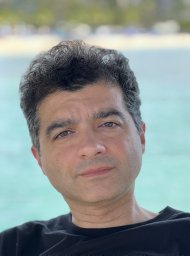 Pedram Roushan合作论文数Joseph Henry Labs, Princeton Univ20
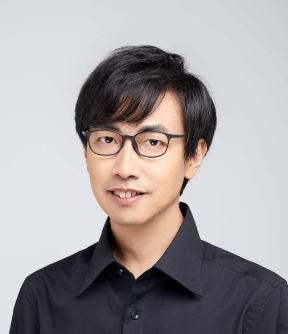 Jiang Zhang (张江)合作论文数School of Systems Science, Beijing Normal University19Cody Jones合作论文数19
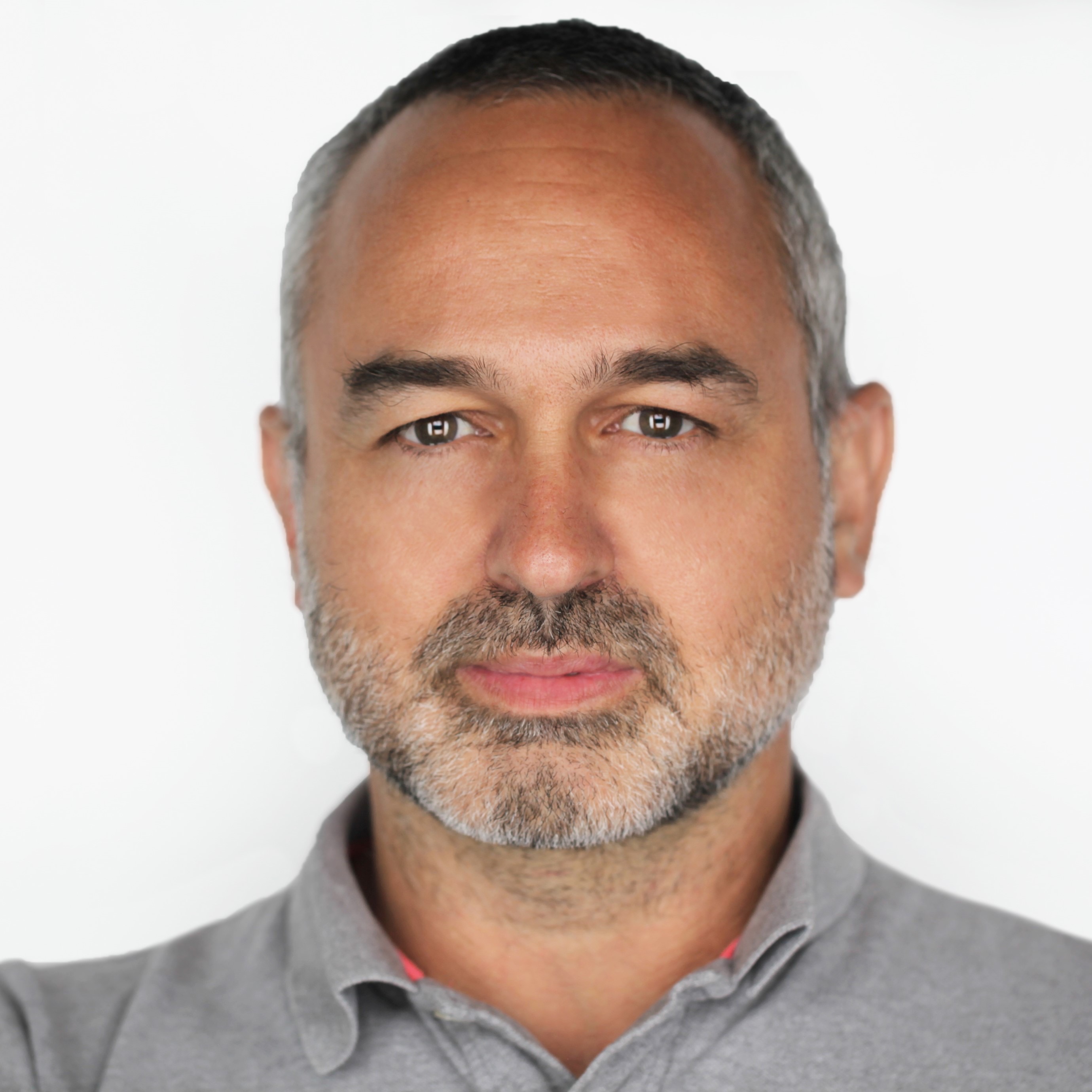 Sergio Boixo合作论文数Google19
 Matthew Neeley合作论文数Department of Physics;University of California , Santa Barbara;Department of Physics, University of California , Santa Barbara19
 Catherine Erickson合作论文数18
 William Courtney合作论文数Google Res, Mountain View, CA 94043 USA18
 Kevin Satzinger合作论文数Google Inc18
 Ryan Babbush合作论文数Google18
 Andreas Bengtsson合作论文数18
 Joseph Bardin合作论文数Department of Electrical and Computer Engineering, College of Engineering, University of Massachusetts Amherst18
 Alexander N. Korotkov合作论文数Department of Electrical and Computer Engineering, University of California, Riverside18
 Bob Buckley合作论文数Ctr Spintron & Quantum Computat, Univ Calif Santa Barbara18Kostyantyn Kechedzhi合作论文数Department of Physics;Lancaster University;Department of Physics, Lancaster University18Ben Chiaro合作论文数17Pavel Laptev合作论文数17Vladimir Shvarts合作论文数17Michael Broughton合作论文数17
 Anthony Megrant合作论文数Google, Goleta, CA 94043 USA17Orion Martin合作论文数Google Res, Mountain View, CA 94043 USA17
 Michael Newman合作论文数Google Res, Mountain View, CA 94043 USA17Alexandre Bourassa合作论文数Google Res, Mountain View, CA 94043 USA17
 Kevin C. Miao合作论文数Univ Chicago, Inst Mol Engn, Chicago, IL 60637 USA17
 Matthew P. Harrigan合作论文数Stanford Univ, Dept Chem, Stanford, CA 94305 USA17
 Sean Harrington合作论文数Google17




