The classical derivation of the well-known Vasicek model for interest rates is reformulated in terms of the associated pricing kernel. An advantage of the pricing kernel method is that it allows one to generalize the construction to the Lévy–Vasicek case, avoiding issues of market incompleteness. In the Lévy–Vasicek model the short rate is taken in the real-world measure to be a mean-reverting process with a general one-dimensional Lévy driver admitting exponential moments. Expressions are obtained for the Lévy–Vasicek bond prices and interest rates, along with a formula for the return on a unit investment in the long bond, defined by [Formula: see text], where [Formula: see text] is the price at time [Formula: see text] of a [Formula: see text]-maturity discount bond. We show that the pricing kernel of a Lévy–Vasicek model is uniformly integrable if and only if the long rate of interest is strictly positive.
Over the past decade it has become evident that intentional disinformation in the political context -- so-called fake news -- is a danger to democracy. However, until now there has been no clear understanding of how to define fake news, much less how to model it. This paper addresses both of these issues. A definition of fake news is given, and two approaches for the modelling of fake news and its impact in elections and referendums are introduced. The first approach, based on the idea of a representative voter, is shown to be suitable for obtaining a qualitative understanding of phenomena associated with fake news at a macroscopic level. The second approach, based on the idea of an election microstructure, describes the collective behaviour of the electorate by modelling the preferences of individual voters. It is shown through a simulation study that the mere knowledge that fake news may be in circulation goes a long way towards mitigating the impact of fake news.
In certain circumstances tools of Riemannian geometry are sufficient to address questions arising in the more general Finslerian context. We show that one such instance presents itself in the characterisation of geodesics in Randers spaces of constant flag curvature. To achieve a simple, Riemannian derivation of this special family of curves, we exploit the connection between Randers spaces and the Zermelo problem of time-optimal navigation in the presence of background fields. The characterisation of geodesics is then proven by generalising an intuitive argument developed recently for the solution of the quantum Zermelo problem.
In certain circumstances tools of Riemannian geometry are sufficient to address questions arising in the more general Finslerian context. We show that one such instance presents itself in the characterisation of geodesics in Randers spaces of constant flag curvature. To achieve a simple, Riemannian derivation of this special family of curves, we exploit the connection between Randers spaces and the Zermelo problem of time-optimal navigation in the presence of background fields. The characterisation of geodesics is then proven by generalising an intuitive argument developed recently for the solution of the quantum Zermelo problem.
If X and Y are independent, Y and Z are independent, and so are X and Z, one might be tempted to conclude that X, Y, and Z are independent.But it has long been known in classical probability theory that, intuitive as it may seem, this is not true in general.In quantum mechanics one can ask whether analogous statistics can emerge for configurations of particles in certain types of entangled states.The explicit construction of such states, along with the specification of suitable sets of observables that have the purported statistical properties, is not entirely straightforward.We show that an example of such a configuration arises in the case of an N-particle GHZ state, and we are able to identify a family of observables with the property that the associated measurement outcomes are independent for any choice of 2, 3, . . ., N -1 of the particles, even though the measurement outcomes for all N particles are not independent.Although such states are highly entangled, the entanglement turns out to be 'fragile', i.e. the associated density matrix has the property that if one traces out the freedom associated with even a single particle, the resulting reduced density matrix is separable.
The solution to the problem of finding a time-optimal control Hamiltonian to generate a given unitary gate, in an environment in which there exists an uncontrollable ambient Hamiltonian (e.g., a background field), is obtained. In the classical context, finding the time-optimal way to steer a ship in the presence of a background wind or current is known as the Zermelo navigation problem, whose solution can be obtained by working out geodesic curves on a space equipped with a Randers metric. The solution to the quantum Zermelo problem, which is shown here to take a remarkably simple form, is likewise obtained by finding explicit solutions to the geodesic equations of motion associated with a Randers metric on the space of unitary operators. The result reveals that the optimal control in a sense "goes along with the wind."
The quantum navigation problem of finding the time-optimal control Hamiltonian that transports a given initial state to a target state through quantum wind, that is, under the influence of external fields or potentials, is analyzed. By lifting the problem from the state space to the space of unitary gates realizing the required task, we are able to deduce the form of the solution to the problem by deriving a universal quantum speed limit. The expression thus obtained indicates that further simplifications of this apparently difficult problem are possible if we switch to the interaction picture of quantum mechanics. A complete solution to the navigation problem for an arbitrary quantum system is then obtained, and the behaviour of the solution is illustrated in the case of a two-level system.
A quantum navigation problem concerns the identification of a time-optimal Hamiltonian that realizes a required quantum process or task, under the influence of a prevailing 'background' Hamiltonian that cannot be manipulated. When the task is to transform one quantum state into another, finding the solution in closed form to the problem is nontrivial even in the case of time-independent Hamiltonians. An elementary solution, based on trigonometric analysis, is found here when the Hilbert space dimension is two. Difficulties arising from generalizations to higher-dimensional systems are discussed.
The quantum navigation problem of finding the time-optimal control Hamiltonian that transports a given initial state to a target state through quantum wind, that is, under the influence of external fields or potentials, is analysed. By lifting the problem from the state space to the space of unitary gates realising the required task, we are able to deduce the form of the solution to the problem by deriving a universal quantum speed limit. The expression thus obtained indicates that further simplifications of this apparently difficult problem are possible if we switch to the interaction picture of quantum mechanics. A complete solution to the navigation problem for an arbitrary quantum system is then obtained, and the behaviour of the solution is illustrated in the case of a two-level system.
We study a trajectory-planning problem whose solution path evolves by means of a Lie group action and passes near a designated set of target positions at particular times. This is a higher-order variational problem in optimal control, motivated by potential applications in computational anatomy and quantum control. Reduction by symmetry in such problems naturally summons methods from Lie group theory and Riemannian geometry. A geometrically illuminating form of the Euler-Lagrange equations is obtained from a higher-order Hamilton-Pontryagin variational formulation. In this context, the previously known node equations are recovered with a new interpretation as Legendre-Ostrogradsky momenta possessing certain conservation properties. Three example applications are discussed as well as a numerical integration scheme that follows naturally from the Hamilton-Pontryagin principle and preserves the geometric properties of the continuous-time solution.
Motivated by applications in computational anatomy, we consider a second-order problem in the calculus of variations on object manifolds that are acted upon by Lie groups of smooth invertible transformations. This problem leads to solution curves known as Riemannian cubics on object manifolds that are endowed with normal metrics. The prime examples of such object manifolds are the symmetric spaces. We characterize the class of cubics on object manifolds that can be lifted horizontally to cubics on the group of transformations. Conversely, we show that certain types of non-horizontal geodesic on the group of transformations project to cubics. Finally, we apply second-order Lagrange–Poincaré reduction to the problem of Riemannian cubics on the group of transformations. This leads to a reduced form of the equations that reveals the obstruction for the projection of a cubic on a transformation group to again be a cubic on its object manifold.
A quantum spline is a smooth curve parametrized by time in the space of unitary transformations, whose associated orbit on the space of pure states traverses a designated set of quantum states at designated times, such that the trace norm of the time rate of change of the associated Hamiltonian is minimized. The solution to the quantum spline problem is obtained, and is applied in an example that illustrates quantum control of coherent states. An efficient numerical scheme for computing quantum splines is discussed and implemented in the examples.
This paper develops a structure-preserving numerical integration scheme for a class of higher-order mechanical systems. The dynamics of these systems are governed by invariant variational principles defined on higher-order tangent bundles of Lie groups. The variational principles admit Lagrangians that depend on acceleration, for example. The symmetry reduction method used in the Hamilton–Pontryagin approach for developing variational integrators of first-order mechanics is extended here to higher order. The paper discusses the general approach and then focuses on the primary example of Riemannian cubics. Higher-order variational integrators are developed both for the discrete-time integration of the initial value problem and for a particular type of trajectory-planning problem. The solution of the discrete trajectory-planning problem for higher-order interpolation among points on the sphere illustrates the approach.
 Dorje C. Brody合作论文数Department of Mathematics, University of Surrey9
 Darryl Holm合作论文数Department of Mathematics, Faculty of Natural Sciences, Imperial College London;Los Alamos National Laboratory6
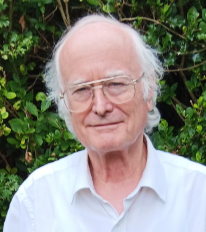 Gary Gibbons合作论文数Department of Applied Mathematics and Theoretical Physics, Faculty of Mathematics, University of Cambridge3
 Christopher L Burnett合作论文数2
 Henry O. Jacobs合作论文数2
 Lane Palmer Hughston合作论文数Department of Mathematics;College London;Department of Mathematics, King ' s College London2
 Colin Cotter合作论文数Applied Mathematics and Mathematical Physics Section, Department of Mathematics, Faculty of Natural Sciences, Imperial College London2
 Tudor Stefan Ratiu (图多尔·拉蒂乌)合作论文数School of Mathematical Sciences, Shanghai Jiao Tong University;Ecole Polytechnique F′ ed′ erale de Lausanne;University of California, Santa Cruz1
 François-Xavier Vialard合作论文数University Gustave Eiffel1
 François Gay-Balmaz合作论文数Laboratoire de Météorologie Dynamique, École Normale Supérieure/CNRS1
 Jaap Eldering合作论文数1




