An extension of standard quantum mechanics is proposed in which the Newtonian time parameter appearing in the unitary evolution operator is replaced with the time shown by a `quantum clock'. A quantum clock is defined by the following properties: (a) the time that the clock shows is non-decreasing, (b) the clock ticks at random with random tick sizes, and (c) on average the clock shows the Newtonian time. We show that the leading term in the evolution equation for the density matrix associated with any quantum clock model gives the von Neumann equation. Modifications to the von Neumann equation are worked out in detail in a parametric family of examples for which the tick sizes have a gamma distribution. The leading correction to the von Neumann equation is given by the Lindblad equation generated by the Hamiltonian, but there are higher-order terms that generalize the von Neumann equation and the Lindblad equation. Lower bounds on the parameters of these quantum clock models are derived by use of the precision limit of an atomic clock.
We introduce so-called super/sub-martingale projections as a family of endomorphisms defined on unions of Polish spaces. Such projections allow us to identify martingales as collections of transformations that relate path-valued random variables to each other under conditional expectations. In this sense, super/sub-martingale projections are random functionals that (i) are boundedness preserving and (ii) satisfy a conditional expectation criterion similar to that of the classical martingale theory. As an application to the theory of open quantum systems, we prove (a) that any system-environment interaction that manifests a supermartingale projection on the density matrix gives rise to decoherence, and (b) that any system-environment interaction that manifests a submartingale projection gives rise an increase in Shannon-Wiener information. It follows (c) that martingale projections in an open quantum system give rise both to quantum decoherence and to information gain.
It is shown that if the wave function of a quantum system undergoes an arbitrary random transformation such that the diagonal elements of the density matrix in the decoherence basis associated with a preferred observable remain constant, then (i) the off-diagonal elements of the density matrix become smaller in magnitude, and (ii) the state of the system gains information about the preferred observable from its environment in the sense that the uncertainty of the observable is reduced in the transformed state. These results do not depend on the details of how the system-environment interaction generates the random state transformation, and together imply that decoherence leads, in general, to information gain, not information loss.
Equal temperament, in which semitones are tuned in the irrational ratio of $2^{1/12} : 1$, is best seen as a serviceable compromise, sacrificing purity for flexibility. Just intonation, in which intervals are given by products of powers of $2$, $3$, and $5$, is more natural, but of limited flexibility. We propose a new scheme in which ratios of Gaussian integers form the basis of an abstract tonal system. The tritone, so problematic in just temperament, given ambiguously by the ratios $\tfrac{45}{32}$, $\tfrac{64}{45}$, $\tfrac{36}{25}$, $\tfrac{25}{18}$, none satisfactory, is in our scheme represented by the complex ratio $1 + \rm{i} : 1$. The major and minor whole tones, given by intervals of $\tfrac{9}{8}$ and $\tfrac{10}{9}$, can each be factorized into products of complex semitones, giving us a major complex semitone $\tfrac{3}{4}(1 + \rm{i})$ and a minor complex semitone $\tfrac{1}{3}(3 + \rm{i})$. The perfect third, given by the interval $\tfrac{5}{4}$, factorizes into the product of a complex whole tone $\tfrac{1}{2}(1 + 2\rm{i})$ and its complex conjugate. Augmented with these supplementary tones, the resulting scheme of complex intervals based on products of low powers of Gaussian primes leads to the construction of a complete system of major and minor scales in all keys.
We consider a rational agent who at time $0$ enters into a financial contract for which the payout is determined by a quantum measurement at some time $T>0$. The state of the quantum system is given in the Heisenberg representation by a known density matrix $\hat p$. How much will the agent be willing to pay at time $0$ to enter into such a contract? In the case of a finite dimensional Hilbert space, each such claim is represented by an observable $\hat X_T$ where the eigenvalues of $\hat X_T$ determine the amount paid if the corresponding outcome is obtained in the measurement. We prove, under reasonable axioms, that there exists a pricing state $\hat q$ which is equivalent to the physical state $\hat p$ on null spaces such that the pricing function $\Pi_{0T}$ takes the form $\Pi_{0T}(\hat X_T) = P_{0T}\,{\rm tr} ( \hat q \hat X_T) $ for any claim $\hat X_T$, where $P_{0T}$ is the one-period discount factor. By "equivalent" we mean that $\hat p$ and $\hat q$ share the same null space: thus, for any $|\xi \rangle \in \mathcal H$ one has $\langle \bar \xi | \hat p | \xi \rangle = 0$ if and only if $\langle \bar \xi | \hat q | \xi \rangle = 0$. We introduce a class of optimization problems and solve for the optimal contract payout structure for a claim based on a given measurement. Then we consider the implications of the Kochen-Specker theorem in such a setting and we look at the problem of forming portfolios of such contracts. Finally, we consider multi-period contracts.
We consider a pair of traders in a market where the information available to the second trader is a strict subset of the information available to the first trader. The traders make prices based on the information available concerning a security that pays a random cash flow at a fixed time T in the future. Market information is modelled in line with the scheme of Brody, Hughston & Macrina (2007, 2008) and Brody, Davis, Friedman & Hughston (2009). The risk-neutral distribution of the cash flow is known to the traders, who make prices with a fixed multiplicative bid-offer spread and report their prices to a game master who declares that a trade has been made when the bid price of one of the traders crosses the offer price of the other. We prove that the value of the first trader’s position is strictly greater than that of the second. The results are analyzed by use of simulation studies and generalized to situations where (a) there is a hierarchy of traders, (b) there are multiple successive trades, and (c) there is inventory aversion.
Twistor theory is the remarkable mathematical framework that was discovered by Roger Penrose in the course of research into gravitation and quantum theory. It have since developed into a broad, many-faceted programme that attempts to resolve basic problems in physics by encoding the structure of physical fields and indeed space-time itself into the complex analytic geometry of twistor space. Twistor theory has important applications in diverse areas of mathematics and mathematical physics. These include powerful techniques for the solution of nonlinear equations, in particular the self-duality equations both for the Yang-Mills and the Einstein equations, new approaches to the representation theory of Lie groups, and the quasi-local definition of mass in general relativity, to name but a few. This volume and its companions comprise an abundance of new material, including an extensive collection of Twistor Newsletter articles written over a period of 15 years. These trace the development of the twistor programme and its applications over that period and offer an overview on the current status of various aspects of that programme. The articles have been written in an informal and easy-to-read style and have been arranged by the editors into chapter supplemented by detailed introductions, making each volume self-contained and accessible to graduate students and non-specialists from other fields. Volume II explores applications of flat twistor space to nonlinear problems. It contains articles on integrable or soluble nonlinear equations, conformal differential geometry, various aspects of general relativity, and the development of Penrose's quasi-local mass construction.
Recently there has been much progress in the development of stochastic models for state reduction in quantum mechanics. In such models, the collapse of the wave function is a physical process, governed by a nonlinear stochastic differential equation that generalizes the Schrödinger equation. The present paper considers energy-based stochastic extensions of the Schrödinger equation. Most of the work carried out hitherto in this area has been concerned with models where the process driving the stochastic dynamics of the quantum state is Brownian motion. Here, the Brownian framework is broadened to a wider class of models where the noise process is of the Lévy type, admitting stationary and independent increments. The properties of such models are different from those of Brownian reduction models. In particular, for Lévy models the decoherence rate depends on the overall scale of the energy. Thus, in Lévy reduction models, a macroscopic quantum system will spontaneously collapse to an eigenstate even if the energy level gaps are small.
This paper introduces an information-based model for the pricing of storable commodities such as crude oil and natural gas. The model uses the concept of market information about future supply and demand as a basis for valuation. Physical ownership of a commodity is taken to provide a stream of convenience dividends equivalent to a continuous cash flow. The market filtration is assumed to be generated jointly by (i) current and past levels of the dividend rate, and (ii) partial information concerning the future of the dividend flow. The price of a commodity is the expectation under a suitable pricing measure of the totality of the discounted risk-adjusted future convenience dividend, conditional on the information provided by the market filtration. In the situation where the dividend rate is modelled by an Ornstein-Uhlenbeck process, the prices of options on commodities can be derived in closed form. The approach that we present can be applied to other assets that yield potentially negative effective cash flows, such as real estate, factories, refineries, mines, and power generating plants.
The phase space of a relativistic system can be identified with the future tube of complexified Minkowski space. As well as a complex structure and a symplectic structure, the future tube, seen as an eight-dimensional real manifold, is endowed with a natural positive-definite Riemannian metric that accommodates the underlying geometry of the indefinite Minkowski space metric, together with its symmetry group. A unitary representation of the 15-parameter group of conformal transformations can then be constructed that acts upon the Hilbert space of square-integrable holomorphic functions on the future tube. These structures are enough to allow one to put forward a quantum theory of phase-space events. In particular, a theory of quantum measurement can be formulated in a relativistic setting, based on the use of positive operator valued measures, for the detection of phase-space events, hence allowing one to assign probabilities to the outcomes of joint space-time and four-momentum measurements in a manifestly covariant framework. This leads to a localization theorem for phase-space events in relativistic quantum theory, determined by the associated Compton wavelength.
This paper introduces an information-based model for the pricing of storable commodities such as crude oil and natural gas.The model uses the concept of market information about future supply and demand as a basis for valuation.Physical ownership of a commodity is taken to provide a stream of convenience dividends equivalent to a continuous cash flow.The market filtration is assumed to be generated jointly by (i) current and past levels of the dividend rate, and (ii) partial information concerning the future of the dividend flow.The price of a commodity is the expectation under a suitable pricing measure of the totality of the discounted risk-adjusted future convenience dividend, conditional on the information provided by the market filtration.In the situation where the dividend rate is modelled by an Ornstein-Uhlenbeck process, the prices of options on commodities can be derived in closed form.The approach that we present can be applied to other assets that yield potentially negative effective cash flows, such as real estate, factories, refineries, mines, and power generating plants.
We present an overview of the broad class of financial models in which the prices of assets are Lévy-Ito processes driven by an $n$-dimensional Brownian motion and an independent Poisson random measure. The Poisson random measure is associated with an $n$-dimensional Lévy process. Each model consists of a pricing kernel, a money market account, and one or more risky assets. We show how the excess rate of return above the interest rate can be calculated for risky assets in such models, thus showing the relationship between risk and return when asset prices have jumps. The framework is applied to a variety of asset classes, allowing one to construct new models as well as interesting generalizations of familiar models.
 Dorje C. Brody合作论文数Department of Mathematics, University of Surrey70
 Andrea Macrina合作论文数15
 Lionel Mason合作论文数Mathematical Institute, University of Oxford;St Peter's College, University of Oxford13
 Piotr Z. Kobak合作论文数Instytut Matematyki, Uniwersytet Jagielloński11
 Daniel W. Hook合作论文数Blackett Laboratory;Imperial College London;Blackett Laboratory, Imperial College London6Anna C. T. Gustavsson合作论文数5WT SHAW合作论文数5K. Pulverer合作论文数4
 Leandro Sánchez-Betancourt合作论文数Dept Math, Kings Coll London4Paul Sommers合作论文数4Edward Hoyle合作论文数4
 Thomas Hurd合作论文数Dept . of Mathematics and Statistics;McMaster University;Dept . of Mathematics and Statistics, McMaster University4p balland合作论文数3
 George Bouzianis合作论文数Dept Comp, Goldsmiths Univ London3Xun Yang合作论文数3
 Peter Sollich合作论文数Institut Fur Theoretische Physik, Fakultat Fur Physik, Georg-August-Universitat Gottingen;Department of Mathematics, King's College London3Raymond Frederick Streater合作论文数3
 Mihail Zervos合作论文数Department of Mathematics, London School of Economics and Political Science3B. Flesaker合作论文数3
 Bernhard K. Meister合作论文数Department of Physics;Renmin University of China;Department of Physics, Renmin University of China3
 Carl M. Bender合作论文数Department of Physics, Washington University in St. Louis2
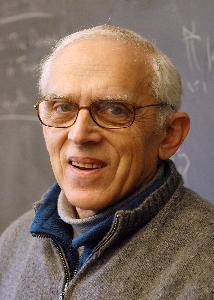 Stephen L. Adler合作论文数School of Natural Sciences, Institute for Advanced Study2Stuart Turnbull合作论文数University of Toronto2
 Richard Jozsa合作论文数Department of Applied Mathematics and Theoretical Physics, University of Cambridge;Centre for Quantum Information and Foundations, University of Cambridge2
 David M. Meier合作论文数Department of Mathematics;Institute for Mathematical Sciences;Imperial College;Institute for Mathematical Sciences, Imperial College2Bjorn Flesaker合作论文数2Ewan Mackie合作论文数2A.C.C. Coolen合作论文数1A. C. C. Coolen合作论文数1K. P. Tod合作论文数1Jeffrey R. Boland合作论文数1Martin Walker合作论文数1
 Sebastian Jaimungal合作论文数Department of Statistical Sciences, Faculty of Arts and Science, University of Toronto1
 Damir Filipovic合作论文数College of Management of Technology, École Polytechnique Fédérale de Lausanne1
 Simon Salamon合作论文数Department of Mathematics, Faculty of Natural, Mathematical & Engineering Sciences, King’s College London1
 Roger Penrose合作论文数Wadham College, University of Oxford;St John's College, University of Cambridge;University College London1
 Martin Bojowald合作论文数Department of Physics, Eberly College of Science, The Pennsylvania State University;Center for Theoretical and Observational Cosmology, The Pennsylvania State University1
 L. P. Horwitz合作论文数School of Physics and Astronomy, Tel Aviv University1
 David Robert Robinson合作论文数sandia national laboratories1
 Paul Tod合作论文数Mathematical Institute, University of Oxford1
 Todd A. Brun合作论文数Ming Hsieh Department of Electrical and Computer Engineering - Systems, University of Southern California;Thomas Lord Department of Computer Science, University of Southern California;Institute for Quantum Information and Matter, California Institute of Technology1
 William K. Wootters合作论文数Department of Physics, Williams College1Veeravalli S. Varadarajan合作论文数1
 Matheus Grasselli合作论文数Dept . of Mathematics and Statistics;McMaster University;Dept . of Mathematics and Statistics, McMaster University1Mark H. A. Davis合作论文数Control Engineering Research Centre;City University;Control Engineering Research Centre, City University1Joanna Syroka合作论文数1Robyn L. Friedman合作论文数1H.-H. Von Borzeszkowski合作论文数1Avraam Rafailidis合作论文数1




