A bstract A search for the exclusive decays of the Higgs and Z bosons to a ϕ or ρ meson and a photon is performed with a pp collision data sample corresponding to an integrated luminosity of up to 35 . 6 fb −1 collected at $$ \sqrt{s}=13 $$ s = 13 TeV with the ATLAS detector at the CERN Large Hadron Collider. These decays have been suggested as a probe of the Higgs boson couplings to light quarks. No significant excess of events is observed above the background, as expected from the Standard Model. Upper limits at 95% confidence level were obtained on the branching fractions of the Higgs boson decays to ϕ γ and ρ γ of 4 . 8 × 10 −4 and 8 . 8 × 10 −4 , respectively. The corresponding 95% confidence level upper limits for the Z boson decays are 0 . 9 × 10 −6 and 25 × 10 −6 for ϕ γ and ρ γ, respectively.
A search for leptoquarks decaying into the bτ final state is performed using Run 2 proton-proton collision data from the Large Hadron Collider, corresponding to an integrated luminosity of 139 fb−1 at √(s) = 13 TeV recorded by the ATLAS detector. The benchmark models considered in this search are vector leptoquarks with electric charge of 2/3e and scalar leptoquarks with an electric charge of 4/3e. No significant excess above the Standard Model prediction is observed, and 95
This letter presents a search for narrow, high-mass resonances in the Zγ final state with the Z boson decaying into a pair of electrons or muons. The s=13 TeV pp collision data were recorded by the ATLAS detector at the CERN Large Hadron Collider and have an integrated luminosity of 140 fb−1. The data are found to be in agreement with the Standard Model background expectation. Upper limits are set on the resonance production cross section times the decay branching ratio into Zγ. For spin-0 resonances produced via gluon–gluon fusion, the observed limits at 95% confidence level vary between 65.5 fb and 0.6 fb, while for spin-2 resonances produced via gluon–gluon fusion (or quark–antiquark initial states) limits vary between 77.4 (76.1) fb and 0.6 (0.5) fb, for the mass range from 220 GeV to 3400 GeV.
It has been found that the theoretical predictions for W and Z boson cross sections, and for the W boson charge asymmetry, which are labelled as NNPDF3.1 [1] have in fact been calculated using the NNPDF3.0 PDF set [2] instead.
The production cross-sections for W +/- and Z bosons are measured using ATLAS data corresponding to an integrated luminosity of 4.0 pb-1 collected at a centre-ofmass energy v s = 2.76 TeV. The deca ...
The product ion rate o f electrons with momentum p > 4 G e V / c and large m o m e n t u m transverse to the jet containing the electron has been measured in 136 000 hadronic decays o f the Z ~ recorded with the O P A L detector at LEP in 1990. The dominan t source o f these electrons is the semileptonic decay of hadrons containing b quarks. I f we assume that the semileptonic branching fraction o f b hadrons produced on the Z ~ resonance is the same as the branching fraction measured at the r ( 4 S) resonance, we determine Fse = 394 + 13 + 32 MeV, where the first error is statistical and the second error is systematic. The sensitivity o f the result to this assumption is discussed. We have reduced the dependence o f our result on the model o f b hadron semileptonic decay by taking into account the correlat ion between the model dependence o f the branching fractions measured at the Y (4 S ) and of our kinematic acceptance for electrons.
This paper reports searches for heavy resonances decaying into ZZ or ZW using data from proton-proton collisions at a centre-of-mass energy of √(s)=13 TeV. The data, corresponding to an integrated luminosity of 36.1 fb −1 , were recorded with the ATLAS detector in 2015 and 2016 at the Large Hadron Collider. The searches are performed in final states in which one Z boson decays into either a pair of light charged leptons (electrons and muons) or a pair of neutrinos, and the associated W boson or the other Z boson decays hadronically. No evidence of the production of heavy resonances is observed. Upper bounds on the production cross sections of heavy resonances times their decay branching ratios to ZZ or ZW are derived in the mass range 300-5000GeV within the context of Standard Model extensions with additional Higgs bosons, a heavy vector triplet or warped extra dimensions. Production through gluon-gluon fusion, Drell-Yan or vector-boson fusion are considered, depending on the assumed model.
Searches for the exclusive decays of the Higgs and Z bosons into a J/ψ, ψ(2S), or ϒ(nS) (n=1,2,3) meson and a photon are performed with a pp collision data sample corresponding to an integrated luminosity of 36.1fb−1 collected at s=13TeV with the ATLAS detector at the CERN Large Hadron Collider. No significant excess of events is observed above the expected backgrounds, and 95% confidence-level upper limits on the branching fractions of the Higgs boson decays to J/ψγ, ψ(2S)γ, and ϒ(nS)γ of 3.5×10⁻⁴, 2.0×10⁻³, and (4.9,5.9,5.7)×10−4, respectively, are obtained assuming Standard Model production. The corresponding 95% confidence-level upper limits for the branching fractions of the Z boson decays are 2.3×10⁻⁶, 4.5×10⁻⁶ and (2.8,1.7,4.8)×10−6, respectively.
AbstractAn angular analysis of the decayBd0 → K∗μ+μ−is presented, based on proton-proton collision data recorded by the ATLAS experiment at the LHC. The study is using 20.3 fb−1of integrated luminosity collected during 2012 at centre-of-mass energy of$$ \sqrt{s}=8 $$s=8TeV. Measurements of theK*longitudinal polarisation fraction and a set of angular parameters obtained for this decay are presented. The results are compatible with the Standard Model predictions.
In Fig. 5 of our original article, we compared measurements and predictions of the charge yield Qy. In that figure, the LUX points were misrepresented, and therefore we present here in Fig. 1 the corrected points from Ref. [1].
Abstract A measurement of the t-channel single-top-quark and single-top-antiquark production cross-sections in the lepton+jets channel is presented, using 3.2 fb−1 of proton-proton collision data at a centre-of-mass energy of 13 TeV, recorded with the ATLAS detector at the LHC in 2015. Events are selected by requiring one charged lepton (electron or muon), missing transverse momentum, and two jets with high transverse momentum, exactly one of which is required to be b-tagged. Using a binned maximum-likelihood fit to the discriminant distribution of a neural network, the cross-sections are determined to be σ(tq) = 156 ± 5 (stat.) ± 27 (syst.) ± 3 (lumi.) pb for single top-quark production and σ t ¯ q = 91 ± 4 $$ \sigma \left(\overline{t}q\right)=91\pm 4 $$ (stat.) ± 18 (syst.) ± 2 (lumi.) pb for single top-antiquark production, assuming a top-quark mass of 172.5 GeV. The cross-section ratio is measured to be R t = σ t q / σ t ¯ q = 1.72 ± 0.09 $$ {R}_t=\sigma (tq)/\sigma \left(\overline{t}q\right)=1.72\pm 0.09 $$ (stat.) ± 0.18 (syst.). All results are in agreement with Standard Model predictions.
bstract To probe the W tb vertex structure, top-quark and W -boson polarisation observables are measured from t -channel single-top-quark events produced in proton-proton collisions at a centre-of-mass energy of 8 TeV. The dataset corresponds to an integrated luminosity of 20.2 fb −1 , recorded with the ATLAS detector at the LHC. Selected events contain one isolated electron or muon, large missing transverse momentum and exactly two jets, with one of them identified as likely to contain a b -hadron. Stringent selection requirements are applied to discriminate t -channel single-top-quark events from background. The polarisation observables are extracted from asymmetries in angular distributions measured with respect to spin quantisation axes appropriately chosen for the top quark and the W boson. The asymmetry measurements are performed at parton level by correcting the observed angular distributions for detector effects and hadronisation after subtracting the background contributions. The measured top-quark and W -boson polarisation values are in agreement with the Standard Model predictions. Limits on the imaginary part of the anomalous coupling g R are also set from model-independent measurements.
We describe the purification of xenon from traces of the radioactive noble gas radon using a cryogenic distillation column. The distillation column was integrated into the gas purification loop of the XENON100 detector for online radon removal. This enabled us to significantly reduce the constant \(^{222}\)Rn background originating from radon emanation. After inserting an auxiliary \(^{222}\)Rn emanation source in the gas loop, we determined a radon reduction factor of \(R\,>\,27\) (95% C.L.) for the distillation column by monitoring the \(^{222}\)Rn activity concentration inside the XENON100 detector.
The cross section of the pure QED process e+ e-> "/"/ has been measured using data accumulated during the 1989 and 1990 scans of the Z resonance at LEP. Both the energy dependence and the angular distribution are in good agreement with the QED prediction, Upper limits on the branching ratios of Z -> "f"f, Z -> 1r "f and Z -> rn have been set at lAx I o-4 , 1 Ax 10-'1 and 2.0 x 10⁻⁴ respectively. Lower limits on the cutoff parameters of the modified electron propagator have been found to be A+> 117 GeV and A_ > 110 GeV. The reaction e+e-> "/"1"1 has also been studied and was found to be consistent with the QED prediction_ An upper limit on the branching ratio of Z _,"/"/"/has been set at 6 .. 6 x 10• All the limits are given at 95% confidence leveL (Submitted to Physics Letters D) The OPAL Collaboration lii.Z. Akrawy 12 , G. Alexander22 , J. Allison 15 , P.P. Allport5 , K.J. Anderson9 , J.C. Armitage6 , G.T.J. Arnison 9, P. Ashton15 , G. Azuelos·d, J.T.l\I. Baines15 , A. H. Ball 16 , J. Banks15 , G.J. Barker , R.J. Barlow 15 , .I.R. Batley5 , G. Beaudoin'\ A. Beck 22 , J. Becker10 , T. Behnkes, K.W. Bell' 9 , G. Bella22 , S. Bethken, 0. Bicbel , U. Binder 10 , I.J. Bloodworth', P. Bockn, II. Breukers, R.l\1. Brown 19 , R. Bruns, A. Buijss, H.J. Burckharts, P. Capiluppi2 , R. K. Carncgie , A.A. Carler12 , J .R. Carter5 , C.Y. Chang16 , D.G. Charltons, J .T.l\1. Chrin 15 , P.E.L. Clarkc , I. Cohen , W.J. Collins , J .E. Conboy14 , i\1. Couch , 1\l. Coupland , 1\l. Cuffiani , S. Dado21 , G.l\1. Dallamlle , S. De Jongs, P. Dcbu20 , 1\l.l\l. Deninno , A. Dieckmann ll, 1\l. Dittmar', 1\l.S. Dixit 1 , E. Duchovni25 , l.P. Duerdoth 15 , D .. J.P. Dumas6 , P.A. Elcombe , P.G. Estabrooks6 , E. Etzion , F. Fabbr?, P. Farthouat20 , H.l\1. Fischer , D.G. Fong , 1\LT. French19 , C. Fukunaga , A. Gaidot20 , 0. GaneF5 , J.W. Garyll, .) . Gascon , N .I. Geddes19 , C.N .P. Gee19 , C. Geich-GimbeP, S. W. Gensler9 , F .X. Gentit20 , G. Giacomcll?, V. Gibson 5 , W.R. Gibson 12 , J.D. Gillies , J. Goldberg21 , i\I.J. Goodrick5 , W. Gorn4 , D. Granite21 , E. Gross25 , J. Grunhaus , H. Hagedorn 10 , J. llagemanns, 1\l.llansrouls, C.K.IIargrove7, I. Harrus21 , J. Hart5 , P.l\1. Hattersley', 1\l.llauschilds, C.l\1. Haw kess, E. Heflin 4 , R.J. llemingway6 , ltD. Heuers, J .C. llill5 , S.J. Hillier1 , D.A.llinshaw 17 , C. Ho4, J.D. Hobbs9 , P.R. Hobson', D. Hochman25 , B. HoUS, R.J. l!omer1 , S.R. Ilou16 , C.P.llowarth1\ R.E.llughcs-Jones , R. Humbert10 , P.lgo-Kemcnesn, H. lhssenll, D.C. lmrie24 , L. Janissen6 , A. Jawahery , P.\V. Jcffreys19 , H. Jeremie , M.Jimacks,.M.Jobes1 , R.W.L.Jones12 , P.Jovanovic1 , D. Karlen6 , K.Kawagoe23 , T. Kawamoto23 , R.G. Kcllogg16 , B.W. Kennedy 14 , C. Klein worts, D.E. Klem1s, G. Knop3 , T. Kobayash? , T.P. Kokott3 , L. Kopkes, R. Kowalewski6 , H. Kreutzmann\ J. Kroll , 1\I. Kuwano , P. Kyberd 12 , G.D. Lalferty'5 , F. Lamarche17 , W.J. Larson', J.G. Layter , P. Le Du20 , P. Leblanc17 , A.M. Lee16 , I\!. H. Lehto14 , D. Lellouchs, P. Lennertn, C. Leroy17 , L. Lessard17 , S. Levegriin3 , L. Levinson25 , S.L. Lloyd , F.K. Loebinger15 , J.l\1. Lorah16 , B. Lora.zo17 , 1\l.J. Losty 7, J. Ludwig10 , J. l\Ia4•b, A.A.l\!acbeth15 , 1\L 1\Iannellis, S. Marcellini2, G.l\Iaringer , A.J.l\Iartin12 , J.P. i\Iartin , T. Mashimo , P.l\Iiittig , U.l\Iaur , T.J. Mcl\!ahon 1 , J.R.l\IcNutt24 , F. Meijerss, D. Mensznern, F.S.l\Ierritt9 , H.l\Ies 7, A.l\Iichelinis, R.P. Middleton 19 , G.l\Iikenberg, J. l\!ildenbcrger6 , D.J. Miller 14 , C.l\Iilstcne22 , l\l.l\Iinowa23 , W.l\lohr10 , C.l\loisan17 , A. Montanari2 , T. Mori23 , 1\l.W. Moss , P.G.l\Iurphy' 5 , W.J.l\lurray , B. Ncllen , lUI. Nguyen , 1\l. Nozaki , A.J.P. O'Dowd15 , S.W. O'Neales,c, B.P. O'Neill', F.G. Oakham', F. Odorici2 , 1\I. Ogg6 , II. Oh 4 , 1\I.J. Oreglia9 , S. Orito23 , J.P. Pansart , G.N. Patrick19 , S.J. Pawley' 5 , P. Pfister10 , J.E. Pilcher9 , J.L. Pinfold25 , D.E. Planes, B. Pol?, A. Pouladdej", E. Prebyss, T.W. Pritchard 12 , II. Przysiezniak17 , G. Quasts, M.W. Redmond 9 , D.L. Rees1 , 1\1. Regimbald11 , K. Riles', C.M. Roach , S.A. Robins 12 , A. Rollnik3 , J.l\1. Roney9 , S. Rossberg 10 , A.M. Rossi2·•, P. Routenburg , K. Runge 10 , 0. Runolfssons, S. Sanghera6 , R.A. Sansum , 1\1. Sasaki23 , B.J. Saunders , A.D. Schaile10 , 0. Scha.ile10 , W. Schappert6 , P. Scha.rlf-Ha.nsens, S. Schreiber3 , J. Schwarz , A. Shapira.25 , B.C. Shen\ P. Sherwood", A. Simon3 , P. Singh 12 , G.P. Siroli2 , A. Skuja16 , A.M. Smiths, T.J. Smiths, G.A. Snow 16 , R.W. Springer , 1\I. Sproston , K. Stephens , H.E. Stier10 , R. Stroehmerll, D. Strom9 , H. Ta.kcda , T. Takeshita. , P. Taras, N.J. Tha.ckra.y', T. Tsukamoto23 , I\!. F. Turner5 , G. Tysarczyk-Niemeyeru, D. Va.n den pla.s , R. Va.n Kootens, G.J. VanDalen', G. Va.sseur20 ,
bstract We present charged-particle distributions sensitive to the underlying event, measured by the ATLAS detector in proton-proton collisions at a centre-of-mass energy of 13 TeV, in low-luminosity Large Hadron Collider fills corresponding to an integrated luminosity of 1.6 nb −1 . The distributions were constructed using charged particles with absolute pseudorapidity less than 2.5 and with transverse momentum greater than 500 MeV, in events with at least one such charged particle with transverse momentum above 1 GeV. These distributions characterise the angular distribution of energy and particle flows with respect to the charged particle with highest transverse momentum, as a function of both that momentum and of charged-particle multiplicity. The results have been corrected for detector effects and are compared to the predictions of various Monte Carlo event generators, experimentally establishing the level of underlying-event activity at LHC Run 2 energies and providing inputs for the development of event generator modelling. The current models in use for UE modelling typically describe this data to 5% accuracy, compared with data uncertainties of less than 1%.
A search for pair production of a scalar partner of the top quark in events with four or more jets plus missing transverse momentum is presented. An analysis of 36.1 fb −1 of √(s)=13 TeV proton-proton collisions collected using the ATLAS detector at the LHC yields no significant excess over the expected Standard Model background. To interpret the results a simplified supersymmetric model is used where the top squark is assumed to decay via t̃_1→t^(∗)_1^0 and t̃_1→ b_1^±→ bW^(∗)_1^0 , where χ 1 0 (χ 1 ± ) denotes the lightest neutralino (chargino). Exclusion limits are placed in terms of the top-squark and neutralino masses. Assuming a branching ratio of 100
The W boson angular distribution in events with high transverse momentum jets is measured using data collected by the ATLAS experiment from proton–proton collisions at a centre-of-mass energy √ s = 8 TeV at the Large Hadron Collider, corresponding to an integrated luminosity of 20 . 3 fb − 1 . The focus is on the contributions to W + jets processes from real W emission, which is achieved by studying events where a muon is observed close to a high transverse momentum jet. At small angular separations, these contributions are expected to be large. Various theoretical models of this process are compared to the data in terms of the absolute cross-section and the angular distributions of the muon from the leptonic W decay.
 G. Mikenberg合作论文数399
 Steve Lloyd合作论文数School of Physical and Chemical Sciences, Queen Mary University of London;Institute of Physics, Queen Mary University of London394
 Peter Mättig合作论文数University of Wuppertal384
 Günter Duckeck合作论文数Faculty of Physics, Ludwig Maximilian University of Munich369Gabor Bella合作论文数Department of Physics and Astronomy Tel Aviv University 69978 Tel Aviv Israel363
 Gideon Alexander合作论文数School of Physics and Astronomy, Tel-Aviv University357R. Keeler合作论文数354
 Georges Azuelos合作论文数Department of Physics, Faculty of Arts and Science, Université de Montréal;TRIUMF351
 Chris Hawkes合作论文数School of Physics and Astronomy, University of Birmingham344
 Otmar Biebel合作论文数Fakultät für Physik, Ludwig-Maximilians-Universität München343
 Ken Bell合作论文数Rutherford Appleton Laboratory341D. G. Charlton合作论文数339M. Hauschild合作论文数European Organisation for Particle Physics CERN CH-1211 Geneva 23 Switzerland338F. K. Loebinger合作论文数337D. Lellouch合作论文数334L. Levinson合作论文数334
 Paul de Jong合作论文数Institute of Physics, Faculty of Science, Universiteit van Amsterdam;Nikhef332
 Richard Batley合作论文数The Cavendish Laboratory, Department of Physics, University of Cambridge332P. Sherwood合作论文数331
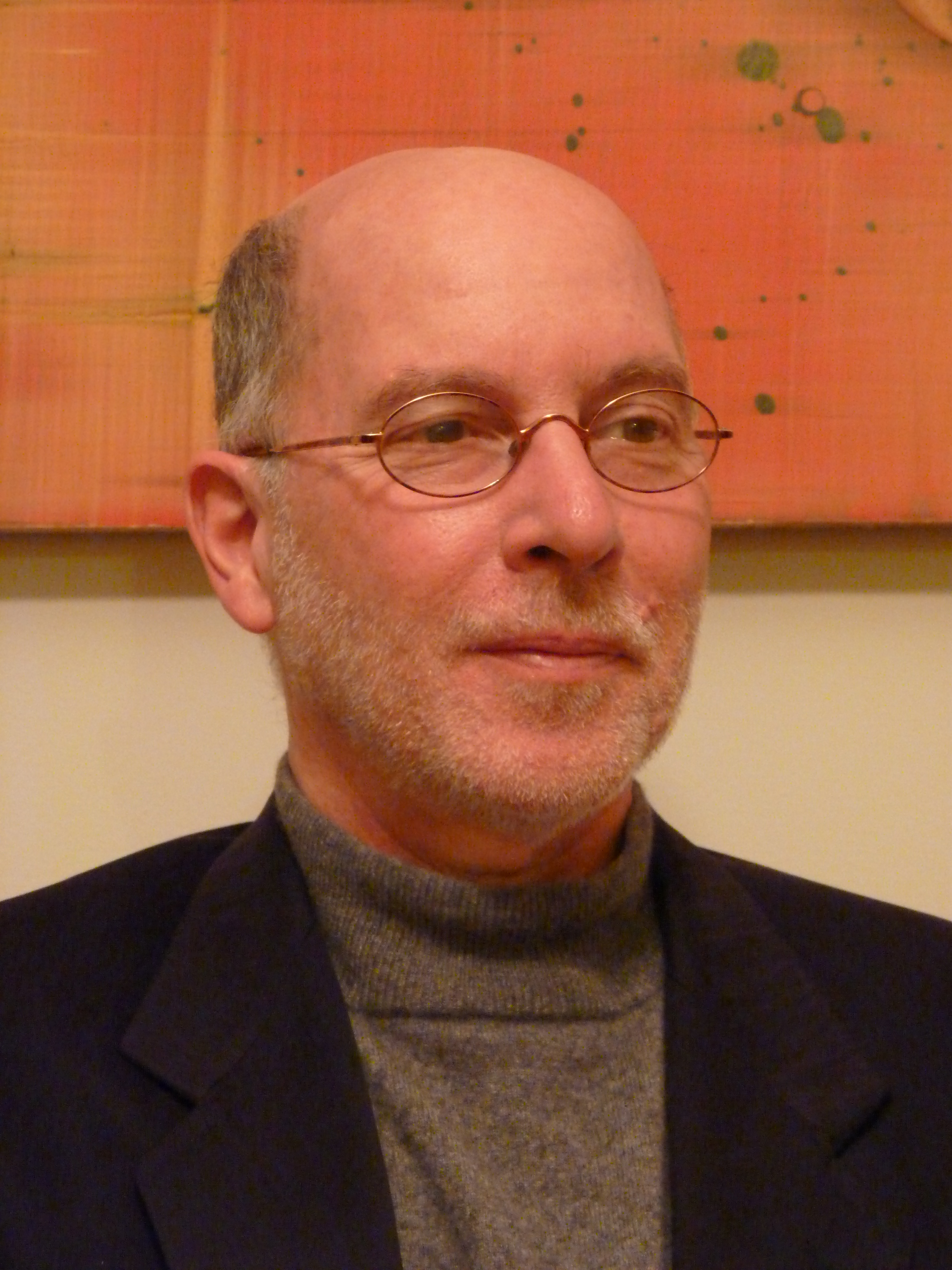 Mark J. Oreglia合作论文数Department of Physics, The University of Chicago;Enrico Fermi Institute, The University of Chicago328r so合作论文数326
 Norbert Wermes合作论文数Physikalisches Institut, Universitat Bonn325P. M. Watkins合作论文数324
 Roger Barlow合作论文数School of Computing and Engineering, University of Huddersfield323
 James Pinfold合作论文数Department of Physics, Faculty of Science, University of Alberta323
 Shlomit Tarem合作论文数Department of Physics, Technion–Israel Institute of Technology;The Center of Research Excellence in The Quantum Universe320
 David Axen合作论文数Department of Physics & Astronomy, The University of British Columbia316Antony A. Carter合作论文数Queen Mary University of London315
 Eilam Gross合作论文数Department of Particle Physics and Astrophysics, Faculty of Physics, Weizmann Institute of Science314S. Dado合作论文数313T. Kawamoto合作论文数313F. S. Merritt合作论文数313
 Heinrich Voß合作论文数Institute of Mathematics, Hamburg University of Technology313T. R. Wyatt合作论文数312
 J. Colin Hill合作论文数Department of Physics, Columbia University312
 Stefan Kluth合作论文数Max Planck Institute for Physics311J. Ludwig合作论文数310
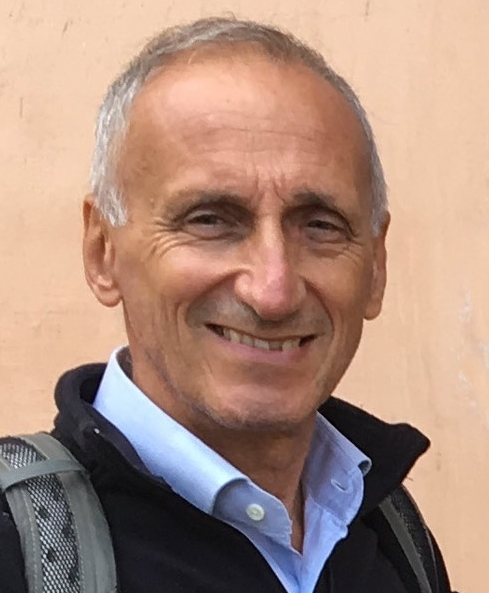 Fabrizio Fabbri合作论文数Istituto Nazionale di Fisica Nucleare Sezione di Bologna309Ties Behnke合作论文数308H. J. Burckhart合作论文数European Organisation for Particle Physics CERN CH-1211 Geneva 23 Switzerland308Aldo Michelini合作论文数305P. Igo-Kemenes合作论文数304
 Waad Mohr合作论文数303
 David Leith合作论文数Stanford Linear Accelerator Center303P. Jovanovic合作论文数303K. Kawagoe合作论文数International Centre for Elementary Particle Physics and Department of Physics University of Tokyo 113 Tokyo303K. J. Anderson合作论文数302G. Herten合作论文数301Shuji Orito合作论文数298




