We classify primitive quandles with alternating displacement group. All of them are conjugation quandles, and the following is a complete list of the underlying conjugacy classes: transpositions in $S_n$ for $n=3$ and $n\geq5$; fixpoint-free involutions in $S_n$ for $n\equiv 2\pmod 4$, $n\geq6$; fixpoint-free involutions in $A_n$ for $n\equiv 0\pmod 4$, $n\geq12$; and one exceptional conjugacy class of size 36 in a group of order 720.
We study rack and quandle coverings from a universal algebraic viewpoint. We show how coverings can be understood using the concept of strongly abelian congruences. We provide an abstract characterization of several particular types of covering extensions, such as central and abelian ones. We present a new characterization of simply connected quandles and we show that the categorical notion of normal extension coincides with the notion of central covering. We answer several questions from the papers of Clark, Saito and Vendramin about identities preserved by quandle coverings.
We adapt the abstract concepts of abelianness and centrality of universal algebra to the context of inverse semigroups. We characterize abelian and central congruences in terms of the corresponding congruence pairs. We relate centrality to conjugation in inverse semigroups. Subsequently we prove that solvable and nilpotent inverse semigroups are groups.
First of all, we recall the well known notion of semidirect product both for classical algebraic structures (like groups and rings) and for more recent ones (digroups, left skew braces, heaps, trusses). Then we analyse the concept of semidirect product for an arbitrary algebra $A$ in a variety $\cal{V}$ of type~$\cal{F}$. An inner semidirect-product decomposition $A=B \ltimes\omega$ of $A$ consists of a subalgebra $B$ of $A$ and a congruence $\omega$ on $A$ such that $B$ is a set of representatives of the congruence classes of $A$ modulo $\omega$. An outer semidirect product is the restriction to $B$ of a functor from a suitable category $\cal{C}_B$ containing $B$, called the enveloping category of $B$, to the category Set$_*$ of pointed sets.
We find a short equational basis for the variety of 3-supernilpotent loops. We also present a conceptually simple proof that k-nilpotence and k-supernilpotence are equivalent for groups. Connections between 3-supernilpotent loops, Moufang loops, code loops, automorphic loops and AIM loops are explored.
We introduce the abstract concept of supernilpotence in loop theory, and relate it to existing concepts, namely, central nilpotence and nilpotence of the multiplication group. We prove that the class of supernilpotence is greater or equal than the class of nilpotence of the multiplication group, and combining existing results, we show that a finite loop is supernilpotent if and only if its multiplication group is nilpotent. We also provide a new exposition of a classical result and crucial ingredient, that loops with a nilpotent multiplication group are centrally nilpotent and admit a prime decomposition.
Idempotent left nondegenerate solutions of the Yang-Baxter equation are in one-to-one correspondence with twisted Ward left quasigroups, which are left quasigroups satisfying the identity $(x*y)*(x*z)=(y*y)*(y*z)$. Using combinatorial properties of the Cayley kernel and the squaring mapping, we prove that a twisted Ward left quasigroup of prime order is either permutational or a quasigroup. Up to isomorphism, all twisted Ward quasigroups $(X,*)$ are obtained by twisting the left division operation in groups (that is, they are of the form $x*y=\psi(x^{-1}y)$ for a group $(X,\cdot)$ and its automorphism $\psi$), and they correspond to idempotent latin solutions. We solve the isomorphism problem for idempotent latin solutions.
Wolfgang Rump showed that there is a one-to-one correspondence between nondegenerate involutive set-theoretic solutions of the Yang-Baxter equation and binary algebras in which all left translations $L_x$ are bijections, the squaring map is a bijection, and the identity $(xy)(xz) = (yx)(yz)$ holds. We call these algebras \emph{rumples} in analogy with quandles, another class of binary algebras giving solutions of the Yang-Baxter equation. We focus on latin rumples, that is, on rumples in which all right translations are bijections as well. We prove that an affine latin rumple of order $n$ exists if and only if $n=p_1^{p_1 k_1}\cdots p_m^{p_m k_m}$ for some distinct primes $p_i$ and positive integers $k_i$. A large class of affine solutions is obtained from nonsingular near-circulant matrices $A$, $B$ satisfying $[A,B]=A^2$. We characterize affine latin rumples as those latin rumples for which the displacement group generated by $L_x L_y\inv$ is abelian and normal in the group generated by all translations. We develop the extension theory of rumples sufficiently to obtain examples of latin rumples that are not affine, not even isotopic to a group. Finally, we investigate latin rumples in which the dual identity $(zx)(yx) = (zy)(xy)$ holds as well, and we show, among other results, that the generators $L_x L_y\inv$ of their displacement group have order dividing four.
We are interested in abstract conditions that characterize homomorphic images of affine quandles. Our main result is a two-fold characterization of this class: one by a property of the displacement group, the other one by a property of the corresponding affine mesh. As a consequence, we obtain efficient algorithms for recognizing homomorphic images of affine quandles, including an efficient explicit construction of the covering affine quandle.
We adapt the commutator theory of universal algebra to the particular setting of racks and quandles, exploiting a Galois connection between congruences and certain normal subgroups of the displacement group. Congruence properties such as abelianness and centrality are reflected by the corresponding relative displacement groups, and so do the global properties, solvability and nilpotence. To show the new tool in action, we present three applications: non-existence theorems for quandles (no connected involutory quandles of order $2^k$, no latin quandles of order $\equiv2\pmod4$), a non-colorability theorem (knots with trivial Alexander polynomial are not colorable by latin quandles), and a strengthening of Glauberman's results on Bruck loops of odd order.
1.1. Gaussova věta. Polynomy jedné proměnné nad tělesem tvoří eukleidovský obor, a podle Věty ?? jsou gaussovské. Polynomy více proměnných, nebo třeba polynomy nad Z, eukleidovské nejsou. K důkazu jejich gaussovskosti potřebujeme jiný trik: dělitelnost polynomů nad oborem R lze do jisté míry převést na dělitelnost polynomů nad jeho podílovým tělesem Q a na dělitelnost v oboru R (viz Lemma 1.2 a Věta 1.3). Důsledkem bude, že z gaussovskosti R plyne gaussovskost R[x], čemuž se říká Gaussova věta (Věta 1.4). Pro účely této sekce se nám budou hodit následující definice. Buď f = ∑n i=0 aix i polynom z R[x]. Definujeme
A quandle will be called quasi-affine, if it embeds into an affine quandle. Our main result is a characterization of quasi-affine quandles, by group-theoretic properties of their displacement group, by a universal algebraic condition coming from the commutator theory, and by an explicit construction over abelian groups. As a consequence, we obtain efficient algorithms for recognizing affine and quasi-affine quandles, and we enumerate small quasi-affine quandles. We also prove that the “abelian implies quasi-affine” problem of universal algebra has affirmative answer for the class of quandles.
1.1. Definice a příklady. Motivací teorie grup je především studium nejrůznějších symetrií matematických objektů. Pojem pochází z Galoisovy teorie a původně označoval množinu (skupinu) permutací G uzavřenou na skládání, tj. splňující π ◦ σ ∈ G pro všechna π, σ ∈ G. Abstrakcí tohoto pojmu vznikla rozsáhlá větev algebry, zvaná teorie grup. Aplikace nachází mimo jiné v kombinatorice (zejména teorie konečných grup) a geometrii (zejména teorie reprezentací, zkoumající maticové grupy). Teorie abelovských grup se výrazně liší od teorie grup obecně nekomutativních. Abelovské grupy připomínají vektorové prostory (viz Tvrzení 1.2 a poznámky pod ním) a z tohoto pohledu pochází většina metod k jejich studiu. Aplikace často vedou do teorie čísel.
We describe an linear representation for Abel-Grassmann groups. As a consequence, we obtain or improve many previous results. In particular, enumeration of Abel-Grassmann groups up to isomorphism is obtained for orders <512.
We enumerate three classes of non-medial quasigroups of order 243 = 3(5) up to isomorphism. There are 17 004 non-medial trimedial quasigroups of order 243 (extending the work of Kepka, Beneteau and Lacaze), 92 non-medial distributive quasigroups of order 243 (extending the work of Kepka and Nemec), and 6 non-medial distributive Mendelsohn quasigroups of order 243 (extending the work of Donovan, Griggs, McCourt, Oprsal and Stanovsky).The enumeration technique is based on affine representations over commutative Moufang loops, on properties of automorphism groups of commutative Moufang loops, and on computer calculations with the LOOPS package in GAP. (C) 2016 Elsevier B.V. All rights reserved.
We prove that the existence spectrum of Mendelsohn triple systems whose associated quasigroups satisfy distributivity corresponds to the Loeschian numbers, and provide some enumeration results. We do this by considering a description of the quasigroups in terms of commutative Moufang loops. In addition we provide constructions of Mendelsohn quasigroups that fail distributivity for as many combinations of elements as possible. These systems are analogues of Hall triple systems and anti-mitre Steiner triple systems respectively.
We establish a canonical correspondence between connected quandles and certain configurations in transitive groups, called quandle envelopes. This correspondence allows us to efficiently enumerate connected quandles of small orders, and present new proofs concerning connected quandles of order p and 2p. We also present a new characterization of connected quandles that are affine.
We prove that, for any prime $p$, there are precisely $2p^4-p^3-p^2-3p-1$ medial quasigroups of order $p^2$, up to isomorphism.
We apply SAT and #-SAT to problems of computational topology: knot detection and recognition. Quandle coloring can be viewed as associations of elements of algebraic structures, called quandles, to arcs of knot diagrams such that certain algebraic relations hold at each crossing. The existence of a coloring (called colorability) and the number of colorings of a knot by a quandle are knot invariants that can be used to distinguish knots. We realise coloring instances as SAT and #-SAT instances, and produce experimental data demonstrating that a SAT-based approach to colorability is a practically efficient method for knot detection and #-SAT can be utilised for knot recognition.
Medial quandles are represented using a heterogeneous affine structure. As a consequence, we obtain numerous structural properties, including enumeration of isomorphism classes of medial quandles up to 13 elements.
 Petr Vojtechovsky合作论文数University of Denver8
 Agata Pilitowska合作论文数5
 Premysl Jedlicka合作论文数4
 Marco Bonatto合作论文数Inst IMAS CONICET, Buenos Aires, DF, Argentina3
 Ralph N Mckenzie合作论文数Dept Math, Vanderbilt Univ2
 Andrew Fish合作论文数School of Computing, Engineering & Maths, University of Brighton2
 Petar Markovic合作论文数University of Novi Sad2Jaroslav Jezek合作论文数2Alexei Lisitsa合作论文数Department of Computer Science;University of Liverpool2Anna B. Romanowska合作论文数Faculty of Mathematics and Information Sciences Warsaw University of Technology Plac Politechniki 1 00 661 Warsaw Poland2
 Michael K. Kinyon合作论文数Department of Mathematics, University of Denver2
 Anna Zamojska-Dzienio合作论文数Faculty of Mathematics and Information Science, Warsaw University of Technology2Sarah Swartwood合作论文数1Žaneta Semanišinová合作论文数1A. V. Kravchenko合作论文数1
 Martin Suda合作论文数Czech Tech Univ, Prague, Czech Republic1
 Petar Đapic合作论文数1
 Jakub Oprsal合作论文数University of Birmingham1
 Michał Stronkowski合作论文数Faculty of Mathematics and Information Science, Warsaw University of Technology1
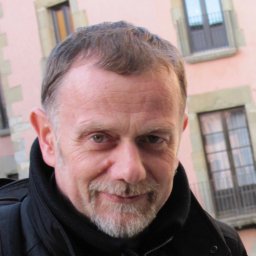 Alberto Facchini合作论文数Dipartimento di Matematica Pura e Applicata;Universita di Padova;Dipartimento di Matematica Pura e Applicata, Universita di Padova1
 Josef Urban合作论文数Czech Institute of of Informatics, Robotics and Cybernetics, Czech Technical University in Prague;Faculty of Information Technology, Czech Technical University in Prague1
 Libor Barto合作论文数Mathematical Institute, Charles University1Alexander Hulpke合作论文数Department of Mathematics;Ohio State University;Department of Mathematics, Ohio State University1
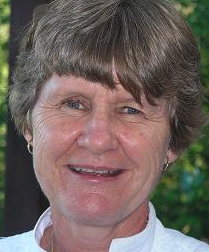 Diane Donovan合作论文数School of Mathematics and Physics, Faculty of Science, The University Of Queensland1
 Jamie Phillips合作论文数Department of Electrical and Computer Engineering, College of Engineering, University of Delaware1
 Thomas A. Mccourt合作论文数1Emil Jeřábek合作论文数Academy of Sciences of the Czech Republic1Marcin Kozik合作论文数kozik@tcs.uj.edu.pl1
 Kira Adaricheva合作论文数Department of Mathematical Sciences, Yeshiva University1Tomáš Kepka合作论文数1
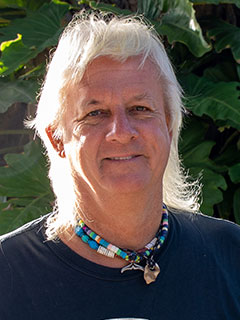 Geoff Sutcliffe合作论文数Department of Computer Science, College of Arts and Sciences, University of Miami1Terry Griggs合作论文数Faculty of Science, Technology, Engineering & Mathematics, The Open University;School of Mathematics & Statistics, The Open University1
 Jirí Vyskocil合作论文数Czech Tech Univ1




