Innovation is driven by the creativity of individuals. This creative process involves both generative and evaluative steps, but we know far less about the evaluative process than we do about the generative, despite idea evaluation being essential to the successful implementation of innovations. Receiving evaluations is an event known to induce emotional reactions, however, it is unclear how these reactions may impact the creative process beyond the evaluation. To address this, we utilized affective events theory to examine the relationships between idea evaluation as an affective event, the emotional reactions (positive and negative emotions), and two resulting affect-driven behaviors - perseverance and evaluating the ideas of others. Our results suggest that the valence of the idea evaluation (positive, neutral, or negative) is related to positive and negative emotional reactions. This relationship is moderated by self-evaluations of one's own creativity, and the emotional reaction mediates the relationship between evaluations and whether individuals persevere on the creative task as well as whether they retaliate in their evaluations of others' ideas.
Face coverings can potentially impact how trustworthy someone appears through two channels: by hiding important facial cues associated with trust; or by signalling the wearer's intentions or personal characteristics. The facemasks widely adopted during the COVID-19 pandemic both obscured the face and were associated with pro-social attitudes or intentions. The goal of this paper is to investigate how facemasks impact judgments about the trustworthiness of the wearer, and whether this would affect interactions with others. We report three experiments. Experiments 1 and 2 examined decisions in a two-player trust game when participants interacted with a single masked or unmasked counterpart. Experiment 3 explored whether participants were more likely to trust a masked or an unmasked person in a straight choice between them. In all experiments, masked faces were judged more trustworthy than unmasked ones. While in Experiments 1 and 2 this was not reflected in trust behaviour, in Experiment 3 over 70% of participants chose to trust the masked person, a decision predicted by the difference in perceived trustworthiness between the masked and unmasked counterparts. This suggests that in settings where facemasks or similar trust related cues are more salient, such as in joint evaluation, they can lead to enhanced trust.
The purpose of this study is to explore conditions in which innovative behaviour can have either desirable or undesirable effects. The current study surveyed employees who remained in an organization following downsizing. Voice costs and perceived influence were measured as boundary conditions. Based on our understanding of Conservation of Resources theory, these variables may be particularly important to consider how individuals view innovative work behaviours in stressful situations such as experiencing downsizing. The results of this study revealed that engagement in innovative work behaviours (IWB) was associated with reduced burnout in employees when they perceived few costs of speaking up in the post downsized environment, but at very high perceptions of voice cost (above 1.74 standard deviations above the mean), this relationship was positive. Similarly, and contrary to what was expected, engagement in IWB was negatively related to burnout when employees perceived they had little influence within the organization. We discuss possible interpretations of this unexpected result. This study adds to the small body of work that examines outcomes, rather than predictors, of innovative behaviour and also identifies conditions in which engaging in innovative behaviours has a negative impact on the individual.
Given what we know about the predictors of leaders' ability, facial appearance should play a small or a very limited role in observers' selection of leaders; however, research convincingly shows otherwise. The more distant observers are from leaders or the less information they have about them, the more likely they are to use whatever information is available-including the target's looks-to make inferences about a leader's character and competence. In this article, we review which consequential leadership outcomes are predicted by facial appearance. We explain why observers are inclined to make heuristic decisions using facial cues, discuss whether facial appearance carries credible information, and identify the conditions that may attenuate face effects.
Organizations are making huge investments in training their leaders to take on the challenge of leading more complex and continually changing scenarios. Despite the flourishing research into leader development there is much to be learnt about how to develop leaders more effectively, promoting positive leader development trajectories for all those engaging in developmental experiences. This symposium fulfils this need by reviewing state- of-the-art theory and research in leader development and the role of identity with papers by researchers in Australia, Chile, France, the UK and Spain. From the perspective of leader development, the first presentation explores the role of self- leadership development, exploring how personal purpose and future- self declarations affect objective and subjective career success. The second paper focuses on the construct of leader self- concordance in order to predict positive leader development trajectories. The third paper looks at conflicts in the leader identity and how they can be turned into positive developmental opportunities by investigating the identity conflict experienced by new leaders and the strategies that they use to face these challenging situations. The last paper explores the conflict created when followers’ proactive behavior is perceived as a threat to the leader’s identity. Finally, Russell E. Johnson concludes with an insightful discussion of the topic. This symposium ultimately provides a critical overview of current and relevant theory along with well-supported propositions in order to both draw attention and to encourage further scholarship in potentiating positive leader development trajectories. Leader Identity Self-concordance: Facilitating Positive Leader Development Trajectory Presenter: Elisa Adriasola; U. Adolfo Ibanez Presenter: Diego Bravo; U. Adolfo Ibanez Presenter: Carolina Marcone; U. Adolfo Ibanez The Role of Personal Purpose and Positive Future-Self on Self- Leadership and Career Success Presenter: Alvaro Espejo; U. Adolfo Ibanez Presenter: Steven A. Y. Poelmans; EADA Business School Leader Identity Threat and the Interplay of Employee Work Behaviors and Gender Presenter: Asma Bagash; Warwick Business School Presenter: Karoline Strauss; ESSEC Business School Presenter: Dawn L. Eubanks; U. of Warwick Am I a Leader or a Friend? How New Team Leaders Resolve their Multiple Identities Presenter: Kerrie Unsworth; U. of Leeds Presenter: Darja Miscenko; U. of Western Australia Presenter: Amber Johnston-Billings; South 32
In this study, we explored team roles in virtual, partially distributed teams, or vPDTs (teams with at least one co-located subgroup and at least two subgroups that are geographically dispersed but that collaborate virtually). Past research on virtual teams emphasizes the importance of team dynamics. We argue that the following three roles are particularly important for high functioning virtual teams: Project Coordinator, Implementer and Completer-Finisher. We hypothesized that the highest performing vPDTs will have 1) a single Project Coordinator for each subgroup, 2) multiple Implementers within the team, and 3) fewer Completer-Finishers within the team. A sample of 28 vPDTs with members working on two different continents provides support for the second and third hypothesized relationships, but not the first.
Decision-making is a complex cognitive activity filled with bias. Leader decision-making is unique because it occurs in a social context. We examine how biases resulting from social network dynamics complicate leaders' decision-making. In particular, we focus on a specific case of leader cognition: nepotism in the succession decisions in the context of family businesses. Succession often leads to a decline in performance because leaders frequently choose family members as their successor, a form of nepotism. We show that even when a leader can overcome individual decision biases, a bias in sampling resulting from families' strong ties can still allow a leader to wrongly conclude that family members are better qualified than external candidates when the opposite is true. We demonstrate this phenomenon using simulation modeling and explore solutions to family business succession planning.
The freedom to try new things plays a vital role for employees engaging in creative endeavors. This freedom can be influenced by one's relationship with her supervisor, relationship with her team, and various work pressures. One of the first steps to reaching creative output is to have a playful attitude toward work where there is encouragement and processes that allow individuals to take risks and try new things. However, we argue that what allows someone to try new things earlier in their career and when they are more established might be different. Noteworthy progress has been made in conceptualizing the multi-level factors that are important for creativity. In the current study, we identified variables associated with a willingness to try new things, part of the exploration phase of creativity, and divided them by the early and established careers of 59 Nobel Prize winners. Using a historiometric approach, we rated individual and team-level variables to identify what makes someone try new things either earlier or later in her career. Findings indicate that willingness to try new things is related to autonomy, the relationship with one's mentor, team climate, and team network, but not to personal initiative.
Previous research has shown that people form impressions of potential leaders from their faces and that certain facial features predict success in reaching prestigious leadership positions. However, much less is known about the accuracy or meta-accuracy of face-based leadership inferences. Here we examine a simple, but important, question: Can leadership domain be inferred from faces? We find that human judges can identify business, military, and sports leaders (but not political leaders) from their faces with above-chance accuracy. However, people are surprisingly bad at evaluating their own performance on this judgment task: We find no relationship between how well judges think they performed and their actual accuracy levels. In a follow-up study, we identify several basic dimensions of evaluation that correlate with face-based judgments of leadership domain, as well as those that predict actual leadership domain. We discuss the implications of our results for leadership perception and selection.
A study was conducted to investigate the body movements of participants waiting to be interviewed in one of two conditions: preparing to answer questions truthfully or preparing to lie. The effects of increased self-awareness were also investigated, with half of the participants facing a mirror; the other half facing a blank wall. Analysis of covertly obtained video footage showed a significant interaction for the duration of hand/arm movements between deception level and self-awareness. Without a mirror, participants expecting to lie spent less time moving their hands than those expecting to tell the truth; the opposite was seen in the presence of a mirror. Participants expecting to lie also had higher levels of anxiety and thought that they were left waiting for less time than those expecting to tell the truth. These findings led to the identification of further research areas with the potential to support deception detection in security applications.
The behavioral experiment presented in this paper investigated deception tasks (both concealment and lying) undertaken in a public space. The degree of risk of deception detection and the demands of self-regulation when deceiving were manipulated. The results showed a significant interaction effect between veracity and risk of deception detection, emerged for the body movement of “hand(s) in pocket(s)”. The incidence of “hand(s) in pocket(s)” was found to increase from truth telling to deceiving conditions when the risk of deception detection was higher, and to decrease from truth telling to deceiving conditions when the risk was lower. Higher risk of deception detection was also found in magnifying the “overall negative and controlled impression” displayed by both deceivers and truth tellers, compared to the lower risk of detection condition. We also discussed the possible effects of risk of deception detection and depletion of self-regulation, on deception behavior. Further studies and the connection between this study and the research community of computer vision and multimodel interaction is also discussed.
Organizational Psychology with a minor in quantitative methods from The University of Oklahoma.Dawn's research interests are primarily in the areas of leadership and innovation, with particular interest in destructive leadership.Within leadership, she is exploring the darker side including reactions to criticism and different types of
This special issue of Journal of Business Ethics focuses on the interactions between leadership, ethics and identity. A substantial literature is developing centered on ethics and morality in work organizations. In recent times, critical attention has focused on how identities are best conceived and researched, the discursive resources that are drawn on in processes of identity construction, and how identities are embedded in relations of power. A much larger and longer established management and organization studies literature exists which has theorized and explored empirically aspects of leadership. However, surprisingly, little attention has been devoted to how notions of ‘‘leadership,’’ ‘‘ethics,’’ and ‘‘identity’’ are connected conceptually or in practice. This is an important gap that our special issue seeks to address. In studying how ethics are embedded in leadership and identity issues, we gain a better understanding of basic sensemaking practices of organizational actors involved in ‘‘leading’’ and ‘‘following,’’ and of how identity issues are bound-up with the desire to become a leader, the style that a leader adopts, influence strategies used, and use of power. In this issue, we aim equally at scholars whose principal interest is ‘‘ethics and leadership,’’ ‘‘ethics and identity,’’ and ‘‘identity and leadership’’. Leadership, Ethics, and Identity
 Michael Mumford合作论文数Department of Psychology, Dodge Family College of Arts and Sciences, The University of Oklahoma;Center for Applied Social Research, Dodge Family College of Arts and Sciences, The University of Oklahoma13
 Samuel Todd Hunter合作论文数Department of Psychology, The Pennsylvania State University5
 Tamara Friedrich合作论文数Warwick Business School, Faculty of Social Sciences, The University of Warwick5
 Katrina E. Bedell Avers合作论文数4
 Michelle Hammond合作论文数Dept Management & Mkt, Elliot Hall 410,275 Varner Dr, Rochester, MI 48309 USA4
 Michael E. Palanski合作论文数E. Philip Saunders College of Business, Rochester Institute of Technology4
 Lara Frumkin合作论文数Office of Ethnic Minority Affairs Eddie Billingslea;University of the District of Columbia;Howard University;University of the District of Columbia, Howard University4Joy Oguntebi合作论文数3Ke Zhang合作论文数3
 Juani Swart合作论文数University of Bath;School of Management;School of Management, University of Bath3
 Alex W. Stedmon合作论文数University of Nottingham3Shane Connelly合作论文数Department of Psychology, University of Oklahoma3
 Glyn Lawson合作论文数University of Nottingham3
 Adam Joinson合作论文数Department of Information Systems, University of Bath3Stephen T. Murphy合作论文数2patchareeporn pluempavarn合作论文数2
 Andrew Brown合作论文数2
 Alison L Antes合作论文数2
 Daniel Read合作论文数Warwick Business School, University of Warwick2Amanda Angie合作论文数2James A. Dove合作论文数2
 Leon Watts合作论文数2
 Niki Panteli合作论文数UK Academy for Information Systems;Norwegian University of Science and Technology;Centre for Critical and Historical Research on Organisation and Society, School of Business and Management, Royal Holloway, University of London2Jazmine Espejo合作论文数2Sam T. Hunter合作论文数1Rose Saikayasit合作论文数1brandon vessey合作论文数1katrina e bedell合作论文数1
 Lauren Blackwell Landon合作论文数KBRwyle1
 Joshua Fairchild合作论文数Creighton Univ1Joy Olabisi合作论文数Rochester Institute of Technology1
 Jeffrey B. Lovelace合作论文数McIntire Sch Commerce, Univ Virginia1
 Christopher Y. Olivola合作论文数Marketing Faculty, Tepper School of Business, Carnegie Mellon University;Social and Decision Sciences, Dietrich College of Humanities and Social Sciences, Carnegie Mellon University1
 Chengwei Liu合作论文数Warwick Business School, University of Warwick1Caughron Jared J合作论文数1Beeler Cheryl K合作论文数1
 Strauss Karoline合作论文数Institute of Work Psychology, University of Sheffield1
 Nick Chater合作论文数Behavioural Science Group, Warwick Business School, University of Warwick Warwick, UK.1
 Zeitoun Hossam合作论文数Warwick Business School, University of Warwick1
 John Antonakis合作论文数Department of Organizational Behavior, Faculty of Business & Economics, University of Lausanne1
 Russell E. Johnson合作论文数Department of Psychology, University of South Florida1
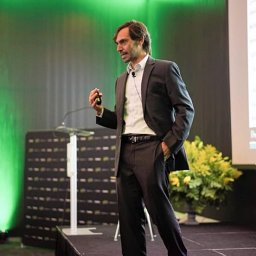 Alvaro Espejo合作论文数School of Business, Universidad Adolfo Ibañez1Amanda D. Angie合作论文数1
 Cross Christine合作论文数1
 Tina Kiefer合作论文数Warwick Business School, Faculty of Social Sciences, The University of Warwick1Chloe Zhang合作论文数1
 Kerrie Unsworth合作论文数UWA Business School, The University of Western Australia1Katrina E. Bedell-Avers合作论文数1
 Zeynep Y. Yalabik合作论文数1




