This chapter will summarise the findings and theoretical arguments made in the previous chapters. It will reiterate that the body needs to be understood in relation to racism in four senses: firstly, as a phenomenological object of value; secondly, through the corporeal schemas of perception embedded in the habitus; thirdly, in bodily affect specifically through shame and hope; and lastly, in hesitancy of action caused by habitual reflexivity. It will finish by contemplating some of the implications of this work for change at both the micro level of interaction and the macro level of policy. The concept of resilience will be touched on, and it will argue that change is better understood as a moving equilibrium where the residue of our habitus in the past has implications on its structure in the present.
Athletes can experience loss in the form of chronic competitive failure, deselection, injury, and sport career termination. Reactions to these losses may affect and be affected by athletes' self-identity. Although the self has generally been conceptualized as stable in sport-related research, there are compelling theoretical and empirical reasons to expect that aspects of the self may vary across sport situations. In this investigation, two studies were conducted to test the hypothesis that sport participants would reduce their self-identification with the athlete role in response to the personal loss resulting from a poor competitive season. Mat intercollegiate athletes completed preseason and late season assessments of athletic identity in both Study 1 and Study 2. As predicted, participants who were not satisfied with their performances during the season tended to decrease their athletic identity to a greater extent than participants who were satisfied with their performances during the season. Taken together, the findings of Studies 1 and 2 provide converging evidence in support of the malleability of sport-specific self-identity in responses to loss.
This investigation was designed to assess the factorial validity of the Sports Inventory for Pain (SIP) which was completed by 182 undergraduate students. Responses were subjected to a confirmatory factor analysis designed to test the hypothesized underlying factor structure. Of five proposed subscales, only the items for the Cognitive and Coping subscales reasonably fit the hypothesized structure. To improve the fit of the model, factors were allowed to correlate, and the worst fitting item from each of the subscales was removed. The modified model also failed to adequately fit the data. Lastly, the items corresponding to the worst fitting subscale were dropped from the analysis. Again, the modified model failed to fit the data. Discussion suggests a possible respecification of the SIP.
When pressure to perform is increased, individuals commonly perform worse than if there were no pressure ("choking under pressure'). Two mechanisms have been proposed to account for this effect-distraction (cognitive load), wherein pressure distracts attention from the task, and self focus, wherein attention shifts inward interfering with performance. To distinguish between these two competing explanations, the current experiment manipulated pressure by offering performance-contingent rewards. For half the participants, cognitive load was increased by requiring participants to count backward from 100. Additionally, adaptation to self awareness was manipulated by videotaping half the participants during practice trials. Results show that pressure caused choking when participants were not distracted and had not been adapted to self awareness. This effect was attenuated when cognitive load was increased or when self-awareness adaptation had occurred. These results support self focus mediated misregulation as the mechanism for choking and disconfirm the distraction hypothesis.
This study was designed to investigate whether post-exercise analgesia occurs following an ad lib exercise routine. All of the 17 male participants exercised on a regular basis. In an exercise setting (student gymnasium) they participated in 20 min of self-selected exercise, while in the neutral setting (laboratory) they rested quietly for 20 min. Pain was induced via the gross pressure device. Pain threshold and pain tolerance were measured twice, with an interval of 20 min, in both the exercise and the neutral setting. Pain threshold was stable in the exercise setting. A significant increase in pain tolerance followed the 20 min bout of exercise, indicating a postexercise analgesic response. These results support the prediction that the analgesic effect of exercise is not limited to controlled experimental conditions, but generalizes to naturally occur?ring situations.
Athletic identity can be defined as the degree to which an individual identifies with the athlete role. In this article, the athletic identity construct is discussed within the framework of a multidimensional self-concept. Positive and negative factors that are potentially associated with a strong athletic identity are considered. A measure of athletic identity, the Athletic Identity Measurement Scale (AIMS), is introduced. Data from an initial evaluation study (n = 243) and two follow-up studies (n = 449 and n = 90) suggest that the AIMS is a reliable and valid measure of athletic identity. Implications for future research and application with the AIMS are presented.
Study 1 was conducted to explore athletes' perceptions of an athlete who consults a sport psychologist. Football players from two NCAA Division II colleges, one with and one without athletic counseling/sport psychology services, were asked to indicate how strongly they would recommend drafting a quarterback who had worked with his coaches, a sport psychologist, or a psychotherapist to improve his performance. Results indicated that in neither college did athletes derogate other athletes who were said to have consulted sport psychologists. Study 2 was conducted to examine athletes' perceptions of various sport and mental health professionals. Similarity judgments of the practitioners were analyzed using correspondence analysis, and rankings of the practitioners on three dimensions (expertise in sport-related, mental, and physical issues) were analyzed using cultural consensus analysis. Consistent with past research, these three variables were salient factors in subjects' similarity judgments of the practitioners.
Three studies are reported that replicate and extend previous work showing that athletes who consult a sport psychologist are derogated relative to athletes who work with their coaches on the same problem. In the first study, a multidimensional-scaling analysis was conducted to explore the psychological structure underlying perceptions of 12 sport practitioner professionals. Two dimensions, mental/physical and sport/nonsport, provided the best fit for both male and female subjects. The second and third studies, using different subject populations, were conducted to replicate previous findings and to explore the mediating processess involved. In both experiments, subjects were asked to indicate how strongly they would recommend drafting a college baseball, basketball, or football player who had worked with a coach, a sport psychologist, or a psychotherapist to improve performance. Male undergraduates and Lions Club members gave athletes who consulted sport psychologists or psychotherapists significantly lower draft ratings than athletes who consulted their coaches.
Three experiments were conducted to determine which remembered qualities of the peak performance state are robust and to investigate whether recall biases may affect accounts of peak experiences. In the first experiment, introductory psychology students rated psychological characteristics of their best, average, and worst sport performances. Focused attention and confidence were the qualities most strongly identified with peak performance. The second experiment replicated and extended these findings in a sample of intercollegiate cross-country runners and tennis players. In the third experiment, subjects (a) completed a pursuit rotor task; (b) were randomly assigned to receive success, failure, or no feedback; and (c) rated their psychological state during performance. Results indicated that the bogus performance feedback significantly affected ratings of psychological states experienced during performance. Subjects given success feedback perceived themselves as being more confident and focused on the task than subjects given failure feedback. Implications of these findings for research and practice are discussed.
(1990). Validation of a Procedure to Induce Pain of Varied Intensities. Research Quarterly for Exercise and Sport: Vol. 61, No. 3, pp. 268-271.
The effects of experimentally induced pressure pain on the performance of a weight lifting task, a simple golf putting task, and a complex golf putting task were examined in male college students. It was found that pain did not affect performance of the weight lifting task, slightly hampered performance of the simple putting task, and severely hampered performance of the complex putting task. Because the adverse effects of pain increased with task complexity, the findings are consistent with the notion mat pain is a form of arousal and mat pain affects performance in a manner similar to arousal. Limitations of the present experiments and directions for future research are discussed.
Two experiments tested the hypothesis that athletes who consult a sport psychologist to improve performance are derogated by the public compared to athletes who attempt to resolve the same issues by working with their coaches. In the first experiment a college quarterback was reported to have worked with either his coaches or a sport psychologist on improving his consistency. The primary dependent variable was how strongly subjects would recommend drafting the player in question. There was a significant main effect for the coach versus sport psychologist variable, no main effect for the type of problem, and no interaction effect. A set of 10 bipolar scales were analyzed to explore the attributions associated with the draft rating. The second experiment investigated whether the negative halo effect would occur in other sports and apply to players in peripheral as well as central positions. The results indicated that the negative halo effect occurred for a basketball guard on the draft rating but not for a center, a pitcher, or an outfielder. However, a MANOVA of the 10 scales revealed a main effect for the consultant variable. The results of the two experiments were discussed in relation to theories of deviance and stigmatization.
Arizona State UniversityPrevious explanations of arousal-attraction phenomena have focused on misattribution and rein-forcement processes. Two studies were conducted to test an alternative response-facilitation explana-tion of these findings. In general, both studies followed previous methods, with the addition of condi-tions in which Ss attention was directed to the actual source of their arousal. Study I was basedon the fear-arousal method used by Button and Aron (1974) and found enhanced attraction to aconfederate in high-fear-arousal subjects. Contrary to the misattribution model, the focus-of-atten-tion manipulation had no eifect on attraction. Study 2 used a nonthreatening source of arousal(exercise) and also included a focus-of-attention manipulation. Contrary to the misattributionmodel, arousal facilitated sexual attraction even when subjects' attention was directed to the actualarousal source. Although the results of Study 1 are consistent with a negative-reinforcement model,the findings from Study 2, and from several other studies in the area, are not. The simple response-facilitation model best explains these results and provides a parsimonious alternative explanationfor several other sets of data.What role does cognitive labeling play in emotional experi-ences? Schachter and Singer (1962) proposed that all emotionshave a common set of underlying physiological symptoms: Wediscriminate fear from anger from joy by attending not todifferential physiological cues but to the context in which weexperience the arousal. Berscheid and Walster (1974) appliedthe two-factor theory to the emotion of romantic love. Accord-ing to this viewpoint, romantic love occurs when we experiencephysiological arousal in the presence of a member of the oppo-site sex whom we find attractive. One implication of this viewis that romantic attraction can be increased by any extraneoussource of physiological arousal that coincides with exposure toa potential lover.
This study was designed to explore cognitive and motivational factors that underlie preferences for particular sports. Based upon self-presentational theory, it was assumed that sports constitute a symbol system that communicates something about the participant's personality and identity. Individuals may learn to prefer those sports whose symbolism is appropriate to their desired social identity. In order to explore this premise, subjects were asked to rate the participants of five different sports (bowling, skiing, golf, tennis, motocross) on 70 personality and identity dimensions. Results indicated that stereotypes concerning the participants in each sport are widely shared, and that specific identity dimensions are associated with each sport.
Previous studies have suggested that the pig sex pheromone 5 alpha-androst-16-en-3-one may function as a human sex pheromone. Two hundred male and female college students were assigned to one of four odor conditions (androstenone, methyl anthranilate, skatole, and a no-odor control) and were asked to rate photographs of a male stimulus and to rate their own mood in the presence of each odorant. There was a significant overall sex by treatment condition interaction. Men in the androstenone condition rated the stimulus male as more passive, and women in the androstenone condition rated themselves as less sexy; these effects were specific to the androstenone condition.
Four studies were done in an attempt to test the misattribution explanation of earlier findings showing a connection between aversive arousal and attraction. All four studies indicated that subjects do not attribute arousal to a female confederate when a clear and salient aversive stimulus is present. Instead, subjects correctly assigned causality to the experimental situation. All four studies also failed to reproduce the original attraction finding, i.e., aversive circumstances were not found to enhance attraction for the confederate.
Two experiments with male subjects were conducted to investigate the plea bargaining process. Experiment 1 used a role-playing procedure to identify variables that affect the acceptance of a plea bargain. Eighteen percent of the subjects playing the role of innocent defendants accepted the plea bargain, whereas 83% of the guilty defendants accepted. Two other main effects revealed that defendants were more likely to accept a plea bargain when relatively many charges had been filed against them and/or when the severity of punishment upon conviction was great, although internal analyses revealed that these effects were present in guilty defendants only. Experiment 2 was conducted using involved participants to provide validation for the major result of Experiment 1. Students were made to be innocent or guilty of having prior information about an exam. All were accused of having used prior information and were given an opportunity to plea bargain rather than face an ethics committee. In accord with Experiment 1, guilty students accepted the plea bargain significantly more often than innocent students. Results are discussed in terms of information differences between innocent and guilty defendants and the availability heuristic. Implications of the data for the criminal justice system are discussed, as are limitations of the present approach and suggestions for further research on plea bargaining.
 Britton W Brewer合作论文数Springfield College7
 JL VANRAALTE合作论文数6
 Douglas T. Kenrick合作论文数Department of Psychology, College of Liberal Arts and Sciences, Arizona State University2
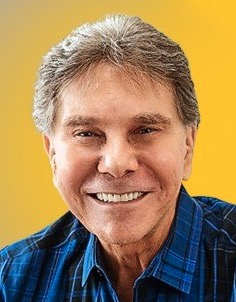 Robert Cialdini合作论文数Department of Psychology, Arizona State University;Cialdini Institute;Pearson Publishing Ltd2B. P. Lewis合作论文数2M Wray合作论文数1F Anthias合作论文数1IJ Nexica合作论文数1E Chiapello合作论文数1KA Appiah合作论文数1JL Van Raalte合作论文数1SL Beilock合作论文数1erik e filsinger合作论文数1D. Cornell合作论文数1WC MONTE合作论文数1
 Albert J. Petitpas合作论文数1Js Phinney合作论文数1RW Connell合作论文数1CH Cooley合作论文数1nina delange合作论文数1John Bartholomew合作论文数1J Butler合作论文数1M Billig合作论文数1P Bourdieu合作论文数1
 Benjamin Bowling合作论文数The Dickson Poon School of Law, King’s College London1
 Allen R McConnell合作论文数Department of Psychology, College of Arts and Science, Miami University1
 Steven M Edwards合作论文数1
 Paul Karoly合作论文数Department of Psychology, College of Liberal Arts and Sciences, Arizona State University1
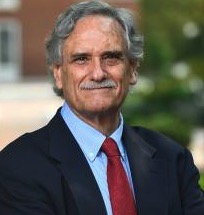 Robert E. Slavin合作论文数School of Education, Johns Hopkins University1Edward K Sadalla合作论文数1Therese Thomson Corwin合作论文数1
 Alexander C. Lichtler合作论文数Department of Reconstructive Sciences, University of Connecticut Health Center1W. Larry Gregory合作论文数1
 Pauline Hope Cheong合作论文数Oxford Internet Institute, Universityof Oxford1
 David Pillow合作论文数Program for Prevention Research;Arizona State University;Program for Prevention Research, Arizona State University1Daniel M. Landers合作论文数1J. Jay Braun合作论文数1Madonna G Constantine合作论文数1Brendan Byrne合作论文数1Luc Boltanski合作论文数1
 Hugh Dauncey合作论文数1Y. Brinbaum合作论文数1
 Seyla Benhabib合作论文数Department of Political Science , Yale University;Columbia Law School1
 Sanford Braver合作论文数1
 Paul Vedder合作论文数Faculty of Social and Behavioral Sciences, Centre for the Study of Education and Instruction, Wassenaarseweg 52, Leiden, 2333 AK The Netherlands1
 James Alexander Liddle合作论文数Microsystems and Nanotechnology Division, National Institute of Standards and Technology1James B. Allen合作论文数1
 Dane B Cook合作论文数Research Service, William S. Middleton Memorial Veterans Hospital1
 John Solomos合作论文数Department of Sociology, Faculty of Social Sciences, The University of Warwick1




