We examined 8 data sets to determine whether it is possible to attain acceptable levels of internal consistency (coefficient alpha) reliability for the 4 Object Relations and Social Cognition scales (ORSC; Westen, Lohr, Silk, Kerber, & Goodrich, 1989) for the Thematic Apperception Test (TAT; Murray, 1943) when cards are considered as items in a scale. Number of cards used in the data sets ranged from 4 to 10, and the Spearman-Brown prophecy formula was applied to estimate the number of cards that would be required to attain alpha levels of different magnitudes. The two more structural subscales (Complexity of Representations and Understanding of Social Causality) have somewhat higher consistencies than the two more affective ones (Affect Tone and Capacity for Emotional Investment and Moral Standards). The results suggest that the use of 10 to 12 cards provides internal consistencies of alpha > or = .70 across each of the 4 ORSC scales.
Although materialism has been studied from a variety of interdisciplinary perspectives, it is not commonly proposed as an information‐processing construct. To establish such a construal would facilitate direct, individual‐level analyses of materialistic stimuli and contribute to an understanding of which of a person's possessions are valued and why. Drawing on schema theory and the work of Kelly (1955), we propose that materialists not only perceive people in terms of possessions, but they use these criteria as superordinate constructs when framing stimuli for social‐cognition purposes. Some empirical evidence corroborating this construal is included, and several research propositions based on it are advanced.
Pleasant ambient odors are found to affect consumer decision making depending on whether the scents are congruent or incongruent with the target product class. Two different choice contexts are examined. In experiment 1, in a static-choice context, subjects in conditions in which the odor is congruent with the product class are found to spend more time processing the data, are more holistic in their processing, are more likely to go beyond the information given, and are more likely to spread their choices evenly over the whole choice set than are subjects in the incongruent-odor conditions. In experiment 2, in a dynamic-choice context, subjects in the congruent conditions are more likely to exhibit behavior that is consistent with variety seeking than are subjects in the incongruent conditions.
This goal of this paper is to establish a research agenda that will lead to a stream of research that closes the gap between actual and normative strategic managerial decision making. We start by distinguishing strategic managerial decision making (choices) from other choices. Next, we propose a conceptual model of how managers make strategic decisions that is consistent with the observed gap between actual and normative decision making. This framework suggests a series of interesting issues, both descriptive and prescriptive in nature, about the strategic decision-making process that define our proposed research agenda.
This study focuses on two complementary modes of elaborative processing in response to advertising: imagery and analysis. Imagery is characterized by nonverbal product-related thoughts, whereas analysis is more semantic and verbal in nature. Two stimulus determinants of ad-induced imaging and analyzing are investigated and related to the purchase consideration of an innovative product. Results show that the consumer's use of imagery is related to the perceived novelty of the advertising stimulus, whereas analyzing is related to less favorable of advertising content. Product-related affect and intention to buy, in turn, are related positively to imaging and negatively to analyzing. Implications for advertising management and research are discussed.
Prospective hindsight involves generating an explanation for a future event as if it had already happened; i.e., one goes forward in time, and then looks back. In order to examine how shifts in perspective might influence people's perceptions of events, we investigated two possible factors: temporal perspective (whether an event is set in the future or past) and uncertainty (whether the event's occurrence is certain or uncertain). In the first experiment, temporal perspective showed little influence while outcome uncertainty strongly affected the nature of explanations for events. Explanations for sure events tended to be longer, to contain a higher proportion of episodic reasons, and to be expressed in past tense. Evidence from the second experiment supports the view that uncertainty mediates not the amount of time spent explaining, but rather subjects' choice of explanation type. The implications of these findings for the use of temporal perspective in decision aiding are discussed.
 William Boulding合作论文数1
 Steve Hibbard合作论文数1nancy pennington合作论文数1JB KERNAN合作论文数1RL OLIVER合作论文数1
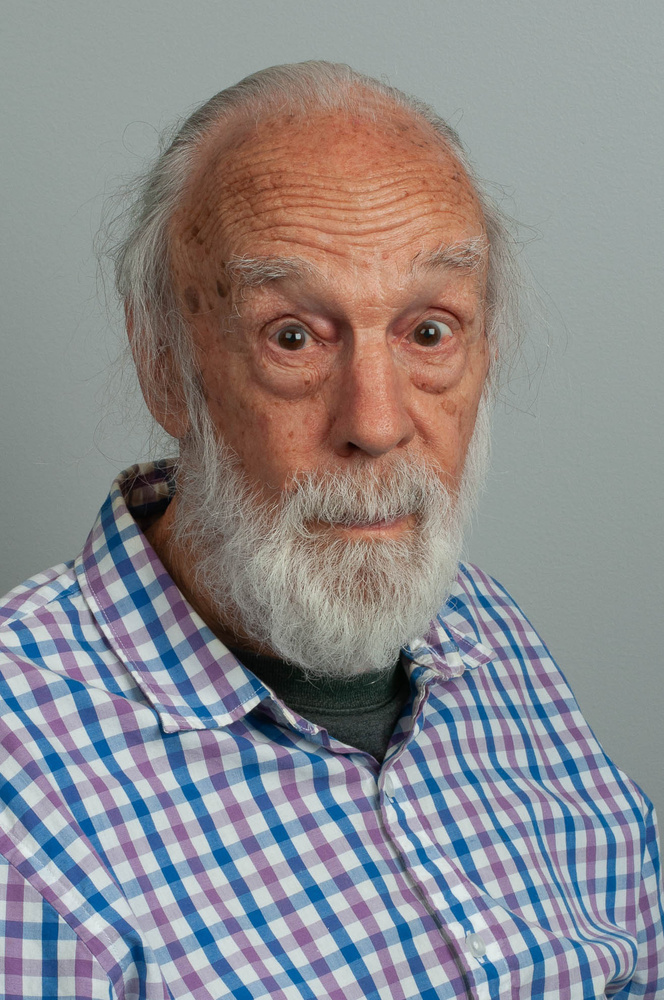 Rick Staelin合作论文数Marketing, Fuqua School of Business, Duke University1
 Gavan J. Fitzsimons合作论文数Department of Psychology and Neuroscience, Trinity College of Arts & Sciences, Duke University1
 Donald R. Lehmann合作论文数Marketing Division, Graduate School of Business, Columbia University1
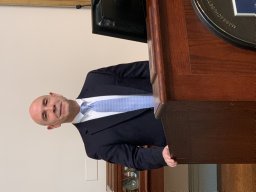 Porcerelli John H合作论文数Department of Family Medicine and Public Health Sciences, Wayne State University School of Medicine1
 J. Edward Russo合作论文数Cornell SC Johnson College of Business, Cornell University;Samuel Curtis Johnson Graduate School of Management, Cornell University1
 Kim P. Corfman合作论文数New York University1Thomas S. Robertson合作论文数London Business School, Regent's Park, London NW1 4SA, UK1
 Barbara E. Kahn合作论文数Department of Marketing, Wharton School, University of Pennsylvania;Graduate Group, Department of Psychology, School of Arts and Sciences, University of Pennsylvania;Department of Medical Ethics & Health Policy, Perlman School of Medicine, University of Pennsylvania;ay H. Baker Retailing Center, The Wharton School, University of Pennsylvania1James M. Hunt合作论文数1Joel E. Urbany合作论文数1Marian Chapman Moore合作论文数1Sankar Sen合作论文数1
 Sunil Gupta合作论文数Harvard Business School, Harvard University1Barton A. Weitz合作论文数University of Florida Gainesville1Peter R. Dickson合作论文数Butler University1J Kernan合作论文数1Susan C. Knasko合作论文数1




