The ability to engineer complex multicellular systems has enormous potential to inform our understanding of biological processes and disease and alter the drug development process. Engineering living systems to emulate natural processes or to incorporate new functions relies on a detailed understanding of the biochemical, mechanical, and other cues between cells and between cells and their environment that result in the coordinated action of multicellular systems. On April 3-6, 2022, experts in the field met at the Keystone symposium "Engineering Multicellular Living Systems" to discuss recent advances in understanding how cells cooperate within a multicellular system, as well as recent efforts to engineer systems like organ-on-a-chip models, biological robots, and organoids. Given the similarities and common themes, this meeting was held in conjunction with the symposium "Organoids as Tools for Fundamental Discovery and Translation".
Synthetic biological networks comprising fast, reversible reactions could enable engineering of new cellular behaviors that are not possible with slower regulation. Here, we created a bistable toggle switch in Saccharomyces cerevisiae using a cross-repression topology comprising 11 protein-protein phosphorylation elements. The toggle is ultrasensitive, can be induced to switch states in seconds, and exhibits long-term bistability. Motivated by our toggle's architecture and size, we developed a computational framework to search endogenous protein pathways for other large and similar bistable networks. Our framework helped us to identify and experimentally verify five formerly unreported endogenous networks that exhibit bistability. Building synthetic protein-protein networks will enable bioengineers to design fast sensing and processing systems, allow sophisticated regulation of cellular processes, and aid discovery of endogenous networks with particular functions.
Cardiac dysfunction is the most frequent cause of morbidity and mortality in amyloid light chain (AL) amyloidosis caused by a clonal immunoglobulin light chain (LC). Previously published transgenic animal models of AL amyloidosis have not recapitulated the key phenotype of cardiac dysfunction seen in AL amyloidosis, which has limited our understanding of the disease mechanisms in vivo, as well as the development of targeted AL therapeutics. We have developed a transgenic zebrafish model in which a λ LC derived from a patient with AL amyloidosis is conditionally expressed in the liver under the control of the Gal4 upstream activation sequence enhancer system. Circulating LC levels of 125 µg/ml in these transgenic zebrafish are comparable to median pathological serum LC levels. Functional analysis links abnormal contractile function with evidence of cellular and molecular proteotoxicity in the heart, including increased cell death and autophagy. However, despite pathological and functional phenotypes analogous to human AL, the lifespan of the transgenic fish is comparable to control fish without the expressed AL-LC transgene. Nuclear labeling experiments suggest increased cardiac proliferation in the transgenic fish, which can be counteracted by treatment with a small molecule proliferation inhibitor leading to increased zebrafish mortality because of cardiac apoptosis and functional deterioration. This transgenic zebrafish model provides a platform to study underlying AL disease mechanisms in vivo further. NEW & NOTEWORTHY Heart failure is a major cause of mortality in amyloid light (AL) amyloidosis, yet it has been difficult to model in animals. We report the generation of a transgenic zebrafish model for AL amyloidosis with pathological concentration of circulating human light chain protein that results in cardiac dysfunction. The light chain toxicity triggers regeneration in the zebrafish heart resulting in functional compensation early in life, but with age develops into cardiac dysfunction.
Microscale robots offer an unprecedented opportunity to perform tasks at resolutions approaching 1 μm, but the great majority of research to this point focuses on actuation and control. Potential applications for microrobots can be considerably expanded by integrating sensing, signal processing and feedback into the system. In this work, we demonstrate that technologies from the field of synthetic biology may be directly integrated into microrobotic systems to create cell-based programmable mobile sensors, with signal processors and memory units. Specifically, we integrate genetically engineered, ultraviolet light-sensing bacteria with magnetic microrobots, creating the first controllable biological microrobot that is capable of exploring, recording and reporting on the state of the microscale environment. We demonstrate two proof-of-concept prototypes: (a) an integrated microrobot platform that is able to sense biochemical signals, and (b) a microrobot platform that is able to deploy biosensor payloads to monitor biochemical signals, both in a biological environment. These results have important implications for integrated micro-bio-robotic systems for applications in biological engineering and research.
Including a load driver in a modular genetic circuit abrogates the effect of downstream elements that can interfere with circuit performance. The behavior of gene modules in complex synthetic circuits is often unpredictable1,2,3,4. After joining modules to create a circuit, downstream elements (such as binding sites for a regulatory protein) apply a load to upstream modules that can negatively affect circuit function1,5. Here we devised a genetic device named a load driver that mitigates the impact of load on circuit function, and we demonstrate its behavior in Saccharomyces cerevisiae. The load driver implements the design principle of timescale separation: inclusion of the load driver's fast phosphotransfer processes restores the capability of a slower transcriptional circuit to respond to time-varying input signals even in the presence of substantial load. Without the load driver, we observed circuit behavior that suffered from a 76% delay in response time and a 25% decrease in system bandwidth due to load. With the addition of a load driver, circuit performance was almost completely restored. Load drivers will serve as fundamental building blocks in the creation of complex, higher-level genetic circuits.
 Ron Weiss合作论文数Department of Biological Engineering, Massachusetts Institute of Technology3
 Vijay Kumar合作论文数Department of Mechanical Engineering and Applied Mechanics, School of Engineering and Applied Science, University of Pennsylvania;General Robotics, Automation, Sensing and Perception Lab, University of Pennsylvania;Exyn Technologies1
 Roger D. Kamm合作论文数MechanoBiology Laboratory, Department of Biological Engineering, Massachusetts Institute of Technology;Department of Mechanical Engineering, Massachusetts Institute of Technology1
 Sandra J Engle合作论文数1Eva Buys合作论文数Div Cardiovasc Med, Brigham & Womens Hosp1Adriana Mulero-Russe合作论文数Sch Chem & Biomol Engn, Georgia Inst Technol1Aric Lu合作论文数1
 Alice E. Stanton合作论文数Department of Bioengineering, Stanford University1
 Wong, D.合作论文数Univ Penn, Dept Mech Engn & Appl Sci, Philadelphia, PA 19104 USA1
 Sarah Hull合作论文数Chem Engn, Stanford Univ1
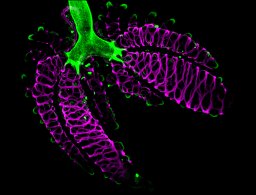 Katharine Goodwin合作论文数Lewis-Sigler Institute for Integrative Genomics, Princeton University1
 Anjelica Gonzalez合作论文数Department of Biomedical Engineering, Yale University1
 Alex J. Hughes合作论文数Department of Bioengineering, School of Engineering and Applied Science, University of Pennsylvania1
 Calum MacRae合作论文数Brigham and Women's Hospital;Harvard Medical School;Harvard Stem Cell Institute1
 Boj Sylvia F合作论文数Fdn Hubrecht Organoid Technol1
 Rashid Bashir合作论文数Laboratory of Integrated Biomedical Micro/Nanotechnology & Applications, Electrical and Computer Engineering Department, Grainger College of Engineering, University of Illinois at Urbana-Champaign1Cable Jennifer合作论文数Department of Biochemistry and Biophysics, University of North Carolina at Chapel Hill1
 Kit Parker合作论文数John A. Paulson School of Engineering and Applied Sciences, Harvard University;Wyss Institute, Harvard University;United States Army;American Institute of Physics;Supermoon Capital;Tender Food;Desora;KK Parker & Associates1Phillip M. Rivera合作论文数1Mishra Shikha合作论文数1Ward Jennifer Ellis合作论文数1Fisch Sudeshna合作论文数1
 Blatchley Michael R合作论文数Johns Hopkins Physical Sciences-Oncology Center and Institute for NanoBioTechnology, Johns Hopkins University1Bepler Tristan合作论文数Center for Genomic and Computational Biology, Duke University1
 Bonnie Berger合作论文数Computer Science & Artificial Intelligence Laboratory, Massachusetts Institute of Technology;Department of Mathematics, Massachusetts Institute of Technology1
 Giampaolo Merlini合作论文数Department of Molecular Medicine, University of Pavia1
 Elebeoba E. May合作论文数Sandia National Laboratories, Albuquerque, NM, USA.1
 Edward B. Steager合作论文数School of Engineering and Applied Sciences, University of Pennsylvania1
 Melissa L. Kemp (Melissa Kemp)合作论文数Wallace H. Coulter Department of Biomedical Engineering, College of Engineering, Georgia Institute of Technology1
 Ryuji Morizane合作论文数Department of Internal Medicine, Keio University School of Medicine1
 Shaurya Joshi合作论文数1
 Danilo A Tagle合作论文数1
 Todd McDevitt合作论文数Genentech1
 Christine Mummery合作论文数Department of Anatomy and Embryology, Leiden University Medical Center1Brian Teague合作论文数Laboratory of Genetics;University of Wisconsin;Laboratory of Genetics, University of Wisconsin1
 Francesca Lavatelli合作论文数Amyloidosis Research and Treatment Center, University of Pavia1
 Ronglih Liao合作论文数Medicine Department, Stanford University1
 Yoshihiro Morishita合作论文数1
 Isabel Morgado合作论文数Martin Luther University Halle-Wittenberg1
 Domitilla Del Vecchio合作论文数Department of Mechanical Engineering, Massachusetts Institute of Technology1
 Adam W. Feinberg合作论文数Department of Biomedical Engineering, College of Engineering, Carnegie Mellon University;FluidForm1
 Sharmila Dorbala合作论文数Harvard Medical School Division of Nuclear Medicine/PET, Brigham and Women’s Hospital 75 Francis St 02115 Boston MA1
 Paola Arlotta合作论文数Department of Stem Cell & Regenerative Biology, Harvard University;Harvard Stem Cell Institute, Harvard University;Stanley Center for Psychiatric Research, Broad Institute1Allen Lin合作论文数1




