The four LEP collaborations, ALEPH, DELPHI, L3 and OPAL, have searched for pair-produced charged Higgs bosons in the framework of Two Higgs Doublet Models (2HDMs). The data of the four experiments have been statistically combined. The results are interpreted within the 2HDM for Type I and Type II benchmark scenarios. No statistically significant excess has been observed when compared to the Standard Model background prediction, and the combined LEP data exclude large regions of the model parameter space. Charged Higgs bosons with mass below 80 \({\rm GeV}/c^{2}\) (Type II scenario) or 72.5 \({\rm GeV}/c^{2}\) (Type I scenario, for pseudo-scalar masses above 12 \({\rm GeV}/c^{2}\)) are excluded at the 95 % confidence level.
Measurements are presented of R_b, the ratio of the b bbar cross-section to the q qbar cross-section in e+e- collisions, and the forward-backward asymmetry A^b_FB at twelve energy points in the range sqrt(s) = 130-207 GeV. These results are found to be consistent with the Standard Model expectations. The measurements are used to set limits on new physics scenarios involving contact interactions.
Single photons detected by the DELPHI experiment at LEP2 in the years 1997-2000 are used to investigate the existence of a single extra dimension in a modifed ADD scenario with slightly warped large extra dimensions. The data collected at centre-of-mass energies between 180 and 209 GeV for an integrated luminosity of ~650 pb^-1 agree with the predictions of the Standard Model and allow a limit to be set on graviton emission in one large extra dimension. The limit obtained on the fundamental mass scale MD is 1.69 TeV at 95% CL, with an expected limit of 1.71 TeV.
Muon bremsstrahlung photons converted in front of the DELPHI main tracker (TPC) in dimuon events at LEP1 were studied in two photon kinematic ranges: 0.2 < E_gamma <= 1 GeV and transverse momentum with respect to the parent muon p_T < 40 MeV/c, and 1 < E_gamma <= 10 GeV and p_T < 80 MeV/c . A good agreement of the observed photon rate with predictions from QED for the muon inner bremsstrahlung was found, contrary to the anomalous soft photon excess that has been observed recently in hadronic Z^0 decays. The obtained ratios of the observed signal to the predicted level of the muon bremsstrahlung are 1.06 +/- 0.12 +/- 0.07 in the photon energy range 0.2 < E_gamma <= 1 GeV and 1.04 +/- 0.09 +/- 0.12 in the photon energy range 1 < E_gamma <= 10 GeV. The bremsstrahlung dead cone is observed for the first time in the direct photon production at LEP.
The production of two high-p_T jets in the interactions of quasi-real photons in e+e- collisions at sqrt{s_ee} from 189 GeV to 209 GeV is studied with data corresponding to an integrated e+e- luminosity of 550 pb^{-1}. The jets reconstructed by the k_T cluster algorithm are defined within the pseudo-rapidity range -1 < eta < 1 and with jet transverse momentum, p_T, above 3 GeV/c. The differential di-jet cross-section is measured as a function of the mean transverse momentum ptmean of the jets and is compared to perturbative QCD calculations.
The production of two high-pT jets in the interactions of quasi-real photons in e+e− collisions at p see from 189 GeV to 209 GeV is studied with data corresponding to an integrated e+e− luminosity of 550 pb−1. The jets re- constructed by the k⊥-cluster algorithm are defined within the pseudo-rapidity range 1 < � < 1 and with jet transverse momentum, pT, above 3 GeV/c. The differential di-jet cross-section is measured as a function of the mean transverse momentum pT of the jets and is compared to perturbative QCD calculations.
Flavour-independent searches for neutral Higgs bosons decaying hadronically are described, using data collected by the DELPHI experiment at LEP in e+e collisions at centre-of-mass energies between 189 and 209 GeV. The col- lected data-set corresponds to an integrated luminosity of around 610 pb 1. Both hZ and hA productions with direct decays into hadrons have been consid- ered. These searches are more general than the usual Standard Model (SM) or Minimal Supersymmetric Standard Model (MSSM) Higgs boson searches, and lead to results interpretable in a wide range of models. No evidence for Higgs boson production was found and limits on hZ and hA production cross-sections were set as a function of the Higgs boson masses.
Hadronic event shape distributions are determined from data in e + e - collisions between 183 and 207 GeV. From these the strong coupling \(\alpha_s\) is extracted in \({\cal{O}}(\alpha_s^2)\), NLLA and matched \({\cal{O}}(\alpha_s^2)\) + NLLA theory. Hadronisation corrections evaluated with fragmentation model generators as well as an analytical power ansatz are applied. Comparing these measurements to those obtained at and around M Z allows a combined measurement of \(\alpha_s\) from all DELPHI data and a test of the energy dependence of the strong coupling.
The precise determination of the Z boson parameters from the measurements at the Z resonance by the four collaborations ALEPH, DELPHI, L3 and OPAL in e+e- collisions at the large electron positron collider LEP at CERN is a landmark for precision tests of the electroweak theory. The four experiments measured quantities which were used to extract the mass and width of the Z boson, the hadronic cross-section at the pole of the resonance, the ratio of hadronic and leptonic decay widths, and the leptonic forward-backward asymmetries at the pole. The combination procedure based on these parameters is presented in this paper.
In the year 2000 the four LEP experiments have collected 870 pb-1 of data at energies between 200 and 209 GeV, with about 510 pb-1 above 206 GeV. These data have been combined with data sets collected earlier at lower energies. following 95 bosons predicted by two-doublet extensions of the Standard Model and decaying only into the channels H+->csbar and tau+nutau, a lower mass bound of 78.6 GeV is obtained, at the 95
This note presents a combination of published and preliminary electroweak results from the four LEP collaborations and the SLD collaboration which were prepared for the 2000 summer conferences. Averages from Z0 resonance results are derived for hadronic and leptonic cross sections, the leptonic forward-backward asymmetries, the tau polarisation asymmetries, the bbbar and ccbar partial widths and forward-backward asymmetries and the qqbar charge asymmetry. Above the Z0 resonance, averages are derived for di-fermion cross sections and asymmetries, W-pair, Z-pair and single-W production cross section, electroweak gauge boson couplings and W mass and decay branching ratios. The major changes with respect to results presented in summer 1999 are final Z0 lineshape results from LEP, updates to the W mass and gauge-boson couplings from LEP, and ALR from SLD. The results are compared with precise electroweak measurements from other experiments. The parameters of the Standard Model are evaluated, first using the combined LEP electroweak measurements, and then using the full set of electroweak results.
This note describes preliminary LEP-combined results of searches for Higgs bosons decaying into photons. The analyses use data collected at sqrt(s) 88-209 GeV. Using the combined data for H -> gamma gamma, a lower bound of 108.2 GeV is set at the 95 boson.
In the year 2000 the four LEP experiments have collected data at energies between 200 and 209 GeV, for approximately 868 pb-1 integrated luminosity. The LEP working group for Higgs boson searches has combined these data with earlier data sets collected at lower centre-of-mass energies to search for a neutral CP-even Higgs boson, produced at the Standard Model rate, decaying into"invisible"particles. No statistically significant excess has been observed when compared to the Standard Model background prediction, and assuming that the Higgs boson decays only into such states a lower bound has been set on its mass at 95% confidence level of 114.4 GeV.
In the year 2000 the four LEP experiments collected data at centre-of-mass energies between 200 and 209 GeV, integrating approximately 870 pb-1 of luminosity, with about 510 pb-1 above 206 GeV. The LEP working group for Higgs boson searches has combined these data with data sets collected previously at lower energies. In representative scans of the parameters of the Minimal Supersymmetric Standard Model (MSSM), the mass limits mh>91.0 GeV and mA>91.9 GeV are obtained for the light CP-even and the CP-odd neutral Higgs boson, respectively. For a top quark mass less than or equal to 174.3 GeV, assuming that the stop quark mixing is maximal, and choosing conservative values for other SUSY parameters affecting the Higgs sector, the range 0.5<tanbeta<2.4 is excluded. Additionally, the results of flavour-independent searches for hadronically decaying Higgs bosons are included, allowing exclusion of MSSM models with suppressed decays of the Higgs bosons to pairs of b quarks.
Hadronic decays of Higgs bosons, not necessarily into b-quarks, have been searched for using data collected at LEP-2. Such searches are complementary to the usual Standard Model Higgs searches and lead to more model-independence. Preliminary results obtained by the four LEP collaborations are presented for the hZ production mechanism (using the q-qbarq-qbar, q-qbarnu-nubar and q-qbarl+l- channels) and combined for the first time.
Data taken by DELPHI during the 1995 and 1996 LEP runs have been used to search for the supersymmetric partners of electron, muon and tau leptons and of top and bottom quarks. The observations are in agreement with standard model predictions. Limits are set on sfermion masses. Searches for long lived scalar leptons from low scale supersymmetry breaking models exclude stau masses below 55 GeV/c2 at the 95% confidence level, irrespective of the gravitino mass.
The transverse, longitudinal and asymmetric components of the fragmentation function are measured from the inclusive charged particles produced in \(e^+e^-\) collisions at LEP. As in deep inelastic scattering, these data are important for tests of QCD. The transverse \(\sigma_T\) and longitudinal \(\sigma_L\) components of the total hadronic cross section \(\sigma_{tot}\) are evaluated from the measured fragmentation functions. They are found to be \(\sigma_T/\sigma_{tot}=0.949\pm 0.001(stat.)\pm 0.007(syst.)\) and \(\sigma_L/\sigma_{tot}=0.051\pm 0.001(stat.)\pm 0.007(syst.)\) respectively. The strong coupling constant is calculated from \(\sigma_L/\sigma_{tot}\) in next-to-leading order of perturbative QCD, giving \(\) Including non-perturbative power corrections leads to \(\) The measured transverse and longitudinal components of the fragmentation function are used to estimate the mean charged multiplicity, \(\) The fragmentation functions and multiplicities in \(b\overline{b}\) and light quark events are compared. The measured transverse and longitudinal components of the fragmentation function allow the gluon fragmentation function to be evaluated.
The events with two photons and missing (transverse) energy collected by the DELPHI detector at centre-of-mass energies between 130 GeV and 183 GeV have been studied to search for processes of the type e + e - → YY with the subsequent decay Y → X7, where X is an undetectable neutral particle. Reactions of this kind are expected in supersymmetric models, where the Y particle can be either the lightest neutralino, decaying to a photon and a gravitino, or the next-to-lightest neutralino, decaying to a photon and the lightest neutralino. To study the case of long-lived Y particles, a search for single-photon events with the reconstructed photon axis pointing far from the beam interaction region has also been performed. No evidence for a deviation from Standard Model expectations has been observed in the data and upper limits have been derived on the signal cross-section as a function of the the X and Y masses and of the Y mean decay path.
An update of the searches for charginos and neutralinos in DELPHI is presented, based mainly on recent data collected at centre-of-mass energies of 161 GeV and 172 GeV. No signal is found. For a sneutrino with mass above 300 GeV/ c 2 and a mass difference between the chargino and the lightest neutralino above 10 GeV/ c 2 , the lower limit at 95% confidence level on the chargino mass ranges from 84.3 GeV/ c 2 to the kinematical limit (86.0 GeV/ c 2 ), depending on the mixing parameters. The limit decreases for lower chargino-neutralino mass differences. The limit in the case of a light sneutrino is 67.6 GeV/ c 2 , provided that that there is no light sneutrino with a mass within 10 GeV/ c 2 below the chargino mass. Upper limits on neutralino pair production cross-sections of about a picobarn are derived. The (μ, M 2 ) domain excluded in the MSSM-GUT scenario is determined by combining the neutralino and chargino searches. These results imply a limit on the mass of the lightest neutralino which, for a heavy sneutrino, is constrained to be above 24.9 GeV/ c 2 for tan ß >- 1. The search has also been extended to the case where the lightest neutralino is unstable and decays into a photon and a gravitino. imply a limit on the mass of the lightest neutralino which, for a heavy sneutrino, is constrained to be above 24.9 GeV/ c 2 for tan ß >- 1. The search has also been extended to the case where the lightest neutralino is unstable and decays into a photon and a gravitino.
 P.S.L Booth合作论文数49F. Fulda-Quenzer合作论文数48M Baubillier合作论文数48M. Bonesini合作论文数48
 Antonio Baroncelli合作论文数Istituto Nazionale di Fisica Nucleare;Roma TRE University48D. Bertrand合作论文数48
 Lucia Di Ciaccio合作论文数University of Savoie Mont Blanc;CERN48
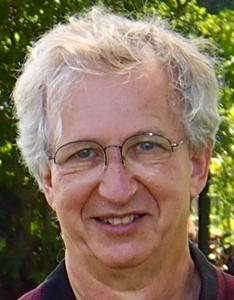 Daniel Bloch合作论文数Institut Pluridisciplinaire Hubert Curien, Université de Strasbourg;Centre National de la Recherche Scientifique48
 Marcia Begalli合作论文数Instituto de Física Armando Dias Tavares, Rio de Janeiro State University48
 Marta Calvi合作论文数Department of Physics "Giuseppe Occhialini", University of Milano-Bicocca;Istituto Nazionale di Fisica Nucleare48N.I. Zimin合作论文数48D. Treille合作论文数47G. Tristram合作论文数47B. Bouquet合作论文数47G. Myatt合作论文数47
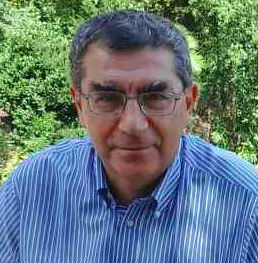 Vincenzo Canale合作论文数Dipartimento di Fisica, Università degli Studi di Napoli Federico II47A Perrotta合作论文数47
 Maria Elena Pol合作论文数Centro Brasileiro de Pesquisas Físicas47F. Carena合作论文数47g borisov合作论文数47
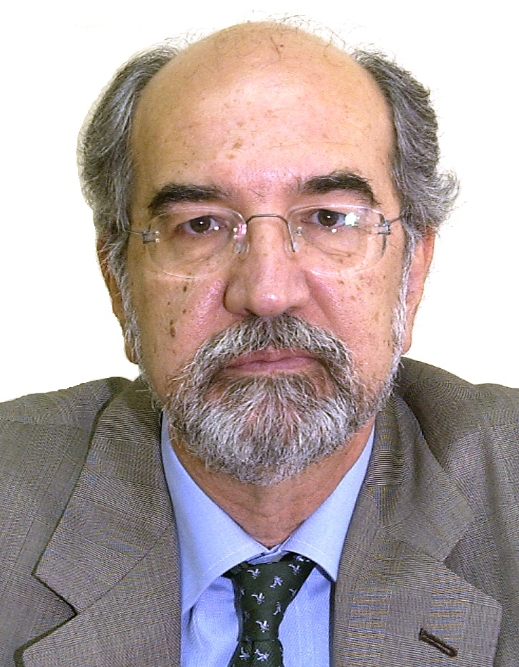 Evangelos N. Gazis合作论文数Department of Physics, School of Applied Mathematical & Physical Sciences, National Technical University of Athens47J. M. Brunet合作论文数47
 Tiziano Camporesi合作论文数CERN47Henryk Palka合作论文数Institute of Nuclear Physics, Polish Academy of Sciences47
 Javier Cuevas Maestro合作论文数Universidad de Oviedo;European Organization for Nuclear Research47
 Emmanuel Fokitis合作论文数47
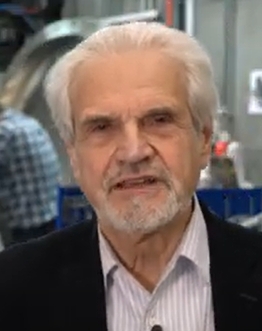 Tord Ekelof合作论文数Department of Physics and Astronomy, Uppsala University47
 Alessandro De Angelis合作论文数Dipartimento di Fisica e Astronomia "Galileo Galilei", University of Padua47
 Olga Botner合作论文数Department of Physics and Astronomy, Uppsala University47P. Kluit合作论文数46A. Ouraou合作论文数46P. Jarry合作论文数46J. Marco合作论文数46S. Tzamarias合作论文数46R. Sekulin合作论文数46U. Mjoernmark合作论文数46F. Ledroit合作论文数46H. Foeth合作论文数46G. Smadja合作论文数46
 Dimitris Fassouliotis合作论文数Department of Physics, National and Kapodistrian University of Athens46B. Åsman合作论文数46F. Richard合作论文数46P Baillon合作论文数46P. Bambade合作论文数46M. Szeptycka合作论文数46t moa合作论文数46Ia Tyapkin合作论文数46
 S-O Holmgren合作论文数46h wahlen合作论文数46




