Little is known about the role of educational collaboratories as information systems for management of social (human) and technical (technology related) factors in interdisciplinary contexts. Within a milieu of interdisciplinary issues in education, science, and technology, this paper takes a situated approach towards identification of complexities in the development of educational collaboratories in the GK-12 EdGrid Graduate Teaching Fellowship Program (GK-12 EdGrid Program). A situated approach calls for recognition of multiple context of use of innovative technologies in educational settings. The GK-12 EdGrid Program is a three-year National Science Foundation (NSF)-funded project to support University of Illinois graduate students in the sciences, mathematics, engineering, and technology (SMET) disciplines. Selected graduate students collaborate with campus faculty and participating K-12 teachers to integrate the use of computer-based modeling, scientific visualization, and informatics in science and mathematics education. Based on initial experiences at four participating high schools across Illinois, this paper draws attention towards a range of factors that are being negotiated for successful progress and implementation of GK-12 EdGrid Program's educational collaboratories during the project's first year. Such a research endeavor will be helpful in two ways: First, it will help to understand how the formation and evolution of an educational collaboratory determines achievement of particular short-term and longterm goals. This may lead to formulation of an agenda for their future application in other similar contexts. Second, such a strategy will provide a clue towards how development of an educational collaboratory takes place as an outcome of negotiation between multiplicity in perceptions, cultural practices, work ethics, and personal preferences. This will help to understand the multifaceted dynamics that take place in the development of educational collaboratories in interdisciplinary contexts.
Background. Although perceived competence has been identified as an essential component of global self-esteem, individual differences in the way competence is conceptualised have been virtually ignored. Achievement goal theory suggests that two conceptions of competence operate in achievement contexts: competence can be conceived as capacity or improvement. These two conceptions are embedded within two goal orientations, namely task and ego orientation. Aims. The study examined the relationship of goal orientations and perceptions of athletic ability to global self-esteem. Samples. Children (N = 907) attending summer sports camps participated in the study. Method. Children completed the Perception of Success Questionnaire and the Self-Esteem Scale and recorded their perceptions of normative athletic ability. Results. High task-oriented children reported significantly higher self-esteem than low task-oriented children. Among high task-oriented boys, those with high perceived ability had higher self-esteem. In addition, high ego-oriented boys had high self-esteem when they perceived themselves as having high ability in relation to their peers. Finally, among low task-oriented girls, those with high perceived ability reported higher self-esteem. Conclusions. The findings are consistent with the tenets of achievement goal theory that success and failure are subjective psychological states. It is recommended that different conceptions of competence are considered in the study of self-esteem.
A subsample (N = 505) was selected from a nationwide, stratified, probability sample of students with disabilities attending high school in 1985. In-school and out-of-school information about these students was obtained in 1987 and 1990 from school records, school personnel, and parents. Conventional item analysis procedures were used to construct a priori quality-of-life composites (social relationships, employment, and independence) from 17 questionnaire variables. These composites were related to 27 geopolitical, family, demographic, cognitive, disability, and school program variables using three multiple regression analyses, which indicated that the predictors accounted for 23.5% of the variance in social relationships; 25.6%, in independence; and 19.5%, in employment. Results suggest that although quality of life is multidimensional, competence appears to underlie many of its facets.
This volume presents a collection of articles selected from Teaching of Psychology, sponsored by APA Division 2. It contains the collective experience of teachers who have successfully dealt with students' statistics anxiety, resistance to conducting literature reviews, and related problems. For those who teach statistics or research methods courses to undergraduate or graduate students in psychology, education, and the social sciences, this book provides many innovative strategies for teaching a variety of methodological concepts and procedures in statistics and research methods courses.
This paper describes the role that information technology is playing an increasing role in the work and personal lives of citizens. At the heart of having trained citizens is the need to have well prepared teachers for our children. Perspectives on how this is being done in Japan and USA are described. Examples of the guidelines for the Information Technology (IT) Education are outlined in both countries with examples of how teachers are prepared for the IT classrooms of the 21(st) century. Issues surrounding the training of teachers are discussed with implications for the implementations of the IT plans. A plan is suggested that addresses the question of what everyone should know about information technology in order to use it more effectively now and in the future. Developing students fluent with information technology (FIT) so they are able to express themselves creatively, to reformulate knowledge and to synthesize new information are the keys to preparing our students for a process of lifelong learning.
This paper describes a new way for teaching statistics that includes an integrated CD based lesson book with web-resources to support a more active learning framework. A new learning approach is provided for students to practice their knowledge of statistics with reference to real world problems. The web-based discussion forum allows for the community of learners to share their insights and understandings. A team learning environment is modeled on the-web with performance evaluation described. A full range of multimedia is provided to motivate, explain, visualize, and apply introductory statistical concepts. Multiple modes of representations are integrated which includes video, simulation, animation, narration, text, interactive:experiments, web access, and a graphical interface statistics package into a meaningful learning environment.
Stevens has written a text that emphasizes conceptual understanding of statistical techniques and effective use of statistical software in analysis and interpretation of results. He provides references to sources offering greater mathematical depth of discussion/analysis as well as incorporating these into the text and exercises. The level and extent of coverage suggest an audience of advanced undergraduate or beginning graduate students in the social sciences. Six chapters cover traditional intermediate statistics topics: review of t tests for independent and dependent samples (chap. 1), one-way analysis of variance (chap. 2), power analysis (chap. 3), factorial analysis of variance (chap. 4), analysis of covariance (chap. 5), and repeated measures analysis (chap. 6). Excellent examples, exercises, and illustrations connect to both SAS and SPSSX through inclusion of a large number of printouts with interpretive notes. This text represents a modern approach to statistics by providing an instructional mix of strategies to introduce each statistical technique. First, definitional formulas are presented on small data sets to convey conceptual insights into what is being quantified. Second, Stevens introduces statistical programs for processing data by guiding the reader to check first for outliers and critical assumptions underlying the analyses before jumping to the main hypotheses being tested. Examples are run using both the SAS and SPSSX statistical packages. Chapter 1 begins with an overview of basic statistical terminology. A section summarizes the summation notation with four properties of the summation operator illustrated with examples. Comparisons among means for independent and dependent samples are discussed in the next section with a review of the basic assumptions and the statistical test statistics noted. Emphasis is given to interpreting the confidence intervals rather than the mere statistical test results of the null hypothesis. Excellent examples are provided, which focus on the detection and impact of outliers on statistical results. The chapter concludes with an introduction to the basic program commands for SAS and SPSSX.
Taro is a typical fifth grader of Nishishiroyama Elementary School. His typical school day begins at 8.30 a.m. and ends at 3.30 p.m. He arrives home at 4.00. Coming home at 4.00, however, does not mean that he can enjoy the rest of the day. At 4.30 p.m. he leaves home for a Shingaku-Juku. He studies arithmetic there until 7.45 p.m. and then comes back home. After supper he begins to do his homework assignments.
This chapter briefly reviews each of the preceding chapters and then outlines a set of issues that confront the development and use of performance assessments in school settings. For performance assessments to be useful, the following issues need to be kept in the forefront: conceptual clarity in the link between instruction, assessment, and reporting; support from the measurement community to assist teachers in using and interpreting results for instructional and student decision making; fairness across raters, tasks, administration, scoring procedures, and student subgroups; and cost-feasibility given current high monetary, time, and human-resource costs for development and use.
Youth with handicaps were found to have much lower career aspirations than their nonhandicapped peers. Discriminant function analyses demonstrated that each group had the same components contributing to their career expectations, and that handicapping status was not a significant factor. The results of an examination of other factors possibly contributing to these aspiration differences indicate that the youth with handicaps were more likely to be in vocational preparation streams and the nonhandicapped youth in academic streams. These differences had emerged by the sophomore year. It was also found that the expectations of parents, teachers, counselors, friends and relatives perceived by the students with handicaps were for the lower-status occupational outcomes. Implications of these findings were discussed in relation to the practice of streaming students with handicaps into areas that would lower their chances for success in later life.
 Michael L. Connell合作论文数7
 Adrian T. Fisher合作论文数7
 Herbert J. Walberg合作论文数University of Illinois at Chicago4Shiow-Ling Tsai合作论文数4norene lowery合作论文数3Robert L. Linn合作论文数3Marjorie W. Steinkamp合作论文数2Ann C. Willig合作论文数1Sharon Comstock合作论文数1Sb Dunbar合作论文数1
 Bertram C. Bruce合作论文数University of Illinois at Urbana-Champaign1
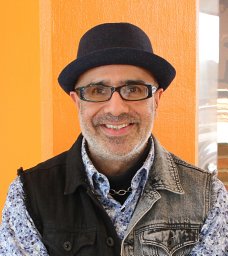 Bharat Mehra合作论文数Graduate School of Library and Information Science, University of Illinois at Urbana-Champaign1
 Martin L. Maehr合作论文数School of Education, University of Michigan/Department of Psychology, College of Literature, Science and the Arts, University of Michigan1Kennedy T. Hill合作论文数1
 Frank R. Rusch合作论文数University of Illinois at Urbana-Champaign1L. W. Heal合作论文数1




