Of the contributors to this volume, I probably knew Ben Wright among the longest. It was 1960 when I first became a University of Chicago doctoral student. In Ben's statistics class, he announced that he needed a research assistant to help analyze data. Two of us applied, and I counted myself lucky to be chosen. In those days, I had the top qualifications of having previously key-punched several IBM cards. I'll recount some of my experiences in those years, and in the years since.
Competitions are used by many teachers at the grassroots level to develop the talents of their gifted students. Each year the top Mathematics, Chemistry, and Physics Olympiad students are identified and assembled into national teams that compete against teams from around the world. This article summarizes findings from the American Olympiad study. Our investigators analyzed data from 345 adult Olympians and found that 52% earned doctorates, and these individuals pursued careers in technical areas that benefit the nation. So far these Olympians have published 8,629 publications, and many of the Olympians have assumed positions in universities or research institutions that contribute to the productivity of the United States. Their success supports competitions as a viable alternative for developing the talents of the gifted.
Th e rationale for school choice is that providing autonomy, innovation, and accountability will allow schools of choice to operate more eff ectively vis-à-vis regular public schools. However, from existing research, we do not know that this is the case. Here, we review several social perspectives on choice: rational choice theory, institutional theory, social capital theory, and the social organization of schooling. Rational choice theory provides a rationale for many forms of school choice, although several researchers have questioned its underlying assumptions. An alternative theory is the institutional perspective, which predicts that school choice will not result in widespread innovation and diff erent school organizational forms. Social capital theory provides a lens to view how face-to-face social relationships among individuals and groups can promote certain goals and outcomes. Th e social organization of schooling perspective emphasizes how school structure and processes are related to student outcomes. We argue that there is a need for researchers to expand this latter perspective to examine what occurs inside the black box of schools of choice. By examining the social structure and processes within schools, classrooms, and families, we will further understand the conditions under which choice may (or may not) promote positive student outcomes. As the school choice movement gathers steam, so too does the research examining whether or not it is doing what it aims to do—that is, advance the educational opportunities for America’s students. It is interesting, however, that most of that research eff ort to date has neglected school structure and processes as they relate not only to student outcomes but the three key aspects of schools that the choice movement intends to improve—autonomy, innovation, and accountability (see Berends, Springer, & Walberg, 2008a; Bulkley & Fisler, 2003; Gill, Timpane, Ross, Brewer, & Booker, 2007; Lubienski, 2003). Central to advocates’ argument for choice is that these aspects of reform will produce changes in organizational conditions that promote learning, curriculum, and instruction, which, in turn, will lead to better student outcomes. Moreover, the argument goes, practices and conditions related to autonomy, innovation, and accountability will diff er across
Recent research and reviews question the adequacy of psychological models for research on instruction and learning. Six models—stimulus variation, organismic variation, multiple variation, interaction, stimulus mediation, and goal setting‐may be, in some cases, too simple and, in other cases, too complex to account for classroom learning. Perceptions of the social environment can make the models more parsimonious, serve as potent covariates, and account for additional variance in instructional research; they can also serve as interesting independent or dependent variables in social‐psychological inquiry. Several important generalizations can be made about social environments; and a number of research problems and priorities can be identified in the areas of theory, validity, evaluation, and educational goals.
Schools will be most successful in their educational mission when they integrate efforts to promote children's academic, social, and emotional learning (Elias et al., 1997). There is general agreem...
Preface, Herbert J. Walberg. Section 1: Overview of Restructuring. Overview of Restructuring, Bryan Hassel, Emily Hassel, and Lauren Morando Rhim. Section 2: Topical Modules. District-Wide Framework for Improvement, Kenneth K. Wong. The School Board and Central Office in District Improvement, Gordon Cawelti and Nancy Protheroe. Restructuring Options and Change Processes, Carole L. Perlman. Restructuring Through Learning-Focused Leadership, Joseph Murphy. Changing and Monitoring Instruction, Herbert J. Walberg. Systems for Improved Teaching and Learning, Sam Redding. Section 3: Indicators of Successful Restructuring. Indicators of Successful Restructuring, Sam Redding.
In the 1940s, Lewis Terman (1954a, 1954b) studied "life success'' of 730 gifted men at the midpoint of their careers and found that success is associated with stability and absence of disturbing conflicts. In this article, we use retrospective data (N = 624) from the academic Olympians in 3 countries (USA, Germany, and Finland) to study factors that are responsible for actualizing the Olympian's talent. The results, analyzed in 3 age cohorts, support the findings of the original Terman study. In the youngest age cohort (16 - 22 years), we found that most of the females were in the A group. For the second (23 - 29 years) and third (30 - 54 years) age cohorts, the findings show that the Olympians in the A group have higher motivation than those in the C group. Results showed that a conducive home atmosphere promoted best Olympians' long-term academic productivity.
This volume is not primarily concerned with what students should learn, nor even how they should learn. Rather it concerns how we can discover the best means and conditions for teaching them in school, at home, and in society. Expressed more explicitly, we seek to find out how students can learn efficiently or productively as much as possible within a given amount of time and resources. As in agriculture, medicine, public health, and modern industries, we can turn to rigorous science as one of the best sources for informing ourselves. The intended audiences are not only scholars in a variety of academic disciplines but also research consumers, including educators, policymakers, parents, and citizens who seek principles to critically separate valid from invalid claims for the efficacy and efficiency of education products, personnel, and policies. Initial versions of the chapters were discussed at a national invitational conference sponsored by the Laboratory for Student Success (LSS), the mid-Atlantic regional educational laboratory, at Temple University Center for Research in Human Development and Education. LSS operates under a contract with the U.S. Department of Education’s Institute of Education Sciences.
This special issue of the Peabody Journal of Education concerns one of the most challenging reform issues of our times?K-12 school choice. Along with school finance and accountability associated with the federal No Child Left Behind Act and state accountability systems, choice is much debated and sorely in need of both solid research and well-informed fed eral, state, and local policies. This issue represents some of the most re cent empirical research that can inform policymakers, practitioners, and researchers. This issue brings together a multidisciplinary group of researchers whose diverse analytical and methodological perspectives provide fresh understanding on the design, implementation, and effects of various types of school choice initiatives. Such an effort is central to the mission of the National Research Center on School Choice, Competition and Student Achievement, in which Kenneth Wong is the founding director and Her bert Walberg is a project investigator. This Institute for Education Sciences
This book takes a hard look at the professional, technical, and public policy issues surrounding student achievement and teacher effectiveness-and shows how testing and accountability can play a vital role in improving American schools.
The program of research on teacher–student relationships described in this issue is an important part of the field of classroom learning environments, although it has its own distinctive and significant features. The questionnaire on teacher interaction (QTI), the main instrument used in this research, follows the strong tradition in learning environments research of using the perceptions of the participants in the classroom. Although this research program originated in the Netherlands, it now is truly international and the QTI has been translated into and validated in over a dozen languages. Not only has past research consistently replicated the advantages of positive teacher–student relationships in terms of promoting improved student outcomes, but positive teacher–student relationships also are worthwhile process goals of education. In the future, it would be desirable for the QTI to be used more frequently by teachers as a feedback instrument for guiding improvements in their classroom relationships with their students, and that qualitative data-collection methods are used more often in conjunction with the use of the QTI in research on teacher–student interaction.
In this book, nationally recognized interdisciplinary leaders examine the relationships between social-emotional education and school success - specifically focusing on interventions that enhance student learning. Offering scientific evidence and practical examples, this volume points out the many benefits of SEL programs.
What may best distinguish our approach from that of others is its emphasis on accomplishment in the case of children and youth, and eminence in the case of adults. For us, accomplishment rather than potential is the best indication of giftedness. Giftedness is only one of several factors that may affect how much a person attains over the course of childhood, youth, or a lifetime. For example, without large amounts of intensive practice, parental support, and expert instruction, giftedness rarely comes to full fruition. Though fundamentally psychological and educational, our approach is derivative of the “new economics” that broadly applies well-established economic principles to explain human behavior outside its traditional monetary purview, including learning, human and social capital, marriage, divorce, crime, addictions, suicide, and other phenomena (Becker, 1976). This economic approach employs only a few central ideas to parsimoniously explain and predict a wide variety of human behavior. Provocative and productive, new applications of economics echo the original Greek meaning of the term – the management of household affairs. Though founded in agreed-on theory, the economic principles accord well with common sense and have many practical applications. For example, dealing with scarcity – not just of money, but of time, energy, and attention – is a classic problem not only of economics but of human life. Economists also influence policy makers because they explicitly quantify the benefits, costs, and risks that should weigh heavily in rational decision making. Can economic ideas help us think more clearly about making giftedness fruitful or, in the language of economics, “productive”? The “opportunity costs” of notable accomplishment or eminence in violin playing preclude top ballet performance and world-class chess. To reach a field’s pinnacle may require a decade of a child or youth’s intense concentration and, as a consequence, the sacrifice of other valuable pursuits. The highest accomplishments require not only such “foregone opportunities,” but also
In response to public demand, federal legislation now requires testing of most students in the United States in reading and mathematics in grades three through eight. Many educators, parents, and policymakers who have paid little attention to testing policy issues in the past need to have better information on the topic than has generally been available. Kill the Messenger, now in paperback, fills this gap.This is perhaps the most thorough and authoritative work in defense of educational testing ever written. Phelps points out that much research conducted by education insiders on the topic is based on ideological preference or profound self-interest. It is not surprising that they arrive at emphatically anti-testing conclusions. Much, if not most, of this hostile research is passed on to the public by journalists as if it were neutral, objective, and independent. Kill the Messenger explains and refutes many of the common criticisms of testing; describes testing opponents' strategies, through case studies of Texas and the SAT; illustrates the profound media bias against testing; acknowledges testing's limitations, and suggests how it can be improved; and finally, outlines the consequences of losing the war on standardized testing.
 Haertel Geneva合作论文数41
 Margaret C. Wang合作论文数31Wayne W. Welch合作论文数18Richard P. Niemiec合作论文数16Thomas Weinstein合作论文数11
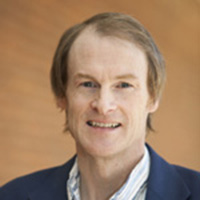
 Barry J. Fraser合作论文数Curtin University10Sp Rasher合作论文数9
 Arthur J. Reynolds合作论文数Institute of Child Development, University of Minnesota8Susan J. Paik合作论文数8Shiow-Ling Tsai合作论文数8Maynard C Reynolds合作论文数7
 Timothy Shanahan合作论文数University of Illinois at Chicago6Melanie F. Sikorski合作论文数6William J. Genova合作论文数6
 Roger Weissberg合作论文数University of Illinois at Chicago6Mc Reynolds合作论文数5susan christie thomas合作论文数5Andrew Ahlgren合作论文数5Rp Niemiec合作论文数5BK IVERSON合作论文数5Kevin Marjoribanks合作论文数5Winifred E. Stariha合作论文数5Edward A. Wynne合作论文数5Trudy Wallace合作论文数5Linda K. Junker合作论文数5
 Ernest Pascarella合作论文数Department of Educational Policy and Leadership Studies, College of Education, University of Iowa5James F. Gregory合作论文数5
 Delwyn Harnisch合作论文数4rebecca c greenberg合作论文数4Hc Waxman合作论文数4Richard S. Lysakowski合作论文数4Edward H. Haertel合作论文数4F. David Boulanger合作论文数4Joseph E. Zins合作论文数4Sl Tsai合作论文数3Mc Wang合作论文数3louis lowy合作论文数3leonard m bloksberg合作论文数3M. C. Wang合作论文数3
 Thomas Cook合作论文数Department of Sociology, Weinberg College of Arts & Sciences, Northwestern University;Mathematica Policy Research3Greg Clark合作论文数3Elliot L. Judd合作论文数3Joseph L. Bast合作论文数3
 Paul E. Peterson合作论文数Department of Government, Harvard University/Harvard Kennedy School, Harvard University3Arthur C Rothman合作论文数3Diane P. Schiller合作论文数3
 James Reed Campbell合作论文数3Lihua Tan合作论文数3Rampal Singh合作论文数2




