Instruments for surface missions to extraterrestrial bodies should be cross-calibrated using a common suite of relevant materials. Such work is necessary to improve instrument performance and aids in the interpretation of in-situ measurements. At the CNRS campus in Orléans, the Observatoire des Sciences de l'Univers en région Centre (OSUC) has created a collection of well-characterised rocks and minerals for testing and calibrating instruments to be flown in space missions. The characteristics of the analogue materials are documented in an accompanying online database. In view of the recent and upcoming rover missions to Mars (NASA's 2011 Mars Science Laboratory (MSL) and ESA/Roscosmos' 2018 ExoMars), we are concentrating initially on materials of direct relevance to the red planet. The initial collection consists of 15 well-studied rock and mineral samples, including a variety of basalts (ultramafic, weathered, silicified, primitive), sediments (volcanic sands, chert, and a banded iron formation –BIF-), and the phyllosilicate nontronite (a clay). All the samples were characterised petrographically, petrologically, and geochemically using the types of analyses likely to be performed during in-situ missions, in particular ExoMars: hand specimen description; optical microscopy; mineralogical analysis by XRD, Raman and IR spectrometry; iron phase analysis by Mössbauer spectroscopy (MBS), elemental analysis by Energy-Dispersive X-ray spectroscopy (EDX), microprobe, Inductively Coupled Plasma Atomic Emission Spectrometry (ICP-AES) and Mass Spectrometry (ICP-MS); and reduced carbon analysis by Raman spectrometry.
1 Computer Science Department (steve.pugh@aber.ac.uk), 2 Institute of Maths and Physics, Aberystwyth University, UK, 3 German Aerospace Centre (DLR), Institute of Planetary Research, Berlin, Germany. 4 Joanneum Research, Graz, Austria , 5 Earth & Planetary Sciences, Birkbeck College, University of London, UK, 6 Department of Physics and Astronomy, University of Leicester, Leicester, UK, 7 UCL, Mullard Space Science Laboratory, Surrey, UK.
The Life Marker Chip (LMC) is one of the instruments being developed for possible flight on the 2018 ExoMars mission. The instrument uses solvents to extract organic compounds from samples of martian regolith and to transfer the extracts to dedicated detectors based around the use of antibodies. The scientific aims of the instrument are to detect organics in the form of biomarkers that might be associated with extinct life, extant life or abiotic sources of organics. The instrument relies on a novel surfactant-based solvent system and bespoke, commercial and research-developed antibodies against a number of distinct biomarkers or molecular types. The LMC comprises of a number of subsystems designed to accept up to four discrete samples of martian regolith or crushed rock, implement the solvent extraction, perform microfluidic-based multiplexed antibody-assays for biomarkers and other targets, optically detect the fluorescent output of the assays, control the internal instrument pressure and temperature, in addition to the associated instrument control electronics and software. The principle of operation, the design and the instrument development status as of December 2011 are reported here. The instrument principle can be extended to other configurations and missions as needed.
1913. [4] Murchie, S.L. et al. (2007) JGR 112, E05S03. [5] Morgan, F. et al. (2009) CRISM Data User’s Workshop, LPSC. [6] Catling D.C. et al. (2005) Icarus, 181, 26-51. [7] Gendrin A. et al. (2005) Science, 307, 1587-1591. Determination of the first level image processing of the Chemcam RMI Instrument for the Mars Science Laboratory (MSL) Rover. ! " # $ ! $ % & ! ' ( )* + ( ),&' & # * & # % & ()*& ' .& + !' " & . # (), ( & !' & # $ (), ( !' ( & . / & & # / / & 0 & / & & & ! 1 . 1 1 1. 2 ' & 1 . 32 4 5 *!* / && & 3 ! 0 4 / / & & / ' 6 & & 7 / & & & / &8 & 9% ( ( 6( 7 !' / 3 % !4 ( / 9%/ 3 %4 % ! ' ( & / /' & & 6& ( & & 7 % ' & % ! .& & / ' 5 / & & & ' ( & & ( / 5 6& & & & ( / & 3 4 -7 ( : ( ' & 1 & ( & ' & ' ' & & ( : & ( 0;< / 3 % ! & 1 /4 7 .& 3 & 1 ( => / ( 1. ' &/ 4 ' && 7 % ( : & . 0? & 1 ( % / ' & . ( ' ( & / && & 1 ' ( ( 1. %*! % & ' & / 3<@9 0$A ( ( 7 / (4 ( 7 1 & ( & / & ' & . ( & & & % ! /' & & 7 & 7 6& % ' & / ( 7 ( & & / / ( / . ( & & / ' & */ & ' ( & & / 1 7 & ' * 1 ( & ' & ( & & 1& ( & 1 & 7 7 & ( ( / 5' / 1 ( /& 7 7 1 & ( 1. 2 / & ! 5 / ( & & ( ( &.& / # / 7 5' ( ' .& ' / 7 + ( & /' / ( 7 ( / ( ( ' / & 7 & '' & . ( ' / & & ( & & 6 ( ( & • 7 / & ' & & ( 1 & &' ( & ' 5 & % ( ' (& / & . /' • "1& . ( / & & & ' 5 & & ' 5 7 / & & 1 & & ( ' ( /' ( / • * ' 5 &7 & ' ' / & . ( ' *1 / 5 / / 7 ( & & & & ( ' ( ' 5 • ( & . /' & & & ( &' / / 5 *& & & & / & ( &' / & &/ 7 ( 1 7 / & &' & 3 4 ' ' 7 ( 1. 1 / & / /' & & ' • &/ & & / & ( & & && ( 1. .& & ( ' ( ( & 7 ( 7 ! 9 ( ( & / 7 & / 5 8 / '' ( ' (& & . ( & & & && & & ( / & & & ( & • * & 3 ( & 4 & ( ' 1 ( ' & & / ( / & 1 ( ( ( ! / ( & ( & 1 ( ( ( . ( & & 1 ( && 0 ? (. & 91 / ( # 8 / / & =
In common with other Mars exploration missions, human supervision of Europe's ExoMars Rover will be mostly indirect via orbital relay spacecraft and thus far from immediate. The gap between issuing commands and witnessing the results of the consequent rover actions will typically be on the order of several hours or even sols. In addition, it will not be possible to observe the external environment at the time of action execution. This lengthens the time required to carry out scientific exploration and limits the mission's ability to respond quickly to favorable science events. To increase potential science return for such missions, it will be necessary to deploy autonomous systems that include science target selection and active data acquisition. In this work, we have developed and integrated technologies that we explored in previous studies and used the resulting test bed to demonstrate an autonomous, opportunistic science concept on a representative robotic platform. In addition to progressing the system design approach and individual autonomy components, we have introduced a methodology for autonomous science assessment based on terrestrial field science practice. © 2009 Wiley Periodicals, Inc.
We have investigated how morphological biosignatures (i.e., features related to life) might be identified with an array of viable instruments within the framework of robotic planetary surface operations at Mars. This is the first time such an integrated lab-based study has been conducted that incorporates space-qualified instrumentation designed for combined in situ imaging, analysis, and geotechnics (sampling). Specimens were selected on the basis of feature morphology, scale, and analogy to Mars rocks. Two types of morphological criteria were considered: potential signatures of extinct life (fossilized microbial filaments) and of extant life (crypto-chasmoendolithic microorganisms). The materials originated from a variety of topical martian analogue localities on Earth, including impact craters, high-latitude deserts, and hydrothermal deposits. Our in situ payload included a stereo camera, microscope, Mössbauer spectrometer, and sampling device (all space-qualified units from Beagle 2), and an array of commercial instruments, including a multi-spectral imager, an X-ray spectrometer (calibrated to the Beagle 2 instrument), a micro-Raman spectrometer, and a bespoke (custom-designed) X-ray diffractometer. All experiments were conducted within the engineering constraints of in situ operations to generate realistic data and address the practical challenges of measurement. Our results demonstrate the importance of an integrated approach for this type of work. Each technique made a proportionate contribution to the overall effectiveness of our "pseudopayload" for biogenic assessment of samples yet highlighted a number of limitations of current space instrument technology for in situ astrobiology.
As part of a comprehensive study of X-ray emission from planetary surfaces and in particular the planet Mercury, we have measured fluorescent radiation from a number of planetary analog rock samples using monochromatized synchrotron radiation provided by the BESSY II electron storage ring. The experiments were carried out using a purpose built X-ray fluorescence (XRF) spectrometer chamber developed by the Physikalisch-Technische Bundesanstalt, Germany's national metrology institute. The XRF instrumentation is absolutely calibrated and allows for reference-free quantitation of rock sample composition, taking into account secondary photon- and electron-induced enhancement effects. The fluorescence data, in turn, have been used to validate a planetary fluorescence simulation tool based on the GEANT4 transport code. This simulation can be used as a mission analysis tool to predict the time-dependent orbital XRF spectral distributions from planetary surfaces throughout the mapping phase.
Morphological biosignatures (features related to life) and associated terrestrial sedimentary structures that provide possible sampling targets for the remote astrobiological exploration of planets have been analysed using Raman spectroscopic techniques. The spectral data from a suite of samples comprising cryptochasmoendoliths, preserved microbial filaments and relict sedimentary structures comprise a preliminary database for the establishment of key Raman biosignatures. This will form the basis for the evaluation of prototype miniaturised instrumentation for the proposed ESA ExoMars mission scheduled for 2013. The Raman spectral biosignatures of carotenoids and scytonemin, organic biomolecules characteristic of the cyanobacterial colonisation of geological matrices and biogeologically modified minerals are also identifiable in the sedimentary specimen materials. The results of this study demonstrate the basis of the molecular recognition of extinct and extant exobiology that will feed into the elemental structural analyses of morphological structures provided by associated SEM, XRD and laser-induced breakdown spectroscopy (LIBS) techniques on robotic analytical landers. Copyright (c) 2007 John Wiley & Sons, Ltd.
The pressure of demands for greater cost-effectiveness is leading space agencies to seek more efficient ways to exploit the science platforms they launch. It is clear that one route to greater efficiency is to migrate some of the decisions about operations from the ground to the platforms themselves. EO- 1 has been an effective demonstration of the potential benefits that this migration can offer, with rewards in the increased density of science value in communicated data and the im- proved responsiveness of the craft in its task of collecting relevant data. In this paper we present some findings from a project conducted to explore the possibility of performing opportunistic science gathering in a planetary rover mission, focussing on geological science data. This problem raises several distinct challenges, including the automatic identifi- cation and evaluation of possible science targets, estimation of the impact of attempting to collect the data these oppor- tunities might offer, making decisions about the operations required to collect the data and, finally, the task of enacting those operations. We outline our solutions to all of these ele- ments, but concentrate, in this paper, on the decision-making elements.1
 Frances Westall合作论文数Centre De Biophysique Moléculaire, CNRS-Orléans4Dave Barnes合作论文数3
 Beda Hofmann合作论文数Institute of Geological Sciences, University of Bern;Natural History Museum Bern, University of Bern3
 Mark Woods合作论文数2
 Arnold Bauer合作论文数2
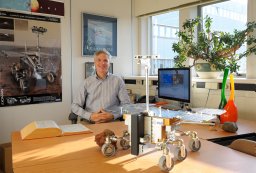 Jorge L. Vago合作论文数2
 Bost Nicolas合作论文数2
 Frederic Foucher合作论文数Centre de Biophysique Moléculaire, CNRS-OSUC2
 Howell Edwards合作论文数School of Chemistry and Bioscience, University of Bradford2
 Gerhard Paar合作论文数Institute for Information and Communication Technologies, Joanneum Research Forschungsgesellschaft mbH2Claire Ramboz合作论文数2
 Derek Long合作论文数Department of Informatics, Faculty of Natural, Mathematical & Engineering Sciences, King’s College London2
 Andy Shaw合作论文数2
 Susana E Jorge-Villar合作论文数Area de Geodinámica Interna, Facultad de Humanidades y Educación, C/Villadiego s/n, 09001 Burgos, Spain;School of Earth and Environment, University of Leeds;Chemical and Forensic Sciences, University of Bradford;University of Leeds, University of Bradford2Alfonso Mantero合作论文数1laurence tyler合作论文数1Goestar Klingelhoefer合作论文数1Michael Mantler合作论文数1carla rato合作论文数1Andrew D Griffiths合作论文数1
 Nicole Schmitz合作论文数1Lutz Richter合作论文数1m g pia合作论文数1
 Mark Sephton合作论文数Department of Earth Science & Engineering, Faculty of Engineering, Imperial College London1García-Con Luis Miguel合作论文数1
 Catherine S. Rix合作论文数1
 Andrew Coates合作论文数Department of Space and Climate Physics, Faculty of Maths & Physical Sciences, University College London1M. Gunn合作论文数Institute of Mathematics and Physics, Aberystwyth University1
 Michael Krumrey合作论文数Department of Radiation, Physikalisch-Technische Bundesanstalt1
 Charles Cockell合作论文数School of Physics and Astronomy, University of Edinburgh;Centre for Science at Extreme Conditions, University of Edinburgh1
 John Parnell合作论文数School of Geosciences, University of Aberdeen1Derveni Mariliza合作论文数1
 Christian Schroder合作论文数Planetary Science Department, Max Planck Institute for Solar System Research1G.W. Fraser合作论文数Space Research Centre, University of Leicester1
 Jon Sykes合作论文数1Anthony Peacock合作论文数1R. C. C. Ward合作论文数1Alain Meunier合作论文数1Dave Price合作论文数1Oliver Blake合作论文数1
 Lucia Marinangeli合作论文数1
 Alan Owens合作论文数ESA/ESTEC Postbus 299 Office of Advanced Concepts and Science Payloads 2200 AG Noordwijk The Netherlands 2200 AG Noordwijk The Netherlands1Richard W. Court合作论文数Department of Earth Science and Engineering, Imperial College London1Gordon Cressey合作论文数1
 David Cullen合作论文数1Sabine Petit合作论文数Bât. Sci. Naturelles, Université de Poitiers1
 Michael Sims合作论文数Department of Physics and Astronomy, University of Leicester1Michel Viso合作论文数1
 Uwe K. Schneider合作论文数Department of Radiation Oncology and Nuclear Medicine, City Hospital Triemli1




