Methods for detecting gene flow between populations often rely on asymmetry in the average length of particular genealogical branches, with the ABBA-BABA test being a well known example. Currently, asymmetry-based methods cannot be applied to a pair of populations and such analyses are instead performed using model-based methods. Here we investigate genealogical asymmetry under a two-population isolation-migration model. We focus on genealogies where the first coalescence event is between lineages sampled from different populations, as the external branches of these genealogies have equal expected length as long as there is no post-divergence gene flow. We show that unidirectional gene flow breaks this symmetry and results in the recipient population having longer external branches. We derive expectations for the probability of this genealogical asymmetry under the isolation-migration model and propose a simple statistic (Am) to detect it from genome sequence data. Amprovides a two-taxon test for gene flow that only requires a single unphased diploid genome from each population, with no outgroup information. We use analytic expectations and coalescent simulations to explore how recombination, unequal effective population sizes and bidirectional gene flow influence Amand find that the statistic provides unambiguous evidence for gene flow under a continent-island history. We estimate Amfor genome sequence data fromHeliconiusbutterflies andOdocoileusdeer, generating results consistent with previous model-based analyses. Our work highlights a signal of gene flow overlooked to date and provides a method that complements existing approaches for investigating the demographic history of recently diverged populations.
Chromosome rearrangements represent a prominent form of genetic variation that plays a key role in creating genetic isolation between emergent species. Despite their significance, the mechanisms and constraints governing chromosome evolution remain poorly understood. Relatively few species have karyotypes with very high chromosome counts, and the chromosome sizes of most species tend to be narrowly distributed around the mean length. Here, we develop and analyze a Markov model for the evolution of chromosome number and relative sizes through fission and fusion events, exploring several alternative models for the dynamics of each as well as the effect of enforcing limits on chromosome length. We compare the distribution of chromosome lengths predicted by the Markov model to karyotype data for a range of Eukaryote species to identify the best-fitting fission/fusion dynamics. We find broad support for a model which (i) favours the breaking of long chromosomes, (ii) favours the fusion of pairs of small chromosomes, and (iii) does not require size limitations to provide a good fit to the data. However, there are exceptions. On the one hand, species with micro chromosomes fit best to models with more uniform rates of fission and/or fusion. On the other hand, many species have chromosome sizes that are much more narrowly distributed than our models predict, suggesting the need to explore alternative dynamics and/or limitations to chromosome lengths.
Large-scale chromosome rearrangements, such as fissions and fusions, are a common feature of eukaryote evolution. They can have considerable influence on the evolution of populations, yet it remains unclear exactly how rearrangements become established and eventually fix. Rearrangements could fix by genetic drift if they are weakly deleterious or neutral, or they may instead be favoured by positive natural selection. Here, we compare genome assemblies of three closely related Brenthis butterfly species and characterize a complex history of fission and fusion rearrangements. An inferred demographic history of these species suggests that rearrangements became fixed in populations with large long-term effective size (N-e), consistent with rearrangements being selectively neutral or only very weakly underdominant. Using a recently developed analytic framework for characterizing hard selective sweeps, we find that chromosome fusions are not enriched for evidence of past sweeps compared to other regions of the genome. Nonetheless, we do infer a strong and recent selective sweep around one chromosome fusion in the B. daphne genome. Our results suggest that rearrangements in these species likely have weak absolute fitness effects and fix by genetic drift. However, one putative selective sweep raises the possibility that natural selection may sometimes play a role in the fixation of chromosome fusions.
Large-scale chromosome rearrangements, such as fissions and fusions, are a common feature of eukaryote evolution. They can have considerable influence on the evolution of populations, yet it remains unclear exactly how rearrangements become established and eventually fix. Rearrangements could fix by genetic drift if they are weakly deleterious or neutral, or they may instead be favoured by positive natural selection. Here we compare genome assemblies of three closely related Brenthis butterfly species and characterise a complex history of fission and fusion rearrangements. An inferred demographic history of these species suggests that rearrangements became fixed in populations with large long-term effective size ( N e ). However, we also find large runs of homozygosity within individual genomes and show that a model of population structure with smaller local N e can reconcile these observations. Using a recently developed analytic framework for characterising hard selective sweeps, we find that chromosome fusions are not enriched for evidence of past sweeps compared to other regions of the genome. Nonetheless, one chromosome fusion in the B. daphne genome is associated with a valley of diversity where genealogical branch lengths are distorted, consistent with a selective sweep. Our results suggest that drift is a stronger force in these populations than suggested by overall genetic diversity, but that the fixation of strongly underdominant rearrangements remains unlikely. Additionally, although chromosome fusions do not typically exhibit signatures of selective sweeps, a single example raises the possibility that natural selection may sometimes play a role in their fixation.
Identifying regions of the genome that act as barriers to gene flow between recently diverged taxa has remained challenging given the many evolutionary forces that generate variation in genetic diversity and divergence along the genome, and the stochastic nature of this variation. Progress has been impeded by a conceptual and methodological divide between analyses that infer the demographic history of speciation and genome scans aimed at identifying locally maladaptive alleles i.e. genomic barriers to gene flow. Here we implement genomewide IM blockwise likelihood estimation (gIMble), a composite likelihood approach for the quantification of barriers, that bridges this divide. This analytic framework captures background selection and selection against barriers in a model of isolation with migration (IM) as heterogeneity in effective population size (Ne) and effective migration rate (me), respectively. Variation in both effective demographic parameters is estimated in sliding windows via pre-computed likelihood grids. gIMble includes modules for pre-processing/filtering of genomic data and performing parametric bootstraps using coalescent simulations. To demonstrate the new approach, we analyse data from a well-studied pair of sister species of tropical butterflies with a known history of post-divergence gene flow: Heliconius melpomene and H. cydno. Our analyses uncover both large-effect barrier loci (including well-known wing-pattern genes) and a genome-wide signal of a polygenic barrier architecture.
We present a genome assembly from an individual female Boloria selene (the small pearl-bordered fritillary, also known as the silver meadow fritillary; Arthropoda; Insecta; Lepidoptera; Nymphalidae). The genome sequence is 400 megabases in span. The complete assembly is scaffolded into 31 chromosomal pseudomolecules, with the W and Z sex chromosome assembled.
We present a genome assembly from an individual female Boloria selene (the small pearl-bordered fritillary, also known as the silver meadow fritillary; Arthropoda; Insecta; Lepidoptera; Nymphalidae). The genome sequence is 400 megabases in span. The complete assembly is scaffolded into 31 chromosomal pseudomolecules, with the W and Z sex chromosome assembled.
Recombination can occur either as a result of crossover or gene conversion events. Population genetic methods for inferring the rate of recombination from patterns of linkage disequilibrium generally assume a simple model of recombination that only involves crossover events and ignore gene conversion. However, distinguishing the two processes is not only necessary for a complete description of recombination, but also essential for understanding the evolutionary consequences of inversions and other genomic partitions in which crossover (but not gene conversion) is reduced. We present heRho , a simple composite likelihood scheme for co-estimating the rate of crossover and gene conversion from individual diploid genomes. The method is based on analytic results for the distance-dependent probability of heterozygous and homozygous states at two loci. We apply heRho to simulations and data from the house mouse Mus musculus castaneus , a well studied model. Our analyses show i) that the rates of crossover and gene conversion can be accurately co-estimated at the level of individual chromosomes and ii) that previous estimates of the population scaled rate of recombination under a pure crossover model are likely biased.
Current methods of identifying positively selected regions of the genome are limited by their underlying model in two key ways: the model cannot account for the timing of the adaptive event and the analytic predictions are limited to single nucleotide polymorphisms. Here we develop a tractable method of describing the effect of positive selection on the genealogical histories in the surrounding genome, explicitly modeling both the timing and context of the adaptive event. In addition, our framework allows us to go beyond simple polymorphism data. We are able to leverage information contained in patterns of linked variants, and even with very small sample sizes, our analytic framework has high power to identify historically adaptive regions of the genome and to correctly infer both the time and strength of selection. Finally, we derived the marginal distribution of genealogical branch lengths at a locus affected by selection acting at a linked site. This provides a much-needed link between current theoretical models to recent advances in simulation procedures that have allowed researchers both to examine the evolution of genealogical histories at the level of full chromosomes and build methods that attempt to reconstruct full ancestries from genome sequence data.
Recent research shows that introgression between closely-related species is an important source of adaptive alleles for a wide range of taxa. Typically, detection of adaptive introgression from genomic data relies on comparative analyses that require sequence data from both the recipient and the donor species. However, in many cases, the donor is unknown or the data is not currently available. Here, we introduce a genome-scan method-VolcanoFinder-to detect recent events of adaptive introgression using polymorphism data from the recipient species only. VolcanoFinder detects adaptive introgression sweeps from the pattern of excess intermediate-frequency polymorphism they produce in the flanking region of the genome, a pattern which appears as a volcano-shape in pairwise genetic diversity. Using coalescent theory, we derive analytical predictions for these patterns. Based on these results, we develop a composite-likelihood test to detect signatures of adaptive introgression relative to the genomic background. Simulation results show that VolcanoFinder has high statistical power to detect these signatures, even for older sweeps and for soft sweeps initiated by multiple migrant haplotypes. Finally, we implement VolcanoFinder to detect archaic introgression in European and sub-Saharan African human populations, and uncovered interesting candidates in both populations, such as TSHR in Europeans and TCHH-RPTN in Africans. We discuss their biological implications and provide guidelines for identifying and circumventing artifactual signals during empirical applications of VolcanoFinder.
Despite the homogenizing effect of strong gene flow between two populations, adaptation under symmetric divergent selection pressures results in partial reproductive isolation: adaptive substitutions act as local barriers to gene flow, and if divergent selection continues unimpeded, this will result in complete reproductive isolation of the two populations, i.e. speciation. However, a key issue in framing the process of speciation as a tension between local adaptation and the homogenizing force of gene flow is that the mutation process is blind to changes in the environment and therefore tends to limit adaptation. Here we investigate how globally beneficial mutations (GBMs) affect divergent local adaptation and reproductive isolation. When phenotypic divergence is finite, we show that the presence of GBMs limits local adaptation, generating a persistent genetic load at the loci that contribute to the trait under divergent selection and reducing genome-wide divergence. Furthermore, we show that while GBMs cannot prohibit the process of continuous differentiation, they induce a substantial delay in the genome-wide shutdown of gene flow. This article is part of the theme issue ‘Towards the completion of speciation: the evolution of reproductive isolation beyond the first barriers’.
By hybridization and backcrossing, alleles can surmount species boundaries and be incorporated into the genome of a related species. This introgression of genes is of particular evolutionary relevance if it involves the transfer of adaptations between populations. However, any beneficial allele will typically be associated with other alien alleles that are often deleterious and hamper the introgression process. In order to describe the introgression of an adaptive allele, we set up a stochastic model with an explicit genetic makeup of linked and unlinked deleterious alleles. Based on the theory of reducible multitype branching processes, we derive a recursive expression for the establishment probability of the beneficial allele after a single hybridization event. We furthermore study the probability that slightly deleterious alleles hitchhike to fixation. The key to the analysis is a split of the process into a stochastic phase in which the advantageous alleles establishes and a deterministic phase in which it sweeps to fixation. We thereafter apply the theory to a set of biologically relevant scenarios such as introgression in the presence of many unlinked or few closely linked deleterious alleles. A comparison to computer simulations shows that the approximations work well over a large parameter range.
 Lohse Konrad合作论文数Institute of Evolutionary Biology, University of Edinburgh8
 Alexander Mackintosh合作论文数Institute of Evolutionary Biology, University of Edinburgh, Edinburgh, UK.3
 Gertjan Bisschop合作论文数Inst Evolutionary Biol, Univ Edinburgh3
 Simon Martin合作论文数School of Biological Sciences, The University of Edinburgh3
 Roger Vila合作论文数Institut de Biologia Evolutiva (CSIC-UPF), Passeig Marítim de la Barceloneta 37-49, 08003 Barcelona, Spain2
 Joachim Hermisson合作论文数Institut fur Theoretische;Universitat Tubingen;Institut fur Theoretische, Universitat Tubingen2Sam Ebdon合作论文数1
 Xiaoheng Cheng合作论文数Penn State Univ, University Pk1
 Rasmus Nielsen合作论文数Department of Integrative Biology, College of Letters & Science, University of California, Berkeley;Department of Statistics, University of California, Berkeley;University of Copenhagen1Uecker Hildegard合作论文数Faculty of Mathematics and Max F. Perutz Laboratories, University of Vienna1
 Rafajlović Marina合作论文数Department of Physics, University of Gothenburg1
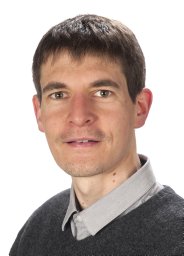 Aeschbacher Simon合作论文数Institute of Evolutionary Biology, University of Edinburgh1Sylvain Mousset合作论文数1Dominik R Laetsch合作论文数Zoological Institute 1, University of Karlsruhe1
 Stuart J.E. Baird合作论文数1
 Michael Degiorgio合作论文数Department of Electrical Engineering and Computer Science, College of Engineering & Computer Science, Florida Atlantic University;Department of Biomedical Engineering, College of Engineering & Computer Science, Florida Atlantic University1




