Dear Editor, DddAtox-derived cytosine base editors(DdCBEs)can mediate precise,CRISPR-independent editing of mitochondrial DNA(mtDNA),but were recently shown to potentially introduce extensive and non-trivial off-target effects throughout the genome1,2 presenting a significant obstacle for research applica-tions and an obvious safety issue for use in clinical therapies of hereditary mitochondrial disorders.Here,utilizing the crystal structure of DddAtox in complex with DNA,we predicted DNA-binding sites on the DddAtox protein surface and generated variants by converting positively charged residues at these sites to negatively charged amino acids.By modifying the DNA-binding capability of DddAtox through charge reversal,especially through K1402D or K1402E conversions,we could generate split-architecture DdCBEs with high on-target editing efficiency at multiple sites in mtDNA and significantly fewer off-target effects in both mtDNA and whole genome of mice,~400 times lower than wild-type(WT)DdCBE(DdCBEWT).This study establishes K1402D/K1402E-DdCBE(DdCBEK1402D/E)editors as efficient,high-fidelity,and relatively safe research tools for mitochondrial diseases that warrant exploration for therapeutic applications,and demon-strates a strategy for reducing off-target effects in DddAtox family base editors.
The FokI catalytic domain can be fused to various DNA binding architectures to improve the precision of genome editing tools. However, evaluation of off-target effects is essential for developing these tools. We use Genome-wide Off-target analysis by Two-cell embryo Injection (GOTI) to detect low-frequency off-target editing events in mouse embryos injected with FokI-based architectures. Specifically, we test FokI-heterodimers fused with TALENs, FokI homodimers fused with RYdCas9, or FokI catalytic domains alone resulting in no significant off-target effects. These FokI genome editing systems exhibit undetectable off-target effects in mouse embryos, supporting the further development of these systems for clinical applications.
Adenine base editors (ABEs) and cytosine base editors (CBEs) enable the single nucleotide editing of targeted DNA sites avoiding generation of double strand breaks, however, the genomic features that influence the outcomes of base editing in vivo still remain to be characterized. High-throughput datasets from lentiviral integrated libraries were used to investigate the sequence features affecting base editing outcomes, but the effects of endogenous factors beyond the DNA sequences are still largely unknown. Here the base editing outcomes of ABE and CBE were evaluated in mammalian cells for 5012 endogenous genomic sites and 11,868 genome-integrated target sequences, with 4654 genomic sites sharing the same target sequences. The comparative analyses revealed that the editing outcomes of ABE and CBE at endogenous sites were substantially different from those obtained using genome-integrated sequences. We found that the base editing efficiency at endogenous target sites of both ABE and CBE was influenced by endogenous factors, including epigenetic modifications and transcriptional activity. A deep-learning algorithm referred as BE_Endo, was developed based on the endogenous factors and sequence information from our genomic datasets, and it yielded unprecedented accuracy in predicting the base editing outcomes. These findings along with the developed computational algorithms may facilitate future application of BEs for scientific research and clinical gene therapy.
The demand for high-precision CRISPR/Cas9 systems in biomedicine is experiencing a notable upsurge. The editing system fdCas9 employs a dual-sgRNA strategy to enhance editing accuracy. However, the application of fdCas9 is constrained by the stringent requirement for two protospacer adjacent motifs (PAMs) of Cas9. Here, we devised an optimized editor, fRYdCas9, by merging FokI with the nearly PAM-less RYdCas9 variant, and two fRYdCas9 systems formed a dimer in a proper spacer length to accomplish DNA cleavage. In comparison to fdCas9, fRYdCas9 demonstrates a substantial increase in the number of editable genomic sites, approximately 330-fold, while maintaining a comparable level of editing efficiency. Through meticulous experimental validation, we determined that the optimal spacer length between two FokI guided by RYdCas9 is 16 base pairs. Moreover, fRYdCas9 exhibits a near PAM-less feature, along with no on-target motif preference via the library screening. Meanwhile, fRYdCas9 effectively addresses the potential risks of off-targets, as analyzed through whole genome sequencing (WGS). Mouse embryonic editing shows fRYdCas9 has robust editing capabilities. This study introduces a potentially beneficial alternative for accurate gene editing in therapeutic applications and fundamental research.
Dear Editor, Hearing loss is the most common sensory disorder in the world.Among cases of non-syndromic hearing loss,which account for 70%of all cases of genetic hearing loss,around 80%of cases arise from autosomal recessive loss-of-function mutations that require repair,rather than disruption,of the mutant allele.1 CRISPR/Cas9-mediated homology-directed repair(HDR)-based therapies have the potential to cure many genetic diseases because this class of therapeutics can achieve arbitrary base changes as well as the insertion or deletion of DNA fragments.2 However,HDR is considered to be largely restricted to dividing cells and is generally inefficient in animal tissues in vivo.3 CRISPR/Cas9-mediated HDR has been successfully used to efficiently correct the Cdh23ahl allele in C57BL/6NTac zygotes and to rescue the associated auditory phenotype.4 However,there have been no reports of applying this strategy at the postnatal stage(i.e.,in vivo)to achieve hearing preservation in animal models of hereditary hearing loss.An efficient HDR strategy in nondividing mammalian cells(including cochlear hair cells)holds promise for developing treatments for recessive hearing loss.We previously devised a new homology-mediated end joining(HMEJ)-based strategy using CRISPR/Cas9-mediated cleavage of the transgene donor vector,which contains guide RNA target sites and~800 bp of homology arms,and cleavage of the targeted site in the genome5(Supplementary information,Fig.S1).This approach,which is an optimized version of HDR,achieved transgene integration in mouse and monkey embryos,as well as in hepatocytes and neurons in vivo,with an efficiency much greater than homologous recombination-and nonhomologous end joining-based strategies.
Myosin VI(MYO6) is an unconventional myosin that is vital for auditory and vestibular function. Pathogenic variants in the human MYO6 gene cause autosomal-dominant or -recessive forms of hearing loss. Effective treatments for Myo6 mutation causing hearing loss are limited. We studied whether adeno-associated virus (AAV)-PHP.eB vector-mediated in vivo delivery of Staphylococcus aureus Cas9 (SaCas9-KKH)-single-guide RNA (sgRNA) complexes could ameliorate hearing loss in a Myo6WT/C442Y mouse model that recapitulated the phenotypes of human patients. The in vivo editing efficiency of the AAV-SaCas9-KKH-Myo6-g2 system on Myo6C442Y is 4.05% on average in Myo6WT/C442Y mice, which was ∼17-fold greater than editing efficiency of Myo6WT alleles. Rescue of auditory function was observed up to 5 months post AAV-SaCas9-KKH-Myo6-g2 injection in Myo6WT/C442Y mice. Meanwhile, shorter latencies of auditory brainstem response (ABR) wave I, lower distortion product otoacoustic emission (DPOAE) thresholds, increased cell survival rates, more regular hair bundle morphology, and recovery of inward calcium levels were also observed in the AAV-SaCas9-KKH-Myo6-g2-treated ears compared to untreated ears. These findings provide further reference for in vivo genome editing as a therapeutic treatment for various semi-dominant forms of hearing loss and other semi-dominant diseases.
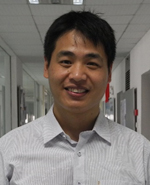 Erwei Zuo (左二伟)合作论文数Agricultural Genomics Institute at Shenzhen, Chinese Academy of Agricultural Sciences7
 Zhenrui Zuo合作论文数5
 Long Xie合作论文数5Yaqi Cao合作论文数4Hu Feng合作论文数Zhengzhou Fruit Research Institute, Chinese Academy of Agriculture Sciences, Zhengzhou, China4
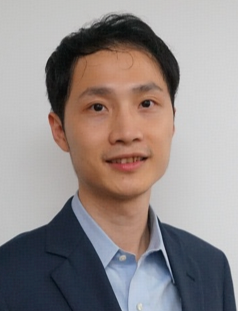 Hui Yang (杨辉)合作论文数Shanghai Institute of Materia Medica, Chinese Academy of Sciences3Jitan Zheng合作论文数2Zhijiao Xu合作论文数2Daqi Wang合作论文数Fudan Univ, Zhongshan Hosp, Sch Life Sci, State Key Lab Genet Engn, Shanghai 200432, Peoples R China2Zhifang Li合作论文数2Tanglong Yuan合作论文数Chinese Acad Agr Sci, Ctr Anim Genom, Agr Genome Inst Shenzhen, Shenzhen 518124, Peoples R China2
 Genglin Li (李耕林)合作论文数The Eye and ENT Hospital of Fudan University2
 Chenfei He合作论文数2Yan Nana合作论文数2Xinde Hu合作论文数2
 Fang Wang (王芳)合作论文数College of Smart Materials and Future Energy, Fudan University2
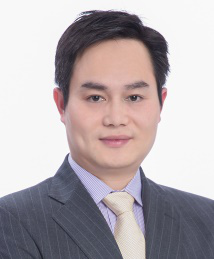 Yilai Shu (舒易来)合作论文数Eye & Ent Hospital, Fudan University;Institutes of Biomedical Sciences, Fudan University;School of Medicine, Tongji University2
 Xi Gu (谷溪)合作论文数福建医科大学基础医学院2Xiali Yang合作论文数1Tianyi Fei合作论文数1Yongsen Sun合作论文数1Haihang Zhang合作论文数1Jinan Zhou合作论文数1
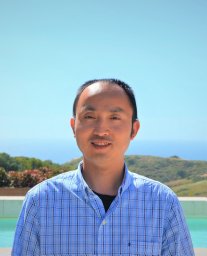 Lei Shi合作论文数Salk Institute for Biological Studies1Leilei Wu合作论文数Shanghai Jiao Tong Univ, Sch Life Sci & Biotechnol, Shanghai 201620, Peoples R China1
 Yidi Sun (孙怡迪)合作论文数Center for Excellence in Brain Science and Intelligent Technology, Chinese Academy of Sciences1Yige Li合作论文数Fudan University
Eye & Ent Hospital of Fudan University1Yinghui Wei合作论文数1
Yidi Sun (孙怡迪)合作论文数Center for Excellence in Brain Science and Intelligent Technology, Chinese Academy of Sciences1Yige Li合作论文数Fudan University
Eye & Ent Hospital of Fudan University1Yinghui Wei合作论文数1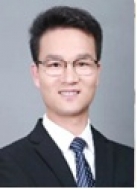 Kui Xu (徐魁)合作论文数State Key Laboratory of Membrane Biology, Beijing Tsinghua Institute for Frontier Interdisciplinary Innovation1Jinghan Wang合作论文数1Chunlong Xu合作论文数1NaNa Li (李娜娜)合作论文数1
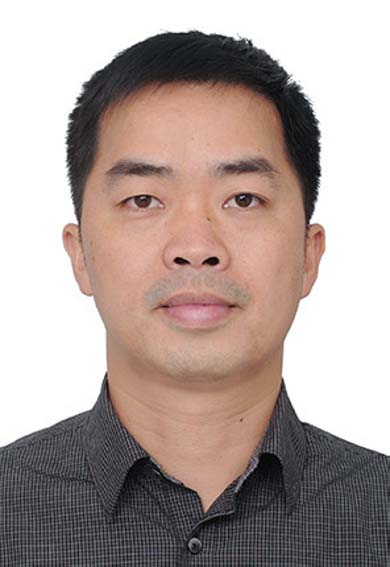 Yangqing Lu (陆阳清)合作论文数College of Animal Science and Technology, Guangxi University1
 Meiling Zhang (张美玲)合作论文数School of Life Sciences, East China Normal University1
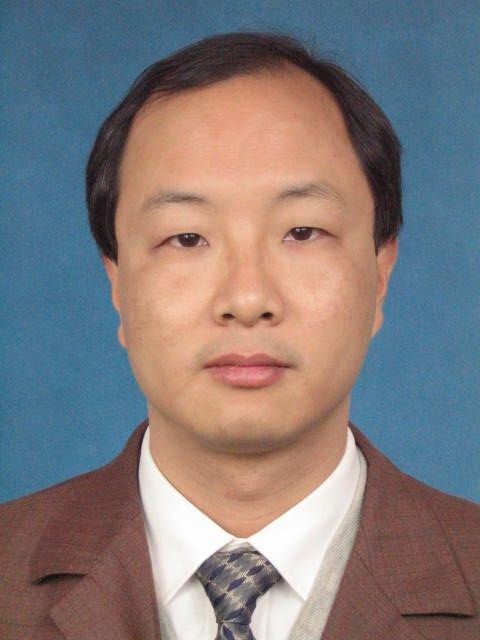 Xiaogan Yang (杨小淦)合作论文数College of Animal Science and Technology, Guangxi University1
 Huawei Li (李华伟)合作论文数The First Affiliated Hospital of Xiamen University;Department of Otorhinolaryngology, Eye & Ent Hospital of Fudan University1Yuanyuan Xue (薛媛媛)合作论文数1
 Jun Shen合作论文数1
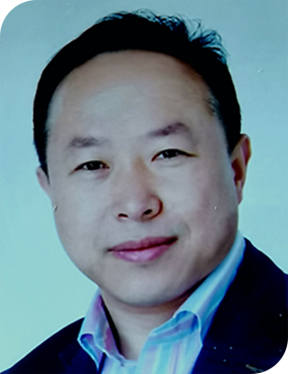 Xingyao Xiong (熊兴耀)合作论文数Agricultural Genomics Institute at Shenzhen, Chinese Academy of Agricultural Sciences1
 Mingqian Huang合作论文数Harvard Medical School, Harvard University1
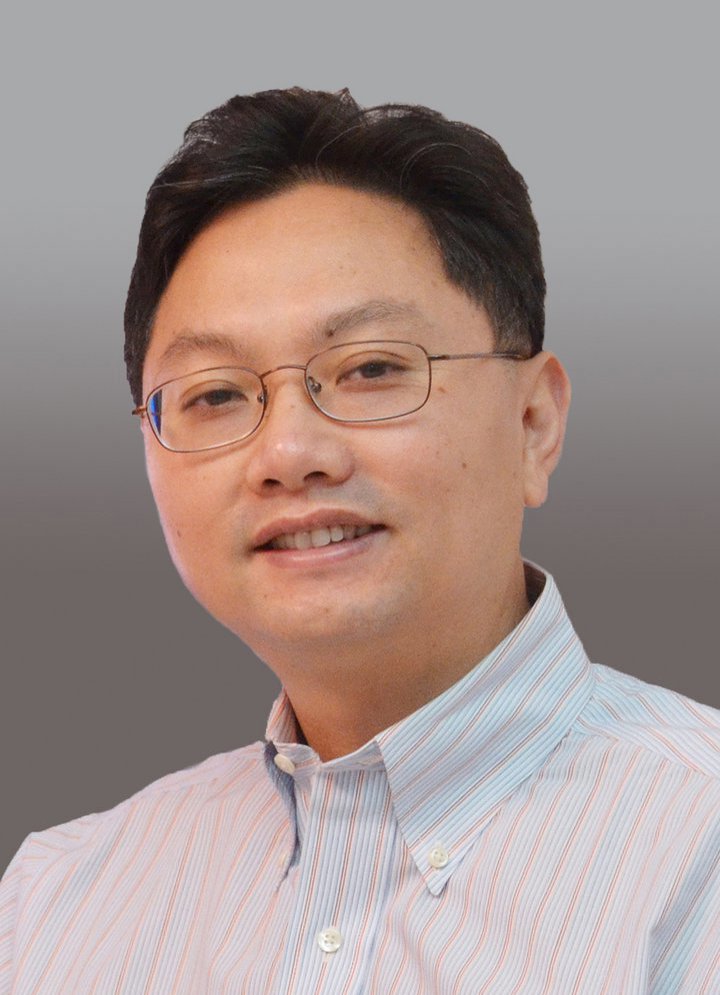 Zheng-Yi Chen合作论文数Eaton-Peabody Laboratories, Massachusetts Eye and Ear, Harvard Medical School, Harvard University1
 Renjie Chai (柴人杰)合作论文数School of Life Science and Technology, Southeast University1
 Wu Wei (魏武)合作论文数中国科学院马普计算生物学伙伴研究所1




