This study examined civil forfeiture's impact on crime rates. Proponents of civil forfeiture, which allows law enforcement to take and permanently keep property without a criminal conviction, claim it is an essential crime-fighting tool, particularly in the War on Drugs. Critics challenge the crime-fighting efficacy of civil forfeiture while warning the policy violates individual liberties. Previous research has associated increases in civil forfeiture with higher rates of drug arrests, but to date, few studies have examined the impact of a major civil forfeiture reform. Using a 9-year panel of monthly crime rates, this study measured the impact on crime of legislation that eliminated civil forfeiture in New Mexico. This study did not find sufficient evidence to conclude civil forfeiture effectively fights crime. Specifically, when New Mexico eliminated the policy, crime rates did not worsen compared to control states. These findings hold important implications informing the policy debate surrounding civil forfeiture.
Este informe presenta un diagnóstico de las disfuncionalidades de las licencias ocupacionales, con énfasis en la calidad del servicio, la participación laboral, la movilidad personal, las restricciones a personas con antecedentes penales y el bienestar público. Se analizan las licencias ocupacionales en Puerto Rico y sus requisitos estableciendo comparaciones con las licencias en Estados Unidos. Además, se comentan las reformas implementadas en varios estados y el Distrito de Columbia; y se proponen cinco elementos principales para una reforma de la regulación ocupacional en Puerto Rico: la supresión de licencias ocupacionales, la adopción del reconocimiento universal, la atenuación de las restricciones por antecedentes penales, las revisiones de inicio y las revisiones de cierre.
This report presents a diagnosis of the dysfunctions of occupational licenses, with an emphasis on service quality, labor force participation, personal mobility, restrictions for individuals with criminal backgrounds, and public well-being. Occupational licenses in Puerto Rico and their requirements are discussed, with comparisons made to licenses in the United States. Additionally, reforms implemented in various states and the District of Columbia are considered, and five key elements are proposed for occupational regulation reform in Puerto Rico: the elimination of occupational licenses, the adoption of universal recognition, the easing of restrictions based on criminal backgrounds, and the establishment of sunrise reviews and sunset reviews.
This article examines whether growth in the food truck sector in the United States harms restaurants, as restaurateurs and their allies often claim. Using 12 years of nationwide data in a dynamic panel data analysis, we explore whether more food trucks in a county in one year equates to fewer restaurants in the same county in the following year. Results indicate the number of food trucks in one year is not significantly related to fewer restaurants in the next year. However, the number of food trucks in one year is positively – and significantly – related to the number of restaurants in the same year. For every additional food truck in a county, we would expect to see about three additional restaurants. We provide some possible reasons for these findings and conclude restrictions on food trucks are likely unnecessary and perhaps even economically unproductive. Policymakers may find such results informative when considering the adoption of new regulations governing food vendors. Researchers may find the results helpful when creating new studies on how food vendors affect neighborhoods or the extent to which the vending and brick-and-mortar sectors are complementary or competitive.
This study examined educational experiences of families under COVID and their schooling decisions in the 2021 school year. Results from a survey of 1743 parents indicate most schools provided educational resources ranging from hardcopy packets to live online instruction. Parents were generally positive about the experience. Parents in private and charter schools reported a more positive experience than those in traditional public schools. Only a small percentage of respondents said they were going to homeschool in fall 2020, but more than a third planned to send their child to a virtual school out of concern about their child's health.
This research note reports on the creation of a new panel dataset using multiple waves of substate estimates from the National Survey on Drug Use and Health. It also provides identifying information that contains state, place, and/or agency codes for merging additional datasets at levels below the state. The process for creating this dataset and for merging external data is described. This research note ends by providing an example analysis utilizing the panel dataset in combination with law enforcement personnel data from the Federal Bureau of Investigation and forfeiture data from municipalities in Minnesota to analyze the relationship between civil asset forfeiture and crime.
Objective: To examine perceptions of mental health stigma among first-year student service members/veterans (SSM/Vs). Participants: 107 SSM/Vs enrolled in a first-semester seminar completed a pre- and post-test measuring five constructs; 1) stigma toward mental health in the military, 2) academic readiness, 3) mental health stigma in college, 4) connection to campus, and 5) resiliency. Methods: Data were analyzed using paired samples t-tests to measure growth on the scales of interest, along with a multiple regression analysis to establish predictors of growth. Results: Stigma-Military and Connection to Campus increased while Stigma-College reduced (p<.05). For the regression analysis, statistically significant predictors of stigma include number of deployments and having served in a combat role (p<.05) Conclusions: Results suggest classroom interventions for SSM/Vs on campus may be related to reduced stigma toward mental health services. This study provides a starting point for expanding research on health and wellness curricular interventions for SSM/V.
This study examines taxation by citation—local governments using code enforcement and the justice system to raise revenue rather than solely to advance public health and safety. It does so through a detailed case study of Morrow, Riverdale, and Clarkston, three Georgia cities with a history of prolific revenue generation through fines and fees from traffic and other ordinance enforcement. Results suggest taxation by citation is a function of the perceived need for revenue and the ability to realize it through code enforcement. Moreover, the phenomenon may be a matter of systemic incentives. City leaders need not be motivated by simple rapaciousness. They may see fines and fees revenue as the answer to their cities’ problems. Once in effect, the mechanisms necessary for taxation by citation—such as highly efficient court procedures—may stick, becoming business as usual.
This study asks: What is the relationship between principal turnover and school performance? We use data on all Colorado public schools for the years 2013 through 2018 to examine the relationship between turnover and school performance. Analyses included difference-in-difference and ordinary least squares regression after first differencing. Results indicated almost 50% of schools experienced principal turnover. The number of turnover events ranged from zero to three. Results showed no significant differences in school performance based on turnover status or number of leadership changes.
Purpose The purpose of this paper is to discuss new findings on municipal-level occupational licensing and other forms of regulation and introduce a new data set available for researchers to study this largely unexplored area. Design/methodology/approach Municipal occupational regulatory data were gathered in 2017 and 2018 from the 50 largest cities in the USA. Data available in the data set include city and state IDs, occupational IDs, requirements associated with the regulations (e.g. education, experience and fees), penalties for practicing without meeting the requirements, regulatory type and NAICS category. Descriptive statistics are used to present information about the number and types of occupations regulated and the number and types of regulations present in the cities. Findings The median number of occupations regulated by a city is 24.5, but the numbers per city vary substantially. The 1,832 occupations in the data set are distributed across every NAICS category. The most prevalent form of regulation is registration; certification is least used. Cities are quite diverse in the types of regulations applied to occupations, and the type of regulation varies substantially by industry type. Originality/value Research on licensing is dominated by state-level analyses. Largely absent are systematic analyses of licensing and other regulation at the municipal level, likely due to a lack of data. This means the current licensing literature underestimates – perhaps severely so – the prevalence, burdens and effects of licensing. The data introduced and discussed in this paper can help remedy this dearth of municipal licensing analyses.
In recent years, the issue of “taxation by citation” has grown in national prominence. It is generally defined as municipal revenue generation through fines and fees that transcends a clear relationship to public health and safety and serves more as a revenue generating device. According to critics, taxation by citation creates conflicts of interest, violates the rights of those with low income, and distorts law enforcement priorities. Municipal leaders reject such criticisms by denying taxation by citation even exists. To date, research findings have been mixed on whether cities practice taxation by citation. This Article examines whether there is a relationship between fines and fees revenue generation and broader economic trends. If there is a relationship, that would suggest cities do, indeed, use municipal ordinance enforcement and the resulting fines and fees as a means of revenue generation beyond public health and safety. We use a panel of 1,471 cities from the Census of Governments spanning 2005 through 2017, which captures the Great Recession of 2008. Fixed-effects regression analyses indicate a significant relationship between the fines and fees revenue trend and the Great Recession. We conclude by recommending legal reforms to eliminate the financial incentives to engage in taxation by citation. These include eliminating municipal courts, capping the revenue cities may retain from ordinance enforcement, and ensuring judicial independence from municipal executive and legislative branches.
Nearly half of all mild brain injury sufferers experience long-term cognitive impairment, so an important goal in rehabilitation is to address their multiple cognitive deficits to help them return to prior levels of functioning. Cognitive training, or the use of repeated mental exercises to enhance cognition, is one remediation method for brain injury. The primary purpose of this hypothesis-generating pilot study was to explore the statistical and clinical significance of cognitive changes and transfer of training to real-life functioning following 60 h of Brain Booster, a clinician-delivered cognitive training program, for six patients with mild traumatic brain injury (TBI) or non-traumatic acquired brain injury (ABI). The secondary purpose was to explore changes in functional connectivity and neural correlates of cognitive test gains following the training. We used a multiple case study design to document significant changes in cognitive test scores, overall IQ score, and symptom ratings; and we used magnetic resonance imaging (MRI) to explore trends in functional network connectivity and neural correlates of cognitive change. All cognitive test scores showed improvement with statistically significant changes on five of the seven measures (long-term memory, processing speed, reasoning, auditory processing, and overall IQ score). The mean change in IQ score was 20 points, from a mean of 108 to a mean of 128. Five themes emerged from the qualitative data analysis including improvements in cognition, mood, social identity, performance, and Instrumental Activities of Daily Living (IADLs). With MRI, we documented significant region-to-region changes in connectivity following cognitive training including those involving the cerebellum and cerebellar networks. We also found significant correlations between changes in IQ score and change in white matter integrity of bilateral corticospinal tracts (CST) and the left uncinate fasciculus. This study adds to the growing body of literature examining the effects of cognitive training for mild TBI and ABI, and to the collection of research on the benefits of cognitive training in general. Clinical Trial Registration: www.ClinicalTrials.gov, identifier NCT02918994.
Background. Colorado passed House Bill 11-1069 in 2011 requiring all public elementary schools to provide students with a minimum of 30 minutes of physical activity (PA) per school day (Physical Activity Expectation in Schools, 2011). The purpose of this article is to describe the results of a 3-year initiative to increase opportunities for PA and to provide recommendations for school health practitioners implementing similar programming. Intervention. In 2014, 13 school districts were funded to increase student PA during school hours and before and after school hours. Intervention activities spanned all components of the Comprehensive School Physical Activity Program framework. An evaluation was conducted to estimate the number of schools providing at least 30 minutes of PA a day. A mixed methods evaluation design was implemented that included tracking the number of minutes of PA provided before, during, and after school and semistructured interviews with school health coordinators. Results. In Year 1, an average of 48 minutes of PA were provided per day. By the end of year 3, the average minutes of PA doubled to 90 minutes per day. Teachers and staff identified professional development and administrator support as key components to incorporating more PA throughout the school day. Conclusions. Health promotion interventions in schools can increase access to PA opportunities for students. Sustainability of PA efforts in schools is dependent on funding to support professional development for teachers and staff and building administrative support for school-based PA.
Cognitive training is growing in popularity as an intervention for children who struggle to learn. In the current study, we compared the equivalency of two delivery models of the same cognitive training program, ThinkRx, for children ages 8–14. In a randomized controlled trial assessing equivalence, we compared cognitive outcomes between a group who received 60 h of ThinkRx cognitive training delivered one-on-one by a cognitive trainer ( n = 20) versus a group of children who received 30 h of ThinkRx delivered by a cognitive trainer and the other 30 h through digital training procedures ( n = 18). Results showed no significant differences between groups on tests of working memory, logic and reasoning, auditory processing, visual processing, processing speed, or overall IQ score. Results were significantly different on the test of long-term memory. These results suggest that both delivery models are equivalent cognitive training interventions for children.
 Elizabeth Tucker合作论文数13
 Cheryl Kelly合作论文数13
 Timothy K Behrens合作论文数Department of Health Sciences, Univ. of Colorado13Carmen Luna合作论文数12Julaine E. Field合作论文数12Whitney M Holeva-Eklund合作论文数9
 Grant Clayton合作论文数Dept Teaching & Learning, Univ Colorado Colorado Springs8
 Amy Moore合作论文数Lyle S Hallman Fac Social Work, Wilfrid Laurier Univ8
 Christina Ledbetter合作论文数7john k ross合作论文数6
 Terissa Miller合作论文数5
 Marcus A. Winters合作论文数Manhattan Institute for Policy Research5Kyle Sweetland合作论文数4al ramirez合作论文数4Joshua Dunn合作论文数3Lisa Knepper合作论文数2Laura Severn合作论文数2
 Ángel Carrión-Tavárez合作论文数2
 Taylor Joseph A合作论文数BSCS2
 Edward Timmons合作论文数School of Business, Saint Francis University2
 John Donovan合作论文数2
 Lindy Crawford合作论文数College of Education;University of Oregon;College of Education, University of Oregon2
 Antonio Garcia-Hermoso合作论文数1Rebecca S. Keith合作论文数1Robert V Masocol合作论文数1A Ramirez合作论文数1Andrea del Pilar Quintero合作论文数1
 Gina Paola Velasco合作论文数1
 Elizabeth A Disbrow合作论文数1Paige Whitney合作论文数1Joshua M. Dunn合作论文数1Freddie Rodriguez合作论文数1
 Pavel Tendetnik合作论文数1kelly butler reeser合作论文数1Gregory B. Ecks合作论文数1Jennifer Tygret合作论文数1Alejandro Castro-Rosales合作论文数1
 Osasohan Agbonlahor合作论文数1
 Robinson Ramirez-Velez合作论文数1
 maria andrea dominguezsanchez合作论文数Programa Fisioterapia, Univ Nacl Colombia1
 Sarah J. Kaka合作论文数Ohio Wesleyan University1
 Phillip Morris合作论文数Leadership Res & Fdn, Univ Colorado1Jennifer McDonald合作论文数1Karla S. Vera-Delgado合作论文数1
 Ethan Bayne合作论文数Div Cybersecur, Abertay Univ1
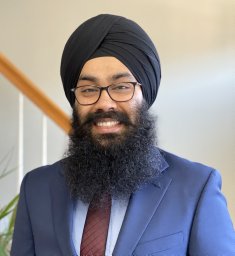 Rumit Singh Kakar合作论文数Dept Human Movement Sci, Oakland Univ1
 Asif Irfan M合作论文数Department of Family Medicine, University of Tennessee1
 Bhibha Das合作论文数1
 Jorge Correa-Bautista合作论文数1




