We present power spectra of the cosmic microwave background (CMB) anisotropy in temperature and polarization, measured from the Data Release 6 maps made from Atacama Cosmology Telescope (ACT) data. These cover 19,000 deg(2) of sky in bands centered at 98, 150 and 220 GHz, with white noise levels three times lower than Planck in polarization. We find that the ACT angular power spectra estimated over 10,000 deg(2), and measured to arcminute scales in TT, TE and EE, are well fit by the sum of CMB and foregrounds, where the CMB spectra are described by the Lambda CDM model. Combining ACT with larger-scale Planck data, the joint P-ACT dataset provides tight limits on the ingredients, expansion rate, and initial conditions of the universe. We find similar constraining power, and consistent results, from either the Planck power spectra or from ACT combined with WMAP data, as well as from either temperature or polarization in the joint P-ACT dataset. When combined with CMB lensing from ACT and Planck, and baryon acoustic oscillation data from the Dark Energy Spectroscopic Instrument (DESI DR1), we measure a baryon density of Omega(b)h(2) = 0.0226 +/- 0.0001, a cold dark matter density of Omega(c)h(2) = 0.118 +/- 0.001, a Hubble constant of H-0 = 68.22 +/- 0.36 km/s/Mpc, a spectral index of n(s) = 0.974 +/- 0.003, and an amplitude of density fluctuations of sigma(8) = 0.813 +/- 0.005. Including the DESI DR2 data tightens the Hubble constant to H-0 = 68.43 +/- 0.27 km/s/Mpc; Lambda CDM parameters agree between the P-ACT and DESI DR2 data at the 1.6 sigma level. We find no evidence for excess lensing in the power spectrum, and no departure from spatial flatness. The contribution from Sunyaev-Zel'dovich (SZ) anisotropy is detected at high significance; we find evidence for a tilt with suppressed small-scale power compared to our baseline SZ template spectrum, consistent with hydrodynamical simulations with feedback.
The Simons Observatory (SO) is a ground-based cosmic microwave background (CMB) survey experiment that currently consists of three 0.42 m small-aperture telescopes and one 6 m large-aperture telescope (LAT), located at an elevation of 5200 m in the Atacama Desert in Chile. At the LAT’s focal plane, SO will install >62,000 transition-edge sensor detectors across 13 optics tubes (OTs) within the Large Aperture Telescope Receiver (LATR), the largest cryogenic camera ever built to observe the CMB. Here we report on the validation of the LATR in the laboratory and the subsequent dark testing and validation within the LAT. We show that the LATR meets cryogenic, optical, and detector specifications required for high-sensitivity measurements of the CMB. At the time of writing, the LATR is installed in the LAT with six OTs (corresponding to >31,000 detectors), and the LAT mirrors and remaining seven OTs are undergoing development.
The (sub)millimeter sky contains a vast wealth of information that is both complementary and inaccessible to other wavelengths. Over half the light we receive is observable at millimeter and submillimeter wavelengths, yet we have mapped only a small portion of the sky at sufficient spatial resolution and sensitivity to detect and resolve distant galaxies or star-forming cores within their large- scale environments. For decades, the astronomical community has highlighted the need for a large, high-throughput (sub)millimeter ( λ ~ 0.35–10 mm) single dish. The Atacama Large Aperture Submillimeter Telescope (AtLAST), with its 50-m aperture and 2° maximal field of view, aims to be such a facility. We present here the preliminary design concept for AtLAST, developed through an EU Horizon 2020-funded design study. Our design approach begins with a long lineage of (sub)millimeter telescopes, relies on calculations and simulations to realize the optics, and uses finite element analysis to optimize the conceptual designs for the mechanical structure and subsystems. The demanding technical requirements for AtLAST, set by transformative science goals, have motivated the design effort to combine novel concepts with lessons learned from previous efforts. The result is an innovative rocking chair design with six instrument bays, two of which are mounted on Nasmyth platforms, inside a large receiver cabin. Ultimately, AtLAST aims to achieve a surface accuracy of a ≤20 µm root mean square half wavefront error, corresponding to the goal of a Ruze efficiency of >50% at 950 GHz. We conclude that a closed-loop metrology of the active primary surface will be required to achieve our surface accuracy goal. In the next phase of the project, we shall prototype and test such a metrology on existing platforms, with the goal of delivering a mature, construction-ready design by the end of this decade.
The Simons Observatory will map the temperature and polarization over half of the sky at millimeter wavelengths in six spectral bands from the Atacama Desert in Chile. These data will provide new insights into the genesis, content, and history of our Universe, the astrophysics of galaxies and galaxy clusters, objects in our solar system, and time-varying astrophysical phenomena. This ambitious new instrument suite, initially comprising three 0.5 m diameter small aperture telescopes and one 6 m diameter large aperture telescope, is designed using a common combination of new technologies and new implementations to realize an observatory significantly more sensitive than the previous generation. In this paper, we present the predeployment performance of the first mid-frequency "optics tube," which will be fielded on the large aperture telescope with sensitivity to the 90 and 150 GHz spectral bands. This optics tube contains lenses, filters, detectors, and readout components, all of which operate at cryogenic temperatures. It is one of seven that form the core of the large aperture telescope receiver in its initial deployment. We describe this optics tube, including details of comprehensive testing methods, new techniques for beam and passband characterization, and its measured performance. The performance metrics include beams, optical efficiency, passbands, and forecasts for the on-sky performance of the system. We forecast a sensitivity that exceeds the requirements of the large aperture telescope with greater than 30% margin in each spectral band and predict that the instrument will realize diffraction-limited performance and the expected detector passbands.
We present Atacama Cosmology Telescope (ACT) Data Release 6 (DR6) maps of the Cosmic Microwave Background temperature and polarization anisotropy at arcminute resolution over three frequency bands centered on 98, 150 and 220 GHz. The maps are based on data collected with the AdvancedACT camera over the period 2017-2022 and cover 19,000 square degrees with a median combined depth of 10 mu K arcmin. We describe the instrument, mapmaking and map properties and illustrate them with a number of figures and tables. The ACT DR6 maps and derived products are available on LAMBDA at https://lambda.gsfc.nasa.gov/product/act/actadv_prod_table.html. We also provide an interactive web atlas at https://phy-act1.princeton.edu/public/snaess/actpol/dr6/atlas and HiPS data sets in Aladin (e.g. https://alasky.cds.unistra.fr/ACT/DR4DR6/color_CMB).
We use new cosmic microwave background (CMB) primary temperature and polarization anisotropy measurements from the Atacama Cosmology Telescope (ACT) Data Release 6 (DR6) to test foundational assumptions of the standard cosmological model, Lambda CDM, and set constraints on extensions to it. We derive constraints from the ACT DR6 power spectra alone, as well as in combination with legacy data from the Planck mission. To break geometric degeneracies, we include ACT and Planck CMB lensing data and baryon acoustic oscillation data from DESI Year-1. To test the dependence of our results on non-ACT data, we also explore combinations replacing Planck with WMAP and DESI with BOSS, and further add supernovae measurements from Pantheon+ for models that affect the late-time expansion history. We verify the near-scale-invariance (running of the spectral index dn(s)/d ln k = 0.0062 +/- 0.0052) and adiabaticity of the primordial perturbations. Neutrino properties are consistent with Standard Model predictions: we find no evidence for new light, relativistic species that are free-streaming (N-eff = 2.86 +/- 0.13, which combined with astrophysical measurements of primordial helium and deuterium abundances becomes N-eff = 2.89 +/- 0.11), for non-zero neutrino masses (Sigma m(nu) < 0.089 eV at 95% CL), or for neutrino self-interactions. We also find no evidence for self-interacting dark radiation (N-idr < 0.134), or for early-universe variation of fundamental constants, including the fine-structure constant (alpha(EM)/alpha(EM,0) = 1.0043 +/- 0.0017) and the electron mass (m(e)/m(e,0) = 1.0063 +/- 0.0056). Our data are consistent with standard big bang nucleosynthesis (we find Y-p = 0.2312 +/- 0.0092), the COBE/FIRAS-inferred CMB temperature (we find T-CMB = 2.698 +/- 0.016 K), a dark matter component that is collisionless and with only a small fraction allowed as axion-like particles, a cosmological constant (w = -0.986 +/- 0.025), and the late-time growth rate predicted by general relativity (gamma = 0.663 +/- 0.052). We find no statistically significant preference for a departure from the baseline Lambda CDM model. In fits to models invoking early dark energy, primordial magnetic fields, or an arbitrary modified recombination history, we find H-0 = 69.9(-1.5)(+0.8), 69.1 +/- 0.5, or 69.6 +/- 1.0 km/s/Mpc, respectively; using BOSS instead of DESI BAO data reduces the central values of these constraints by 1-1.5 km/s/Mpc while only slightly increasing the error bars. In general, models introduced to increase the Hubble constant or to decrease the amplitude of density fluctuations inferred from the primary CMB are not favored over Lambda CDM by our data.
CMB-S4, the next-generation ground-based cosmic microwave background (CMB) observatory, will provide detailed maps of the CMB at millimeter wavelengths to dramatically advance our understanding of the origin and evolution of the universe. CMB-S4 will deploy large and small aperture telescopes with hundreds of thousands of detectors to observe the CMB at arcminute and degree resolutions at millimeter wavelengths. Inflationary science benefits from a deep delensing survey at arcminute resolutions capable of observing a large field of view at millimeter wavelengths. This kind of survey acts as a complement to a degree angular resolution survey. The delensing survey requires a nearly uniform distribution of cameras per frequency band across the focal plane. We present a large-throughput, large-aperture (5-meter diameter) freeform three-mirror anastigmatic telescope and an array of 85 cameras for CMB observations at arcminute resolutions, which meets the needs of the delensing survey of CMB-S4. A detailed prescription of this three-mirror telescope and cameras is provided, with a series of numerical calculations that indicate expected optical performance and mechanical tolerance.
The Simons Observatory (SO) is a cosmic microwave background experiment composed of three 0.42 m Small Aperture Telescopes (SATs) and one 6 m Large Aperture Telescope (LAT) in the Atacama Desert of Chile. The Large Aperture Telescope Receiver (LATR) was integrated into the LAT in August 2023; however, because mirrors were not yet installed, the LATR optical chain was capped at the 4K stage. In this dark configuration we are able to characterize many elements of the instrument without contributions from atmospheric noise. Here we show this noise is below the required upper limit and its features are well described with a simple noise model. Maps produced using this noise model have properties that are in good agreement with the white noise levels of our dark data. Additionally, we show that our nominal scan strategy has a minimal effect on the noise when compared to the noise when the telescope is stationary
Sensitive wide-field observations of polarized thermal emission from interstellar dust grains will allow astronomers to address key outstanding questions about the life cycle of matter and energy driving the formation of stars and the evolution of galaxies. Stratospheric balloon-borne telescopes can map this polarized emission at far-infrared wavelengths near the peak of the dust thermal spectrum - wavelengths that are inaccessible from the ground. In this paper we address the sensitivity achievable by a Super Pressure Balloon (SPB) polarimetry mission, using as an example the Balloon-borne Large Aperture Submillimeter Telescope (BLAST) Observatory. By launching from Wanaka, New Zealand, BLAST Observatory can obtain a 30-day flight with excellent sky coverage - overcoming limitations of past experiments that suffered from short flight duration and/or launch sites with poor coverage of nearby star-forming regions. This proposed polarimetry mission will map large regions of the sky at sub-arcminute resolution, with simultaneous observations at 175, 250, and 350 $\mu m$, using a total of 8274 microwave kinetic inductance detectors. Here, we describe the scientific motivation for the BLAST Observatory, the proposed implementation, and the forecasting methods used to predict its sensitivity. We also compare our forecasted experiment sensitivity with other facilities.
Observations of the millimeter sky contain valuable information on a number of signals, including the blackbody cosmic microwave background (CMB), Galactic emissions, and the Compton-$y$ distortion due to the thermal Sunyaev-Zel'dovich (tSZ) effect. Extracting new insight into cosmological and astrophysical questions often requires combining multi-wavelength observations to spectrally isolate one component. In this work, we present a new arcminute-resolution Compton-$y$ map, which traces out the line-of-sight-integrated electron pressure, as well as maps of the CMB in intensity and E-mode polarization, across a third of the sky (around 13,000 sq.~deg.). We produce these through a joint analysis of data from the Atacama Cosmology Telescope (ACT) Data Release 4 and 6 at frequencies of roughly 93, 148, and 225 GHz, together with data from the \textit{Planck} satellite at frequencies between 30 GHz and 545 GHz. We present detailed verification of an internal linear combination pipeline implemented in a needlet frame that allows us to efficiently suppress Galactic contamination and account for spatial variations in the ACT instrument noise. These maps provide a significant advance, in noise levels and resolution, over the existing \textit{Planck} component-separated maps and will enable a host of science goals including studies of cluster and galaxy astrophysics, inferences of the cosmic velocity field, primordial non-Gaussianity searches, and gravitational lensing reconstruction of the CMB.
Erratum: "Inferences from Surface Brightness Fluctuations of Zwicky 3146 via the Sunyaev–Zel'dovich Effect and X-Ray Observations" (2023, ApJ, 951, 41), Charles E. Romero, Massimo Gaspari, Gerrit Schellenberger, Tanay Bhandarkar, Mark Devlin, Simon R. Dicker, William Forman, Rishi Khatri, Ralph Kraft, Luca Di Mascolo, Brian S. Mason, Emily Moravec, Tony Mroczkowski, Paul Nulsen, John Orlowski-Scherer, Karen Perez Sarmiento, Craig Sarazin, Jonathan Sievers, Yuanyuan Su
In this paper, we present the results of a blind survey for compact sources in 243 Galaxy clusters that were identified using the thermal Sunyaev–Zel'dovich effect (tSZ). The survey was carried out at 90 GHz using MUSTANG2 on the Green Bank Telescope and achieved a 5 σ detection limit of 1 mJy in the center of each cluster. We detected 24 discrete sources. The majority (18) of these correspond to known radio sources, and of these, five show signs of significant variability, either with time or in spectral index. The remaining sources have no clear counterparts at other wavelengths. Searches for galaxy clusters via the tSZ strongly rely on observations at 90 GHz, and the sources found have the potential to bias mass estimates of clusters. We compare our results to the Websky simulation that can be used to estimate the source contamination in galaxy cluster catalogs. While the simulation shows a good match to our observations at the clusters’ centers, it does not match our source distribution further out. Sources over 104″ from a cluster’s center bias the tSZ signal high, for some of the sources found, by over 50%. When averaged over the whole cluster population, the effect is smaller but still at a level of 1%–2%. We also discovered that unlike previous measurements and simulations, we see an enhancement of source counts in the outer regions of the clusters and fewer sources than expected in the centers of this tSZ-selected sample.
The Simons Observatory is a new ground-based cosmic microwave background experiment, which is currently being commissioned in Chile's Atacama Desert. During its survey, the observatory's small aperture telescopes will map 10% of the sky in bands centered at frequencies ranging from 27 to 280 GHz to constrain cosmic inflation models, and its large aperture telescope will map 40% of the sky in the same bands to constrain cosmological parameters and use weak lensing to study large-scale structure. To achieve these science goals, the Simons Observatory is deploying these telescopes' receivers with 60,000 state-of-the-art superconducting transition-edge sensor bolometers for its first five year survey. Reading out this unprecedented number of cryogenic sensors, however, required the development of a novel readout system. The SMuRF electronics were developed to enable high-density readout of superconducting sensors using cryogenic microwave SQUID multiplexing technology. The commissioning of the SMuRF systems at the Simons Observatory is the largest deployment to date of microwave multiplexing technology for transition-edge sensors. In this paper, we show that a significant fraction of the systems deployed so far to the Simons Observatory's large aperture telescope meet baseline specifications for detector yield and readout noise in this early phase of commissioning.
We present cosmological constraints from a gravitational lensing mass map covering 9400 sq. deg. reconstructed from CMB measurements made by the Atacama Cosmology Telescope (ACT) from 2017 to 2021. In combination with BAO measurements (from SDSS and 6dF), we obtain the amplitude of matter fluctuations $\sigma_8 = 0.819 \pm 0.015$ at 1.8% precision, $S_8\equiv\sigma_8({\Omega_{\rm m}}/0.3)^{0.5}=0.840\pm0.028$ and the Hubble constant $H_0= (68.3 \pm 1.1)\, \text{km}\,\text{s}^{-1}\,\text{Mpc}^{-1}$ at 1.6% precision. A joint constraint with CMB lensing measured by the Planck satellite yields even more precise values: $\sigma_8 = 0.812 \pm 0.013$, $S_8\equiv\sigma_8({\Omega_{\rm m}}/0.3)^{0.5}=0.831\pm0.023$ and $H_0= (68.1 \pm 1.0)\, \text{km}\,\text{s}^{-1}\,\text{Mpc}^{-1}$. These measurements agree well with $\Lambda$CDM-model extrapolations from the CMB anisotropies measured by Planck. To compare these constraints to those from the KiDS, DES, and HSC galaxy surveys, we revisit those data sets with a uniform set of assumptions, and find $S_8$ from all three surveys are lower than that from ACT+Planck lensing by varying levels ranging from 1.7-2.1$\sigma$. These results motivate further measurements and comparison, not just between the CMB anisotropies and galaxy lensing, but also between CMB lensing probing $z\sim 0.5-5$ on mostly-linear scales and galaxy lensing at $z\sim 0.5$ on smaller scales. We combine our CMB lensing measurements with CMB anisotropies to constrain extensions of $\Lambda$CDM, limiting the sum of the neutrino masses to $\sum m_{\nu}<0.12$ eV (95% c.l.), for example. Our results provide independent confirmation that the universe is spatially flat, conforms with general relativity, and is described remarkably well by the $\Lambda$CDM model, while paving a promising path for neutrino physics with gravitational lensing from upcoming ground-based CMB surveys.
We present new measurements of cosmic microwave background (CMB) lensing over $9400$ sq. deg. of the sky. These lensing measurements are derived from the Atacama Cosmology Telescope (ACT) Data Release 6 (DR6) CMB dataset, which consists of five seasons of ACT CMB temperature and polarization observations. We determine the amplitude of the CMB lensing power spectrum at $2.3\%$ precision ($43\sigma$ significance) using a novel pipeline that minimizes sensitivity to foregrounds and to noise properties. To ensure our results are robust, we analyze an extensive set of null tests, consistency tests, and systematic error estimates and employ a blinded analysis framework. The baseline spectrum is well fit by a lensing amplitude of $A_{\mathrm{lens}}=1.013\pm0.023$ relative to the Planck 2018 CMB power spectra best-fit $\Lambda$CDM model and $A_{\mathrm{lens}}=1.005\pm0.023$ relative to the $\text{ACT DR4} + \text{WMAP}$ best-fit model. From our lensing power spectrum measurement, we derive constraints on the parameter combination $S^{\mathrm{CMBL}}_8 \equiv \sigma_8 \left({\Omega_m}/{0.3}\right)^{0.25}$ of $S^{\mathrm{CMBL}}_8= 0.818\pm0.022$ from ACT DR6 CMB lensing alone and $S^{\mathrm{CMBL}}_8= 0.813\pm0.018$ when combining ACT DR6 and Planck NPIPE CMB lensing power spectra. These results are in excellent agreement with $\Lambda$CDM model constraints from Planck or $\text{ACT DR4} + \text{WMAP}$ CMB power spectrum measurements. Our lensing measurements from redshifts $z\sim0.5$--$5$ are thus fully consistent with $\Lambda$CDM structure growth predictions based on CMB anisotropies probing primarily $z\sim1100$. We find no evidence for a suppression of the amplitude of cosmic structure at low redshifts
In this paper, we present the results of a blind survey for compact sources in 138 galaxy clusters from the eFEDS X-ray survey. Of these clusters, 96 are new observations. These targets have X-ray mass estimates and redshifts that formally place them above the thermal Sunyaev-Zel'dovich effect (tSZ) survey limits from the Atacama Cosmology Telescope (ACT, DR5), yet were not detected. Compact sources with apparent locations close to (<104") the center of a galaxy cluster can in-fill the tSZ flux decrement, resulting in tSZ surveys missing clusters. To quantify the number of missing clusters from ACT, we carried out a survey at 90GHz using MUSTANG2 on the Green Bank Telescope and achieved a 5-sigma detection limit of 1mJy in the center of each cluster. We detected 11 discrete sources, which when scaled, is slightly lower than our previous tSZ selected sample, M2-ACT (8.0
In the course of refactoring the code used to perform model fitting in Orlowski-Scherer et al. 2022, it was discovered that the beam size used was incorrect.MUSTANG-2 uses two concentric Gaussian beam profiles to represent the inner beam and the extended wings (e.g.Romero et al. 2020).For each of the Gaussians, the amplitude of the Gaussian and its full width at half maximum (FWHM) had been swapped.This resulted in incorrect smoothing of the map.We have completely rerun the analysis using the more accurate beam.There are no significant changes to our results.In general, the suppression factors, f , increase by about 1σ from the values quoted in Orlowski-Scherer et al. 2022, but remain consistent with either non-thermal pressure support or a mixture of extremely hot thermal and nonthermal support.In fact, our results are less consistent with purely thermal support, although we still cannot completely rule out pure thermal support.Additionally, we no longer find statistically significant support for an outer profile slope, β 1 , which differs from the X-ray-inferred value from Vantyghem et al. 2014 when not performing time ordered data (TOD) subtraction; this is a very minor change.In this erratum we include updated versions of all the tables and plots that were affected by this bug.In general, using this improved representation of the MUSTANG-2 beam has not changed the results of Orlowski-Scherer et al. (2022).The exact suppression factors have changed slightly, however, and as such we report them here.These new suppression factors should be used instead of those found in Orlowski-Scherer et al. (2022).
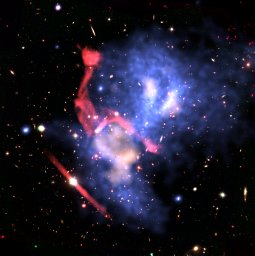
The galaxy cluster Zwicky 3146 is a sloshing cool-core cluster at z = 0.291 that in Sunyaev–Zel’dovich (SZ) imaging does not appear to exhibit significant pressure substructure in the intracluster medium. We perform a surface brightness fluctuation analysis via Fourier amplitude spectra on SZ (MUSTANG-2) and X-ray (XMM-Newton) images of this cluster. These surface brightness fluctuations can be deprojected to infer pressure and density fluctuations from the SZ and X-ray data, respectively. In the central region (Ring 1, r < 100″ = 440 kpc, in our analysis), we find fluctuation spectra that suggest injection scales around 200 kpc (∼140 kpc from pressure fluctuations and ∼250 kpc from density fluctuations). When comparing the pressure and density fluctuations in the central region, we observe a change in the effective thermodynamic state from large to small scales, from isobaric (likely due to the slow sloshing) to adiabatic (due to more vigorous motions). By leveraging scalings from hydrodynamical simulations, we find an average 3D Mach number ≈0.5. We further compare our results to other studies of Zwicky 3146 and, more broadly, to other studies of fluctuations in other clusters.
Abstract We report the fluxes of 10 compact sources in 90 GHz maps of the galaxy cluster A401 and the intercluster region between A401 and A399 from 66 hr of observations with the MUSTANG-2 receiver on the Green Bank Telescope. All sources have been previously detected in other bands (IR or radio). The flux and central coordinates of each source are fitted with 2D Gaussian profiles and fluxes are compared with an aperture photometry method. Future observations over a larger area would be a unique tool to compare theoretical predictions of source counts at 90 GHz with measured data, as well as refining their spectral index and improve extrapolations to higher frequencies.
 Mark Devlin合作论文数Department of Physics and Astronomy, School of Arts & Sciences, University of Pennsylvania108
 Tony Mroczkowski合作论文数Department of Astronomy;Columbia University;Department of Astronomy, Columbia University55
 Michael D. Niemack合作论文数Department of Physics, The College of Arts & Sciences, Cornell University/Astronomy Department, Cornell University55
 Edward J Wollack合作论文数Goddard Space Flight Center, National Aeronautics and Space Administration49
 C. Tucker合作论文数School of Physics and Astronomy;Cardiff University;School of Physics and Astronomy, Cardiff University44
 Peter Ade合作论文数School of Physics and Astronomy, Cardiff University43
 Suzanne T. Staggs合作论文数Department of Physics, Princeton University42
 John Orlowski-Scherer合作论文数Dept Phys & Astron, Univ Penn41
 Kent Irwin合作论文数Physics Department, School of Humanities and Sciences, Stanford University;Hansen Experimental Physics Laboratory, Stanford University41
 Johannes Hubmayr合作论文数Quantum Electromagnetics Division, National Institute of Standards and Technology40
 Jonathan Sievers合作论文数Department of Physics, Faculty of Science, McGill University39
 Neelima Sehgal合作论文数Department of Physics and Astronomy, College of Arts and Sciences, Stony Brook University38
 Mark Halpern合作论文数Department of Physics & Astronomy, Faculty of Science, The University of British Columbia37Robert Thornton合作论文数Dept Phys & Astron, Univ Penn36
 Bruce Partridge合作论文数Haverford College36
 Brian S. Mason合作论文数National Radio Astronomy Observatory35
 Matt Hilton合作论文数Astrophysics Research Institute;Liverpool John Moores University;Astrophysics Research Institute, Liverpool John Moores University35
 David Spergel合作论文数Center for Computational Astrophysics, Flatiron Institute;Department of Astrophysical Sciences, Princeton University,34
 Kavilan Moodley合作论文数Centre for Mathematical Sciences;University of Cambridge;Centre for Mathematical Sciences, University of Cambridge34
 Michele Limon合作论文数Goddard Space Flight Center33Patricio A. Gallardo合作论文数Dept Phys, Cornell Univ32
 Zhilei Xu合作论文数Massachusetts Institute of Technology32
 Rolando Dunner合作论文数32
 J. Richard Bond合作论文数Department of Physics, University of Toronto;Canadian Institute for Theoretical Astrophysics, University of Toronto32M. Hasselfield合作论文数Department of Physics and Astronomy;University of British Columbia;Department of Physics and Astronomy, University of British Columbia32Tanay Bhandarkar合作论文数University of Pennsylvania31Jeff McMahon合作论文数Dept Phys, Univ Chicago31
 Charles Romero合作论文数31
 John P. (Jack) Hughes合作论文数Department of Physics and Astronomy, School of Arts and Sciences, Rutgers University31
 Gene Hilton合作论文数Zanvyl Krieger School of Arts & Sciences, Johns Hopkins University;National Institute of Standards and Technology31
 Adam D. Hincks合作论文数Department of Astronomy & Astrophysics, Faculty of Arts and Science, University of Toronto/St. Michael’s College, University of Toronto30
 Arthur Kosowsky合作论文数Department of Physics and Astronomy, University of Pittsburgh30
 Federico Nati合作论文数Dipartimento di Fisica, Universitá di Roma La Sapienza30
 Craig L. Sarazin合作论文数Department of Astronomy, College of Arts and Sciences, University of Virginia30
 Lyman A. Page Jr.合作论文数Department of Physics, Princeton University29
 Jo Dunkley合作论文数Department of Astrophysical Sciences, Princeton University29
 Nicholas Galitzki合作论文数Dept Phys, Univ Calif San Diego28
 Shannon Duff合作论文数Quantum Electromagnetics Division, Physical Measurement Laboratory, National Institute of Standards and Technology28
 Eve M. Vavagiakis合作论文数Dept Phys, Cornell Univ27
 Kevin Huffenberger合作论文数Department of Physics & Astronomy, College of Arts & Sciences, Texas A&M University27
 Hy Trac合作论文数McWilliams Center for Cosmology, Department of Physics, Mellon College of Science, Carnegie Mellon University27
 Blake D. Sherwin合作论文数Department of Applied Mathematics and Theoretical Physics, University of Cambridge26
 Renee Hlozek合作论文数David A. Dunlap Department of Astronomy and Astrophysics, University of Toronto26Eric R. Switzer合作论文数Department of Physics;Princeton University;Department of Physics, Princeton University26James Beall合作论文数25
 Joel Ullom合作论文数Quantum Sensors Division, National Institute of Standards and Technology25
 Sara Michelle Simon合作论文数24
 Steve K Choi合作论文数Dept Astron, Cornell Univ24
 Jason Austermann合作论文数National Institute of Standards and Technology24




