The Simons Observatory will map the temperature and polarization over half of the sky at millimeter wavelengths in six spectral bands from the Atacama Desert in Chile. These data will provide new insights into the genesis, content, and history of our Universe, the astrophysics of galaxies and galaxy clusters, objects in our solar system, and time-varying astrophysical phenomena. This ambitious new instrument suite, initially comprising three 0.5 m diameter small aperture telescopes and one 6 m diameter large aperture telescope, is designed using a common combination of new technologies and new implementations to realize an observatory significantly more sensitive than the previous generation. In this paper, we present the predeployment performance of the first mid-frequency "optics tube," which will be fielded on the large aperture telescope with sensitivity to the 90 and 150 GHz spectral bands. This optics tube contains lenses, filters, detectors, and readout components, all of which operate at cryogenic temperatures. It is one of seven that form the core of the large aperture telescope receiver in its initial deployment. We describe this optics tube, including details of comprehensive testing methods, new techniques for beam and passband characterization, and its measured performance. The performance metrics include beams, optical efficiency, passbands, and forecasts for the on-sky performance of the system. We forecast a sensitivity that exceeds the requirements of the large aperture telescope with greater than 30% margin in each spectral band and predict that the instrument will realize diffraction-limited performance and the expected detector passbands.
We use time-domain simulations of Jupiter observations to test and develop a beam reconstruction pipeline for the Simons Observatory Small Aperture Telescopes. The method relies on a mapmaker that estimates and subtracts correlated atmospheric noise and a beam fitting code designed to compensate for the bias caused by the mapmaker. We test our reconstruction performance for four different frequency bands against various algorithmic parameters, atmospheric conditions, and input beams. We additionally show the reconstruction quality as a function of the number of available observations and investigate how different calibration strategies affect the beam uncertainty. For all of the cases considered, we find good agreement between the fitted results and the input beam model within an similar to 1.5% error for a multipole range l = 30-700 and an similar to 0.5% error for a multipole range l = 50-200. We conclude by using a harmonic-domain component separation algorithm to verify that the beam reconstruction errors and biases observed in our analysis do not significantly bias the Simons Observatory r-measurement
The Simons Observatory is a ground-based telescope array located at an elevation of 5200 meters, in the Atacama Desert in Chile, designed to measure the temperature and polarization of the cosmic microwave background. It comprises four telescopes: three 0.42-meter small aperture telescopes (SATs), focused on searching for primordial gravitational waves, and one 6-meter large aperture telescope, focused on studying small-scale perturbations. Each of the SATs will field over 12,000 TES bolometers, with two SATs sensitive to both 90 and 150 GHz frequency bands (SAT-MF1, and SAT-MF2), while the third SAT is sensitive to 220 and 280 GHz frequency bands. Prior to its deployment in 2023, the optical properties of SAT-MF1 were characterized in the laboratory. We report here on measurements of beam maps acquired using a thermal source on SAT-MF1, along with measurements of near-field beam maps using a holographic method that enables characterization of both the amplitude and phase of the beam response, yielding an estimate of the far-field radiation pattern received by the telescope. We find that the near-field half-width-half-maximum (HWHM) requirements are met across the focal plane array for the 90 GHz frequency band, and through most of the focal plane array for the 150 GHz frequency band. Namely, the mean of the bandpass averaged HWHM of the edge-detector universal focal plane modules match the simulated HWHM to 10.4 %, with the discrepancy caused by fringing in the simulation. The measured radial profile of the beams matches simulations to within 2 dB from the beam center to at least the -10 dB level. Holography estimates of the far-field 90 GHz beams match the full-width-half-maximum from simulation within 1%, and the beam radial profiles deviate by less than 2 dB inside the central lobe. The success of the holography and thermal beam map experiments confirmed the optical performance were sufficient to meet the science requirements. SAT-MF1 was deployed to Chile in June, 2023. On-site observations are currently underway.
Observations of the millimeter sky contain valuable information on a number of signals, including the blackbody cosmic microwave background (CMB), Galactic emissions, and the Compton-$y$ distortion due to the thermal Sunyaev-Zel'dovich (tSZ) effect. Extracting new insight into cosmological and astrophysical questions often requires combining multi-wavelength observations to spectrally isolate one component. In this work, we present a new arcminute-resolution Compton-$y$ map, which traces out the line-of-sight-integrated electron pressure, as well as maps of the CMB in intensity and E-mode polarization, across a third of the sky (around 13,000 sq.~deg.). We produce these through a joint analysis of data from the Atacama Cosmology Telescope (ACT) Data Release 4 and 6 at frequencies of roughly 93, 148, and 225 GHz, together with data from the \textit{Planck} satellite at frequencies between 30 GHz and 545 GHz. We present detailed verification of an internal linear combination pipeline implemented in a needlet frame that allows us to efficiently suppress Galactic contamination and account for spatial variations in the ACT instrument noise. These maps provide a significant advance, in noise levels and resolution, over the existing \textit{Planck} component-separated maps and will enable a host of science goals including studies of cluster and galaxy astrophysics, inferences of the cosmic velocity field, primordial non-Gaussianity searches, and gravitational lensing reconstruction of the CMB.
We present cosmological constraints from a gravitational lensing mass map covering 9400 sq. deg. reconstructed from CMB measurements made by the Atacama Cosmology Telescope (ACT) from 2017 to 2021. In combination with BAO measurements (from SDSS and 6dF), we obtain the amplitude of matter fluctuations $\sigma_8 = 0.819 \pm 0.015$ at 1.8% precision, $S_8\equiv\sigma_8({\Omega_{\rm m}}/0.3)^{0.5}=0.840\pm0.028$ and the Hubble constant $H_0= (68.3 \pm 1.1)\, \text{km}\,\text{s}^{-1}\,\text{Mpc}^{-1}$ at 1.6% precision. A joint constraint with CMB lensing measured by the Planck satellite yields even more precise values: $\sigma_8 = 0.812 \pm 0.013$, $S_8\equiv\sigma_8({\Omega_{\rm m}}/0.3)^{0.5}=0.831\pm0.023$ and $H_0= (68.1 \pm 1.0)\, \text{km}\,\text{s}^{-1}\,\text{Mpc}^{-1}$. These measurements agree well with $\Lambda$CDM-model extrapolations from the CMB anisotropies measured by Planck. To compare these constraints to those from the KiDS, DES, and HSC galaxy surveys, we revisit those data sets with a uniform set of assumptions, and find $S_8$ from all three surveys are lower than that from ACT+Planck lensing by varying levels ranging from 1.7-2.1$\sigma$. These results motivate further measurements and comparison, not just between the CMB anisotropies and galaxy lensing, but also between CMB lensing probing $z\sim 0.5-5$ on mostly-linear scales and galaxy lensing at $z\sim 0.5$ on smaller scales. We combine our CMB lensing measurements with CMB anisotropies to constrain extensions of $\Lambda$CDM, limiting the sum of the neutrino masses to $\sum m_{\nu}<0.12$ eV (95% c.l.), for example. Our results provide independent confirmation that the universe is spatially flat, conforms with general relativity, and is described remarkably well by the $\Lambda$CDM model, while paving a promising path for neutrino physics with gravitational lensing from upcoming ground-based CMB surveys.
We present new measurements of cosmic microwave background (CMB) lensing over $9400$ sq. deg. of the sky. These lensing measurements are derived from the Atacama Cosmology Telescope (ACT) Data Release 6 (DR6) CMB dataset, which consists of five seasons of ACT CMB temperature and polarization observations. We determine the amplitude of the CMB lensing power spectrum at $2.3\%$ precision ($43\sigma$ significance) using a novel pipeline that minimizes sensitivity to foregrounds and to noise properties. To ensure our results are robust, we analyze an extensive set of null tests, consistency tests, and systematic error estimates and employ a blinded analysis framework. The baseline spectrum is well fit by a lensing amplitude of $A_{\mathrm{lens}}=1.013\pm0.023$ relative to the Planck 2018 CMB power spectra best-fit $\Lambda$CDM model and $A_{\mathrm{lens}}=1.005\pm0.023$ relative to the $\text{ACT DR4} + \text{WMAP}$ best-fit model. From our lensing power spectrum measurement, we derive constraints on the parameter combination $S^{\mathrm{CMBL}}_8 \equiv \sigma_8 \left({\Omega_m}/{0.3}\right)^{0.25}$ of $S^{\mathrm{CMBL}}_8= 0.818\pm0.022$ from ACT DR6 CMB lensing alone and $S^{\mathrm{CMBL}}_8= 0.813\pm0.018$ when combining ACT DR6 and Planck NPIPE CMB lensing power spectra. These results are in excellent agreement with $\Lambda$CDM model constraints from Planck or $\text{ACT DR4} + \text{WMAP}$ CMB power spectrum measurements. Our lensing measurements from redshifts $z\sim0.5$--$5$ are thus fully consistent with $\Lambda$CDM structure growth predictions based on CMB anisotropies probing primarily $z\sim1100$. We find no evidence for a suppression of the amplitude of cosmic structure at low redshifts
The increasing statistical power of cosmic microwave background (CMB) datasets requires a commensurate effort in understanding their noise properties. The noise in maps from ground-based instruments is dominated by large-scale correlations, which poses a modeling challenge. This paper develops novel models of the complex noise covariance structure in the Atacama Cosmology Telescope Data Release 6 (ACT DR6) maps. We first enumerate the noise properties that arise from the combination of the atmosphere and the ACT scan strategy. We then prescribe a class of Gaussian, map-based noise models, including a new wavelet-based approach that uses directional wavelet kernels for modeling correlated instrumental noise. The models are empirical, whose only inputs are a small number of independent realizations of the same region of sky. We evaluate the performance of these models against the ACT DR6 data by drawing ensembles of noise realizations. Applying these simulations to the ACT DR6 power spectrum pipeline reveals a $\sim 20\%$ excess in the covariance matrix diagonal when compared to an analytic expression that assumes noise properties are uniquely described by their power spectrum. Along with our public code, $\mathtt{mnms}$, this work establishes a necessary element in the science pipelines of both ACT DR6 and future ground-based CMB experiments such as the Simons Observatory (SO).
This Snowmass 2021 White Paper describes the Cosmic Microwave Background Stage 4 project CMB-S4, which is designed to cross critical thresholds in our understanding of the origin and evolution of the Universe, from the highest energies at the dawn of time through the growth of structure to the present day. We provide an overview of the science case, the technical design, and project plan.
We describe the measurement and treatment of the telescope beams for the Atacama Cosmology Telescope's fourth data release, DR4. Observations of Uranus are used to measure the central portion (< 12 ') of the beams to roughly -40 dB of the peak. Such planet maps in intensity are used to construct azimuthally averaged beam profiles, which are fit with a physically motivated model before being transformed into Fourier space. We investigate and quantify a number of percent-level corrections to the beams, all of which are important for precision cosmology. Uranus maps in polarization are used to measure the temperature-to-polarization leakage in the main part of the beams, which is. 1% (2.5%) at 150 GHz (98 GHz). The beams also have polarized sidelobes, which are measured with observations of Saturn and deprojected from the ACT time-ordered data. Notable changes relative to past ACT beam analyses include an improved subtraction of the atmospheric effects from Uranus calibration maps, incorporation of a scattering term in the beam profile model, and refinements to the beam model uncertainties and the main temperature-to-polarization leakage terms in the ACT power spectrum analysis.
We present near-field radio holography measurements of the Simons Observatory Large Aperture Telescope Receiver optics. These measurements demonstrate that radio holography of complex millimeter-wave optical systems comprising cryogenic lenses, filters, and feed horns can provide detailed characterization of wave propagation before deployment. We used the measured amplitude and phase, at 4 K, of the receiver near-field beam pattern to predict two key performance parameters: 1) the amount of scattered light that will spill past the telescope to 300 K and 2) the beam pattern expected from the receiver when fielded on the telescope. These cryogenic measurements informed the removal of a filter, which led to improved optical efficiency and reduced sidelobes at the exit of the receiver. Holography measurements of this system suggest that the spilled power past the telescope mirrors will be less than 1%, and the main beam with its near sidelobes are consistent with the nominal telescope design. This is the first time such parameters have been confirmed in the lab prior to deployment of a new receiver. This approach is broadly applicable to millimeter and submillimeter instruments.
This conference presentation was prepared for the Millimeter, Submillimeter, and Far-Infrared Detectors and Instrumentation for Astronomy XI conference at SPIE Astronomical Telescopes + Instrumentation, 2022.
This conference presentation was prepared for the Millimeter, Submillimeter, and Far-Infrared Detectors and Instrumentation for Astronomy XI conference at SPIE Astronomical Telescopes + Instrumentation, 2022.
We present the conceptual design of the modular detector and readout system for the Cosmic Microwave Background Stage 4 (CMB-S4) ground-based survey experiment. CMB-S4 will map the cosmic microwave background (CMB) and the millimeter-wave sky to unprecedented sensitivity, using 500,000 superconducting detectors observing from Chile and Antarctica to map over 60 percent of the sky. The fundamental building block of the detector and readout system is a detector module package operated at 100 mK, which is connected to a readout and amplification chain that carries signals out to room temperature. It uses arrays of feedhorn-coupled orthomode transducers (OMT) that collect optical power from the sky onto dc-voltage-biased transition-edge sensor (TES) bolometers. The resulting current signal in the TESs is then amplified by a two-stage cryogenic Superconducting Quantum Interference Device (SQUID) system with a time-division multiplexer to reduce wire count, and matching room-temperature electronics to condition and transmit signals to the data acquisition system. Sensitivity and systematics requirements are being developed for the detector and readout system over a wide range of observing bands (20 to 300 GHz) and optical powers to accomplish CMB-S4's science goals. While the design incorporates the successes of previous generations of CMB instruments, CMB-S4 requires an order of magnitude more detectors than any prior experiment. This requires fabrication of complex superconducting circuits on over 10 square meters of silicon, as well as significant amounts of precision wiring, assembly and cryogenic testing.
This conference presentation was prepared for the Millimeter, Submillimeter, and Far-Infrared Detectors and Instrumentation for Astronomy XI conference at SPIE Astronomical Telescopes + Instrumentation, 2022.
$\textit{The Bachelor}$ is a reality TV dating show in which a single bachelor selects his wife from a pool of approximately 30 female contestants over eight weeks of filming (American Broadcasting Company 2002). We collected the following data on all 422 contestants that participated in seasons 11 through 25: their Age, Hometown, Career, Race, Week they got their first 1-on-1 date, whether they got the first impression rose, and what "place" they ended up getting. We then trained three machine learning models to predict the ideal characteristics of a successful contestant on $\textit{The Bachelor}$. The three algorithms that we tested were: random forest classification, neural networks, and linear regression. We found consistency across all three models, although the neural network performed the best overall. Our models found that a woman has the highest probability of progressing far on $\textit{The Bachelor}$ if she is: 26 years old, white, from the Northwest, works as an dancer, received a 1-on-1 in week 6, and did not receive the First Impression Rose. Our methodology is broadly applicable to all romantic reality television, and our results will inform future $\textit{The Bachelor}$ production and contestant strategies. While our models were relatively successful, we still encountered high misclassification rates. This may be because: (1) Our training dataset had fewer than 400 points or (2) Our models were too simple to parameterize the complex romantic connections contestants forge over the course of a season.
We present geometrical and physical optics simulation results for the Simons Observatory Large Aperture Telescope. This work was developed as part of the general design process for the telescope, allowing us to evaluate the impact of various design choices on performance metrics and potential systematic effects. The primary goal of the simulations was to evaluate the final design of the reflectors and the cold optics that are now being built. We describe nonsequential ray tracing used to inform the design of the cold optics, including absorbers internal to each optics tube. We discuss ray tracing simulations of the telescope structure that allow us to determine geometries that minimize detector loading and mitigate spurious near-field effects that have not been resolved by the internal baffling. We also describe physical optics simulations, performed over a range of frequencies and field locations, that produce estimates of monochromatic far-field beam patterns, which in turn are used to gauge general optical performance. Finally, we describe simulations that shed light on beam sidelobes from panel gap diffraction.
Two recent large data releases for the Atacama Cosmology Telescope (ACT), called DR4 and DR5, are available for public access. These data include temperature and polarization maps that cover nearly half the sky at arcminute resolution in three frequency bands; lensing maps and component-separated maps covering 2,100 deg^2 of sky; derived power spectra and cosmological likelihoods; a catalog of over 4,000 galaxy clusters; and supporting ancillary products including beam functions and masks. The data and products are described in a suite of ACT papers; here we provide a summary. In order to facilitate ease of access to these data we present a set of Jupyter IPython notebooks developed to introduce users to DR4, DR5, and the tools needed to analyze these data. The data products (excluding simulations) and the set of notebooks are publicly available on the NASA Legacy Archive for Microwave Background Data Analysis (LAMBDA); simulation products are available on the National Energy Research Scientific Computing Center (NERSC).
Near-field radio holography is a common method for measuring and aligning mirror surfaces for millimeter and sub-millimeter telescopes. In instruments with more than a single mirror, degeneracies arise in the holography measurement, requiring multiple measurements and new fitting methods. We present HoloSim-ML, a Python code for beam simulation and analysis of radio holography data from complex optical systems. This code uses machine learning to efficiently determine the position of hundreds of mirror adjusters on multiple mirrors with few micrometer accuracy. We apply this approach to the example of the Simons Observatory 6 m telescope.
The Simons Observatory is a Cosmic Microwave Background experiment to observe the microwave sky in six frequency bands from 30 to 290 GHz. The Observatory—at ∼5200 m altitude—comprises three Small Aperture Telescopes and one Large Aperture Telescope (LAT) at the Atacama Desert, Chile. This research note describes the design and current status of the LAT along with its future timeline.
Though coal was once a leading source of energy and economic growth, negative health impacts, detrimental environmental effects, and market forces have led to a rapid decline in production. Without nationwide legislation aiding them, coal-dependent communities in the US are suffering from financial downfall during this shift. Here, we propose three policy options to uplift these communities by providing subsidies to renewable energy companies that expand operations in former coal communities, reclaim the land, and provide job retraining. These options, alongside suggested federal funding for direct community aid, work cohesively to provide a lasting source of economic stability, improve environmental and public health in former coal-dependent communities, and mitigate the climate crisis. We call upon the Interagency Working Group on Coal and Power Plant Communities and Economic Revitalization (Interagency Working Group) to ensure the diversion of subsidies away from the coal industry and towards these efforts to promote a just transition for the affected communities.
 Jeff McMahon合作论文数Dept Phys, Univ Chicago23
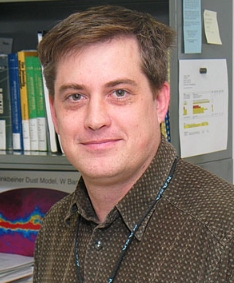 Edward J Wollack合作论文数Goddard Space Flight Center, National Aeronautics and Space Administration19
 Michael D. Niemack合作论文数Department of Physics, The College of Arts & Sciences, Cornell University/Astronomy Department, Cornell University19Patricio A. Gallardo合作论文数Dept Phys, Cornell Univ18
 Zhilei Xu合作论文数Massachusetts Institute of Technology18
 Federico Nati合作论文数Dipartimento di Fisica, Universitá di Roma La Sapienza18
 Mark Devlin合作论文数Department of Physics and Astronomy, School of Arts & Sciences, University of Pennsylvania17Carlos Sierra合作论文数16Joseph E. Golec合作论文数Dept Phys, Univ Chicago16
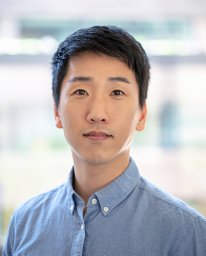 Steve K Choi合作论文数Dept Astron, Cornell Univ16
 Johannes Hubmayr合作论文数Quantum Electromagnetics Division, National Institute of Standards and Technology16
 Sara Michelle Simon合作论文数15
 Jon E. Gudmundsson合作论文数Dept Phys, Stockholm Univ14Kathleen Harrington合作论文数14
 Brian Koopman合作论文数Department of Physics, Yale University14
 Shannon Duff合作论文数Quantum Electromagnetics Division, Physical Measurement Laboratory, National Institute of Standards and Technology14
 Simon Dicker合作论文数University of Pennslyvania14John Orlowski-Scherer合作论文数Dept Phys & Astron, Univ Penn13
 Eve M. Vavagiakis合作论文数Dept Phys, Cornell Univ13
 Michele Limon合作论文数Goddard Space Flight Center13Shuay-Pwu P. Ho合作论文数12Nicholas F. Cothard合作论文数NASA Goddard Space Flight Center12
 Nicholas Galitzki合作论文数Dept Phys, Univ Calif San Diego12Roberto Puddu合作论文数12
 Gabriele Coppi合作论文数Dept Phys & Astron, Univ Penn12
 Suzanne T. Staggs合作论文数Department of Physics, Princeton University12Naess Sigurd合作论文数Sub-Department of Astrophysics, University of Oxford12
 Mathew Syriac Madhavacheril合作论文数Department of Physics & Astronomy, University of Pennsylvania12
 Jo Dunkley合作论文数Department of Astrophysical Sciences, Princeton University12
 Kavilan Moodley合作论文数Centre for Mathematical Sciences;University of Cambridge;Centre for Mathematical Sciences, University of Cambridge12
 J. Richard Bond合作论文数Department of Physics, University of Toronto;Canadian Institute for Theoretical Astrophysics, University of Toronto12
 Erminia Calabrese合作论文数12M. Hasselfield合作论文数Department of Physics and Astronomy;University of British Columbia;Department of Physics and Astronomy, University of British Columbia12Robert Thornton合作论文数Dept Phys & Astron, Univ Penn11James Beall合作论文数11Kevin T. Crowley合作论文数11Yilun Guan合作论文数11
 Simone Aiola合作论文数Ctr Computat Astrophys, Flatiron Inst11Laura Newburgh合作论文数Department of Astronomy, Yale University11Louis Thibaut合作论文数Sub-Department of Astrophysics, University of Oxford11
 Rolando Dunner合作论文数11
 Maria Salatino合作论文数Dipartimento di Fisica, Università di Roma “La Sapienza”,11
 Joel Ullom合作论文数Quantum Sensors Division, National Institute of Standards and Technology11Frederick T. Matsuda合作论文数10Tanay Bhandarkar合作论文数University of Pennsylvania10
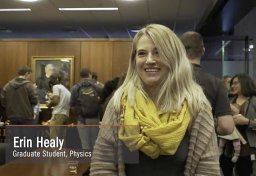 Erin Healy合作论文数Joseph Henry Labs Phys, Princeton Univ10
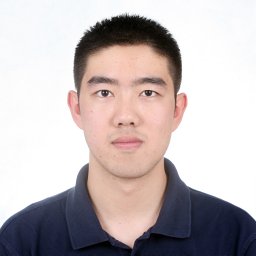 Ningfeng Zhu合作论文数Dept Phys & Astron, Univ Penn10
 Emmanuel Schaan合作论文数SLAC Natl Accelerator Lab10C. Hervias-Caimapo合作论文数Dept Phys, Florida State Univ10




