Large language models (LLMs) are increasingly employed in information-seeking and decision-making tasks. Despite their broad utility, LLMs tend to generate information that conflicts with real-world facts, and their persuasive style can make these inaccuracies appear confident and convincing. As a result, end-users struggle to consistently align the confidence expressed by LLMs with the accuracy of their predictions, often leading to either blind trust in all outputs or a complete disregard for their reliability. In this work, we explore supervised finetuning on uncertainty-augmented predictions as a method to develop models that produce linguistic expressions of uncertainty. Specifically, we measure the calibration of pre-trained models and then fine-tune language models to generate calibrated linguistic expressions of uncertainty. Through experiments on various question-answering datasets, we demonstrate that LLMs are well-calibrated in assessing their predictions, and supervised finetuning based on the model's own confidence leads to well-calibrated expressions of uncertainty, particularly for single-claim answers.
A major challenge facing the world is the provision of equitable and universal access to quality education. Recent advances in generative AI (gen AI) have created excitement about the potential of new technologies to offer a personal tutor for every learner and a teaching assistant for every teacher. The full extent of this dream, however, has not yet materialised. We argue that this is primarily due to the difficulties with verbalising pedagogical intuitions into gen AI prompts and the lack of good evaluation practices, reinforced by the challenges in defining excellent pedagogy. Here we present our work collaborating with learners and educators to translate high level principles from learning science into a pragmatic set of seven diverse educational benchmarks, spanning quantitative, qualitative, automatic and human evaluations; and to develop a new set of fine-tuning datasets to improve the pedagogical capabilities of Gemini, introducing LearnLM-Tutor. Our evaluations show that LearnLM-Tutor is consistently preferred over a prompt tuned Gemini by educators and learners on a number of pedagogical dimensions. We hope that this work can serve as a first step towards developing a comprehensive educational evaluation framework, and that this can enable rapid progress within the AI and EdTech communities towards maximising the positive impact of gen AI in education.
One of the main motivations of studying continual learning is that the problem setting allows a model to accrue knowledge from past tasks to learn new tasks more efficiently. However, recent studies suggest that the key metric that continual learning algorithms optimize, reduction in catastrophic forgetting, does not correlate well with the forward transfer of knowledge. We believe that the conclusion previous works reached is due to the way they measure forward transfer. We argue that the measure of forward transfer to a task should not be affected by the restrictions placed on the continual learner in order to preserve knowledge of previous tasks. Instead, forward transfer should be measured by how easy it is to learn a new task given a set of representations produced by continual learning on previous tasks. Under this notion of forward transfer, we evaluate different continual learning algorithms on a variety of image classification benchmarks. Our results indicate that less forgetful representations lead to a better forward transfer suggesting a strong correlation between retaining past information and learning efficiency on new tasks. Further, we found less forgetful representations to be more diverse and discriminative compared to their forgetful counterparts.
A large body of research in continual learning is devoted to overcoming the catastrophic forgetting of neural networks by designing new algorithms that are robust to the distribution shifts. However, the majority of these works are strictly focused on the "algorithmic" part of continual learning for a "fixed neural network architecture", and the implications of using different architectures are mostly neglected. Even the few existing continual learning methods that modify the model assume a fixed architecture and aim to develop an algorithm that efficiently uses the model throughout the learning experience. However, in this work, we show that the choice of architecture can significantly impact the continual learning performance, and different architectures lead to different trade-offs between the ability to remember previous tasks and learning new ones. Moreover, we study the impact of various architectural decisions, and our findings entail best practices and recommendations that can improve the continual learning performance.
A primary focus area in continual learning research is alleviating the "catastrophic forgetting" problem in neural networks by designing new algorithms that are more robust to the distribution shifts. While the recent progress in continual learning literature is encouraging, our understanding of what properties of neural networks contribute to catastrophic forgetting is still limited. To address this, instead of focusing on continual learning algorithms, in this work, we focus on the model itself and study the impact of "width" of the neural network architecture on catastrophic forgetting, and show that width has a surprisingly significant effect on forgetting. To explain this effect, we study the learning dynamics of the network from various perspectives such as gradient orthogonality, sparsity, and lazy training regime. We provide potential explanations that are consistent with the empirical results across different architectures and continual learning benchmarks.
Continual (sequential) training and multitask (simultaneous) training are often attempting to solve the same overall objective: to find a solution that performs well on all considered tasks. The main difference is in the training regimes, where continual learning can only have access to one task at a time, which for neural networks typically leads to catastrophic forgetting. That is, the solution found for a subsequent task does not perform well on the previous ones anymore. However, the relationship between the different minima that the two training regimes arrive at is not well understood. What sets them apart? Is there a local structure that could explain the difference in performance achieved by the two different schemes? Motivated by recent work showing that different minima of the same task are typically connected by very simple curves of low error, we investigate whether multitask and continual solutions are similarly connected. We empirically find that indeed such connectivity can be reliably achieved and, more interestingly, it can be done by a linear path, conditioned on having the same initialization for both. We thoroughly analyze this observation and discuss its significance for the continual learning process. Furthermore, we exploit this finding to propose an effective algorithm that constrains the sequentially learned minima to behave as the multitask solution. We show that our method outperforms several state of the art continual learning algorithms on various vision benchmarks.
We present the One Pass ImageNet (OPIN) problem, which aims to study the effectiveness of deep learning in a streaming setting. ImageNet is a widely known benchmark dataset that has helped drive and evaluate recent advancements in deep learning. Typically, deep learning methods are trained on static data that the models have random access to, using multiple passes over the dataset with a random shuffle at each epoch of training. Such data access assumption does not hold in many real-world scenarios where massive data is collected from a stream and storing and accessing all the data becomes impractical due to storage costs and privacy concerns. For OPIN, we treat the ImageNet data as arriving sequentially, and there is limited memory budget to store a small subset of the data. We observe that training a deep network in a single pass with the same training settings used for multi-epoch training results in a huge drop in prediction accuracy. We show that the performance gap can be significantly decreased by paying a small memory cost and utilizing techniques developed for continual learning, despite the fact that OPIN differs from typical continual problem settings. We propose using OPIN to study resource-efficient deep learning.
This work focuses on off-policy evaluation (OPE) with function approximation in infinite-horizon undiscounted Markov decision processes (MDPs). For MDPs that are ergodic and linear (i.e. where rewards and dynamics are linear in some known features), we provide the first finite-sample OPE error bound, extending existing results beyond the episodic and discounted cases. In a more general setting, when the feature dynamics are approximately linear and for arbitrary rewards, we propose a new approach for estimating stationary distributions with function approximation. We formulate this problem as finding the maximum-entropy distribution subject to matching feature expectations under empirical dynamics. We show that this results in an exponential-family distribution whose sufficient statistics are the features, paralleling maximum-entropy approaches in supervised learning. We demonstrate the effectiveness of the proposed OPE approaches in multiple environments.
A neural network deployed in the wild may be asked to make predictions for inputs that were drawn from a different distribution than that of the training data. A plethora of work has demonstrated that it is easy to find or synthesize inputs for which a neural network is highly confident yet wrong. Generative models are widely viewed to be robust to such mistaken confidence as modeling the density of the input features can be used to detect novel, out-of-distribution inputs. In this paper we challenge this assumption. We find that the density learned by flow-based models, VAEs, and PixelCNNs cannot distinguish images of common objects such as dogs, trucks, and horses (i.e. CIFAR-10) from those of house numbers (i.e. SVHN), assigning a higher likelihood to the latter when the model is trained on the former. Moreover, we find evidence of this phenomenon when pairing several popular image data sets: FashionMNIST vs MNIST, CelebA vs SVHN, ImageNet vs CIFAR-10 / CIFAR-100 / SVHN. To investigate this curious behavior, we focus analysis on flow-based generative models in particular since they are trained and evaluated via the exact marginal likelihood. We find such behavior persists even when we restrict the flows to constant-volume transformations. These transformations admit some theoretical analysis, and we show that the difference in likelihoods can be explained by the location and variances of the data and the model curvature. Our results caution against using the density estimates from deep generative models to identify inputs similar to the training distribution until their behavior for out-of-distribution inputs is better understood.
We propose a neural hybrid model consisting of a linear model defined on a set of features computed by a deep, invertible transformation (i.e. a normalizing flow). An attractive property of our model is that both p(features), the density of the features, and p(targets | features), the predictive distribution, can be computed exactly in a single feed-forward pass. We show that our hybrid model, despite the invertibility constraints, achieves similar accuracy to purely predictive models. Moreover the generative component remains a good model of the input features despite the hybrid optimization objective. This offers additional capabilities such as detection of out-of-distribution inputs and enabling semi-supervised learning. The availability of the exact joint density p(targets, features) also allows us to compute many quantities readily, making our hybrid model a useful building block for downstream applications of probabilistic deep learning.
We present an application of counterfactual reasoning for completely automated tuning of online ad auctions. We discuss practical considerations for applying the approach on a major search engine and present results showing parity between a reliable simulation engine and our approach that is orders of magnitude more efficient computationally. 1 Online Ad Auctions Selection, pricing, and allocation of ads on search result pages is determined via an auction that runs in real time whenever a query is submitted to a search engine. In each instance, relevant ads are selected to participate and allocation and pricing rules are subsequently executed to determine the placement and click-contingent price for each ad. Varian [3] popularized an abstraction of this auction known as Generalized Second Price, whereby ads are allocated in descending order of rank score and priced such that the payment per click is equal to the minimum bid required to maintain its current position according to the rank score function. Varian describes the rank score of ad i with bid bi as Si(bi) = qibi, where qi is some advertiser dependent quality score. In this paper, we consider a more generalized form of the rank score function, parameterized by auxiliary parameters {λj}1 , that influence pricing and allocation via advertiser, user and query dependent quality scores {qj}1 , namely Si(bi|λ,q). The auxiliary parameters control the trade-off between different key performance indicators (KPIs) such as revenue (RPM), click through rate (CTR), quick back rate (QBR), and ad coverage. The parameter values can be adjusted to achieve a particular operating point. Changes in the models that feed into the auction as well as changes in the marketplace make it necessary for the parameters to be readjusted, a process we refer to as tuning. Typically, tens of experiments need to be regularly tuned per market per device per month with many markets worldwide. The number of tunings required per month and the dynamic nature of marketplace requirements makes this a daunting task. This work builds upon [1] and focuses on the practical aspects of utilizing counterfactual reasoning in an end-to-end automated ad auction tuning pipeline for a major search engine. The idea is to use a distribution over the parameters at serve time, which enables asking “what-if” questions and predicting what the expected KPIs would be given alternative marketplace parameter settings. Here, we focus on the practical aspects of this approach and refer the reader to [1] for details on the basic technical details. 2 Quantifying and Controlling Randomization Cost We make use of randomized auction parameters which are then used in conjunction with importance sampling in order to perform counterfactual estimation. For simplicity, we restrict our attention to the case with proposal N (μ,Σ). Choice of the proposal distribution p for which to sample the 30th Conference on Neural Information Processing Systems (NIPS 2016), Barcelona, Spain. Figure 1: Quantifying randomization cost using Monte Carlo simulations. The choice of the proposal distribution should be guided by the desired amount of exploration and the amount of deviation from the non-randomized experiment’s KPIs that can be afforded. Randomization cost can be reduced using parameter correlations. auction parameters from affects the exploration power of the method. Proposals with larger variance will allow a larger range of counterfactuals to be considered. However, randomizing the parameters associated with a real-time auction has an impact on the overall KPIs as well, so there is a trade-off that must be considered. A larger variance will result in parameter samples further away from the current operating point. If the KPIs are not linear functions of the parameters, then the KPIs will be impacted in some way with the effect of the impact (typically) increasing with the size of the variance. The correlation structure of the parameters will impact the KPIs as well. Specifically, it is natural to correlate parameters that impact KPIs similarly so that more samples are exploring interesting regions of the counterfactual space. The corresponding joint covariance can have a different impact on the KPIs than that of an independent covariance with the same marginals as the joint. We utilized an existing auction replay and user simulation platform to obtain simulated counterfactuals in order to compute the correlation structure of the marketplace parameters, estimate the impact of randomization on the KPIs and finally decide on a covariance for online experiments. For computing the correlation structure, we simulated counterfactual KPIs for a large grid of marketplace parameters. We applied rather lose constraints on the counterfactual KPIs to eliminate points that lead to very poor operating points. We treated the parameter settings for the remaining points as possibly viable for a tuning scenario, and computed the correlation on these points. Next, we tested the impact of randomization using independent and correlated distributions with increasing variance. Let f be our KPI of interest and x our auction parameters. If the marketplace parameter distribution is p(x) and the distribution of the KPI given a parameter setting is p(f |x), then we are interested in the quantity Ep(f)[f ] = Ep(f,x)[f ] = ∫ fp(x)p(f |x)dxdf = ∫ dxp(x) ∫ fp(f |x)df = Ep(x)[Ep(f |x)[f |x]]. (1) The simulation platform performs its estimations given user queries by training user click models and applying these to simulated auctions and clicks with computationally intensive simulation models, providing a reliable estimate of the KPI: f̂(x) ≈ Ep(f |x)[f |x]. Given this approximation, we can construct a Monte Carlo estimate of the KPI with Ep(f)[f ] ≈ Ep(x)[f̂(x)] ≈ ∑
We present a scalable sequential Monte Carlo algorithm and its greedy counterpart for models based on Kingman’s coalescent. We utilize fast nearest neighbor algorithms to limit expensive computations to only a subset of data point pairs. For a dataset size of n, the resulting algorithm has O(nlogn) computational complexity. We empirically verify that we achieve a large speedup in computation. When the gain in speed is used for increasing the number of particles, we can often obtain significantly better samples than those of previous algorithms. We apply our algorithm for learning visual taxonomies of birds on 6033 examples, a dataset size for which previous algorithms fail to be feasible.
>In the Bayesian mixture modeling framework it is possible to infer the necessary number of components to model the data and therefore it is unnecessary to explicitly restrict the number of components.Nonparametric mixture models sidestep the problem of finding the"correct"number of mixture components by assuming infinitely many components.In this paper Dirichlet process mixture(DPM) models are cast as infinite mixture models and inference using Markov chain Monte Carlo is described.The specification of the priors on the model parameters is often guided by mathematical and practical convenience.The primary goal of this paper is to compare the choice of conjugate and non-conjugate base distributions on a particular class of DPM models which is widely used in applications,the Dirichlet process Gaussian mixture model (DPGMM).We compare computational efficiency and modeling performance of DPGMM defined using a conjugate and a conditionally conjugate base distribution.We show that better density models can result from using a wider class of priors with no or only a modest increase in computational effort.
The Indian buffet process (IBP) is an exchangeable distribution over binary matrices used in Bayesian nonparametric featural models. In this paper we propose a three-parameter generalization of the IBP exhibiting power-law behavior. We achieve this by generalizing the beta process (the de Finetti measure of the IBP) to the stable-beta process and deriving the IBP corresponding to it. We find interesting relationships between the stable-beta process and the Pitman-Yor process (another stochastic process used in Bayesian nonparametric models with interesting power-law properties). We derive a stick-breaking construction for the stable-beta process, and find that our power-law IBP is a good model for word occurrences in document corpora.
The mixtures of factor analyzers (MFA) model allows data to be modeled as a mixture of Gaussians with a reduced parametrization. We present the formulation of a nonparametric form of the MFA model, the Dirichlet process MFA (DPMFA). The proposed model can be used for density estimation or clustering of high dimensiona data. We utilize the DPMFA for clustering the action potentials of different neurons from extracellular recordings, a problem known as spike sorting. DPMFA model is compared to Dirichlet process mixtures of Gaussians model (DPGMM) which has a higher computational complexity. We show that DPMFA has similar modeling performance in lower dimensions when compared to DPGMM, and is able to work in higher dimensions.
In this paper we present the Infinite Hierarchical Hidden Markov Model (IHHMM), a nonparametric generalization of Hierarchical Hidden Markov Models (HHMMs). HHMMs have been used for modeling sequential data in applications such as speech recognition, detecting topic transitions in video and extracting information from text. The IHHMM provides more flexible modeling of sequential data by allowing a potentially unbounded number of levels in the hierarchy, instead of requiring the specification of a fixed hierarchy depth. Inference and learning are performed eciently using Gibbs sampling and a modified forward-backtrack algorithm. We present encouraging results on toy sequences and English text data.
In this paper we propose a new incremental spike sorting model that automatically eliminates refractory period violations, accounts for action potential waveform drift, and can handle "appearance" and "disappearance" of neurons. Our approach is to augment a known time-varying Dirichlet process that ties together a sequence of infinite Gaussian mixture models, one per action potential waveform observation, with an interspike-interval-dependent likelihood that prohibits refractory period violations. We demonstrate this model by showing results from sorting two publicly available neural data recordings for which a partial ground truth labeling is known.
We propose an efficient sequential Monte Carlo inference scheme for the recently proposed coalescent clustering model [1]. Our algorithm has a quadratic runtime while those in [1] is cubic. In experiments, we were surprised to find that in addition to being more efficient, it is also a better sequential Monte Carlo sampler than the best in [1], when measured in terms of variance of estimated likelihood and effective sample size.
The Indian buffet process (IBP) is a Bayesian nonparametric distribution whereby objects are modelled using an unbounded number of latent features. In this paper we derive a stick-breaking representation for the IBP. Based on this new representation, we develop slice samplers for the IBP that are efficient, easy to implement and are more generally applicable than the currently available Gibbs sampler. This representation, along with the work of Thibaux and Jordan [17], also illuminates interesting theoretical connections between the IBP, Chinese restaurant processes, Beta processes and Dirichlet processes.
 Carl Edward Rasmussen合作论文数Machine Learning Group, Computational and Biological Learning Lab, Division of Information Engineering, Department of Engineering, University of Cambridge;Secondmind;QuantMachines9
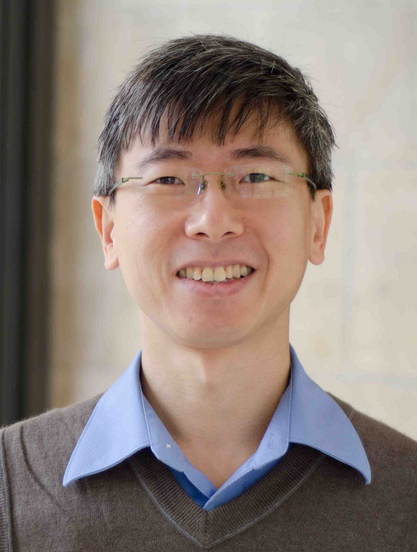 Yee Whye Teh合作论文数Department of Statistics, University of Oxford;Google DeepMind8
 Arslan Chaudhry合作论文数Google DeepMind5
 Mehrdad Farajtabar合作论文数DeepMind4
 Dong Yin合作论文数3
 Iman Mirzadeh合作论文数Apple3
 Razvan Pascanu合作论文数Google DeepMind3
 Levi Boyles合作论文数2
 Sridhar Thiagarajan合作论文数2Akihiro Matsukawa合作论文数2
 Nir Levine合作论文数Google DeepMind2
 Timothy Nguyen合作论文数DeepMind2Hamdullah Aydin合作论文数2G. Ongun合作论文数2
 Uğur Halıcı合作论文数Computer Vision and Intelligent Systems Research Laboratory, Department of Electrical and Electronics Engineering, Middle East Technical University2
 Balaji Lakshminarayanan合作论文数Google DeepMind2Huiyi Hu合作论文数1Kevin R. McKee合作论文数1
 Laura Weidinger合作论文数Affective Brain Lab, DeepMind1Lidan Hackmon合作论文数1Roni Rabin合作论文数1Niv Efron合作论文数1James Cohan合作论文数1Roee Engelberg合作论文数1Daniele Calandriello合作论文数Google DeepMind1
 Canfer Akbulut合作论文数Google DeepMind1Laura Culp合作论文数1Fuat Ozgen合作论文数1
 Maxwell Bileschi合作论文数Google1
 Clara Huiyi Hu合作论文数Google DeepMind1
 Nahema Marchal合作论文数Oxford Internet Inst, Univ Oxford1
 Annie E. Hale合作论文数Biodesign Pathfinder Ctr, Arizona State Univ1
 Markus Kunesch合作论文数Sch Math Sci, Queen Mary Univ London1Jasmin Rubinovitz合作论文数Massachusetts Institute of Technology, Cambridge, MA, USA1
 Luis C. Cobo合作论文数DeepMind1
 Avishkar Bhoopchand合作论文数DeepMind, London, England1
 Lisa Wang合作论文数Google Res, Mountain View, CA 94043 USA1patrick jordan合作论文数1
 Jennifer She合作论文数DeepMind1
 Daniel Kasenberg合作论文数Tufts University1
 Katherine Ann Heller合作论文数Google Brain1
 Avi Caciularu合作论文数Department of Computer Science, Bar-Ilan University1
 Jiefeng Chen合作论文数Google Cloud AI Research1Huber Andrea B合作论文数1Wei-Jen Ko合作论文数Google1
 Andreas Tolias合作论文数Andreas Tolias Lab, Department of Ophthalmology, Stanford University;Department of Electrical Engineering, Stanford University;Department of Neuroscience, Baylor College of Medicine1
 Irina Jurenka合作论文数Google DeepMind1
 Pierre-Alexandre Kamienny合作论文数Pierre and Marie Curie University;ISIR MLIA, Sorbonne Université;Meta AI1
 Katherine L. Hermann合作论文数Google DeepMind1




