Sampling from score-based diffusion models incurs bias due to both time discretisation and the approximation of the score function. A common strategy for reducing this bias is to apply corrector steps based on the unadjusted Langevin algorithm (ULA) at each noise level within a predictor-corrector framework. However, ULA is itself a biased sampler, as it discretises a continuous diffusion process. In this work, we consider adjusted Langevin correctors that employ Metropolis–Hastings (MH) or Barker's accept-reject steps to correct for this bias. Since the target density ratio typically required by MH-based algorithms is unavailable, we propose methods that instead utilise the score function to compute the correct acceptance probability. We introduce the first exact method for adjusting Langevin corrections in diffusion models, based on a two-coin Bernoulli factory algorithm. We also propose an efficient approximation based on Simpson's rule that achieves accuracy of order 5/2 in the step size at near-zero marginal cost. We demonstrate that these procedures improve sample quality on both synthetic and image datasets, yielding consistent gains in Fréchet Inception Distance (FID) on the latter.
Large Language Models (LLMs) demonstrate strong capabilities for solving scientific and mathematical problems, yet they struggle to produce valid, challenging, and novel problems - an essential component for advancing LLM training and enabling autonomous scientific research. Existing problem generation approaches either depend on expensive human expert involvement or adopt naive self-play paradigms, which frequently yield invalid problems due to reward hacking. This work introduces VHG, a verifier-enhanced hard problem generation framework built upon three-party self-play. By integrating an independent verifier into the conventional setter-solver duality, our design constrains the setter's reward to be jointly determined by problem validity (evaluated by the verifier) and difficulty (assessed by the solver). We instantiate two verifier variants: a Hard symbolic verifier and a Soft LLM-based verifier, with evaluations conducted on indefinite integral tasks and general mathematical reasoning tasks. Experimental results show that VHG substantially outperforms all baseline methods by a clear margin.
Autoformalisation (AF) systems map natural language reasoning steps into formal statements in a proof assistant such as Lean. We consider how to assess the faithfulness of these systems. Existing approaches require expensive human-annotated ground truth, or rely on LLM judges or embedding models, which come with limited guarantees of accuracy. In addition, these methods typically only consider inputs that are known to be correct, and therefore do not assess whether the AF translates incorrect inputs faithfully. To address these limitations, we propose a new benchmark for AF faithfulness that is cheap to apply, sound under weak assumptions, and assesses both positive and negative examples. Our method is based on automatically generating perturbed reasoning steps that are designed to be invalid, and then measuring validity preservation on unperturbed steps and invalidity preservation on perturbed steps. We apply our method to eight AF systems across four mathematical datasets, and observe pervasive sycophancy: many AFs "silently correct" invalid inputs into provable statements. The most validity-preserving fine-tuned AFs are also the most sycophantic, suggesting a tension between validity and invalidity preservation in current AF systems.
Subword-level understanding is integral to numerous tasks, including understanding multi-digit numbers, spelling mistakes, abbreviations, rhyming, and wordplay. Despite this, current large language models (LLMs) still struggle disproportionally with seemingly simple subword-level tasks, like counting the number of 'r's in 'strawberry'. A key factor behind these failures is tokenization, which obscures the fine-grained structure of words. Current alternatives, such as character-level and dropout tokenization methods, significantly increase computational costs and provide inconsistent improvements. In this paper, we revisit tokenization and introduce StochasTok, a simple, efficient stochastic tokenization scheme that randomly splits tokens during training, allowing LLMs to ‘see’ their internal structure. Our experiments show that pretraining with StochasTok substantially improves LLMs’ downstream performance across multiple subword-level language games, including character counting, substring identification, and math tasks. Furthermore, StochasTok’s simplicity allows seamless integration at any stage of the training pipeline, and we demonstrate that post-training with StochasTok can instill improved subword understanding into existing pretrained models, thus avoiding costly pretraining from scratch. These dramatic improvements achieved with a minimal change suggest StochasTok holds exciting potential when applied to larger, more capable models.
A major focus in designing methods for learning distributions defined on manifolds is to alleviate the need to implicitly learn the manifold so that learning can concentrate on the data distribution within the manifold. However, accomplishing this often leads to compute-intensive solutions. In this work, we propose a simple modification to denoising score-matching in the ambient space to implicitly account for the manifold, thereby reducing the burden of learning the manifold while maintaining computational efficiency. Specifically, we propose a simple decomposition of the score function into a known component s^base and a remainder component s-s^base (the learning target), with the former implicitly including information on where the data manifold resides. We derive known components s^base in analytical form for several important cases, including distributions over rotation matrices and discrete distributions, and use them to demonstrate the utility of this approach in those cases.
The training paradigm for large language models (LLMs) is moving from static datasets to experience-based learning, where agents acquire skills via interacting with complex environments. To facilitate this transition we introduce GEM (General Experience Maker), an open-source environment simulator designed for the age of LLMs. Analogous to OpenAI-Gym for traditional reinforcement learning (RL), GEM provides a standardized framework for the environment-agent interface, including asynchronous vectorized execution for high throughput, and flexible wrappers for easy extensibility. GEM also features a diverse suite of environments, robust integrated tools, and single-file example scripts demonstrating using GEM with five popular RL training frameworks. Along with this, we also provide a set of baselines across 24 environments using REINFORCE with Return Batch Normalization (ReBN), which---unlike GRPO---is compatible with the full RL setting of dense per-turn rewards and arbitrary discount factors. We further conduct apple-to-apple benchmarking of PPO, GRPO and REINFORCE in both single- and multi-turn settings using GEM to shed light on the algorithmic designs. GEM also functions as a convenient evaluation toolkit besides a training environment. We hope this framework can help accelerate future agentic LLM research.
LLM parameter editing methods commonly rely on computing an ideal target hidden-state at a target layer (referred as anchor point) and distributing the target vector to multiple preceding layers (commonly known as backward spreading) for cooperative editing. Although widely used for a long time, its underlying basis have not been systematically investigated. In this paper, we first conduct a systematic study of its foundations, which helps clarify its capability boundaries, practical considerations, and potential failure modes. Then, we propose a simple and elegant alternative that replaces backward spreading with forward-propagation. Instead of optimizing the target at the last editing layer, we optimize the anchor point at the first editing layer, and then propagate it forward to obtain accurate and mutually compatible target hidden-states for all subsequent editing layers. This approach achieves the same computational complexity as existing methods while producing more accurate layer-wise targets. Our method is simple, without interfering with either the computation of the initial target hidden state or any other components of the subsequent editing pipeline, and thus constituting a benefit for a wide range of LLM parameter editing methods.
While large language models (LLMs) are trained to align with human values, their generations may still violate safety constraints. A growing line of work addresses this problem by modifying the model's sampling policy at decoding time using a safety reward. However, existing decoding-time steering methods often intervene unnecessarily, modifying generations that would have been safe under the base model. Such unnecessary interventions are undesirable, as they can distort key properties of the base model such as helpfulness, fluency, style, and coherence. We propose a new test-time steering method designed to reduce such unnecessary interventions while improving the safety of unsafe responses. Our approach filters tokens using a value-based safety criterion and provides an explicit bound on the probability of false interventions. A single threshold hyperparameter controls this bound, allowing practitioners to trade off higher rates of unnecessary intervention for better output safety. Across multiple datasets and experiments, we show that our value-filtered decoding method outperforms existing baselines, achieving better trade-offs between safety, helpfulness, and similarity to the base model.
Large language models (LLMs) often solve reasoning problems by generating intermediate traces that explore and revise partial solutions. From a search perspective, these traces can be viewed as linearized search trees, where the model extends a partial solution, abandons it when it fails, and backtracks to try alternatives. Compared with traditional heuristic-guided search, such a policy has a potential advantage: it conditions on the whole search trace rather than only on the current local state. We first test whether LLMs utilize this advantage by comparing trace-conditioned reasoning policies against best-first search equipped with an LLM heuristic that only observes the current local state. Across three controlled reasoning environments, Blocks World, grid Navigation, and Sokoban, we find that raw access to search history alone is not enough to reliably outperform heuristic search. We then study one possible reason: in LLM reasoning traces, the underlying search tree is only implicitly represented, and when the model backtracks or switches branches, the trace does not explicitly identify which earlier search state is being revisited. We show that adding simple parent pointers to explicitly represent the linearized tree (LinTree) structure improves both task performance and search efficiency relative to implicit reasoning models and LLM-heuristic-guided search. These results suggest that search history becomes most useful when its tree structure is made explicit, motivating more structure-aware representations for LLM reasoning.
Controlling generative models is computationally expensive. This is because optimal alignment with a reward function–whether via inference-time steering or fine-tuning–requires estimating the value function. This task demands access to the conditional posterior p_1|t(x_1|x_t), the distribution of clean data x_1 consistent with an intermediate state x_t, a requirement that typically compels methods to resort to costly trajectory simulations. To address this bottleneck, we introduce Meta Flow Maps (MFMs), a framework extending consistency models and flow maps into the stochastic regime. MFMs are trained to perform stochastic one-step posterior sampling, generating arbitrarily many i.i.d. draws of clean data x_1 from any intermediate state. Crucially, these samples provide a differentiable reparametrization that unlocks efficient value function estimation. We leverage this capability to solve bottlenecks in both paradigms: enabling inference-time steering without inner rollouts, and facilitating unbiased, off-policy fine-tuning to general rewards. Empirically, our single-particle steered-MFM sampler outperforms a Best-of-1000 baseline on ImageNet across multiple rewards at a fraction of the compute.
Model editing has recently emerged as a popular paradigm for efficiently updating knowledge in LLMs. A central desideratum of updating knowledge is to balance editing efficacy, i.e., the successful injection of target knowledge, and specificity (also known as edit locality), i.e., the preservation of existing non-target knowledge. However, we find that existing specificity evaluation protocols are inadequate for this purpose. We systematically elaborated on the three fundamental issues it faces. Beyond the conceptual issues, we further empirically demonstrate that existing specificity metrics are weakly correlated with the strength of specificity regularizers. We also find that current metrics lack sufficient sensitivity, rendering them ineffective at distinguishing the specificity performance of different methods. Finally, we propose a constructive evaluation protocol. Under this protocol, the conflict between open-ended LLMs and the assumption of determined answers is eliminated, query-independent fluency biases are avoided, and the evaluation strictness can be smoothly adjusted within a near-continuous space. Experiments across various LLMs, datasets, and editing methods show that metrics derived from the proposed protocol are more sensitive to changes in the strength of specificity regularizers and exhibit strong correlation with them, enabling more fine-grained discrimination of different methods' knowledge preservation capabilities.
Abstract Accurate in silico prediction of protein properties, functional fitness, and mutational effects remains a central challenge in protein engineering and therapeutic design. While Protein Language Models (PLMs) successfully capture rich evolutionary and functional constraints from sequence data, they only indirectly encode the spatial and geometric information that fundamentally governs protein function. Consequently, state-of-the-art approaches typically rely on extensive fine-tuning, ensembling, or the incorporation of handcrafted structural features to achieve competitive accuracy, making them computationally expensive and difficult to scale. In this work, we demonstrate that explicit geometric modeling can substitute for, and in most cases outperform, large-scale PLM fine-tuning, with much higher parameter efficiency. Our approach, ProtEGNN, pairs PLM residue representations with a lightweight E (3) -Equivariant Graph Neural Network, competing with or achieving state-of-the-art performance across eight different benchmarks in protein property, mutational effect and function prediction, while needing 100–1000 × fewer parameters than competing methods. Even when protein structure is combined with representations from ESM2-T6, a small 8M-parameter PLM, ProtEGNN matches fine-tuned sequence-only approaches based on substantially larger PLM backbones, while training orders of magnitude fewer parameters. Together, these results highlight geometric inductive bias as a powerful and scalable alternative to task-specific fine-tuning of large PLMs for protein modeling.
Reward models (RMs) play a critical role in enhancing the reasoning performance of LLMs. For example, they can provide training signals to finetune LLMs during reinforcement learning (RL) and help select the best answer from multiple candidates during inference. In this paper, we provide a systematic introduction to RMs, along with a comprehensive survey of their applications in LLM reasoning. We first review fundamental concepts of RMs, including their architectures, training methodologies, and evaluation techniques. Then, we explore their key applications: (1) guiding generation and selecting optimal outputs during LLM inference, (2) facilitating data synthesis and iterative self-improvement for LLMs, and (3) providing training signals in RL-based finetuning. Finally, we discuss critical open questions regarding the selection, generalization, evaluation, and enhancement of RMs, based on existing research and our own empirical findings. Our analysis aims to provide actionable insights for the effective deployment and advancement of RMs for LLM reasoning.
Determining the binding pose of a ligand to a protein, known as molecular docking, is a fundamental task in drug discovery. Generative approaches promise faster, improved, and more diverse pose sampling than physics-based methods, but are often hindered by chemically implausible outputs, poor generalisability, and high computational cost. To address these challenges, we introduce a novel fragmentation scheme, leveraging inductive biases from structural chemistry, to decompose ligands into rigid-body fragments. Building on this decomposition, we present SigmaDock, an SE(3) Riemannian diffusion model that generates poses by learning to reassemble these rigid bodies within the binding pocket. By operating at the level of fragments in SE(3), SigmaDock exploits well-established geometric priors while avoiding overly complex diffusion processes and unstable training dynamics. Experimentally, we show SigmaDock achieves state-of-the-art performance, reaching Top-1 success rates (RMSD<2 & PB-valid) above 79.9% on the PoseBusters set, compared to 12.7-30.8% reported by recent deep learning approaches, whilst demonstrating consistent generalisation to unseen proteins. SigmaDock is the first deep learning approach to surpass classical physics-based docking under the PB train-test split, marking a significant leap forward in the reliability and feasibility of deep learning for molecular modelling.
Flow maps enable high-quality image generation in a single forward pass. However, unlike iterative diffusion models, their lack of an explicit sampling trajectory impedes incorporating external constraints for conditional generation and solving inverse problems. We put forth , a framework for conditional sampling that shifts the perspective of conditioning from "guiding a sampling path", to that of "learning the proper initial noise". Specifically, given an observation, we seek to learn a that outputs a noise distribution, so that after mapping to the data space via flow map, the samples respect the observation and data prior. To this end, we develop a principled variational objective that jointly trains the noise adapter and the flow map, improving noise-data alignment, such that sampling from complex data posterior is achieved with a simple adapter. Experiments on various inverse problems show that VFMs produce well-calibrated conditional samples in a single (or few) steps. For ImageNet, VFM attains competitive fidelity while accelerating the sampling by orders of magnitude compared to alternative iterative diffusion/flow models.
Deep-research agents answer complex questions by interacting with search and browsing tools, yet they often search along a single evolving trajectory. Our trajectory-level analysis reveals a common failure mode in which the agent may encounter an early search state with several plausible directions, but follow one direction before collecting enough comparative evidence. Once this happens, subsequent tool calls tend to reinforce the same path, increasing the chance of failure when the initial direction is misleading. We further find that successful trajectories reduce this risk through two behaviors: grounding vague exploration in concrete candidates and shifting directions when the current path is weak or incomplete. Based on these findings, we propose HypoSearch, which generates lightweight hypotheses as soft search hints, explores them through bounded independent branches, and compares branch-level evidence before commitment. Across four deep-research benchmarks and three backbone models, HypoSearch consistently outperforms single-trajectory search and standard parallel baselines, improving Qwen3.5-122B from 46.7 to 60.0 on BC-small while using fewer tool calls than five independent trajectories. A pilot supervised fine-tuning study further shows that these behavioral signals can curate compact training trajectories and reduce degradation from unfiltered data.
Reinforcement Learning (RL) has been promising in single-turn LLM fine-tuning. However, long-horizon agentic reasoning introduces increasingly branching interactions and sparse rewards, exposing several limitations of RL: its heavyweight backpropagation-based training stack makes it impractical to fine-tune larger LLMs, and longer-horizon trajectories make credit assignment in RL substantially harder. This paper argues that evolution strategies (ES) can be a better choice for fine-tuning long-horizon LLM agents. Compared with agentic RL, ES offers three key advantages: 1) Model Scalability: ES enables full-parameter optimization with only minimal, inference-level GPU memory, making it possible to fine-tune large LLMs. 2) Flexibility: its lightweight, black-box feedback interface makes ES fine-tuning easy to compose with prompt-space evolution (e.g., skill optimization test-time compute); and 3) Long-Horizon Scalability: ES performs trajectory-level parameter attribution without decomposing rewards across horizons, yielding better scalability than Agentic RL as the horizon length grows. Based on this insight, we propose Agentic ESOpt, a full-parameter agentic fine-tuning framework tailored to flexible parameter–context co-evolution. At each step, Agentic ESOpt samples perturbations around the current LLM parameters, evaluates the resulting agents with rewards, and applies an online reward-weighted update. To improve the exploration–adaptation trade-off, Agentic ESOpt further introduces a cosine decay schedule of the perturbation scale σ. On WebArena-Lite, full-parameter optimization of Qwen-3.5-27B improves the No Skill baseline by 6.69
Diffusion and flow-based models learn powerful data priors by training a denoiser to reverse Gaussian corruption. To use this prior to solve a linear inverse problem, one needs to sample from the posterior, but the score that the prior provides is the unconditional score, not the posterior score. Existing methods either steer a fixed pretrained denoiser with approximate measurement-matching corrections, or train a conditional restoration model that abandons the denoising structure of the prior. We derive the exact posterior score in closed form for linear Gaussian inverse problems under general Gaussian interpolants, and show that posterior sampling reduces to a denoising problem at an operator-dependent shifted pivot under an anisotropic noise covariance. We turn this identity into Exact Posterior Score (EPS), a denoising training objective that preserves the input/output structure of standard pretraining and can therefore be trained from scratch or fine-tuned from a pretrained denoiser. At inference, EPS uses the same sampler as the underlying backbone, with no likelihood gradients or projections. We evaluate EPS on five linear inverse problems across FFHQ and ImageNet, where it outperforms training-free and training-based baselines on fidelity, perceptual, and distributional metrics, while using roughly an order of magnitude fewer denoiser evaluations than gradient-based posterior samplers.
Real-world tool-using agents operate over long-horizon workflows with recurring structure and diverse demands, where effective behavior requires not only invoking atomic tools but also abstracting, and reusing higher-level tool compositions. However, existing benchmarks mainly measure instance-level success under static tool sets, offering limited insight into agents' ability to acquire such reusable skills. We address this gap by introducing SkillCraft, a benchmark explicitly stress-test agent ability to form and reuse higher-level tool compositions, where we call Skills. SkillCraft features realistic, highly compositional tool-use scenarios with difficulty scaled along both quantitative and structural dimensions, designed to elicit skill abstraction and cross-task reuse. We further propose a lightweight evaluation protocol that enables agents to auto-compose atomic tools into executable Skills, cache and reuse them inside and across tasks, thereby improving efficiency while accumulating a persistent library of reusable skills. Evaluating state-of-the-art agents on SkillCraft, we observe substantial efficiency gains, with token usage reduced by up to 80% by skill saving and reuse. Moreover, success rate strongly correlates with tool composition ability at test time, underscoring compositional skill acquisition as a core capability.
We propose SymDiff, a method for constructing equivariant diffusion models using the framework of stochastic symmetrisation. SymDiff resembles a learned data augmentation that is deployed at sampling time, and is lightweight, computationally efficient, and easy to implement on top of arbitrary off-the-shelf models. In contrast to previous work, SymDiff typically does not require any neural network components that are intrinsically equivariant, avoiding the need for complex parameterisations or the use of higher-order geometric features. Instead, our method can leverage highly scalable modern architectures as drop-in replacements for these more constrained alternatives. We show that this additional flexibility yields significant empirical benefit for E(3)-equivariant molecular generation. To the best of our knowledge, this is the first application of symmetrisation to generative modelling, suggesting its potential in this domain more generally.
 Geoffrey E. Hinton合作论文数Department of Computer Science, University of Toronto;Vector Institute30
 Max Welling合作论文数CuspAI27
 Tom Rainforth合作论文数Dept. of Statistics, University of Oxford26
 Razvan Pascanu合作论文数Google DeepMind23
 Arnaud Doucet合作论文数DeepMind;Department of Statistics, University of Oxford20
 Claude Sammut合作论文数School of Computer Science & Engineering, Faculty of Engineering, The University of New South Wales18
 Stefano Favaro合作论文数Collegio Carlo Alberto;Department of Economics and Statistics, University of Torino;DataLab Algorithms16
 Lee Wee Sun合作论文数Department of Computer Science, National University of Singapore15
 Hyunjik Kim合作论文数Google DeepMind14
 Joerg Sander合作论文数14George Karypis合作论文数14
 Jonathan Richard Schwarz合作论文数University College London;DeepMind14Michail Vlachos合作论文数14
 Alexandre Galashov合作论文数DeepMind14
 Johannes Fürnkranz合作论文数Institute for Application-Oriented Knowledge Processing, Johannes Kepler University Linz14
 Ying Zhao (赵颖)合作论文数Department of Computer Science and Technology, Tsinghua University14
 Dunia Mladenić合作论文数Atrificial Intelligence Laboratory, Jozef Stefan Institute;Quintelligence;Jožef Stefan International Postgraduate School14
 Frank Wood合作论文数Department of Computer Science, Faculty of Science, University of British Columbia;Inverted AI;Invrea Ltd.14
 Jonathan Patrick合作论文数Telfer School of Management, University of Ottawa14
 Susan Craw合作论文数School of Computing, Robert Gordon University14
 Nicolas Heess合作论文数Google DeepMind14Emile Mathieu合作论文数13Geoffrey I. Webb合作论文数13
 Ying Yang合作论文数Australian Taxation Office13
 Balaji Lakshminarayanan合作论文数Google DeepMind12
 Adam Kosiorek合作论文数Google DeepMind11
 Sheheryar Zaidi合作论文数Google DeepMind10
 Michael Hutchinson合作论文数Isomorphic Labs10
 Ning Miao (苗宁)合作论文数Department of Statistics, University of Oxford9Martin L. Puterman合作论文数9
 Leonard Hasenclever合作论文数DeepMind9
 Siddharth N.合作论文数School of Informatics, University of Edinburgh9
 Marko Grobelnik合作论文数Department for Artificial Intelligence, Jozef Stefan Institute;Artificial Intelligence Lab, Jozef Stefan Institute;Senira Solutions;Quintelligence;Cycorp Europe9
 Janez Brank合作论文数Artificial Intelligence Laboratory, Jozef Stefan Institute;Department for Artificial Intelligence, Jozef Stefan Institute9
 Simon Osindero合作论文数DeepMind9
 Yarin Gal合作论文数Department of Computer Science, University of Oxford;Christ Church College, University of Oxford;Alan Turing Institute for Data Science9
 Chris J. Maddison合作论文数Department of Statistical Sciences, Faculty of Arts & Science, University of Toronto;Vector Institute;DeepMind9
 Adam Foster合作论文数Microsoft Research8
 Tim G. J. Rudner合作论文数Center for Data Science, New York University;Center for Security and Emerging Technology, School of Foreign Service, Georgetown University;University of Oxford8
 Zoubin Ghahramani合作论文数Department of Engineering, University of Cambridge;Google DeepMind8
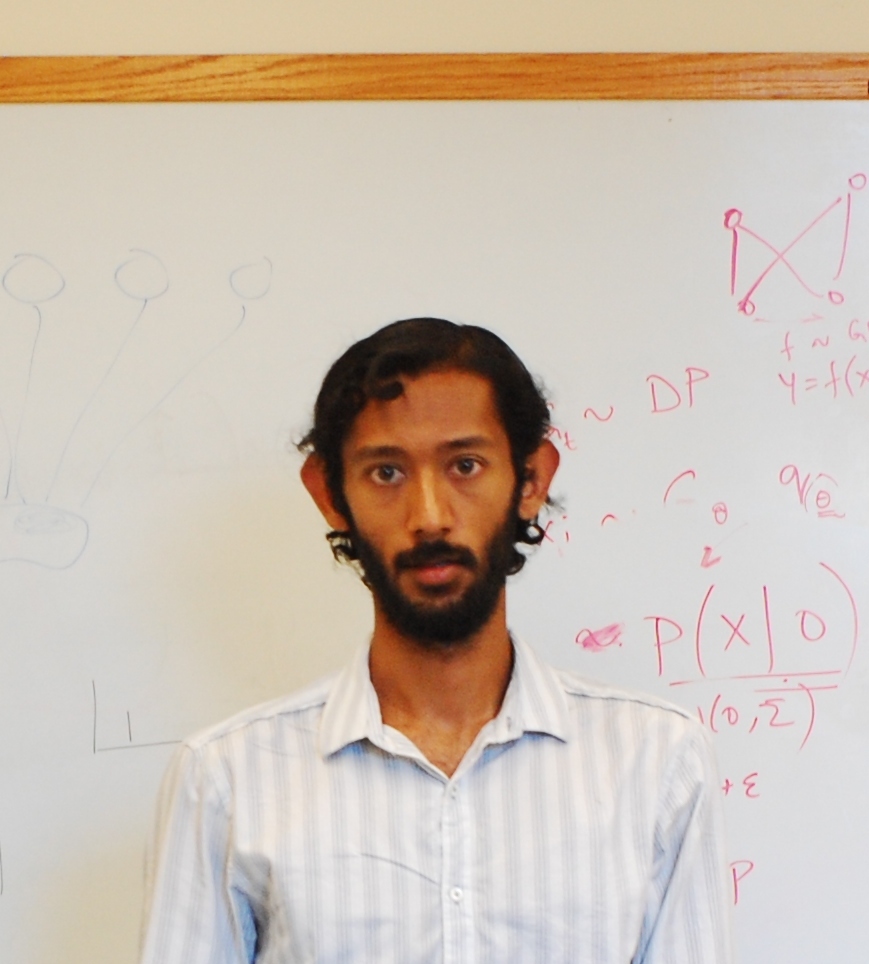 Vinayak Rao合作论文数Purdue University8
 Michael I. Jordan (迈克尔·乔丹)合作论文数Department of Electrical Engineering and Computer Sciences, University of California, Berkeley;Department of Statistics, University of California, Berkeley;Department of Industrial Engineering and Operations Research, University of California, Berkeley8
 Dilan Gorur合作论文数DeepMind8
 Dan Roy合作论文数Department of Statistical Sciences, Faculty of Arts and Science, University of Toronto;Department of Computer Science, University of Toronto;Department of Computer and Mathematical Sciences, University of Toronto Scarborough;Department of Electrical and Computer Engineering, University of Toronto;Vector Institute8
 Stefan Webb合作论文数Univ Oxford, Dept Engn Sci, Oxford, England7Peter Orbanz合作论文数Gatsby Computational Neuroscience Uni, Faculty of Life Sciences, University College London7
 Cong Lu合作论文数Google DeepMind7Charles Blundell合作论文数DeepMind7
 Emilien Dupont合作论文数Google DeepMind7




