Plants, as sessile organisms, deploy transcriptional dynamics for adapting to extreme growth conditions such as cold stress. Emerging evidence suggests that chromatin architecture contributes to transcriptional regulation. However, the relationship between chromatin architectural dynamics and transcriptional reprogramming in response to cold stress remains unclear. Here, we apply a chemical-crosslinking assisted proximity capture (CAP-C) method to elucidate the fine-scale chromatin landscape, revealing chromatin interactions within gene bodies closely associated with RNA polymerase II (Pol II) densities across initiation, pausing, and termination sites. We observe dynamic changes in chromatin interactions alongside Pol II activity alterations during cold stress, suggesting local chromatin dynamics may regulate Pol II activity. Notably, cold stress does not affect large-scale chromatin conformations. We further identify a comprehensive promoter-promoter interaction (PPI) network across the genome, potentially facilitating co-regulation of gene expression in response to cold stress. Our study deepens the understanding of chromatin conformation-associated gene regulation in plant response to cold.
The continually growing human population creates a concomitantly increasing demand for nutritious crops with high yields. Advances in high throughput sequencing technologies have revealed the genetic architecture of major crops. This includes extensive information enabling comprehensive genetic markers for breeding selection, new gene discoveries, and novel gene regulatory strategies for crop editing. RNA structure is an important type of genetic feature, essential for post-transcriptional regulation of gene expression. Here, we summarize recent advances in genome-wide RNA structure studies in crops and review the associated RNA structure-mediated regulation of gene expression. We also discuss the functional importance of those single nucleotide variations that induce large RNA structure disparities. Lastly, we discuss the potential role of RNA structure in crop molecular breeding.
BACKGROUND:Polyploidy, especially allopolyploidy, which entails merging divergent genomes via hybridization and whole-genome duplication (WGD), is a major route to speciation in plants. The duplication among the parental genomes (subgenomes) often leads to one subgenome becoming dominant over the other(s), resulting in subgenome asymmetry in gene content and expression. Polyploid wheats are allopolyploids with most genes present in two (tetraploid) or three (hexaploid) functional copies, which commonly show subgenome expression asymmetry. It is unknown whether a similar subgenome asymmetry exists during translation. We aim to address this key biological question and explore the major contributing factors to subgenome translation asymmetry.RESULTS:Here, we obtain the first tetraploid wheat translatome and reveal that subgenome expression asymmetry exists at the translational level. We further perform in vivo RNA structure profiling to obtain the wheat RNA structure landscape and find that mRNA structure has a strong impact on translation, independent of GC content. We discover a previously uncharacterized contribution of RNA structure in subgenome translation asymmetry. We identify 3564 single-nucleotide variations (SNVs) across the transcriptomes between the two tetraploid wheat subgenomes, which induce large RNA structure disparities. These SNVs are highly conserved within durum wheat cultivars but are divergent in both domesticated and wild emmer wheat.CONCLUSIONS:We successfully determine both the translatome and in vivo RNA structurome in tetraploid wheat. We reveal that RNA structure serves as an important modulator of translational subgenome expression asymmetry in polyploids. Our work provides a new perspective for molecular breeding of major polyploid crops.
 Wenqing Sun合作论文数3
 Huakun Zhang (张铧坤)合作论文数School of Life Sciences, Northeast Normal University3
 Jitender Cheema合作论文数2
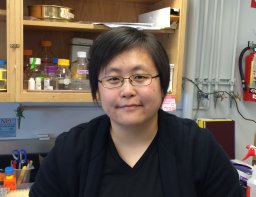 Yiliang Ding合作论文数John Innes Ctr, Norwich Res Pk2
 Azahara C. Martin合作论文数1Qinzhe Liu合作论文数1Qiancheng You合作论文数Inst Biophys Dynam, Univ Chicago1Qianli Dong (董芊里)合作论文数Key Lab Mol Epigenet, Minist Educ MOE, Northeast Normal Univ1
 Cristobal Uauy合作论文数John Innes Centre1
 Xiaofeng Cao (曹晓风)合作论文数Institute of Genetics and Developmental Biology, Chinese Academy of Sciences;University of Chinese Academy of Sciences1
 Yueying Zhang合作论文数Chinese Academy of Sciences, China University of Chinese Academy of Sciences1Zhen Wang合作论文数1Ricardo H. Ramirez-Gonzalez合作论文数1
 Chuan He (何川)合作论文数Department of Chemistry, The University of Chicago;Howard Hughes Medical Institute1
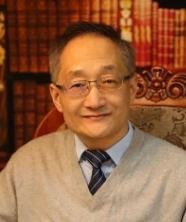 Bao Liu (刘宝)合作论文数School of Life Sciences, Northeast Normal University1
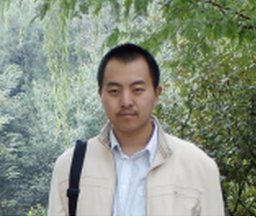 Pengyu Hao (郝鹏宇)合作论文数The State Key Laboratory of Remote Sensing Science,Institute of Remote Sensing and Digital Earth,Chinese Academy of Sciences,Beijing ,China1




