Virtual coupling is an emerging platoon control paradigm that facilitates dynamic coupling and decoupling of trains, enhancing the efficiency and flexibility of freight railway transportation. This study addresses the integrated optimization of train routing, convoy formation, and timetabling for virtual coupling train scheduling in multi-directional networks. We propose an integer linear programming model based on big-M and cumulative flow methods to maximize transport capacity and minimize operation costs. To handle large-scale instances, we propose an Enhanced Branch-Relax-Check Benders algorithm based on logic-based Benders decomposition. Numerical experiments demonstrate that virtual coupling significantly enhances capacity, achieving a 57% increase in single-track networks and approximately 25% in double- and mixed-track networks. Convoy length and track availability at critical stations significantly impact overall transportation performance.
Coordinating transport and maintenance in railway operations is difficult. The complexity induced by fluctuating daily train volumes on railway corridors has motivated us to propose a dynamic maintenance scheduling mode that increases the routine maintenance flexibility to scheduling more maintenance activities on days with lower train volumes to reduce the burden on track resources. Some activities of railway assets with relatively mature condition-monitoring technology are scheduled based on maintenance-condition thresholds. Within a planning horizon of several days, dynamic maintenance demands are satisfied by scheduling maintenance activities based on their flexible maintenance date or maintenance-condition threshold, which are coordinated with fluctuating daily train volumes. To reduce maintenance-induced interference on train operations and schedule the maximum possible maintenance activities within the planning horizon, an integer linear programming model is proposed to collaboratively optimize daily train timetabling with maintenance window setting and maintenance scheduling, where the duration and maintenance content of each maintenance window on each day are determined based on dynamic maintenance demands and daily train volumes. To solve large-scale instances, a Lagrangian relaxation-based heuristic algorithm is developed in which the primal problem is decomposed into multiple day- and section-specific subproblems. The effectiveness of the collaborative optimization method and performance of the algorithm are verified for a real-world case. Our method can effectively satisfy dynamic maintenance demands under fluctuating daily train volumes. Moreover, we develop an application of our method to the entire life cycle of railways using the rolling horizon framework.
Virtual coupling technology provides a novel approach to increasing the transport capacity of freight railway corridors. To enable the dynamic formation and adjustment of train convoys during a trip from origin to destination, this study develops an integrated planning model for virtual coupling train convoy formation schemes and timetables. The model simultaneously incorporates infrastructure characteristics and the coupling-decoupling process, which is described by a "waiting and sequential braking" strategy. The objective is to maximize the residual transport capacity, while considering constraints related to convoy formation, train timetables, convoy adjustment and arrival-departure times, coupling-decoupling within sections, and station capacity. Considering the characteristics of the problem, we design a heuristic optimization framework combining the Advantage Actor-Critic algorithm and the Gurobi solver. Numerical experiments based on the Ningwuxi-Diliudeng segment of the Shuohuang Railway reveal that, compared with Moving Block systems, virtual coupling trains achieve a 9.9% reduction in operating energy consumption with only a 1.5% increase in travel time. In the tested scenarios, the transport capacity can be increased by 25%, provided the coupling-decoupling time penalty remains within a reasonable range. In addition, the maximum convoy length, track availability, and section length are found to significantly affect the efficiency of virtual coupling trains.
Large-scale single-track railway timetabling is a combinatorial NP-hard problem characterized by a high-dimensional decision space and stringent coupling constraints. While multi-agent deep reinforcement learning (MADRL) has shown promise in addressing such problems by decomposing them into multiple resource-defined units while preserving optimality-seeking capabilities, existing methods often suffer from non-stationarity, slow convergence, and high computational cost. This paper proposes a novel MADRL framework that integrates a Transformer architecture with the Heterogeneous Agent Proximal Policy Optimization (HAPPO) algorithm to overcome the above challenges. The proposed approach models each train as an agent operating within a block-sequence environment, where agents sequentially make dwell-time decisions while implicitly coordinating via the Transformer’s attention mechanism. This design eliminates explicit communication channels and reduces computational overhead by using a weight-shared neural network. The HAPPO algorithm ensures monotonic policy improvement through an auto-regressive trust-region update scheme. Large-scale cases demonstrate that the proposed method outperforms state-of-the-art MADRL algorithms and heuristic methods in both solution quality and computational efficiency, achieving stable convergence and superior scalability.
Timely and effective rescheduling of high-speed railway timetables is critical for maintaining operational safety and service quality during inevitable disturbances and disruptions. In tackling this challenge, a novel multi-agent deep reinforcement learning framework is proposed, formulating the rescheduling problem as a unified Markov decision process and constructing an adaptive learning environment. The environment integrates both disturbance and disruption scenarios and incorporates dedicated modules for state generation, system dynamics, constraints detection, and reward assignment to simulate the rescheduling process. To address the curse of dimensionality, the multi-agent actor-critic architecture is employed, in which each train agent possesses two deep neural networks, and the multi-agent proximal policy optimization algorithm facilitates agent training through successive simulated transitions. The proposed approach is tested in several instances on both hypothesized and real-world lines by conducting specific and generalization training. The experimental results demonstrate that the generalized model can obtain high-quality solutions in a very short time, underscoring the effectiveness of the proposed approach and strong potential for practical application.
Understanding the fine-grained trajectories of metro passengers, especially at the train and route levels, is essential for analyzing system-level dynamics and individual behavior. However, existing approaches often rely on strong behavioral priors or simplified boarding assumptions, limiting their generality and realism. This study proposes a fully data-driven framework for passenger trajectory inference that explicitly incorporates physical capacity constraints and crowding effects. Entry, transfer, and egress walking durations are modeled using non-parametric Kernel Density Estimation (KDE) at the platform level. Based on these distributions, we construct a confidence-based model to estimate the probability of each feasible itinerary. A congestion-aware penalty function is introduced to reduce the confidence of infeasible itineraries involving overloaded in-vehicle links. To balance inference accuracy and computational efficiency, we develop a dynamic batch-size adjustment algorithm that iteratively updates train loads and refines probabilities. The framework is validated using large-scale AFC and timetable data from Chengdu Metro. Results demonstrate that the proposed method effectively suppresses violations of physical capacity constraints, improves behavioral plausibility, and provides reliable inputs for downstream applications such as resilience analysis and passenger behavior modeling.
Disruptions are inevitable in daily rail operations, causing trains and maintenance tasks to deviate from plans or even be cancelled and thereby diminishing the efficiency of railway transportation. Rescheduling based on a fixed disruption duration often shows difficulties in ensuring the practicability of the scheme. Considering the uncertainty of the disruption duration, this study first proposes a maintenance rescheduling strategy for major disruptions, and addresses the robust rescheduling problem of train timetables and maintenance windows. A rolling horizon framework is adopted to meet the real-time rescheduling requirements, and a distributionally robust optimization model, wherein the probability distribution of scenarios is only partially known in advance, is proposed for each horizon. To solve the obstacle of model solvability resulting from imprecise probability distributions, a discrepancy-based ambiguity set is used to transform the robust counterpart into its computationally. Moreover, a generalized branch-and-Benders-cut approach, which includes a customized upper bound generation and acceleration strategy, is proposed to solve the model. Finally, the effectiveness of the algorithm is demonstrated through numerical experiments.
The last train services of urban rail transit offer all passengers the final chance to reach their destinations. In the context of multimodal transport, considering the random delayed arrivals of late-night vehicles of other transport modes at urban hub stations and their adverse effects on multimodal passengers transferring to urban rail transit, a probabilistic scenario set is established to determine the arrival uncertainties of multimodal passengers. In each scenario, the timetable synchronization problem is formulated as a mixed-integer nonlinear programming model that requires a performance trade-off between destination reachability and the remaining path distance of both non-multimodal and multimodal passengers, integrally termed last train service compatibility. Through linearization techniques, the model is transformed into an equivalent mixed-integer linear programming form, which can be efficiently solved using the Gurobi solver to obtain the optimal last train timetable for each scenario and form an alternative scheme set. An improved probabilistic scenario set-based regret value theory is then developed, in which a novel regret value calculation method is proposed. The scheme with the minimum total weighted opportunity loss in all scenarios is selected as the optimal robust. Real case experiments based on the Chengdu-Chongqing high-speed railway line and Chengdu metro network are conducted to test the performance of our model. The results show that compared with the original timetable, the optimized timetable reduces the number of unreachable passengers by 34.29 % and the sum of the average remaining path distance of non-multimodal and multimodal passengers by 57.43 % with the help of path planning for all passengers. The proposed approach is proven not only to balance the demands of both reachable and unreachable passengers, but also to significantly improve the robustness of the last train timetable to arrival uncertainties of multimodal passengers and reduce their service inequity.
Accurate network-level Origin-Destination (OD) passenger flow forecasting is crucial for enhancing the efficiency and service quality of urban rail transit (URT). In URT networks, a significant portion of the passenger flow comes from medium and low flow OD pairs. However, network-level OD passenger flow data exhibit characteristics such as high-dimensional sparsity, data availability, and strong randomness, which severely constrain the performance of forecasting models for medium and low flow OD pairs. In view of this, this study proposes an ensemble deep learning framework (PatchPF) with data augmentation at its core, aimed at short-term OD passenger flow forecasting at the URT network level. We introduce a novel BaggingT mechanism to implement time series ensemble forecasting in PatchPF to further improve the forecasting performance and robustness. The PatchPF architecture is tested on real-world metro datasets from Chongqing and Chengdu, China. The results indicate that it outperforms the other benchmark models. Moreover, the PatchPF architecture does not exhibit the performance bottlenecks in forecasting medium and low flow OD pairs that other state-of-the-art models do, demonstrating the effectiveness of PatchPF and its key components in OD passenger flow forecasting.
Incorporating train control into the railway design process enables a practical and comprehensive evaluation of the lifecycle utility of a track profile. This paper proposes a novel integrated approach, termed EETC-VAO, which combines railway track Vertical Alignment Optimization (VAO) and Energy-Efficient Train Control (EETC). Initially formulated as a Mixed-Integer Nonlinear Programming (MINLP) problem, EETC-VAO aims to meet various geometric constraints and simultaneously minimize construction costs, traction energy consumption, and section running times in both directions. The model is subsequently reformulated into an equivalent Mixed-Integer Linear Programming (MILP) model using linearization methods and is further enhanced with valid inequalities, logic cuts, and a warm start algorithm with random velocity generation. The model has been extensively tested across a variety of case studies and train types, from synthetic small-scale scenarios to challenging real-world cases spanning from 3 to 71.2 km. Our findings demonstrate that operational costs can be significantly reduced with only marginal increases in construction costs. The integrated approach achieves reductions in total lifecycle costs of up to 40%, revealing a critical trade-off between construction and operational expenses. Notably, our results also indicate that lower construction costs do not inherently conflict with reduced operational costs, emphasizing the critical importance of integrating the train control scheme into the VAO problem.
This research paper focuses on the optimization of train timetables and maintenance windows, both of which significantly impact service quality and cost-effectiveness. Uncertainties in both elements can disrupt established transportation plans, causing train delays and maintenance cancellations. Accordingly, we highlight the necessity of augmenting the robustness of these schedules. In this study, we explored an integrated robust optimization of maintenance windows and train timetables using a distributionally robust optimization (DRO) model. The DRO model was established with two types of binary variables and a cross-resolution consistency constraint was introduced to couple them. We innovatively employed a multi-commodity network flow framework to reconstruct the DRO model and designed an alternating direction method of multipliers (ADMM)-based decomposition mechanism. This mechanism was applied to dualize the cross-resolution consistency and track capacity constraints. To handle the problem, we developed a heuristic algorithm driven by ADMM, along with a nested simulation. The algorithm's effectiveness is demonstrated through numerical experiments.
Train timetables play an important role in improving passenger services and transportation efficiency. The arrangement of maintenance windows directly affects the maintenance quality, which in turn interacts with the train timetable. In this study, we investigated the integrated optimization of maintenance windows and train timetables. We creatively abstracted the occupation of track capacity for maintenance activities as arcs and constructed an integrated space-time network for maintenance activities and trains. The initial model was converted into a multicommodity network flow model containing multiple types of arcs. Furthermore, we divided the problem into two subproblems: (1) the arrangement of major maintenance activities. (2) the integrated optimization of maintenance windows and train timetables for fixed maintenance activities. Heuristic algorithms based on the customized variable neighborhood search and the alternation direction method of multipliers framework were designed respectively to solve the aforementioned subproblems. The effectiveness and efficiency of the proposed model and algorithm are demonstrated through a series of practical case studies using data from the Wuchang-Zhuzhou Conventional railway.
This manuscript focuses on investigating the metro network expansion problem, which is formulated as a Markov Decision Process and addressed using a sequential station selection methodology. To identify an effective expansion strategy, we introduce a multi-objective reinforcement learning framework, which encompasses objectives such as traffic demands, social equity, and network accessibility. The proposed method can explore the entire city area without limiting the search space, by leveraging reward calculations to fine-tune the policy during the learning process To effectively address the challenges posed by multiple objectives and the curse of dimensionality, the proposed method utilizes an actor-critic framework. The actor is responsible for selecting actions, specifically determining the next metro station to be added to the network. The critic evaluates the performance of the given policy, providing feedback on the quality of the expanded metro network. Furthermore, by integrating the Tchebycheff decomposition method into the actor-critic framework, the proposed method enhances the exploration and optimization of the non-convex metro network expansion problem. Our method has been validated through experiments utilizing real-world data and outperforms traditional heuristic algorithms by over 30%. These results compellingly illustrate the superior effectiveness of our proposed method.
We present a multi-agent deep reinforcement learning (MDRL) framework for tackling the train timetabling problem (TTP) in this paper. A multi-agent learning environment is proposed to model the TTP as a multi-agent Markov decision process (MA-MDP) and incorporate a new function to predict inevitable train conflicts in the future caused by some seemingly good or feasible actions in the present. This innovative function prevents the environment from producing deceptive experiences, which affects agent training efficiency. We use a novel MDRL algorithm called multi-agent transformer (MAT), which combines cutting-edge deep learning (DL) and reinforcement learning (RL) theorems and technologies such as the Sequence-to-sequence (Seq2seq) architecture, the self-attention mechanism, the multi-agent trust region theorem, and the multi-agent advantage decomposition lemma. Based on these theorems and technologies, MAT solves the TTP sequentially and with a guarantee of monotonic improvement. On single-track train timetabling cases, we ran extensive experiments to compare our approach to several benchmarks. The benchmarks were chosen for their relevance to the TTP as well as their availability in the literature. Experimental results showed a significant performance improvement of our approach against benchmarks by nearly 85% in the small-scale case and nearly 45 % in the large-scale case in terms of computational efficiency, demonstrating its effectiveness.
为综合定量决策维修天窗开设方案,刻画决策者在不同运维需求条件下的天窗开设方案选择行为.基于效用理论,选取畅通性、高效性、快速性、安全性与协调性作为天窗开设方案技术属性,结合AHP-熵权法建立天窗开设方案效用函数与综合决策模型;利用Logit函数计算天窗开设方案分担率;基于夹角测度与距离测度方法对天窗开设方案的属性权重与属性值进行敏感性分析.案例结果表明:最佳天窗开设方案为4 hV形天窗,不同运营阶段的分担率分别为17.220%,17.256%,17.311%,决策者在天窗开设方案选择时对线路通过能力具有一定的偏好性;通过敏感性分析发现,4 h分段矩形天窗为潜在最优方案,畅通性、高效性的属性权重整体敏感程度较高,协调性的属性值相对更敏感.
服务质量中乘客感知的获取和满足是提高城市轨道交通吸引力的重要依据,评价过程的科学性与结果的准确性将对优化城市轨道交通的运营管理产生关键影响.为解决城市轨道交通服务质量主要依靠问卷调查,无法全面反映乘客真实心理感知的问题,以社交网络评论数据为切入点,运用自然语言处理技术,对轨道交通服务质量评价进行量化研究.首先,通过网络爬虫技术对社交网络中相关评论数据进行采集,针对文本预处理结果,运用基于情感词典构建与量级划分的分析方法,识别语料情感极性和强度.然后,建立基于K-Means文本聚类算法的轨道交通服务质量评价指标体系,将乘客需求与服务要素转化为评价指标,应用TF-IDF法,结合文本特征评估指标重要度,计算服务质量综合评价得分.最后,选取微博平台中重庆轨道交通评论语料为例进行实证分析.研究结果表明:重庆轨道交通服务质量综合评价分值为4.383,总体处于较低水平,运营服务提升空间较大;乘客对检票智能及人员服务方面满意度最高,车厢温度情感得分最低;影响服务质量最重要的因素为乘车安全(7.850%),其次分别是票价经济(7.524%)、购票便捷(7.212%)和检票智能(7.139%).相较现有方法,社交网络数据可更为直观地反馈乘客意见,为轨道交通服务质量评价提供科学的数据来源.
In the business of intermodal passenger transport, fare optimization of intermodal products has significant effects on corporate revenue and passenger travel convenience. This study takes the competitive relationship between high-speed rail (HSR) and airlines as well as carrier connectivity as the starting point, analyzes the advantages and disadvantages of different carriers in the different markets, and researches the optimization of fares. The stochastic user equilibrium model based on elastic demand is used to establish a bi-level programming model for the optimization of fares; the upper and lower models are solved using the particle swarm algorithm and method of successive averages, respectively. The results suggest that airlines are willing to cooperate with the HSR sector and improve the connectivity between aviation and HSR, and a reasonable pricing strategy is more likely to motivate cooperation between aviation and HSR.
With the development of informationization and intelligence of railway passenger stations, problems such as inconvenient information interaction, missing operation and maintenance data, and difficulty in accurate positioning of equipment under the existing equipment operation and maintenance management mode have become the focus. In this paper, the operation and maintenance management process of equipment is divided into three stages: fault prediction and warning, fault diagnosis and processing, and fault rule summary. The implementation schemes of key technologies such as data warehouse, data mining, 5G fusion positioning, and electronic fence are given to realize functions such as condition assessment, fault prediction, fault diagnosis, precise positioning, fence warning, and auxiliary decision-making, which can meet the needs of managers and operations people. Research will help to improve the efficiency and safety of equipment operation and maintenance, and have a reference significance for integrated intelligent operation and maintenance technology and the construction of modern passenger stations.
Because of the high utilization efficiency of transport capacity and a wide range of passenger flow radiation,the nested rail route has great significance for improving the organization and management of urban rail transit operations.Existing studies of the nested rail route are generally based on the multiple relationships between the departure frequency of different trains or the same interval between train departures within a set unit time period(often one hour or more),which makes it difficult to resolve the contradiction between transport capacity supply and time-varying passenger flow demand.According to the OD demand of the passenger flow in different periods based on differential passenger behaviors,this paper constructed a comprehensive optimization model of the routing plan and timetable in the nested rail route mode,designed a hierarchical optimization algorithm,and used an example to verify that the maximum full load rate of the optimized line has dropped by 0.397;the full load rate balance has dropped by 15.5%,and the optimization effect of interval with a full load rate of more than 0.8 is 100%.This helps to improve the adaptability of transport capacity to time-varying passenger flows and realize high-quality and fast transport service.
 Shaoquan Ni (倪少权)合作论文数School of Transportation and Logistics, Southwest Jiaotong University63
 Hongxia Lv (吕红霞)合作论文数School of Transportation and Logistics, Southwest Jiaotong University16
 Miaomiao Lv (吕苗苗)合作论文数School of Transportation and Logistics, Southwest Jiaotong University15
 Kai-Teng Wu合作论文数13
 Changan Xu合作论文数10
 Qingpeng Zhang (張清鵬)合作论文数Department of Pharmacology and Pharmacy, City University of Hong Kong10Haonan Yang合作论文数7
 Tao Chen (陈韬)合作论文数School of Transportation and Logistics, Southwest Jiaotong University;Engineering Research Center of Advanced Drive Energy Saving Technologies, Ministry of Education, Southwest Jiaotong University7WenXian Wang (王文宪)合作论文数6Qianqian Guo合作论文数5Chengbing Li合作论文数5WANG Bing (王兵)合作论文数5
 Su Liu合作论文数4Chang’an Xu合作论文数4
 Jinshan Pan (潘金山)合作论文数School of Transportation and Logistics, Southwest Jiaotong University4
 Keyang Sun (孙克洋)合作论文数3Song Pu (蒲松)合作论文数3
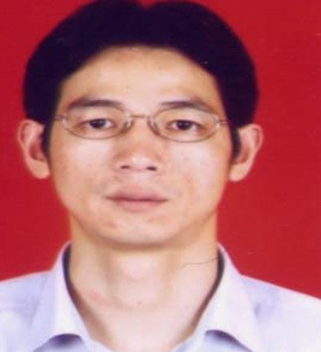 Jie Zhang (张杰)合作论文数School of Transportation and Logistics, Southwest Jiaotong University3
 Keyun Qin (秦克云)合作论文数School of Mathematics, Southwest Jiaotong University3
 Mi Gan (甘蜜)合作论文数School of Transportation and Logistics, Southwest Jiaotong University3
 Feiyu Yang合作论文数2miaomiao lv合作论文数2Zhang Tao合作论文数2Lulu Ge (葛露露)合作论文数2Fengjie ZHOU (周凤杰)合作论文数2LIU Yi (刘熠)合作论文数2ZhiYan Fu (傅志妍)合作论文数2
 Jian Chen (陈坚)合作论文数2
 Yao Li合作论文数2
 Xia Zhou (周霞)合作论文数西南交通大学生命科学与工程学院2
 Leong Hou U (余亮豪)合作论文数Department of Computer and Information Science, Faculty of Science and Technology, University of Macau;Centre for Data Science, University of Macau;Institute of Collaborative Innovation, University of Macau2Zhenning Li 合作论文数University of Macau1Lexi Li合作论文数1
 Shengdong Li合作论文数1Zhiqiang Tian合作论文数1Xuqiang Li合作论文数1SUN Yun-hao (孙运豪)合作论文数1Sihan Li (李斯涵)合作论文数1WANG Cai-xue (王才雪)合作论文数1Zhang Ji合作论文数1
 Yi Liu合作论文数1Qingchen Yao合作论文数1li han合作论文数1
 Zhang Jie合作论文数1Hui ZHANG (张慧)合作论文数1
 Zhongzhi Xu (徐仲之)合作论文数School of Public Health, Sun Yat-sen University1DU Yijia (杜懿佳)合作论文数1




