As an emerging innovation, hybrid potato breeding raises high expectations about faster variety development and clean true potato seed as a new source of planting material. Hybrid breeding could, therefore, substantially contribute to global food security and other major sustainable development goals. However, its success will not only depend on the performance of hybrid potato in the field, but also on a range of complex and dynamic system conditions. This article is based on a multidisciplinary project in which we have studied the innovation dynamics of hybrid potato breeding and explored how these dynamics may shape the future of hybrid potato. Inspired by the approach of responsible innovation, we closely involved key players in the Dutch and international potato sector and other relevant actors in thinking about these potato futures. An important and recurrent theme in our work is the tension between the predominant commercial innovation dynamics in plant breeding and promises to respond to the global challenges of food security, agrobiodiversity and climate change. In this article, we, therefore, discuss responsible innovation strategies in (hybrid) potato breeding, which may help to bridge this tension and finally reflect on the implications for the field of plant breeding in general.
Hybrid diploid breeding is a radical innovation that promises to revolutionize breeding practices in potato, the world’s third-largest food crop. Yet concerted efforts are needed to ensure this innovation can be harnessed for food security.
This article explores the relation between innovation and resources that are governed as commons by looking at the governance of potato genetic resources, especially in the context of the emergence of hybrid diploid potato breeding that will enable potato propagation through true seeds. As a new breeding tool, hybrid diploid potato breeding may not only revolutionize traditional potato breeding practices, it may also strongly affect current governance modes of potato genetic resources as a commons. Contrary to conventional accounts of the commons that treat technological innovation mainly as an exogenous factor, we argue that technological innovation can better be understood as an endogenous factor. In particular, we develop a co-production framework of innovation and the commons that draws attention to the different ways in which innovation, commons and its governance interact. Using this framework, we demonstrate that the constitution of potato genetic resources as a commons cannot be understood without considering the various ways in which technological innovation affects resources and mediate how these are governed. While reversely, technological innovations themselves are also enabled and constrained by users who govern potato genetic resources as a shared resource. We argue that changes in the governance of genetic resources can be understood as a change from one socio-technical constellation to another, whereby innovations, resources, and institutions are continuously co-produced.
The emerging field of synthetic biology, the (re-)designing and construction of biological parts, devices and systems for useful purposes, may simultaneously resolve some issues and raise others. In order to develop applications robustly and in the public interest, it is important to organize reflexive strategies of assessment and engagement in early stages of development. Against this backdrop, initiatives related to the concept of Responsible Research and Innovation (RRI) have also appeared. This paper describes such an initiative: the construction of future scenarios to explore the plausibility and desirability of potential synthetic biology innovations. We guided teams of synthetic biology students who participated in the large international Genetically Engineered Machines (iGEM) competition, in constructing scenarios aimed at exploring the plausibility and desirability of potential synthetic biology innovations. In this paper we aim to examine to what extent, and how, constructing such future scenarios contributes to RRI. In order to do so, we conducted observations and interviews to understand what kind of learning and reflection was promoted by constructing the scenarios in terms of four dimensions, which are discussed prominently in the literature on RRI: anticipation, inclusion, reflexivity and responsiveness. While we focus on how constructing future scenarios can contribute to strengthening RRI at a project (and individual) level, we also consider how far our experiment may foster RRI in the iGEM competition in general, and perhaps even inspire constructive collaboration between 'social scientists' and 'natural scientists' in the context of larger scientific research programmes.
As partners in a European project for responsible research and innovation (RRI) in synthetic biology, we organized a collaborative and interactive process of real-time technology assessment. This process consisted of two related activities complementing each other as different modes of future making, one focussing on technological options, the other on societal objectives. For the first type of activity, we established a three-year collaboration with the annual international Genetically Engineered Machines competition, stimulating student teams to consider the wider societal ramifications of future options for innovation in synthetic biology. As a follow-up activity in this process of real-time and anticipatory technology assessment, we involved a variety of societal stakeholders and researchers in synthetic biology in workshop dialogues focusing on antibiotic resistance and renewable energy as societal challenges. We invited the participants to critically consider the nature of these challenges and related value-laden issues of concern, and to define in this context opportunities and needs for innovation in synthetic biology. We see both approaches as vital in fulfilling the ambitions of responsible research and innovation. In terms of the governance of innovation, we emphasize the need for a proper toolbox and a co-creation infrastructure as crucial requirements for inclusive, reflexive and responsive practices of future making.
This chapter focuses on cancergenetics as a field in which the extension of options for genetic screening is clearly visible and which allows people to study the emergence and implications of the new genetics from a co-evolutionary perspective. From this perspective two points are especially important for understanding of the new genetics in society. First, co-evolution is a process in which technology and society are mutually shaped, starting with new options, initiatives and expectations on a local level. Second, the development and embedding of new technologies in society will always be conditioned by alignments and arrangements resulting from earlier processes of co-evolution of technology and society. These two points consider how in the Netherlands a screening practice has emerged for Familiar Adenomatous Polyposis, a particular hereditary predisposition for colon cancer. In the Netherlands, deoxyribose nucleic acid-diagnosis is made available only through a network of regional clinical genetics centres.
Krom et al. give an in-depth account of a methodological experiment carried out in the PACITA project, namely the application in a cross-European context of the Future Panel method. Focusing on the complex issue of genomics and its potential use in public health care, parliamentarians from different countries were gathered to learn about and debate this far-reaching field of research in order to create a foundation for proactive policy formulation. The authors analyse and evaluate the project setup and argue that while further development and institutional is necessary to make similar future projects reach their full potential, the project nevertheless exemplifies the practicability and value of applying previously nationally contained TA methods in a cross-European setting.
This chapter consists of a comparative analysis of emerging debates on synthetic biology in the European Union, China and India. After briefly introducing synthetic biology as a new and emerging science, it maps and compares the emerging debates on synthetic biology in the three regions, focusing on a number of different discourses respectively relating to innovation, risk, and power and control. In addition, the chapter discusses and analyses the role of public and ethics debates as crosscutting and reflective discourses. It considers how these discourses have evolved, what the dominant themes and issues are, which actors are involved and how the discourses have been informed by the value systems and socioeconomic development in the three regions. In conclusion the governance challenges resulting from these discourses are considered.
This chapter provides integrative conclusions and policy recommendations deriving from the analyses of ethics perspectives in the book. It describes the state-of-art in ethics in Europe, India and China in terms of values systems, public debates, advisory bodies and public engagement initiatives. It further provides suggestions for the mainstreaming of socio-ethical analysis in the three regions, paying particular attention to the different innovation needs evident in Europe on one hand and in India and China on the other. Conclusions are drawn for each technology case study (nanotechnology, synthetic biology and new food technologies) while policy recommendations for common research programmes in relation to ethical analysis are provided.
In this chapter we present a framework for a comparative analysis of developments in the field of food technology, nanotechnology and synthetic biology in Europe, China and India. The focus of this framework is on science and technology discourses relating to innovation, risk, and power and control, and on ethics and public debate as reflective and crosscutting discourses. On the basis of these five discourses, developments in the different fields can be systematically described and compared across the three different regions. To illustrate our framework, we will discuss some major findings from the comparative case descriptions presented in the next three chapters of this book. In discussing these findings, we focus on the mediating role of the crosscutting discourses of reflective ethics and lay morality in science and technology policy-making in the three regions and highlight the main governance challenges arising in this context.
 q c van est合作论文数19
 Lotte Asveld合作论文数Department of Biotechnology, Faculty of Applied Sciences, Delft University of Technology16
 virgil rerimassie合作论文数13Rinie Van Est合作论文数8
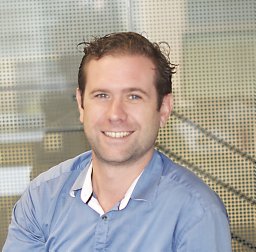 Conor M.W. Douglas合作论文数Faculty of Pharmaceutical Sciences, University of British Columbia5
 Roel Nahuis合作论文数5
 Bart Walhout合作论文数Rathenau Institute5
 Pascale Bourret合作论文数ONERA-CERT/DERI5van est合作论文数5
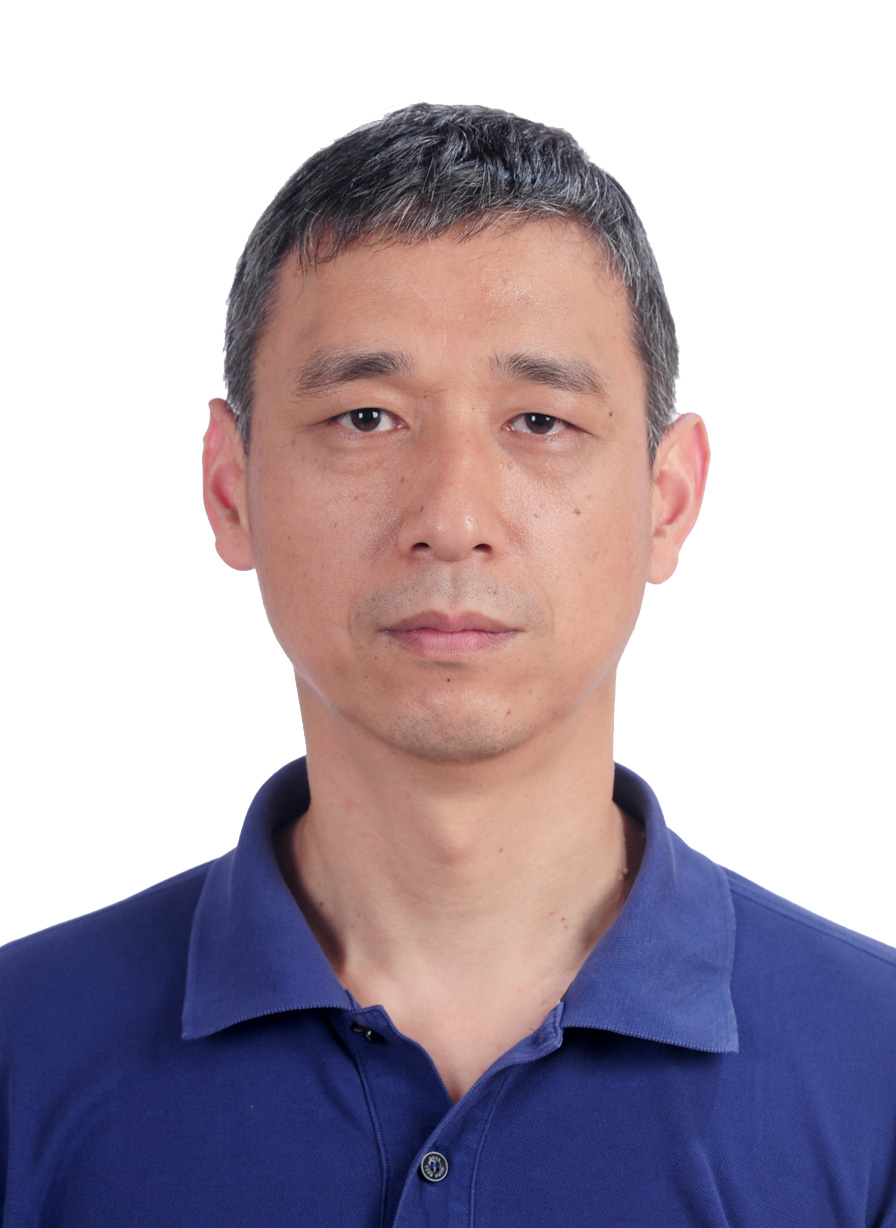 Yandong Zhao (赵延东)合作论文数School of Social Research, Renmin University of China4
 Tsjalling Swierstra合作论文数Department of Philosophy, Maastricht University4
 Sachin Chaturvedi合作论文数Research and Information System for Developing Countries;Macao University of Science and Technology;Research and Information System for Developing Countries, Macao University of Science and Technology4Miltos Ladikas合作论文数4Lene Koch合作论文数4Koen Beumer合作论文数3Huib de Vriend合作论文数3van Rijswoud Erwin合作论文数3Nelis Annemiek合作论文数3Marianne Boenink合作论文数Faculty of Behavioural Sciences, University of Twente3
 Lucien Hanssen合作论文数Foundation for Science and Technology in The Netherlands3m schuijff合作论文数2keulen van i合作论文数2Afke Wieke Betten合作论文数2
 Andre Krom合作论文数2Bitsch Lise合作论文数The Rathenau Institute, University of Twente2
 F. Kupper合作论文数2
 Jac. Swart合作论文数2F.W.A. Brom合作论文数1Ira van Keulen合作论文数1Tomáš Michalek合作论文数1G. N. Cantor合作论文数1Arnold Sauter合作论文数1Edgaras Leichteris合作论文数1Leo Hennen合作论文数1Hans Harbers合作论文数1Marcus Popkema合作论文数1J. Gerard Loeber合作论文数1Marianne Baarda合作论文数1wenxia zhang合作论文数1Emily ter Steeg合作论文数1
 Piret Kukk合作论文数1M. J. S. Hodge合作论文数1
 Luuk C M Van Dijk合作论文数1
 Stefanie B. Seitz合作论文数1Rosanne Edelenbosch合作论文数1
 Phillis Lakeman合作论文数1
 Julia Hahn合作论文数Faculty of Biology, Bielefeld University1P. Lindhout合作论文数1
 Zoe Robaey合作论文数Rathenau Instituut1




