Data lakes, increasingly adopted for their ability to store and analyze diverse types of data, commonly use columnar storage formats like Parquet and ORC for handling relational tables. However, these traditional setups fall short when it comes to efficiently managing graph data, particularly those conforming to the Labeled Property Graph (LPG) model. To address this gap, this paper introduces GraphAr, a specialized storage scheme designed to enhance existing data lakes for efficient graph data management. Leveraging the strengths of Parquet, GraphAr captures LPG semantics precisely and facilitates graph-specific operations such as neighbor retrieval and label filtering. Through innovative data organization, encoding, and decoding techniques, GraphAr dramatically improves performance. Our evaluations reveal that GraphAr outperforms conventional Parquet and Acero-based methods, achieving an average speedup of 4452x for neighbor retrieval, 14.8x for label filtering, and 29.5x for end-to-end workloads. These findings highlight GraphAr's potential to extend the utility of data lakes by enabling efficient graph data management.
Model markets (e.g., Hugging Face) feature a wide variety of models with unique characteristics and varying levels of popularity. Serving sporadic and unpredictable requests in concurrent inference workloads with dedicated GPU instances results in substantial resource waste. While existing multi-model serving solutions use GPU pooling and serverless computing to improve resource efficiency, their effectiveness is limited to supporting at most two or three models per GPU, which is inadequate for fully utilizing GPU resources. We propose Aegaeon, a multi-model serving system that performs model auto-scaling at the token granularity to achieve effective GPU pooling. Aegaeon schedules multi-model requests and makes auto-scaling decisions on a per-token basis to maximize service quality. It reduces autoscaling overhead by 97% through component reuse, explicit memory management, and fine-grained KV cache synchronization. Experiments show that Aegaeon sustains 2-2.5x higher request arrival rates or 1.5-9x more goodput compared to existing solutions. Aegaeon has been beta deployed in our model marketplace and currently serves tens of models. Deployment results show that Aegaeon reduces the number of GPUs required for serving these models from 1,192 to 213, highlighting an 82% GPU resource saving.
Graph computing has become increasingly crucial in processing large-scale graph data, with numerous systems developed for this purpose. Two years ago, we introduced GraphScope as a system addressing a wide array of graph computing needs, including graph traversal, analytics, and learning in one system. Since its inception, GraphScope has achieved significant technological advancements and gained widespread adoption across various industries. However, one key lesson from this journey has been understanding the limitations of a "one-size-fits-all" approach, especially when dealing with the diversity of programming interfaces, applications, and data storage formats in graph computing. In response to these challenges, we present GraphScope Flex, the next iteration of GraphScope. GraphScope Flex is designed to be both resource-efficient and cost-effective, while also providing flexibility and user-friendliness through its LEGO-like modularity. This paper explores the architectural innovations and fundamental design principles of GraphScope Flex, all of which are direct outcomes of the lessons learned during our ongoing development process. We validate the adaptability and efficiency of GraphScope Flex with extensive evaluations on synthetic and real-world datasets. The results show that GraphScope Flex achieves 2.4X throughput and up to 55.7X speedup over other systems on the LDBC Social Network and Graphalytics benchmarks, respectively. Furthermore, GraphScope Flex accomplishes up to a 2,400X performance gain in real-world applications, demonstrating its proficiency across a wide range of graph computing scenarios with increased effectiveness.
Data lakes, increasingly adopted for their ability to store and analyze diverse types of data, commonly use columnar storage formats like Parquet and ORC for handling relational tables. However, these traditional setups fall short when it comes to efficiently managing graph data, particularly those conforming to the Labeled Property Graph (LPG) model. To address this gap, this paper introduces GraphAr, a specialized storage scheme designed to enhance existing data lakes for efficient graph data management. Leveraging the strengths of Parquet, GraphAr captures LPG semantics precisely and facilitates graph-specific operations such as neighbor retrieval and label filtering. Through innovative data organization, encoding, and decoding techniques, GraphAr dramatically improves performance. Our evaluations reveal that GraphAr outperforms conventional Parquet and Acero-based methods, achieving an average speedup of $3283\times$ for neighbor retrieval, $6.0\times$ for label filtering, and $29.5\times$ for end-to-end workloads. These findings highlight GraphAr's potential to extend the utility of data lakes by enabling efficient graph data management.
Modern data analytics and AI jobs become increasingly complex and involve multiple tasks performed on specialized systems. Sharing of intermediate data between different systems is often a significant bottleneck in such jobs. When the intermediate data is large, it is mostly exchanged through files in standard formats (e.g., CSV and ORC), causing high I/O and (de)serialization overheads. To solve these problems, we develop Vineyard, a high-performance, extensible, and cloud-native object store, trying to provide an intuitive experience for users to share data across systems in complex real-life workflows. Since different systems usually work on data structures (e.g., dataframes, graphs, hashmaps) with similar interfaces, and their computation logic is often loosely-coupled with how such interfaces are implemented over specific memory layouts, it enables Vineyard to conduct data sharing efficiently at a high level via memory mapping and method sharing. Vineyard provides an IDL named VCDL to facilitate users to register their own intermediate data types into Vineyard such that objects of the registered types can then be efficiently shared across systems in a polyglot workflow. As a cloud-native system, Vineyard is designed to work closely with Kubernetes, as well as achieve fault-tolerance and high performance in production environments. Evaluations on real-life datasets and data analytics jobs show that the above optimizations of Vineyard can significantly improve the end-to-end performance of data analytics jobs, by reducing their data-sharing time up to 68.4x.
Finding a set of co-clusters in a bipartite network is a fundamental and important problem. In this paper, we present the Attributed Bipartite Co-clustering (ABC) problem which unifies two main concepts: (i) bipartite modularity optimization, and (ii) attribute cohesiveness. To the best of our knowledge, this is the first work to find co-clusters while considering the attribute cohesiveness. We prove that ABC is NP-hard and is not in APX, unless P=NP. We propose three algorithms: (1) a top-down algorithm; (2) a bottom-up algorithm; (3) a group matching algorithm. Extensive experimental results on real-world attributed bipartite networks demonstrate the efficiency and effectiveness of our algorithms.
GraphScope is a system and a set of language extensions that enable a new programming interface for large-scale distributed graph computing. It generalizes previous graph processing frameworks (e.g., Pregel, GraphX) and distributed graph databases (e.g., Janus-Graph, Neptune) in two important ways: by exposing a unified programming interface to a wide variety of graph computations such as graph traversal, pattern matching, iterative algorithms and graph neural networks within a high-level programming language; and by supporting the seamless integration of a highly optimized graph engine in a general purpose data-parallel computing system. A GraphScope program is a sequential program composed of declarative data-parallel operators, and can be written using standard Python development tools. The system automatically handles the parallelization and distributed execution of programs on a cluster of machines. It outperforms current state-of-the-art systems by enabling a separate optimization (or family of optimizations) for each graph operation in one carefully designed coherent framework. We describe the design and implementation of GraphScope and evaluate system performance using several real-world applications.
 Wenyuan Yu合作论文数Alibaba Group7
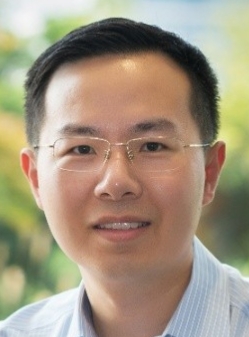 Jingren Zhou合作论文数Alibaba Group6
 Xue Li合作论文数5
 Jingbo Xu (徐镜波)合作论文数4Weibin Zeng合作论文数3Lei Wang合作论文数Alibaba Group3Tao He合作论文数3
 Zhibin Wang (王智彬)合作论文数Software Institute, Nanjing University;School of Intelligent Software and Engineering, Nanjing University2Ke Meng合作论文数2
 Longbin Lai合作论文数Univ New South Wales, Sydney, NSW, Australia2Lexiao Liu合作论文数1Neng Li合作论文数1Dongze Li合作论文数1Ye Cao合作论文数1Shuxian Hu合作论文数1Yuxing Xiang合作论文数1Yufan Yang合作论文数1Kun Qian合作论文数1
 Bingqing Lyu合作论文数1Xiaoli Zhou合作论文数1
 Qiang Yin (尹强)合作论文数School of Computer Science, Shanghai Jiao Tong University1Yong Li合作论文数1Li Su合作论文数1
 Youyang Yao合作论文数Shanghai Jiao Tong Univ, Inst Parallel & Distributed Syst, Shanghai, Peoples R China1
 Sijie Shen合作论文数Shanghai Jiao Tong Univ, Inst Parallel & Distributed Syst, Shanghai, Peoples R China1
 Junghoon Kim合作论文数Nanyang Technological University, Singapore, Singapore1
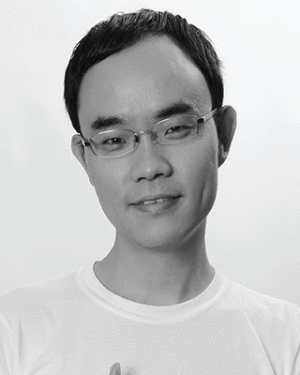 Sanhong Li合作论文数Alibaba Group, Hangzhou, China1
 Rong Zhu (朱鎔)合作论文数Institute for Intelligent Computing, Alibaba Group1Luo Xiaojian合作论文数1
 Xin Jin (金鑫)合作论文数School of Computer Science, Peking University1
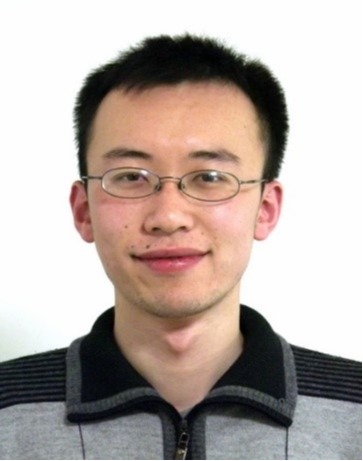 Chao Tian (田超)合作论文数School of Computer Science and Engineering, Beihang University1
 Zhao Li (李朝)合作论文数Zhejiang Lab;Hangzhou Yugu Technology Co.,Ltd1
 Chun Yan Miao合作论文数College of Computing & Data Science, Nanyang Technological University;School of Computer Science and Engineering, Nanyang Technological University1
 Xuanzhe Liu (刘譞哲)合作论文数Institute of Software, School of Computer Science, Peking University;Institute for Artificial Intelligence, Peking University1
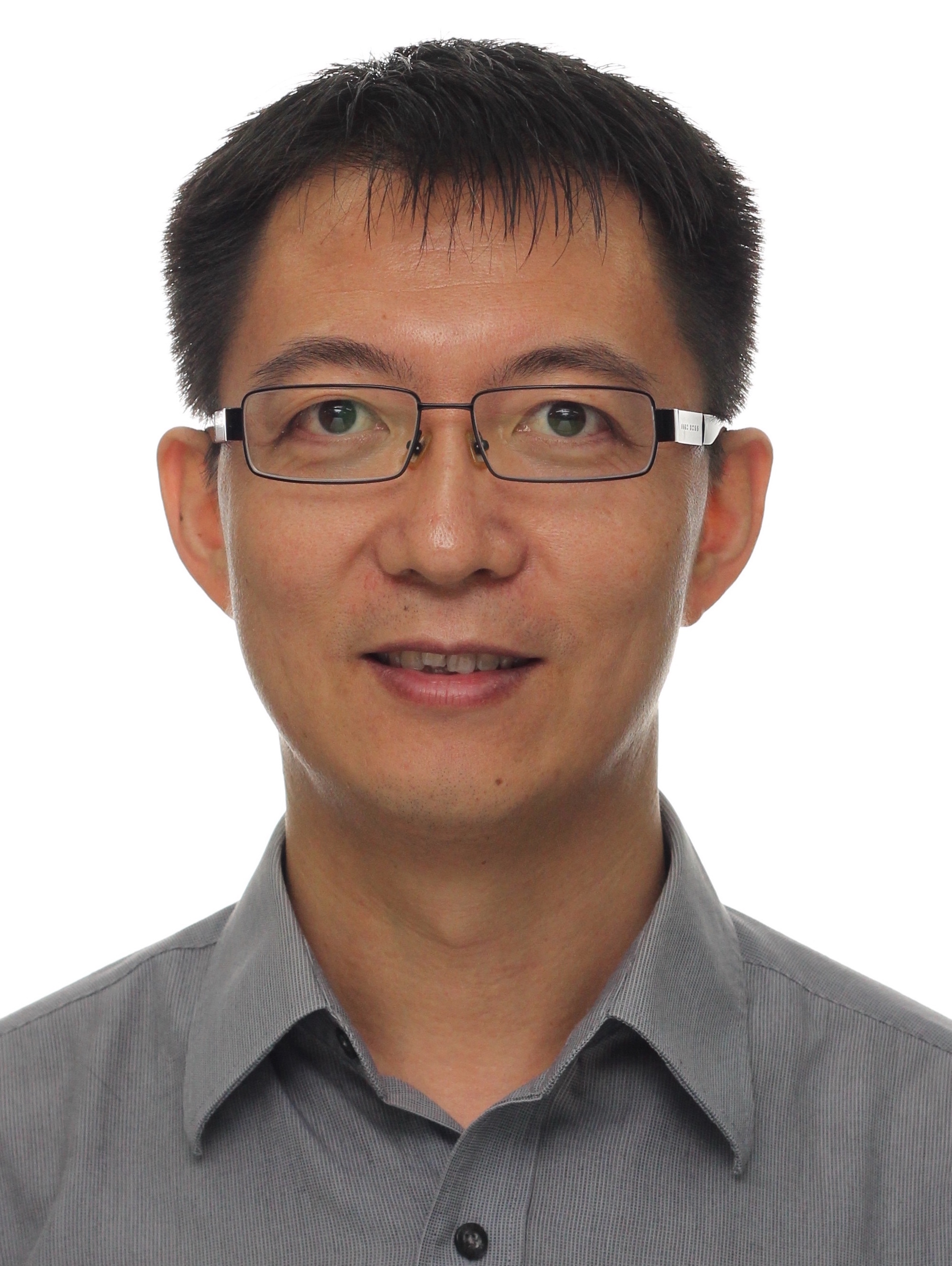 Gao Cong (丛高)合作论文数Division of Data Science, College of Computing & Data Science, Nanyang Technological University1
 Wenfei Fan (樊文飞)合作论文数Laboratory for Foundations of Computer Science, School of Informatics, The University of Edinburgh1
 Lei Zhang (张磊)合作论文数International Digital Economy Academy1
 Zhengping Qian合作论文数Alibaba Group1
 Ennan Zhai (翟恩南)合作论文数Alibaba Group1




