Various graph models have emerged to meet diverse application needs, each with unique characteristics and specialties. Managing and analyzing graph data inevitably requires interactions across different models to serve upstream business requirements. Therefore, an Extract-Transform-Load (ETL) tool designed to bridge different graph models is desired. In this paper, we propose GETL, a generalized graph ETL framework capable of automatically identifying graph model schemas and performing seamless data conversion among RDF, RDF-star, labeled property graph, and the relational model. This is attributed to GETL's unified graph representation model, constructed as nested pairs, offering powerful capabilities in graph representation and model compatibility. Additionally, we develop a unified programming interface to support complex graph transformation tasks. It is built upon the Gremlin syntax and provides strong expressive capabilities. Finally, our evaluation demonstrates that GETL outperforms state-of-the-art solutions in terms of model conversion efficiency and data manipulation language (DML) intelligibility.
High-quality LLM request scheduling requires meeting two key objectives: ensuring the routed instance has KVCache to accelerate request execution, and ensuring that the workload is balanced across instances. Achieving both objectives is challenging because pursuing one may compromise the other. Current approaches use various combinators (e.g., linear combinations) to compute a scheduling score that combines indicators for the two objectives. These approaches are complex: they either require significant workload-specific hyperparameter tuning or model-hardware-aware simulator development, yet could still lead to suboptimal performance. In this paper, we show that using a simple multiplication of two carefully chosen indicators: one KVCache-aware (new prefill tokens if routed to an instance) and one load-balancing-aware (current batch size of the instance), as the scheduling score (LMETRIC) can achieve both objectives simultaneously without any hyperparameter tuning. The key idea is that the simply multiplied score considers both objectives in a manner similar to a linear combination, but the original hyperparameters cancel out during comparison, so no tuning is needed to find the best parameters. The two indicators are chosen based on our analysis of LLM characteristics. Our extensive experiments show that this simple approach can reduce TTFT by 92
LLM scheduling is critical to serving, yet it remains unclear how well existing designs fit agentic serving–with LLM requests issued by agents instead of humans. This shifts the workload in two ways: (1) agents act only on complete responses, making the cluster's tokens per second (TPS) the primary goal and relaxing–not eliminating–per-token latency requirements; and (2) requests share much of their KV$-reuse exceeds 80 This paper first contributes a systematic study of request scheduling for agents on two real-world traces. We find that to increase KV$ reuse, existing schedulers overly prioritize routing requests to instances caching their KV$, overloading a few while leaving the rest idle, capping TPS. We thus present two key insights: (1) load balance need not sacrifice all KV$ reuse, thanks to the global-tier KV$ store and (2) by utilizing the workload's intra-session locality, balancing a small fraction of requests–the first request in each agent session–suffices to balance the cluster without sacrificing most KV$ reuse on local instances. SMETRIC realizes these insights with balanced session-centric scheduling: it routes each session's first request purely for load balance and its follow-up requests in a cache-aware manner, preserving load balance and local reuse while keeping demand on the global tier low. Using the session turn information as the scheduling metric is deliberate: it is derived efficiently and accurately from the user inputs alone, so the scheduler stays clean and stateless. SMETRIC improves cluster TPS by 10-16
With the widespread adoption of Large Language Models (LLMs), serving LLM inference requests has become an increasingly important task, attracting active research advancements. Practical workloads play an essential role in this process: they are critical for motivating and benchmarking serving techniques and systems. However, the existing understanding of real-world LLM serving workloads is limited due to the lack of a comprehensive workload characterization. Prior analyses remain insufficient in scale and scope, thus failing to fully capture intricate workload characteristics. In this paper, we fill the gap with an in-depth characterization of LLM serving workloads collected from our worldwide cloud inference serving service, covering not only language models but also emerging multimodal and reasoning models, and unveiling important new findings in each case. Moreover, based on our findings, we propose ServeGen, a principled framework for generating realistic LLM serving workloads by composing them on a per-client basis. A practical use case in production validates that ServeGen avoids 50
Learned top-K search is a promising approach for serving vector queries with both high accuracy and performance. However, current models trained for a specific K value fail to generalize to real-world multi-K queries: they suffer from accuracy degradation (for larger Ks) and performance loss (for smaller Ks). Training the model to generalize on different Ks requires orders of magnitude more preprocessing time and is not suitable for serving vector queries in the wild. We present OMEGA, a K-generalizable learned top-K search method that simultaneously achieves high accuracy, high performance, and low preprocessing cost for multi-K vector queries. The key idea is that a base model properly trained on K=1 with our trajectory-based features can be used to accurately predict larger Ks with a dynamic refinement procedure and smaller Ks with minimal performance loss. To make our refinements efficient, we further leverage the statistical properties of top-K searches to reduce excessive model invocations. Extensive evaluations on multiple public and production datasets show that, under the same preprocessing budgets, OMEGA achieves 6-33
Graph neural networks (GNNs) have become a prevalent framework for graph tasks. Many recent studies have proposed the use of graph convolution methods over the numerous subgraphs of each graph, known as subgraph graph neural networks. Despite their impressive performance, subgraph GNNs face challenges of both storage and computational inefficiencies due to the vast number and large size of subgraphs. In response to this problem, this paper introduces Ego-Nets-Fit-All (ENFA), a model that uniformly takes the small ego nets as subgraphs, thereby providing greater storage and computational efficiency, while at the same time guarantees identical outputs to the original subgraph GNNs. Experiments reveal that ENFA can reduce storage space by 29.0
We present Wan-Image, a unified visual generation system explicitly engineered to paradigm-shift image generation models from casual synthesizers into professional-grade productivity tools. While contemporary diffusion models excel at aesthetic generation, they frequently encounter critical bottlenecks in rigorous design workflows that demand absolute controllability, complex typography rendering, and strict identity preservation. To address these challenges, Wan-Image features a natively unified multi-modal architecture by synergizing the cognitive capabilities of large language models with the high-fidelity pixel synthesis of diffusion transformers, which seamlessly translates highly nuanced user intents into precise visual outputs. It is fundamentally powered by large-scale multi-modal data scaling, a systematic fine-grained annotation engine, and curated reinforcement learning data to surpass basic instruction following and unlock expert-level professional capabilities. These include ultra-long complex text rendering, hyper-diverse portrait generation, palette-guided generation, multi-subject identity preservation, coherent sequential visual generation, precise multi-modal interactive editing, native alpha-channel generation, and high-efficiency 4K synthesis. Across diverse human evaluations, Wan-Image exceeds Seedream 5.0 Lite and GPT Image 1.5 in overall performance, reaching parity with Nano Banana Pro in challenging tasks. Ultimately, Wan-Image revolutionizes visual content creation across e-commerce, entertainment, education, and personal productivity, redefining the boundaries of professional visual synthesis.
Modern graph applications require low-latency query processing, but the increasing scale of graph data forces the use of out-of-core processing. Conventional cache designs perform poorly in this setting, causing severe throughput degradation and low SSD utilization. Our analysis of the LDBC SNB benchmark traces these issues to two root causes: the inefficient handling of warm data and the underutilization of I/O parallelism inherent in graph traversals. This paper presents GoCache, a high-performance userspace cache that accelerates out-of-core graph queries through two key innovations: (1) dSIEVE, a two-layer eviction policy that protects warm data from premature eviction, significantly reducing miss rates; and (2) an intelligent I/O subsystem that exploits inherent parallelism in graph traversals by injecting batched I/O operations into query execution plans, dramatically improving SSD bandwidth utilization and reducing I/O latency. Implemented in 3,900 lines of C++ and integrated with GraphScope, GoCache achieves 37-80% higher throughput than MMAP and 89-118% higher than TriCache, effectively alleviating the I/O bottleneck in large-scale graph processing. We hope the results demonstrates its effectiveness as a deployable, high-performance caching solution for large-scale graph query workloads. We plan to open-source the system upon acceptance.
Business Intelligence (BI) analysis is evolving towards Exploratory BI, an iterative, multi-round exploration paradigm where analysts progressively refine their understanding. However, traditional BI systems impose critical limits for Exploratory BI: heavy reliance on expert knowledge, high computational costs, static schemas, and lack of reusability. We present ExBI, a novel system that introduces the hypergraph data model with operators, including Source, Join, and View, to enable dynamic schema evolution and materialized view reuse. Using sampling-based algorithms with provable estimation guarantees, ExBI addresses the computational bottlenecks, while maintaining analytical accuracy. Experiments on LDBC datasets demonstrate that ExBI achieves significant speedups over existing systems: on average 16.21x (up to 146.25x) compared to Neo4j and 46.67x (up to 230.53x) compared to MySQL, while maintaining high accuracy with an average error rate of only 0.27
Serving large language models (LLMs) is important for cloud providers, and caching intermediate results (KV$) after processing each request substantially improves serving throughput and latency. However, there is limited understanding of how LLM serving benefits from KV$ caching, where system design decisions like cache eviction policies are highly workload-dependent. In this paper, we present the first systematic characterization of the KV$ workload patterns from one of the leading LLM service providers. We draw observations that were not covered by previous studies focusing on synthetic workloads, including: KV$ reuses are skewed across requests, where reuses between single-turn requests are equally important as multi-turn requests; the reuse time and probability are diverse considering all requests, but for a specific request category, the pattern tends to be predictable; and the overall cache size required for an ideal cache hit ratio is moderate. Based on the characterization, we further propose a workload-aware cache eviction policy that improves the serving performance under real-world traces, especially with limited cache capacity.
Complex Graph Patterns (CGPs), which combine pattern matching with relational operations, are widely used in real-world applications. Existing systems rely on monolithic architectures for CGPs, which restrict their ability to integrate multiple query languages and lack certain advanced optimization techniques. Therefore, to address these issues, we introduce GOpt, a modular graph-native query optimization framework with the following features: (1) support for queries in multiple query languages, (2) decoupling execution from specific graph systems, and (3) integration of advanced optimization techniques. Specifically, GOpt offers a high-level interface, GraphIrBuilder, for converting queries from various graph query languages into a unified intermediate representation (GIR), thereby streamlining the optimization process. It also provides a low-level interface, PhysicalSpec, enabling backends to register backend-specific physical operators and cost models. Moreover, GOpt employs a graph-native optimizer that encompasses extensive heuristic rules, an automatic type inference approach, and cost-based optimization techniques tailored for CGPs. Comprehensive experiments show that integrating GOpt significantly boosts performance, with Neo4j achieving an average speedup of 9.2 times (up to 48.6 times), and GraphsScope achieving an average speedup of 33.4 times (up to 78.7 times), on real-world datasets.
This report presents Wan, a comprehensive and open suite of video foundation models designed to push the boundaries of video generation. Built upon the mainstream diffusion transformer paradigm, Wan achieves significant advancements in generative capabilities through a series of innovations, including our novel VAE, scalable pre-training strategies, large-scale data curation, and automated evaluation metrics. These contributions collectively enhance the model's performance and versatility. Specifically, Wan is characterized by four key features: Leading Performance: The 14B model of Wan, trained on a vast dataset comprising billions of images and videos, demonstrates the scaling laws of video generation with respect to both data and model size. It consistently outperforms the existing open-source models as well as state-of-the-art commercial solutions across multiple internal and external benchmarks, demonstrating a clear and significant performance superiority. Comprehensiveness: Wan offers two capable models, i.e., 1.3B and 14B parameters, for efficiency and effectiveness respectively. It also covers multiple downstream applications, including image-to-video, instruction-guided video editing, and personal video generation, encompassing up to eight tasks. Consumer-Grade Efficiency: The 1.3B model demonstrates exceptional resource efficiency, requiring only 8.19 GB VRAM, making it compatible with a wide range of consumer-grade GPUs. Openness: We open-source the entire series of Wan, including source code and all models, with the goal of fostering the growth of the video generation community. This openness seeks to significantly expand the creative possibilities of video production in the industry and provide academia with high-quality video foundation models. All the code and models are available at https://github.com/Wan-Video/Wan2.1.
An efficient data structure is fundamental to meeting the growing demands in dynamic graph processing. However, the dual requirements for graph computation efficiency (with contiguous structures) and graph update efficiency (with linked list-like structures) present a conflict in the design principles of graph structures. After experimental studies of state-of-the-art dynamic graph structures, we observe that the overhead of cache misses accounts for a major portion of the graph computation time. This paper presents GastCoCo, a system with graph storage and coroutine-based prefetch co-design. By employing software prefetching via stackless coroutines and designing a prefetch-friendly data structure CBList, GastCoCo significantly alleviates the performance degradation caused by cache misses. Our results show that GastCoCo outperforms state-of-the-art graph storage systems by 1.3×- 180×in graph updates and 1.4×- 41.1×in graph computation.
Distributed processing of large-scale graph data has many practical applications and has been widely studied. In recent years, a lot of distributed graph processing frameworks and algorithms have been proposed. While many efforts have been devoted to analyzing these, with most analyzing them based on programming models, less research focuses on understanding their challenges in distributed environments. Applying graph tasks to distributed environments is not easy, often facing numerous challenges through our analysis, including parallelism, load balancing, communication overhead, and bandwidth. In this paper, we provide an extensive overview of the current state-of-the-art in this field by outlining the challenges and solutions of distributed graph algorithms. We first conduct a systematic analysis of the inherent challenges in distributed graph processing, followed by presenting an overview of existing general solutions. Subsequently, we survey the challenges highlighted in recent distributed graph processing papers and the strategies adopted to address them. Finally, we discuss the current research trends and identify potential future opportunities.
Data lakes, increasingly adopted for their ability to store and analyze diverse types of data, commonly use columnar storage formats like Parquet and ORC for handling relational tables. However, these traditional setups fall short when it comes to efficiently managing graph data, particularly those conforming to the Labeled Property Graph (LPG) model. To address this gap, this paper introduces GraphAr, a specialized storage scheme designed to enhance existing data lakes for efficient graph data management. Leveraging the strengths of Parquet, GraphAr captures LPG semantics precisely and facilitates graph-specific operations such as neighbor retrieval and label filtering. Through innovative data organization, encoding, and decoding techniques, GraphAr dramatically improves performance. Our evaluations reveal that GraphAr outperforms conventional Parquet and Acero-based methods, achieving an average speedup of 4452x for neighbor retrieval, 14.8x for label filtering, and 29.5x for end-to-end workloads. These findings highlight GraphAr's potential to extend the utility of data lakes by enabling efficient graph data management.
Efficient video generation models are increasingly vital for multimedia synthetic content generation. Leveraging the Transformer architecture and the diffusion process, video DiT models have emerged as a dominant approach for high-quality video generation. However, their multi-step iterative denoising process incurs high computational cost and inference latency. Caching, a widely adopted optimization method in DiT models, leverages the redundancy in the diffusion process to skip computations in different granularities (e.g., step, cfg, block). Nevertheless, existing caching methods are limited to single-granularity strategies, struggling to balance generation quality and inference speed in a flexible manner. In this work, we propose MixCache, a training-free caching-based framework for efficient video DiT inference. It first distinguishes the interference and boundary between different caching strategies, and then introduces a context-aware cache triggering strategy to determine when caching should be enabled, along with an adaptive hybrid cache decision strategy for dynamically selecting the optimal caching granularity. Extensive experiments on diverse models demonstrate that, MixCache can significantly accelerate video generation (e.g., 1.94× speedup on Wan 14B, 1.97× speedup on HunyuanVideo) while delivering both superior generation quality and inference efficiency compared to baseline methods.
This technical report extends the SIGMOD 2025 paper "A Modular Graph-Native Query Optimization Framework" by providing a comprehensive exposition of GOpt's advanced technical mechanisms, implementation strategies, and extended evaluations. While the original paper introduced GOpt's unified intermediate representation (GIR) and demonstrated its performance benefits, this report delves into the framework's implementation depth: (1) the full specification of GOpt's optimization rules; (2) a systematic treatment of semantic variations (e.g., homomorphism vs. edge-distinct matching) across query languages and their implications for optimization; (3) the design of GOpt's Physical integration interface, enabling seamless integration with transactional (Neo4j) and distributed (GraphScope) backends via engine-specific operator customization; and (4) a detailed analysis of plan transformations for LDBC benchmark queries.
Python stands as the preferred language for data science, thanks to its user-friendly syntax and a robust ecosystem that effortlessly accommodates a variety of data types and workloads, such as relational/tabular data, tensors, and graphs. While Python thrives in smaller data settings, it struggles to scale in distributed big data environments. MOKO is an IR-based execution framework designed to extend Python's reach into the distributed big data domain by generating code that can utilize existing systems such as Spark, Dask, Torch, and GRAPE. MOKO preserves Python's key features-interoperability, ease of use, and support for multi-model data types and workloads-while enabling efficient execution in a distributed setting. Our evaluation indicates that MOKO can accelerate Python applications by up to 11x across diverse systems, diminish data alignment overhead by 28x, and outperform hand-optimized solutions by 2.5x.
Large language models have shown exceptional capabilities in a wide range of tasks, such as text generation and video generation, among others. However, due to their massive parameter count, these models often require substantial storage space, imposing significant constraints on the machines deploying LLMs. To overcome this limitation, one research direction proposes to compress the models using integer replacements for floating-point numbers, in a process known as Quantization. Some recent studies suggest quantizing the key and value cache (KV Cache) of LLMs, and designing quantization techniques that treat the key and value matrices equivalently. This work delves deeper into the asymmetric structural roles of KV Cache, a phenomenon where the transformer's output loss is more sensitive to the quantization of key matrices. We conduct a systematic examination of the attention output error resulting from key and value quantization. The phenomenon inspires us to propose an asymmetric quantization strategy. Our approach allows for 1-bit quantization of the KV cache by implementing distinct configurations for key and value matrices. We carry out experiments across a variety of datasets, demonstrating that our proposed model allows for the quantization of up to 75 maintaining performance levels comparable to those of the models with floating parameters.
 Jingren Zhou合作论文数Alibaba Group46
 Wenfei Fan (樊文飞)合作论文数Laboratory for Foundations of Computer Science, School of Informatics, The University of Edinburgh21
 Longbin Lai合作论文数Univ New South Wales, Sydney, NSW, Australia15
 Xue Li合作论文数12
 Qian Tao (陶乾)合作论文数School of Artificial Intelligence, Beihang University12Lei Wang合作论文数Alibaba Group12
 Sijie Shen合作论文数Shanghai Jiao Tong Univ, Inst Parallel & Distributed Syst, Shanghai, Peoples R China11
 Jingbo Xu (徐镜波)合作论文数11
 Qiang Yin (尹强)合作论文数School of Computer Science, Shanghai Jiao Tong University10
 Nan Tang (汤南)合作论文数Data Intelligence and Analytics Lab, The Hong Kong University of Science and Technology (Guangzhou)10Li Su合作论文数9
 Rong Chen (陈榕)合作论文数Institute of Parallel and Distributed Systems, School of Software, Shanghai Jiao Tong University;Shanghai AI Laboratory9
 Shufeng Gong (巩树凤)合作论文数School of Computer Science and Engineering, Northeastern University8
 Yanfeng Zhang (张岩峰)合作论文数School of Computer Science and Engineering, Northeastern University8Luo Xiaojian合作论文数8
 Ge Yu (于戈)合作论文数College of Computer Science and Engineering, Northeastern University8Diwen Zhu合作论文数7Yong Li合作论文数7Tao He合作论文数7
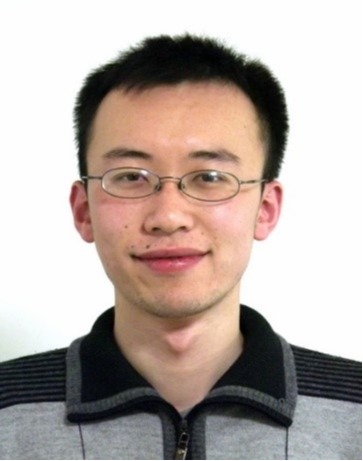 Chao Tian (田超)合作论文数School of Computer Science and Engineering, Beihang University7Yufan Yang合作论文数6
 Bingqing Lyu合作论文数6Xiaoli Zhou合作论文数6
 Shuai Ma (马帅)合作论文数The Institute of Advanced Computing Technology, School of Computer Science and Engineering, Beihang University;School of Artificial Intelligence, Nanchang University6
 Zhengping Qian合作论文数Alibaba Group6
 Haibo Chen (陈海波)合作论文数Institute of Parallel and Distributed Systems, School of Software, Shanghai Jiao Tong University5Song Yu合作论文数5Ke Meng合作论文数5
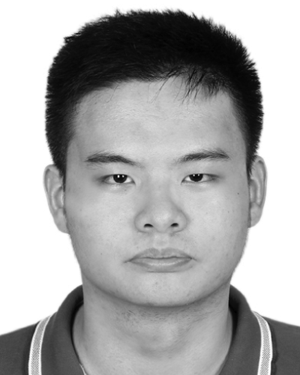 Yunkai Lou合作论文数Tsinghua University5
 Ruiqi Xu合作论文数5
 Wenjie Zhang合作论文数School of Computer Science and Engineering, The University of New South Wales5
 Wei Lin (林伟)合作论文数Alibaba Group5Jianzhong Li (李建中)合作论文数5Wenting Shen合作论文数4Zuocheng Shi合作论文数4
 Zhibin Wang (王智彬)合作论文数Software Institute, Nanjing University;School of Intelligent Software and Engineering, Nanjing University4
 Xingda Wei (魏星达)合作论文数Institute of Parallel And Distributed Systems, School of Software, Shanghai Jiao Tong University4
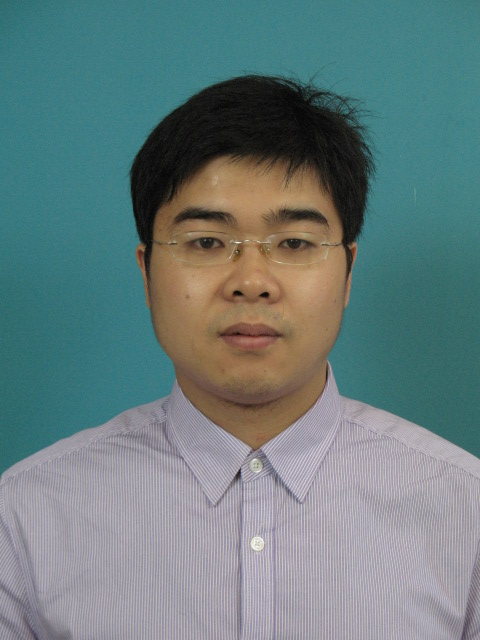 Zeke Wang (王则可)合作论文数College of Computer Science and Technology, Zhejiang University;Collaborative Innovation Center of Artificial Intelligence by MOE and Zhejiang Provincial Government, Zhejiang University4
 Fei Wu (吴飞)合作论文数College of Computer Science and Technology, Zhejiang University4
 Xuemin Lin (林学民)合作论文数Antai College of Economics & Management, Shanghai Jiaotong University4
 Floris Geerts合作论文数Department of Computer Science, University of Antwerp;Simons Institute for the Theory of Computing4Yu Shao合作论文数3Feng Yao合作论文数3Weibin Zeng合作论文数3Lingkai Meng合作论文数3
 Wenmeng Zhou (周文猛)合作论文数DAMO Academy3Jianbang Yang合作论文数3Kun Qian合作论文数3Dahai Tang合作论文数3




