In this paper, a hybrid image denoising method that is based on locally adaptive window-based maximum likelihood (LAWML) and NeighShrink. The LAWML is doubly stochastic process models which denoise an image by exploiting the dependency of local wavelet coefficients within each scale. The LAWML needs a global optimal neighboring window. The NeighShrink thresholding scheme uses the immediate neighboring coefficients based on block thresholding. It uses a suboptimal universal threshold and identical neighbouring window size in all wavelet subbands. The NeighShrink and LAWML always produce an over-smoothed image like the Weiner filter in which many of the detail coefficients are lost during threshold evaluation. This proposed method overcomes these disadvantages and, as a result, it provides significant improvement in visual quality i. e. Peak-to-Signal Noise Ratio (PSNR) of a noisy image.
We consider recovery of low-rank matrices from noisy data by hard thresholding of singular values, where singular values below a prescribed threshold $\lambda$ are set to 0. We study the asymptotic MSE in a framework where the matrix size is large compared to the rank of the matrix to be recovered, and the signal-to-noise ratio of the low-rank piece stays constant. The AMSE-optimal choice of hard threshold, in the case of n-by-n matrix in noise level \sigma, is simply $(4/\sqrt{3}) \sqrt{n}\sigma \approx 2.309 \sqrt{n}\sigma$ when $\sigma$ is known, or simply $2.858\cdot y_{med}$ when $\sigma$ is unknown, where $y_{med}$ is the median empirical singular value. For nonsquare $m$ by $n$ matrices with $m \neq n$, these thresholding coefficients are replaced with different provided constants. In our asymptotic framework, this thresholding rule adapts to unknown rank and to unknown noise level in an optimal manner: it is always better than hard thresholding at any other value, no matter what the matrix is that we are trying to recover, and is always better than ideal Truncated SVD (TSVD), which truncates at the true rank of the low-rank matrix we are trying to recover. Hard thresholding at the recommended value to recover an n-by-n matrix of rank r guarantees an AMSE at most $3nr\sigma^2$. In comparison, the guarantee provided by TSVD is $5nr\sigma^2$, the guarantee provided by optimally tuned singular value soft thresholding is $6nr\sigma^2$, and the best guarantee achievable by any shrinkage of the data singular values is $2nr\sigma^2$. Empirical evidence shows that these AMSE properties of the $4/\sqrt{3}$ thresholding rule remain valid even for relatively small n, and that performance improvement over TSVD and other shrinkage rules is substantial, turning it into the practical hard threshold of choice.
Image denoising is a applicable issue found in diverse image processing and computer vision problems. There are various existing methods to denoise image. The important property of a good image denoising model is that it should completely remove noise as far as possible as well as preserve edges. This paper presents a review of some major work in area of image denoising. There have been numerous published algorithms and each approach has its assumptions, advantages and limitations. After brief introduction various methods have been explained for removing noise.
We conducted an extensive computational experiment, lasting multiple CPU-years, to optimally select parameters for important classes of algorithms for finding sparse solutions of underdetermined systems of linear equations. We make the optimally tuned implementations freely available at sparselab.stanford.edu; they can be used 'out of the box' with no user input: it is not necessary to select thresholds or know the likely degree of sparsity. Our class of algorithms includes iterative hard and soft thresholding with or without relaxation, as well as CoSaMP, Subspace Pursuit and some natural extensions. As a result, our optimally tuned algorithms dominate such proposals. Our notion of optimality is defined in terms of phase transitions, i.e. we maximize the number of nonzeros at which the algorithm can successfully operate. We show that the phase transition is a well-defined quantity with our suite of random underdetermined linear systems. Our tuning gives the highest transition possible within each given class of algorithms. We verify by extensive computation the robustness of our recommendations to the amplitude distribution of the nonzero coefficients as well as the matrix ensemble defining the underdetermined system. Several specific findings are established. (a) For all algorithms the worst amplitude distribution for nonzeros is generally the constantamplitude random-sign distribution; where all nonzeros are the same size. (b) Various random matrix ensembles give the same phase transitions; random partial isometries give different transitions and require different tuning; (c) Optimally tuned Subspace Pursuit dominates optimally tuned CoSaMP, particularly so when the system is almost square. (d) For randomly decimated partial Fourier transform sampling, our recommended Iterative Soft Thresholding gives extremely good performance, making more complex algorithms like CoSaMP and Subspace Pursuit relatively pointless.
Morphological component analysis of signals and images has far-reaching applications in science and technology, but some consider it problematic and even intractable. Reproducible research is essential to give MCA a firm scientific foundation. Researchers developed MCALab to demonstrate key MCA concepts and make them available to interested researchers.
A non-sub sampled Contour let coefficient compressive sensing based on infrared and visible image fusion method was proposed to solve the problem that the infrared light sensor and the visible light sensor was failed to get clear images simultaneously in this study. Firstly, the multiscale and multi-directional image decomposition for the infrared and visible image was preformed by using the non-sub sampled Contourlet transformation and then the non-subsampled Contourlet coefficients of them were obtained. Secondly, the Low-frequency coefficients of the infrared and visible images was fused by the weighted average fusion method and the band-pass sub-band coefficients was fused by the pseudo-random Fourier matrix observations weights fusion method; Thirdly, the coefficient reconstruction for the fused band-pass sub-band coefficients was carried out. Finally, the image was reconstructed by the inverse …
We present in this paper a new method for con trast enhancement based on the curvelet transform. The curvelet transform represents edges better than wavelets, and is therefore well-suited for multiscale edge enhancement. We compare this approach with enhancement based on the wavelet transform, and the Multiscale Retinex. In a range of examples, we use edge de tection and segmentation, among other processing applications, to provide for quantitative comparative evaluation. Our find ings are that curvelet based enhancement out-performs other enhancement methods on noisy images, but on noiseless or near noiseless images curvelet based enhancement is not remarkably better than wavelet based enhancement. KeywordsWavelets, Ridgelets, CUl'velets, Contrast Enhance ment.
We present a nonlinear fully adaptive wavelet algorithm which can recover a blurred image (n?n) observed in white noise with O(n 2 (logn) 2 ) steps. Our method exploits both the natural representation of the convolution operator in the Fourier domain and the typical characterisation of Besov classes in the wavelet domain. A particular feature of our method includes "cycle-spinning" band-limited wavelet approximations over all circulant shifts. The speed and the accuracy of the algorithm is illustrated with numerical examples of image deblurring. All figures presented in this paper are reproducible using the WaveD software package.
Deconvolution of a noisy signal in a periodic band-limited wavelet basis exhibits visual artifacts in the neighbourhood of discontinuities. This phenomenon is similar to that appearing in denoising with compactly-supported wavelet transforms and can be reduced by "cycle spinning" as in Coifman and Donoho [3]. In this paper we present an algorithm which "cycle-spins" a periodic band-limited wavelet estimator over all circulant shifts in O(n( log (n))2) steps. Our approach is based on a mathematical idea and takes full advantage of the Fast Fourier Transform. A particular feature of our algorithm is to bounce from the Fourier domain (where deconvolution is performed) to the wavelet domain (where denoising is performed). For both smooth and boxcar convolutions observed in white noise, we illustrate the visual and numerical performances of our algorithm in an extensive simulation study of the [Formula: see text] estimator recently proposed by Johnstone, Kerkyacharian, Picard, and Raimondo [8]. All figures presented here are reproducible using the [Formula: see text] software package.
A macrotile estimation algorithm is introduced to estimate the covariance of locally stationary processes. A macrotile algorithm uses a penalized method to optimize the partition of the space in orthogonal subspaces, and the estimation is computed with a projection operator. It is implemented by searching for a best basis among a dictionary of orthogonal bases and by constructing an adaptive segmentation of this basis to estimate the covariance coefficients. The macrotile algorithm provides a consistent estimation of the covariance of locally stationary processes, using a dictionary of local cosine bases. This estimation is computed with a fast algorithm. Macrotile algorithms apply to other estimation problems such as the removal of additive noise in signals. This simpler problem is used as an intuitive guide to better understand the case of covariance estimation. Examples of removal of white noise from sounds illustrate the results.
Classical multiscale analysis based on wavelets has a number of successful applications, e.g. in data compression, fast algorithms, and noise removal. Wavelets, however, are adapted to point singularities, and many phenomena in several variables exhibit intermediate-dimensional singularities, such as edges, filaments, and sheets. This suggests that in higher dimensions, wavelets ought to be replaced in certain applications by multiscale analysis adapted to intermediate-dimensional singularities. My lecture described various initial attempts in this direction. In particular, I discussed two approaches to geometric multiscale analysis originally arising in the work of Harmonic Analysts Hart Smith and Peter Jones (and others): (a) a directional wavelet transform based on parabolic dilations; and (b) analysis via anistropic strips. Perhaps surprisingly, these tools have potential applications in data compression, inverse problems, noise removal, and signal detection; applied mathematicians, statisticians, and engineers are eagerly pursuing these leads.
The Information Theory Society is an organization, within the framework of the IEEE, of members with principal professional interests in information theory. All members of the IEEE are eligible for membership in the Society and will receive this TRANSACTIONS upon payment of the annual Society membership fee of $15.00. For information on joining, write to the IEEE at the address below. Member copies of Transactions/Journals are for personal use only.
In this paper we review some recent interactions between harmonic analysis and data compression. The story goes back of course to Shannon's R(D) theory in the case of Gaussian stationary processes, which says that transforming into a Fourier basis followed by block coding gives an optimal lossy compression technique; practical developments like transform-based image compression have been inspired by this result. In this paper we also discuss connections perhaps less familiar to the information theory community, growing out of the field of harmonic analysis. Recent harmonic analysis constructions, such as wavelet transforms and Gabor transforms, are essentially optimal transforms for transform coding in certain settings. Some of these transforms are under consideration for future compression standards. We discuss some of the lessons of harmonic analysis in this century. Typically, the problems and achievements of this field have involved goals that were not obviously related to practical data compression, and have used a language not immediately accessible to outsiders. Nevertheless, through an extensive generalization of what Shannon called the "sampling theorem", harmonic analysis has succeeded in developing new forms of functional representation which turn out to have significant data compression interpretations. We explain why harmonic analysis has interacted with data compression, and we describe some interesting recent ideas in the field that may affect data compression in the future.
Donoho and Johnstone (1994) proposed a method for reconstructing an unknown function f on [0,1] from noisy data d/sub i/=f(t/sub i/)+/spl sigma/z/sub i/, i=0, ..., n-1,t/sub i/=i/n, where the z/sub i/ are independent and identically distributed standard Gaussian random variables. The reconstruction f/spl circ/*/sub n/ is defined in the wavelet domain by translating all the empirical wavelet coefficients of d toward 0 by an amount /spl sigma//spl middot//spl radic/(2log (n)/n). The authors prove two results about this type of estimator. [Smooth]: with high probability f/spl circ/*/sub n/ is at least as smooth as f, in any of a wide variety of smoothness measures. [Adapt]: the estimator comes nearly as close in mean square to f as any measurable estimator can come, uniformly over balls in each of two broad scales of smoothness classes. These two properties are unprecedented in several ways. The present proof of these results develops new facts about abstract statistical inference and its connection with an optimal recovery model.< >
Adaptive signal representations in overcomplete libraries of waveforms have been very popular. One naturally expects that in searching through a large number of signal representations for noisy data, one is at risk of identifying apparent structure in the data which turns out to be spurious, noise-induced artifacts. We show how to use penalties based on the logarithm of library complexity to temper the search, preventing such spurious structure, and giving near-ideal behavior
If the measure of the support of a function f is small, its symmetric decreasing rearrangement f* is more nearly bandlimited to low frequencies than f, while their norms are equal. An immediate corollary is that the time-limited zero-order prolate spheroidal wavefunction is the extremal function for a new optimization problem involving time- and bandlimiting. The result has an application in exploration seismology.
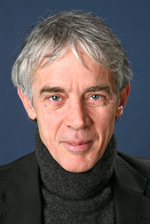 Martin Vetterli合作论文数School of Computer and Communication Sciences, Ecole Polytechnique Federale de Lausanne3
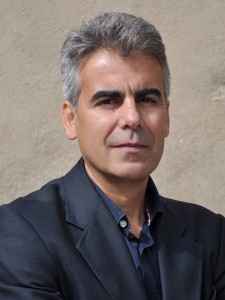 Jean-Luc Starck合作论文数CosmoStat laboratory, Institute of Research into The Fundamental Laws of The Universe, Departement D'Astrophysique, CEA-Saclay3
 Emmanuel Candès合作论文数Department of Statistics, Stanford University;Department of Mathematics, Stanford University3
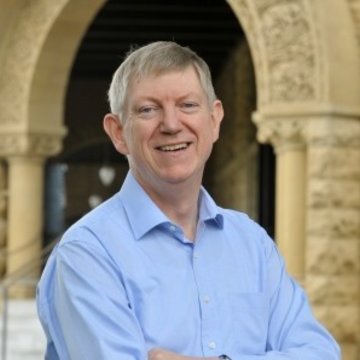 Iain M. Johnstone合作论文数Department of Statistics, School of Humanities and Sciences, Stanford University2
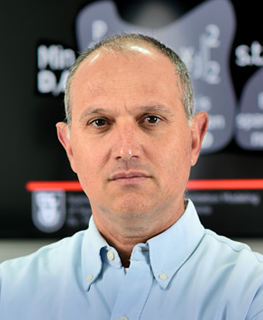 Michael Elad合作论文数Department of Computer Science, Technion2
 Ingrid Daubechies合作论文数Department of Mathematics, Trinity College of Arts & Sciences, Duke University;Department of Electrical and Computer Engineering, Pratt School of Engineering, Duke University2
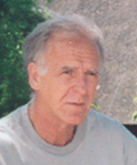 Ronald A. DeVore合作论文数Department of Mathematics, College of Arts and Sciences, University of South Carolina;Department of Mathematics, Texas A&M University2
 A Ephremides合作论文数1D Labate合作论文数1Shamai, S.合作论文数1Ja O'Sullivan合作论文数1WQ Lim合作论文数1Jk Wolf合作论文数1Pawan Patidar合作论文数1MB Wakin合作论文数1SJ Wright合作论文数1Poonamdeep Kaur合作论文数1Guo Baolong合作论文数1Manoj Gupta合作论文数1V. Wei合作论文数1I Csiszár合作论文数1
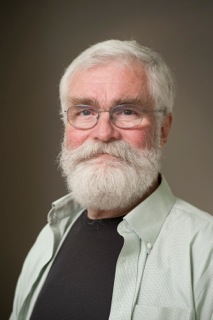 Robert M Gray合作论文数School of Engineering, Stanford University;Department of Electrical and Computer Engineering, Boston University1Q Zhang合作论文数1X Li合作论文数1T Wan合作论文数1Toby Berger合作论文数1
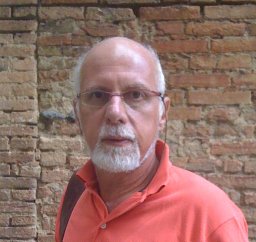 János Körner合作论文数Sapienza Univ Rome1
 Philip B. Stark合作论文数Department of Statistics, University of California, Berkeley1Santosh S. Venkatesh合作论文数Department of Electrical and Systems Engineering, School of Engineering and Applied Science, University of Pennsylvania1
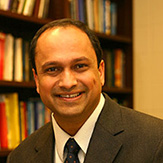 Sanjeev R. Kulkarni合作论文数Department of Electrical and Computer Engineering, School of Engineering and Applied Science, Princeton University;The Operations Research and Financial Engineering Department, Princeton University1
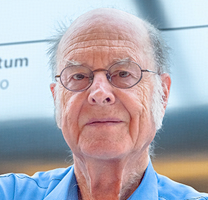 Charles H. Bennett合作论文数Thomas J. Watson Research Center, IBM Research1Xiaoming Wang合作论文数1
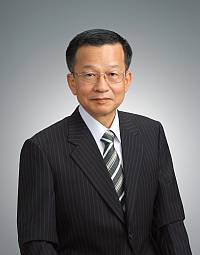 Hideki Imai合作论文数National Institute of Advanced Industrial Science and Technology1
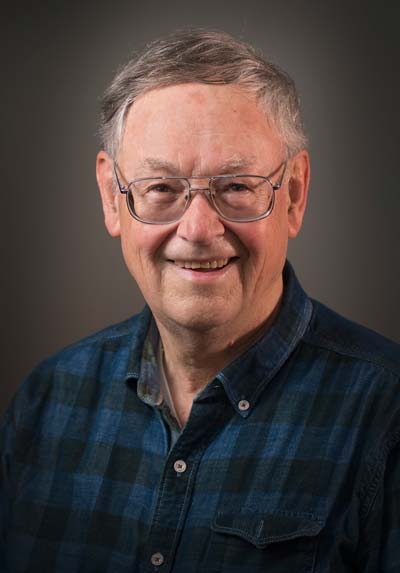 Daniel Costello合作论文数Department of Electrical Engineering, University of Notre Dame;Wireless Institute, University of Notre Dame1Aaron D. Wyner合作论文数1
 Gábor Lugosi合作论文数Barcelona Graduate School of Economics;Department of Economics and Business, Pompeu Fabra University;Institución Catalana de Investigación y Estudios Avanzados1Moshe Israeli合作论文数1
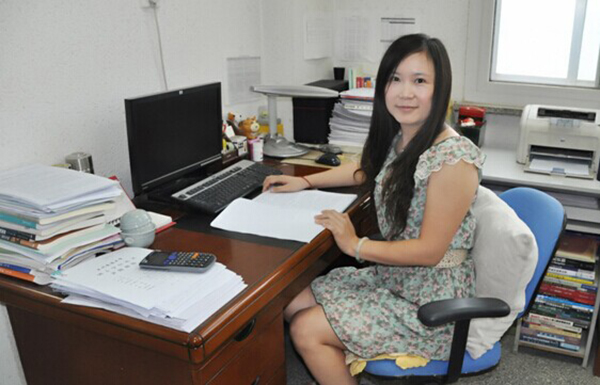 Yu Shen (沈瑜)合作论文数兰州交通大学电信学院1
 Jianwu Dang (党建武)合作论文数School of Electronic and Information Engineering, Lanzhou Jiaotong University;Gansu Provincial Engineering Research Center for Artificial Intelligence and Graphic and Image Processing1
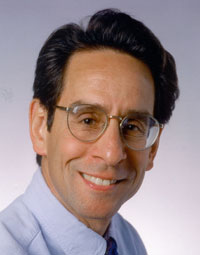 Paul H. Siegel合作论文数Department of Electrical and Computer Engineering, Jacobs School of Engineering, University of Calif1
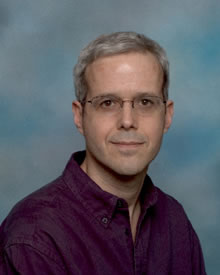 Alon Orlitsky合作论文数Department of Computer Science and Engineering, Jacobs School of Engineering, University of California, San Diego;Information Theory and Applications Center, University of California, San Diego1
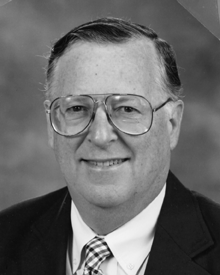 Donald L. Snyder合作论文数1
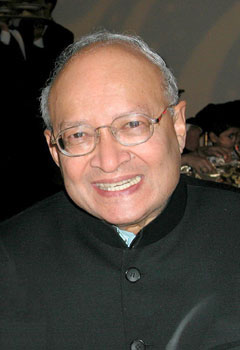 Thomas Kailath合作论文数Information Systems Laboratory, Department of Electrical Engineering, Stanford University1
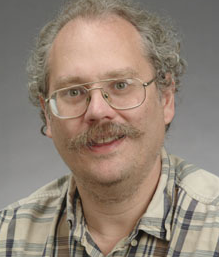 Peter Shor合作论文数Department of Mathematics, Massachusetts Institute of Technology1
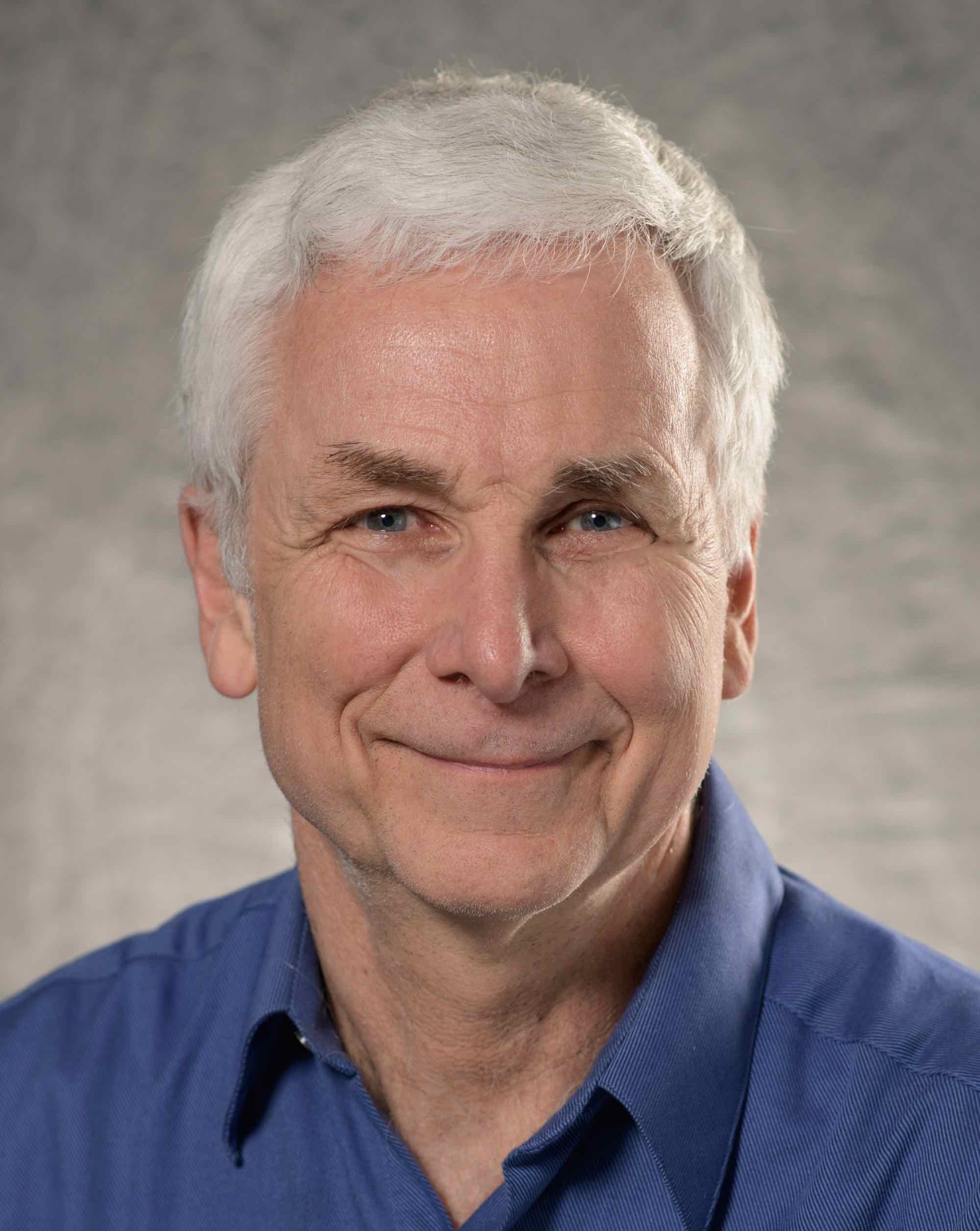 Bruce Hajek合作论文数Department of Electrical and Computer Engineering, Grainger College of Engineering, University of Illinois at Urbana-Champaign;Coordinated Science Laboratory, Grainger College of Engineering, University of Illinois at Urbana-Champaign1John G Proakis合作论文数1
 Harold Vincent Poor (文森特·珀尔)合作论文数Department of Electrical and Computer Engineering, School of Engineering and Applied Science, Princeton University;Center for Statistics and Machine Learning, Princeton University;High Meadows Environmental Institute, Princeton University1
 Jacob Ziv合作论文数Communications Division, Scientific Department, Israel Ministry of Defense;Faculty of Electrical Engineering, Technion-Israel Institute of Technology1
 Neri Merhav合作论文数Department of Electrical Engineering, The Andrew and Erna Viterbi Faculty of Electrical and Computer Engineering, Technion, Israel Institute of Technology1




