Goal. To estimate a possibility of correction laboratory abnormalities (increased level of cholesterol and/or triglycerides at blood of HIV-positive children) by switch the boosted PI on HIV integrase inhibitor (Raltegravir). Methods. The retrospective study was conducted in group of 58 HIV-positive children (less 18 yo). Inclusion criteria were increasing level of cholesterol in blood (more than 5,0 mmol/l) and/or the triglyceride (more than 2,3 mmol/l) ART with boosted PI. The ART regime was changed for all children (n=58). Boosted PI was replaced to integrase inhibitor (RAL). RAL formulation (chewable tablets, 25mg and 100mg) used accordingly weight. Time horizon of observation and laboratory control after boosted PI switch was 24 months. Results. Lab abnormalities in study group (n=58) after switch to RAL were changed: reliable decrease in level of cholesterol (p <0,01), triglycerides (p <0,001), viral load (p <0,001) and growth CD4 count (p <0,05). Conclusion. Boosted PI switch to integrase inhibitor is providing long-term and effective HIV management and improvement of lipid abnormalities among children.
AbstractChemInform is a weekly Abstracting Service, delivering concise information at a glance that was extracted from about 100 leading journals. To access a ChemInform Abstract of an article which was published elsewhere, please select a “Full Text” option. The original article is trackable via the “References” option.
AbstractChemInform is a weekly Abstracting Service, delivering concise information at a glance that was extracted from about 100 leading journals. To access a ChemInform Abstract of an article which was published elsewhere, please select a “Full Text” option. The original article is trackable via the “References” option.
Abstract With the aim to create macrocyclic phosphorus-containing heterocycles (new phosphorus crown-ethers) and corresponding polyesters the interaction between dihydric phenols and complete anides of phosphoric and phenylphosphonic acids was studied. It was shown that, according to reaction conditions and reagents ratio, the resulting products can have a linear structure, with oligo- (A) or polymexic (B) molecules, and a macrocyclic structure (C) alike : phospho(III)arylene crown-ethers obtained for example by the consecutive assembling of planned macrocyclic systems or by the direct interaction.
A new representative of phospho(scIII)crown ethers was obtained based on 4,4′-thiodiphenol and tetraethyldiamide of phenylphosphonous acid. Thiaphospho(III)crown ethers can be prepared by different methods depending on the ratio of the initial reactants and the reaction conditions. The structures of the compounds obtained were confirmed by spectroscopic data and X-ray structural analysis.
Phosphorylation of dihydric phenols with triamides of phosphorous acid was performed under different reaction conditions and using reactants taken in various ratios. The selectivity of the reaction depends on the presence of the solvent, its polarity, and, to a lesser degree, on the temperature.
Based on phenylphosphonous acid tetraethyldiamide and 2,2-di(p-oxyphenyl)propane diarylenecyclophenylphosphonite is synthesized. Its oxidation and sulfurization is investigated. It is shown that these reactions are stereospecific and lead to cis-isomers. The compounds obtained are the first representatives of of oligoarylenephosphocyclanes. The structure of these compounds is confirmed by an X-ray structure analysis.
 Yu. I. Blokhin合作论文数4E. E. Nifant'Ev合作论文数4N. R. Sokolinskaya合作论文数4N. Sizova合作论文数2U. Kuimova合作论文数2A. Pokrovskaya合作论文数2
 Alexander V Lotov合作论文数Dorodnicyn Computing Center, Russian Academy of Sciences2
 Aleksandra a Kuznetsova合作论文数M. V. Lomonosov, Moscow State University2Aleksei Kravchenko合作论文数2V. K. Bel'sky合作论文数1A. V. Samarina合作论文数1O. Degen合作论文数1Yurii Blokhin合作论文数1V. K. Bel'skii合作论文数1Vitaly K. Belsky合作论文数1Fm Galiaskarova合作论文数1Ol Chernykh合作论文数1R. D'Amico合作论文数1A. Yakovlev合作论文数1D. Dorey合作论文数1Williams Peter合作论文数1
 Cynthia Brinson合作论文数1
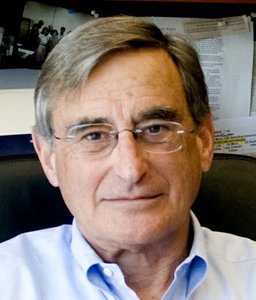 Douglas D. Richman合作论文数San Diego Center for AIDS Research;School of Medicine, University of California San Diego1
 Shiro Oka (岡志郎)合作论文数Department of Gastroenterology, Graduate School of Biomedical and Health Sciences, Hiroshima University;Department of Gastroenterology and Metabolism, Hiroshima University1
 Adam I Stash合作论文数Karpov Research Institute of Physical Chemistry1V.K. Belsky合作论文数1
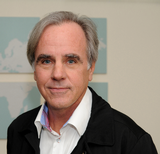 Robert L. Murphy合作论文数Feinberg School of Medicine, Northwestern University;McCormick School of Engineering, Northwestern University;Northwestern Memorial Hospital1
 Vladimir A. Bushenkov合作论文数1Marty St. Clair合作论文数1
 Juan González-García合作论文数Hospital Universitario La Paz1David A. Margolis合作论文数1Eduard E Nifantyev合作论文数1
 Chloe Orkin合作论文数Blizard Institute, Faculty of Medicine and Dentistry, Queen Mary University of London;Centre for Immunobiology, Queen Mary University of London;Barts Health NHS Trust1Sandy Griffith合作论文数1
 G. K. Kamenev合作论文数Dorodnicyn Computing Center, Russian Academy of Sciences1Patrick Philibert合作论文数1William Spreen合作论文数1




