Direct detection experiments aimed at uncovering the elusive nature of dark matter (DM) have made significant progress in probing ever lower cross-sections for DM-nucleon interactions. At the same time, an upper limit in the cross-section sensitivity region is present due to DM scattering in the Earth and atmosphere and as a result never reaching the detector. We investigate the impact of this effect for both spin-dependent and spin-independent interactions. In contrast to previous studies that assume a straight line path for DM scattering we employ a semi-analytic diffusion model that takes into account the impact of potentially large angle deviations prevalent for light DM masses. We find that for sufficiently low energy thresholds, this difference in modelling impacts the DM interaction cross-section sensitivity. This study evaluates the impact in the context of the QUEST-DMC experiment, which utilises surface-based detectors with superfluid Helium-3 bolometers to search for sub-GeV DM exploiting low energy threshold. At masses below 1 GeV/c^2 the deviation between the two frameworks becomes pronounced. The ceiling sensitivity limit for QUEST-DMC on spin-dependent DM-neutron cross-sections is ∼ 3 × 10^-24cm^2 using the diffusive framework and approximately doubles with the straight-line path DM scattering. Similarly, for spin-independent DM-nucleon cross-sections, the ceiling limit is ∼ 7.5 × 10^-27cm^2 under the diffusive framework and also increases about a factor of two with the straight-line path approximation, within the mass range of 0.025–5 GeV/c^2.
The symmetry-breaking first-order phase transition between superfluid phases $^3$He-A and $^3$He-B can be triggered extrinsically by ionising radiation or heterogeneous nucleation arising from the details of the sample cell construction. However, the role of potential homogeneous intrinsic nucleation mechanisms remains elusive. Discovering and resolving the intrinsic processes may have cosmological consequences, since an analogous first-order phase transition, and the production of gravitational waves, has been predicted for the very early stages of the expanding Universe in many extensions of the Standard Model of particle physics. Here we introduce a new approach for probing the phase transition in superfluid $^3$He. The setup consists of a novel stepped-height nanofluidic sample container with close to atomically smooth walls. The $^3$He is confined in five tiny nanofabricated volumes and assayed non-invasively by NMR. Tuning of the state of $^3$He by confinement is used to isolate each of these five volumes so that the phase transitions in them can occur independently and free from any obvious sources of heterogeneous nucleation. The small volumes also ensure that the transitions triggered by ionising radiation are strongly suppressed. Here we present the preliminary measurements using this setup, showing both strong supercooling of $^3$He-A and superheating of $^3$He-B, with stochastic processes dominating the phase transitions between the two. The objective is to study the nucleation as a function of temperature and pressure over the full phase diagram, to both better test the proposed extrinsic mechanisms and seek potential parallel intrinsic mechanisms.
Abstract The focus of dark matter searches to date has been on Weakly Interacting Massive Particles (WIMPs) in the GeV/ $$c^2$$ c 2 -TeV/ $$c^2$$ c 2 mass range. The direct, indirect and collider searches in this mass range have been extensive but ultimately unsuccessful, providing a strong motivation for widening the search outside this range. Here we describe a new concept for a dark matter experiment, employing superfluid $$^3$$ 3 He as a detector for dark matter that is close to the mass of the proton, of order 1 GeV/ $$c^2$$ c 2 . The QUEST-DMC detector concept is based on quasiparticle detection in a bolometer cell by a nanomechanical resonator. In this paper we develop the energy measurement methodology and detector response model, simulate candidate dark matter signals and expected background interactions, and calculate the sensitivity of such a detector. We project that such a detector can reach sub-eV nuclear recoil energy threshold, opening up new windows on the parameter space of both spin-dependent and spin-independent interactions of light dark matter candidates.
Vibrating probes when immersed in a fluid can provide powerful tools for characterising the surrounding medium. In superfluid 3He-B, a condensate of Cooper pairs, the dissipation arising from the scattering of quasiparticle excitations from a mechanical oscillator provides the basis of extremely sensitive thermometry and bolometry at sub-millikelvin temperatures. The unique properties of the Andreev reflection process in this condensate also assist by providing a significantly enhanced dissipation. While existing models for such damping on an oscillating cylinder have been verified experimentally, they are valid only for flows with scales much greater than the coherence length of 3He, which is of the order of a hundred nanometres. With our increasing proficiency in fabricating nanosized oscillators which can be readily used in this superfluid there is a pressing need for the development of new models that account for the modification of the flow around these smaller oscillators. Here we report preliminary results on measurements of the damping in superfluid 3He-B of a range of cylindrical nano-sized oscillators with radii comparable to the coherence length, and outline a model for calculating the associated drag.
We report the results of radioactivity assays and heat leak calculations for a range of common cryogenic materials, considered for use in the QUEST-DMC superfluid 3He dark matter detector. The bolometer, instrumented with nanomechanical resonators, will be sensitive to energy deposits from dark matter interactions. Events from radioactive decays and cosmic rays constitute a significant background and must be precisely modelled, using a combination of material screening and Monte Carlo simulations. However, the results presented here are of wider interest for experiments and quantum devices sensitive to minute heat leaks and spurious events, thus we present heat leak per unit mass or surface area for every material studied. This can inform material choices for other experiments, especially if underground operation is considered where the radiogenic backgrounds will dominate even at shallow depths.
First order phase transitions in the very early universe are a prediction of many extensions of the Standard Model of particle physics and could provide the departure from equilibrium needed for a dynamical explanation of the baryon asymmetry of the Universe. They could also produce gravitational waves of a frequency observable by future space-based detectors such as the Laser Interferometer Space Antenna (LISA). All calculations of the gravitational wave power spectrum rely on a relativistic version of the classical nucleation theory of Cahn-Hilliard and Langer, due to Coleman and Linde. The high purity and precise control of pressure and temperature achievable in the laboratory made the first-order A to B transition of superfluid $^3$He an ideal for test of classical nucleation theory. As Leggett and others have noted the theory fails dramatically. The lifetime of the metastable A phase is measurable, typically of order minutes to hours, far faster than classical nucleation theory predicts. If the nucleation of B phase from the supercooled A phase is due to a new, rapid intrinsic mechanism that would have implications for first-order cosmological phase transitions as well as predictions for gravitational wave (GW) production in the early universe. Here we discuss studies of the AB phase transition dynamics in $^3$He, both experimental and theoretical, and show how the computational technology for cosmological phase transition can be used to simulate the dynamics of the A-B transition, support the experimental investigations of the A-B transition in the QUEST-DMC collaboration with the goal of identifying and quantifying the mechanism(s) responsible for nucleation of stable phases in ultra-pure metastable quantum phases.
The focus of dark matter searches to date has been on Weakly Interacting Massive Particles (WIMPs) in the GeV/$c^2$-TeV/$c^2$ mass range. The direct, indirect and collider searches in this mass range have been extensive but ultimately unsuccessful, providing a strong motivation for widening the search outside this range. Here we describe a new concept for a dark matter experiment, employing superfluid $^3$He as a detector for dark matter that is close to the mass of the proton, of order 1 GeV/$c^2$. The QUEST-DMC detector concept is based on quasiparticle detection in a bolometer cell by a nanomechanical resonator. In this paper we develop the energy measurement methodology and detector response model, simulate candidate dark matter signals and expected background interactions, and calculate the sensitivity of such a detector. We project that such a detector can reach sub-eV nuclear recoil energy threshold, opening up new windows on the parameter space of both spin-dependent and spin-independent interactions of light dark matter candidates.
Fabrication of superconducting nanomechanical resonators for quantum research, detectors and devices traditionally relies on a lithographic process, resulting in oscillators with sharp edges and a suspended length limited to a few 100 micrometres. We report a low-investment top-down approach to fabricating NbTi nanowire resonators with suspended lengths up to several millimetres and diameters down to 100 nanometres. The nanowires possess high critical currents and fields, making them a natural choice for magnetomotive actuation and sensing. This fabrication technique is independent of the substrate material, dimensions and layout and can readily be adapted to fabricate nanowire resonators from any metal or alloy with suitable ductility and yield strength. Our work thus opens access to a new class of nanomechanical devices with applications including microscopic and mesoscopic investigations of quantum fluids, detecting dark matter and fundamental materials research in one-dimensional superconductors in vacuum.
The B phase of superfluid 3He can be cooled into the pure superfluid regime, where the thermal quasiparticle density is negligible. The bulk superfluid is surrounded by a quantum well at the boundaries of the container, confining a sea of quasiparticles with energies below that of those in the bulk. We can create a non-equilibrium distribution of these states within the quantum well and observe the dynamics of their motion indirectly. Here we show that the induced quasiparticle currents flow diffusively in the two-dimensional system. Combining this with a direct measurement of energy conservation, we conclude that the bulk superfluid 3He is effectively surrounded by an independent two-dimensional superfluid, which is isolated from the bulk superfluid but which readily interacts with mechanical probes. Our work shows that this two-dimensional quantum condensate and the dynamics of the surface bound states are experimentally accessible, opening the possibility of engineering two-dimensional quantum condensates of arbitrary topology.
We have measured signals induced in 5 Corbino electrodes by spontaneous oscillations of 2D surface electrons on liquid helium at $\sim$0.3\,K, with a perpendicular magnetic field and microwave radiation. Analysis using multi-scale, time-resolved, methods yields results consistent with magnetoplasmons modulated by slow surface gravity waves, with the latter requiring consideration of the 3rd dimension. Calculation of phase differences and phase coherences between signals from differently-positioned pairs of electrodes enables reconstruction of the electron dynamics on the helium surface.
On-chip demagnetization refrigeration has recently emerged as a powerful tool for reaching microkelvin electron temperatures in nanoscale structures. The relative importance of cooling on-chip and off-chip components and the thermal subsystem dynamics are yet to be analyzed. We study a Coulomb blockade thermometer with on-chip copper refrigerant both experimentally and numerically, showing that dynamics in this device are captured by a first-principles model. Our work shows how to simulate thermal dynamics in devices down to microkelvin temperatures, and outlines a recipe for a low-investment platform for quantum technologies and fundamental nanoscience in this novel temperature range.
We present the working prototype of a levitation system designed for investigation of flows in cryogenic helium fluids. The current device allows the levitation of a superconducting sphere and has several provisions made for allowing precise control over its motion. We report on progress in the detection and control systems of the prototype and demonstrate how uniform circular motion can be implemented.
We introduce a low-frequency torsional oscillator suitable for studies of quantum fluids and solids. It operates at frequencies of ∼100 Hz, achieves velocities of several cm s−1, and exhibits a quality factor of Q≃3×10⁴. In order to reach such velocities at this relatively low frequency, the oscillator amplitude must exceed 100 μm, which would be impracticable for a conventional capacitor-driven device where the drive is applied parallel to the main motion and there are correspondingly large changes in the separation of the capacitor plates. For the different geometry of the oscillator that we now describe, however, the separations of both the drive and detect capacitor plates remain constant regardless of the amplitude of oscillation. We discuss its design and report our initial tests of its performance.
Destroying superfluidity is a fundamental process and in fermionic superfluid such as 3He-B it splits Cooper pairs into thermal excitations, quasiparticles. At the lowest temperatures, a gas of these quasiparticle excitations is tenuous enough for the propagation to be ballistic. We describe here an exploitation of the ballistic quasiparticles as the ???photons??? to observe the local destruction of superfluid 3He-B by a mechanical resonator. We use a 5 by 5 pixel quasiparticle camera to image an emergence of quasiparticle excitations and a tangle of quantized vortices accompanying the pair-breaking. The detected quantum tangle is asymmetric around the mechanical resonator and is governed by the stability of vortices on the resonator surface. The vortex distribution shows that a conventional production of a quantum tangle via repetitive emission of vortex rings starts on the top surface of the generator and spreads around whole surface at high velocity when escaping vortex rings get retrapped by the moving resonator.
We present a new mechanical probe to study the properties of superfluid 3He at microkelvin temperatures down to 100 μK. The setup consists of a set of coils for levitating a superconducting sphere and controlling its motion in a wide variety of regimes. In particular, the realisation of motion of a levitating body at a uniform velocity presents both an experimental challenge and a promising direction into the study of the edge states in topological superfluid 3He-B. We include the theoretical study of the device stability and simulations to illustrate the capabilities of the control system.
Understanding the temperature dependence of thermal boundary resistance, or Kapitza resistance, between liquid helium and sintered metal has posed a problem in low temperature physics for decades. In the ballistic regime of superfluid $^{3}$He-B, we find the Kapitza resistance can be described via scattering of thermal excitations (quasiparticles) with a macroscopic geometric area, rather than the sintered metal's microscopic area. We estimate that a quasiparticle needs on the order of 1000 collisions to successfully thermalise with the sinter. Finally, we find that the Kapitza resistance is approximately doubled with the addition of two mono-layers of solid $^{4}$He on the sinter surface, which we attribute to an extra magnetic channel of heat transfer being closed as the non-magnetic solid $^{4}$He replaces the magnetic solid $^{3}$He.
Nanoscale mechanical resonators are widely utilized to provide high sensitivity force detectors. Here we demonstrate that such high-quality-factor resonators immersed in superfluid He-4 can be excited by a modulated flux of phonons. A nanosized heater immersed in superfluid He-4 acts as a source of ballistic phonons in the liquid-"phonon wind". When the modulation frequency of the phonon flux matches the resonance frequency of the mechanical resonator, the motion of the latter can be excited. This ballistic thermomechanical effect can potentially open up new types of experiments in quantum fluids.
The ground state of a fermionic condensate is well protected against perturbations in the presence of an isotropic gap. Regions of gap suppression, surfaces and vortex cores which host Andreev-bound states, seemingly lift that strict protection. Here we show that in superfluid 3 He the role of bound states is more subtle: when a macroscopic object moves in the superfluid at velocities exceeding the Landau critical velocity, little to no bulk pair breaking takes place, while the damping observed originates from the bound states covering the moving object. We identify two separate timescales that govern the bound state dynamics, one of them much longer than theoretically anticipated, and show that the bound states do not interact with bulk excitations.
 Richard P. Haley合作论文数28
 V. Tsepelin合作论文数Physics Department, Lancaster University24
 George R. Pickett合作论文数Lancaster University22V. V. Dmitriev合作论文数Skryabin Institute of Biochemistry and Physiology of Microorganisms;Russian Academy of Sciences;Skryabin Institute of Biochemistry and Physiology of Microorganisms, Russian Academy of Sciences18
 S Autti合作论文数aalto university15
 R. Schanen合作论文数Low Temperature Lab;Helsinki University of Technology15Vladislav V. Zavjalov合作论文数Kapitza Institute13Andrei Golov合作论文数Department of Physics and Astronomy, School of Natural Sciences, Faculty of Science and Engineering, The University of Manchester12
 Sergey Kafanov合作论文数Low Temperature Laboratory;Helsinki University of Technology12M. T. Noble合作论文数11Paul Walmsley合作论文数Department of Physics and Astronomy, School of Natural Sciences, Faculty of Science and Engineering, The University of Manchester11
 Anthony M. Guenault合作论文数11Norbert Mulders合作论文数11
 Yu. A. Pashkin合作论文数11Lev V. Levitin合作论文数10A. Jennings合作论文数8Jonathan Prance合作论文数8Petri J Heikkinen合作论文数Low Temperature Laboratory, Aalto University School of Science7
 Andrew Guthrie合作论文数IQM Quantum Computers7I. V. Kosarev合作论文数6M. Poole合作论文数6
 Michael D Thompson合作论文数Univ Lancaster, Dept Phys, Lancaster LA1 4YB, England6
 J. Saunders合作论文数Department of Physics, Royal Holloway University of London6
 Shaun N. Fisher合作论文数Department of Physics, Lancaster University6R. Gazizulin合作论文数5T. Wilcox合作论文数5
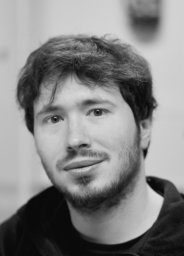 Olivier Maillet合作论文数Aalto Univ, Sch Sci, Dept Appl Phys, QTF Ctr Excellence, POB 13500, Aalto 00076, Finland5Vonka Jakub合作论文数5
 Xavier Rojas合作论文数Department of Physics,Royal Holloway,University of London5E. Collin合作论文数5D Ian Bradley合作论文数5Andrew Casey合作论文数McGill University5
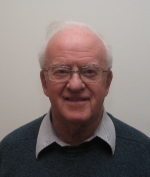 William F. Vinen合作论文数University of Birmingham5T. Salmon合作论文数4E. Leason合作论文数4Manuel Arrayás合作论文数Departamento de Matemáticas y Física Aplicada;Universidad Rey Juan Carlos;Departamento de Matemáticas y Física Aplicada, Universidad Rey Juan Carlos4
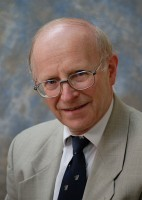 Peter Vaughan Elsmere McClintock合作论文数Department of Physics, Lancaster University4D. A. Krasnikhin合作论文数3malcolm poole合作论文数3A. Kemp合作论文数3J. Monroe合作论文数MIT, Nucl Sci Lab, Cambridge, MA 02139 USA3
 Paolo Franchini合作论文数Royal Holloway, University of London3Whitehead L合作论文数Brookhaven National Laboratory, University of Houston3
 Roger Smith合作论文数University of the Witwatersrand3Jose Luis Trueba合作论文数3M. J. Fear合作论文数Department of Physics, Lancaster University3M. Skyba合作论文数2Anthony Guénault合作论文数2sean ahlstrom合作论文数2




