Teachers of pastoral care in a seminary setting face a host of challenges. Two pressing challenges lie at the intersection of religion and childhood. First, teaching pastoral care assumes developmental, historical, and religious understandings of all ages and stages of life. Yet courses often focus on adults, excluding children and youth as persons who need, give, and receive care. Senior pastoral theologians have contributed to the scholarship of childhood and religion in the last two decades. Still, teaching and research are under-resourced when it comes to subject matter touched by the intersection of children and religion. This book provides a partial bridge to help close the gaps in and between pastoral theology and childhood studies.
Religion Past and Present (RPP) is a complete, updated English translation of the 4th edition of the definitive encyclopedia of religion worldwide. the peerless Religion in Geschichte und Gegenwart (RGG). Including the latest developments in research, Religion Past and Present encompasses a vast range of subjects connected with religion. This great resource, now at last available in English, continues the tradition of deep knowledge and authority relied upon by generations of scholars in religious, theological, and biblical studies. Religion Past and Present indisputably belongs to the small class of essential reference works. Key Features • RGG has been a standard reference work since the publication of the first edition in 1908. • Strongly international, cross-cultural and ecumenical, written by over 3,000 authors from 88 countries • Covers an unparalleled breadth of subject matter in theological and biblical studies • Up-to-date research and bibliographies make it an indispensable resource for all levels of users • Interdisciplinary articles cover a wide range of topics from history, archaeology, liturgy, law, bible, music, visual arts, politics, social sciences, natural sciences, ethics, and philosophy. • The 4th edition of RGG, the basis of the RPP translation, includes hundreds of new entries on Eastern religions and other religious subjects. The editors of RPP have added a number of articles and revised others for a global English-speaking readership. • Short definitions and cross-references enable quick and easy searching • Over 15,000 entries and 8 million words • 13 volumes and an index
Zygon®Volume 47, Issue 3 p. 653-654 Patrons—Philip Hefner Fund First published: 23 August 2012 https://doi.org/10.1111/j.1467-9744.2012.01285.xRead the full textAboutPDF ToolsRequest permissionExport citationAdd to favoritesTrack citation ShareShare Give accessShare full text accessShare full-text accessPlease review our Terms and Conditions of Use and check box below to share full-text version of article.I have read and accept the Wiley Online Library Terms and Conditions of UseShareable LinkUse the link below to share a full-text version of this article with your friends and colleagues. Learn more.Copy URL Share a linkShare onFacebookTwitterLinkedInRedditWechat No abstract is available for this article. Volume47, Issue3September 2012Pages 653-654 RelatedInformation
In this paper, which was among Don Browning's last writings before he died, we review and evaluate the main arguments against the United Nations Convention on the Rights of the Child (the “CRC”) that conservative American Christians in particular have opposed. While we take their objections seriously, we think that, on balance, the CRC is worthy of ratification, especially if it is read in light of the profamily ethic that informs the CRC and many earlier human rights instruments. More fundamentally, we think that the CRC captures some of the very best traditional Western legal and theological teachings on marriage, family, and children, which we retrieve and reconstruct for our day.
A possible consequence of the dialogue between science and religion is a revived religious humanism-a firmer grasp of the historical and phenomenological meanings of the great world religions correlated with the more accurate explanations of the rhythms of nature that natural science can provide. The first great expressions of religious humanism in the West emerged when Jewish, Christian, and Islamic scholars sat in the same libraries in Spain and Sicily, studying and translating the lost manuscripts of Aristotle in the ninth and tenth centuries to understand his ethics, epistemology, and psychobiology. In our day, the science-religion dialogue-exemplified by interaction among psychology, spirituality, and psychotherapy-will best support such a revival if guided by the philosophical resources of critical hermeneutics (sometimes called hermeneutical realism) supplemented by William James's brand of phenomenology and pragmatism. Here, I develop primarily the contributions of Paul Ricoeur to hermeneutic realism and his unique ability to find a place for the natural sciences within hermeneutic phenomenology in his formula of understanding-explanation-understanding.
Family changes engulfing advanced western societies over the last four decades – divorce, out-of-wedlock births, father absence, etc. – were first interpreted by social scientists as benign. The sociologist Talcott Parsons said in the 1950s that families were changing but still fulfilling their functions. The feminist sociologist Jessie Bernard said in her influential The Future of Marriage (1972) that these changes were not dangerous; that they were not harming children; that marriage was not particularly good for women anyway; and that divorce, cohabitation and non-marital births would contribute to the increased freedom of women. Some social scientists held that family changes were harmful only when they ended in poverty. A wider welfare net and a healthy economy, they argued, could prevent these negative consequences.
For the past two decades, I have been developing an integrative Christian marriage theory, based in part on a grounding concept of natural law and an overarching theory of covenant. The natural law part of this theory starts with an account of the natural facts, conditions, interests, needs, and qualities of human life, interaction, and generation-what I call the "premoral" goods or realities of life. It then identifies the natural inclinations of humans to form enduring and exclusive monogamous marriages and to preserve these units as the central site for intimacy, procreation, and nurture of children. In this paper, I first summarize this natural law theory of marriage and then compare it to the formulations of other modern Christian thinkers. I also defend this theory against various modern critics of natural law-in part by reinterpreting some traditional natural law teachings that in my view have been misunderstood, in part by looking at the interesting convergences between the insights into sex, marriage, and family life offered by contemporary Christian theological ethicists and by evolutionary biologists and biological anthropologists.
While children figure prominently in religious traditions, few books have directly explored the complex relationships between children and religion. This is the first book to examine the theme of children in major religions of the world. Each of six chapters, edited by world-class scholars, focuses on one religious tradition and includes an introduction and a selection of primary texts ranging from legal to liturgical and from the ancient to the contemporary. Through both the scholarly introductions and the primary sources, this comprehensive volume addresses a range of topics, from the sanctity of birth to a child's relationship to evil, showing that issues regarding children are central to understanding world religions and raising significant questions about our own conceptions of children today. The religions discussed in this book include: Judaism, Christianity, Islam, Hinduism, Buddhism, and, Confucianism.
Previous articleNext article No AccessBook ReviewWilliam M Epstein, . Psychotherapy as Religion: The Civil Divine in America. Reno: University of Nevada Press, 2006. ix+271 pp. $18.96 (cloth).Don S. BrowningDon S. BrowningUniversity of Chicago. Search for more articles by this author University of Chicago.PDFPDF PLUSFull Text Add to favoritesDownload CitationTrack CitationsPermissionsReprints Share onFacebookTwitterLinkedInRedditEmail SectionsMoreDetailsFiguresReferencesCited by The Journal of Religion Volume 88, Number 3July 2008 Article DOIhttps://doi.org/10.1086/590042 Views: 7Total views on this site © 2008 by The University of Chicago. All rights reserved. For permission to reuse, please contact [email protected]PDF download Crossref reports no articles citing this article.
 marjorie h davis合作论文数4Solomon H. Katz合作论文数Department of Geography and Anthropology, Rowan College of New Jersey4
 John Witte Jr.合作论文数Center for the Study of Law and Religion, School of Law, Emory University3daniel jungkuntz合作论文数3william lesher合作论文数3Paul H. Carr合作论文数3Hans Dieter Betz合作论文数2Eberhard Jüngel合作论文数2john j carvalho合作论文数2c mackenzie brown合作论文数2
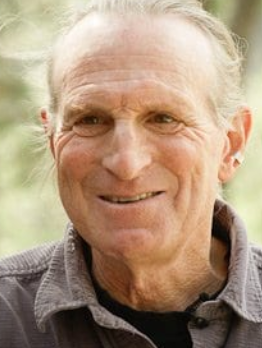 Marc Bekoff合作论文数Department of Ecology and Evolutionary Biology, College of Arts and Sciences, University of Colorado Boulder2
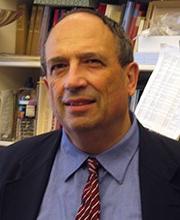 Francis Schüssler Fiorenza合作论文数Harvard Divinity School, Harvard University2Sjoerd L. Bonting合作论文数2Fatima Agha Al-Hayani合作论文数2Max L. Stackhouse合作论文数2James I. McCord合作论文数1john r albright合作论文数1david bradnick合作论文数1Rudolf B. Brun合作论文数1Carl W. Christensen合作论文数1john m halpin合作论文数1Emily H. Mudd合作论文数1John L. Casteel合作论文数1doug ravizza合作论文数1Tim Wennberg合作论文数1Michael Cavanaugh合作论文数1Bernd Janowski合作论文数1John Wall合作论文数Dept Social Sci & Business, Roskilde Univ1
 John Witte合作论文数Ctr Study Law & Relig, Emory Univ1
 M. Chistian Green合作论文数1Philip Clayton合作论文数1
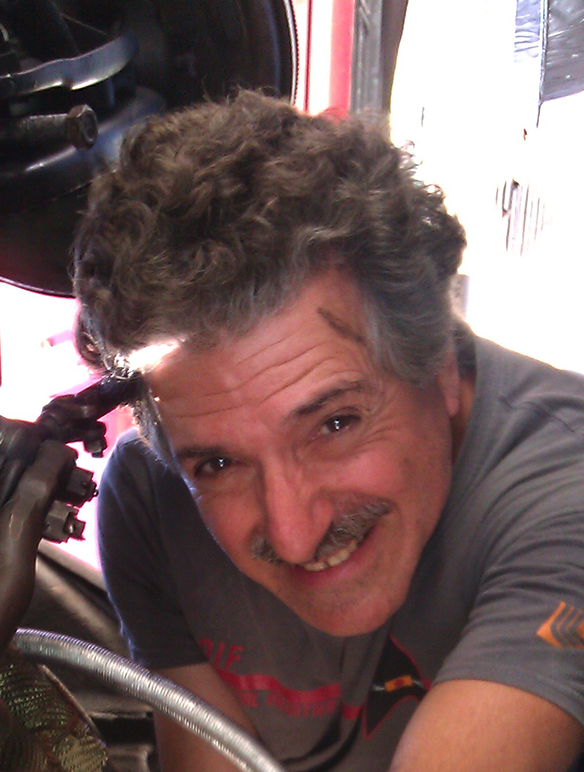 Mark Henesian合作论文数Lawrence Livermore National Laboratory1
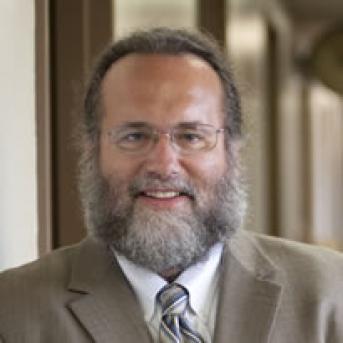 Christopher Ellison合作论文数Department of Sociology, University of Texas at San Antonio1Ye Luo (罗业)合作论文数1Charles R. Stinnette合作论文数1Marcia J. Bunge合作论文数1John Honig合作论文数1Frank E. Budenholzer合作论文数1
 Linda J. Waite合作论文数Department of Sociology, University of Chicago;NORC, University of Chicago;Pritzker School of Medicine, University of Chicago1Peter Homans合作论文数1
 Jennifer Beste合作论文数1William E. Hulme合作论文数1
 John Bartkowski合作论文数Department of Sociology, College for Health, Community and Policy, University of Texas at San Antonio1Paul Ricoeur合作论文数1William J. Doherty合作论文数1
 John Crane合作论文数1Harry Rieger合作论文数1Glenn E. Whitlock合作论文数1
 R. A. Bucko合作论文数1




