During the past 10 years, 20 patients with intractable generalized, generalized and partial, and partial seizures have been treated here by surgical division of one or more of the forebrain commissures. Modifications in the operative technique and extent of operation have resulted in continued good results in seizure control with decreased morbidity. The present operation, a two-stage division of the corpus callosum and underlying hippocampal commissure, is demonstrated to be effective in controlling intractable seizures. Good or excellent results account for more than 80 per cent of the series. Historical background, indications for operation, criteria for patient selection, operative technique, results, complications, and the value of forebrain commissurotomy as a research tool are presented.
During the past 10 years, 20 patients with intractable generalized, generalized and partial, and partial seizures have been treated here by surgical division of one or more of the forebrain commissures. Modifications in the operative technique and extent of operation have resulted in continued good results in seizure control with decreased morbidity. The present operation, a two-stage division of the corpus callosum and underlying hippocampal commissure, is demonstrated to be effective in controlling intractable seizures. Good or excellent results account for more than 80 per cent of the series. Historical background, indications for operation, criteria for patient selection, operative technique, results, complications, and the value of forebrain commissurotomy as a research tool are presented.
A second consecutive series of 12 patients underwent microsurgical "central" commissurotomy (division of the entire corpus callosum and hippocampal commissure) for the relief of previously intractable generalized seizures. This modified operation was found to be safer than the multiple commissurotomies performed in the first series of eight patients and was equally effective. Central commissurotomy was modified further by being performed in two stages, which reduced the length and severity of the "acute disconnection syndrome," a common cause of morbidity in the early postoperative phase. Best results were obtained in patients who were not severely retarded, had signs of unilateral cerebral damage, and included akinetic spells as a prominent form of their generalized seizures. EEG showed that bilateral symmetric discharge became either unilateral or asymmetric after surgery, which emphasized the important role played by the corpus callosum in conducting seizure discharges from one hemisphere to the other.
In patients who have undergone complete section of the corpus callosum for intractable epilepsy, lateralized presentation of visual nonverbal stimulation showed that the coordination of motor acts by either hand is controlled exclusively by the contralateral hemisphere. When two patients had serial operations consisting of an initial division of the splenium and posterior 3 cm, followed by complete callosal division, an opportunity arose to test the explicit cortical pathways involved in ipsilateral control. Between operations, these patients could not coordinate movements of the hand ipsilateral to the hemisphere receiving the command. This suggested that for visual nonverbal stimulation, the posterior 3 cm of corpus callosum is necessary for control of the ipsilateral hand; the rostral callosum cannot transfer sensorimotor commands. Also, contrary to current views, each hemisphere can carry out sequentially dependent motor activity.
The operation of lumbar discectomy has been improved steadily since its introduction by Mixter and Barr in 1934. The present standard operation represents an accumulation of techniques that became available to succeeding generations of neurosurgeons. The addition of microsurgical technique may be the most recent means to refine the process of lumbar discectomy. One hundred cases of microsurgical discectomy were compared to the same number of standard operations, all performed by one surgeon and analyzed by another. The patient profiles were the same; the operative results showed that the standard discectomy was of good quality and that microsurgical discectomy could equal it; in comparing postoperative results, however, microsurgical discectomy was superior to the standard operation: patients returned to their usual activities in half the time. The advantage of the microsurgical technique is its capacity to preserve better the integrity of normal tissue and to impose less trauma on the body. From this analysis, we conclude that microsurgical discectomy represents a small but significant refinement of standard discectomy.
Sensory and cognitive functions were assessed in a right-handed male before and after partial and complete callosal commissurotomy. After the initial posterior section was made, there was no evidence of interhemispheric sensory transfer, although the left hemisphere did have access to stimulus-related semantic and episodic information from the right hemisphere. After the callosum was completely sectioned, this exchange was no longer observed.
Two recent patients in our behavioral series investigating the psychological effects of callosal section exhibit right hemisphere language. Using lateralized visual and auditory stimulation, semantic, phonetic, and expressive linguistic functions were examined. While the right hemisphere language systems in both patients were shown to be capable of semantic information processing, they differed in their abilities to process phonetic information, follow verbal commands, and produce linguistic responses. It is argued that the differences between left and right hemisphere language systems are quantitative and are best characterized along a continuum of generative capacity. It is the variability in such capacity that appears to be responsible for the variability in right hemisphere language function within the split- brain population.
Journal Article DISSOCIATION OF SPATIAL INFORMATION FOR STIMULUS LOCALIZATION AND THE CONTROL OF ATTENTION Get access JEFFREY D. HOLTZMAN, JEFFREY D. HOLTZMAN From the Department of Neurology, Cornell University Medical CollegeNew York, NY 10021Department of Neurosurgery, Dartmouth Medical CenterHanover, New Hampshire Search for other works by this author on: Oxford Academic PubMed Google Scholar JOHN J. SIDTIS, JOHN J. SIDTIS From the Department of Neurology, Cornell University Medical CollegeNew York, NY 10021Department of Neurosurgery, Dartmouth Medical CenterHanover, New Hampshire Search for other works by this author on: Oxford Academic PubMed Google Scholar BRUCE T. VOLPE, BRUCE T. VOLPE From the Department of Neurology, Cornell University Medical CollegeNew York, NY 10021Department of Neurosurgery, Dartmouth Medical CenterHanover, New Hampshire Search for other works by this author on: Oxford Academic PubMed Google Scholar DONALD H. WILSON, DONALD H. WILSON From the Department of Neurology, Cornell University Medical CollegeNew York, NY 10021Department of Neurosurgery, Dartmouth Medical CenterHanover, New Hampshire Search for other works by this author on: Oxford Academic PubMed Google Scholar MICHAEL S. GAZZANIGA MICHAEL S. GAZZANIGA From the Department of Neurology, Cornell University Medical CollegeNew York, NY 10021Department of Neurosurgery, Dartmouth Medical CenterHanover, New Hampshire Search for other works by this author on: Oxford Academic PubMed Google Scholar Brain, Volume 104, Issue 4, December 1981, Pages 861–872, https://doi.org/10.1093/brain/104.4.861 Published: 01 December 1981 Article history Received: 16 December 1980 Published: 01 December 1981
Two questions concerning the mediation of psychophysical scaling of lateralized stimuli were investigated in commissurotomized patients: (I) Is cross modality matching mediated by subvocal number assignment? (II) Are there hemispheric differences in psychophysical scaling? When exponents of power functions characterizing the magnitude estimation of joint position in right and left hands and line length in right and left visual fields were compared between the hemispheres, only the left hemisphere was able to make such judgements. When exponents of functions characterizing the cross modality matching of these stimuli were compared between the hemispheres, there were no significant differences. These results argue against mediation of cross modality matching by subvocal number assignment, and this demonstration of symmetrical transduction of univariate stimuli suggests a reinterpretation of the literature reporting perceptual asymmetries.
For three-and-a-half years we have been studying the cognitive and conscious mechanisms in a remarkable 18-year-old man: Case P.S. This unique individual had his corpus callosum divided in order to control intractable epilepsy. Although for some time after the operation he appeared like other split-brain patients, unable to describe verbally stimuli directed to his mute right hemisphere, he behaved as if he was capable of comprehending a wide range of language-related stimuli directed to that hemisphere. Spelling by choosing the appropriate letters with his left hand, he could process nouns, verbs, rhymes, antonyms, and superordinate concepts. When asked about tachistoscopic presentations delivered to his left visual field, he either said he had seen nothing, or only a flash of light. He was also unable to identify verbally tactile 'sterognostic' inputs to his left hand. In the last year P.S. has begun to speak about stimuli directed to his right hemisphere. This series of experiments suggests that this speech is not interhemispheric transfer within the visual modality. Further, plotting the relative increased proficiency of verbal description of inputs directed to the right hemisphere, this speech system seems to be in a process of continuing development.
A patient with complete surgical section of the corpus callosum was tested on a constructional task 17 months post-operatively. The left and right hands were separately tested under conditions of free visual exposure and lateralized visual field exposure. The results suggest that the typically observed improved performance of the right hand with increasing postoperative time is attributable to the acquisition of homolateral control over the right hand by the right hemisphere. The implications for left-right brain organization and the syndrome of constructional apraxia are considered.
Cerebral commissurotomy, the "split-brain" procedure, has been employed for the control of intractable seizures, in conjunction with moderate doses of anticonvulsant drugs. The results have been encouraging in several small series. The use of microsurgical techniques and the restriction of surgery to one commissure, the corpus callosum, has reduced morbidity without apparent change in result. The eight patients in our first series who underwent the prescribed division of several forebrain commissures are compared to the four patients in our second series who underwent division of the corpus callosum alone. The technique of callosotomy is described.
The anterior commissure, which has been presumed to play a minor role in interhemispheric communication, was tested for the transfer of visual, auditory, and olfactory information in patients with complete sections of the corpus callosum. Four of five patients tested with presumed intact anterior commissures demonstrated interhemispheric transfer of verbal and pictorial stimuli presented visually to a single hemisphere. Evidence was also obtained for auditory and olfactory transfer, although successful interhemispheric communication in all three modalities was not found for any one patient. The data suggest that the human anterior commissure is capable of mediating multisensory, interhemispheric messages of a complex nature and provide evidence of functional plasticity in a phylogenetically early cerebral structure.
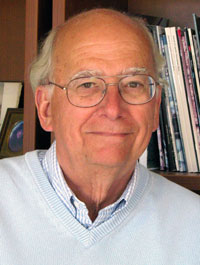 Michael Gazzaniga合作论文数Sage Center for the Study of Mind, University of California, Santa Barbara;Cognitive Neuroscience Institute, University of California, Santa Barbara;Department of Psychological & Brain Sciences, College of Letters & Science, University of California, Santa Barbara19
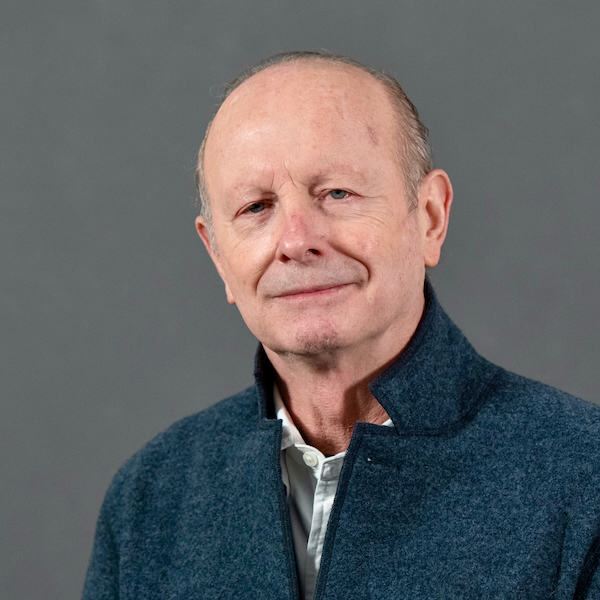 Joseph E. Ledoux合作论文数Department of Child and Adolescent Psychiatry, Grossman School of Medicine, New York University;Department of Psychiatry, Grossman School of Medicine, New York University;Center for Neural Science, New York University6
 Bruce T. Volpe合作论文数Department of Neurology & Neuroscience, Weill Medical College, Cornell University;Center for Biomedical Science, Feinstein Institute for Medical Research;Institute of Molecular Medicine, Feinstein Institutes for Medical Research5
 gary marple合作论文数4John J. Sidtis合作论文数4J D Holtzman合作论文数3nancy krebs合作论文数3
 Robert E Harbaugh合作论文数Departments of Neurosurgery, and Engineering Science and Mechanics, Penn State University3Gail L. Risse合作论文数3Sally P. Springer合作论文数3Anthony H. Handal合作论文数3WJ GARDNER合作论文数2
 Pamela M Greenwood合作论文数Center of Excellence in Neuroergonomics, Technology, and Cognition, George Mason University;Department of Psychology, George Mason University2Alexander G Reeves合作论文数2WC MACCARTY合作论文数1A Erbengi合作论文数1sue ann park合作论文数1Cs Smylie合作论文数1gary kaga合作论文数1M RAYPORT合作论文数1Clark D E合作论文数1
 Alfred E Chang合作论文数School of Medical, University of Michigan1
 Elijah Brewer III合作论文数Economic Research, Federal Reserve Bank of Chicago1George Margolis合作论文数1t b elfe合作论文数1Alexander G. Reeves合作论文数1




