The canonical quantization of gravity in general relativity is greatly simplified by the artificial decomposition of space time into a 3 + 1 formalism. Such a simplification appears to come at the cost of general covariance. This quantization procedure requires tangential and perpendicular infinitesimal diffeomorphisms generated by the symmetry group under the Legendre transformation of the given action. This gauge generator, along with the fact that Weyl curvature scalars may act as “intrinsic coordinates” (or a dynamical reference frame) that depend only on the spatial metric (gab) and the conjugate momenta (pcd), allows for an alternative approach to canonical quantization of gravity. In this paper, we present the tensorial solution of the set of Weyl scalars in terms of canonical phase-space variables.
In a series of papers published in the course of his dissertation work in the mid 1950's, Andrzej Trautman drew upon the slow motion approximation developed by his advisor Infeld, the general covariance based strong conservation laws enunciated by Bergmann and Goldberg, the Riemann tensor attributes explored by Goldberg and related geodesic deviation exploited by Pirani, the permissible metric discontinuities identified by Lichnerowicz, O'Brien and Synge, and finally Petrov's classification of vacuum spacetimes. With several significant additions he produced a comprehensive overview of the state of research in equations of motion and gravitational waves that was presented in a widely cited series of lectures at King's College, London, in 1958. Fundamental new contributions were the formulation of boundary conditions representing outgoing gravitational radiation the deduction of its Petrov type, a covariant expression for null wave fronts, and a derivation of the correct mass loss formula due to radiation emission. Ivor Robinson had already in 1956 developed a bi-vector based technique that had resulted in his rediscovery of exact plane gravitational wave solutions of Einstein's equations. He was the first to characterize shear-free null geodesic congruences. He and Trautman met in London in 1958, and there resulted a long-term collaboration whose initial fruits were the Robinson-Trautman metric, examples of which were exact spherical gravitational waves.
You could begin one of your undergraduate mechanics classes with this question: Suppose that you have a partially open book on a table, and you allow it to fall closed.Does it take the same time to close in air and in vacuum?
The conventional Rosenfeld-Bergmann-Dirac constrained Hamiltonian algorithm applied to Einstein-Yang-Mills theory is shown to be equivalent to a local gauge theoretic extension of Cartan's invariant integral approach to classical mechanics. In addition, the Hamiltonian generators of Legendre-projectable spacetime diffeomorphism and gauge symmetries are derived directly as vanishing Noether charges. This leads directly to their interpretation as delivering the correct symmetry variations of both configuration and momentum feld variables.
The vanishing phase space generator of the full four-dimensional diffeomorphism-related symmetry group in the context of the Barbero–Immirz–Holst Lagrangian is derived directly, for the first time, from Noether’s second theorem. Its applicability in the construction of classical diffeomorphism invariants is reviewed.
Please enjoy these letters and consider writing one yourself.I'd love to hear from you. An alternative way to solve the small oscillations problemSergio A. Hojman 91(8)
It is hard to imagine teaching physics or astronomy without a laboratory component, but that was the common state of affairs in the late 19th century in the United States.Sarah Frances Whiting was among the first educators to make lab work central to the teaching of astronomy.This article dis-
Submission Details: https://eipbn.org/abstracts-submissions/ The deadline for abstract submission is Sunday, 15 January 2023. Authors will be notified of acceptance by Sunday, 2 April 2023. IEEE-NEMS 2023 Call for Papers Website: https://ieee-nems2023.org/
 Beth Parks合作论文数22John Essick合作论文数18
 Claire Marrache-Kikuchi合作论文数IJCLab, Université Paris-Saclay15Josep M. Pons合作论文数14
 Bruce Cameron Reed合作论文数Alma College14Todd Springer合作论文数11
 Raina J. Olsen合作论文数11L. C. Shepley合作论文数10Keith Zengel合作论文数Dept Phys, Harvard Univ7Jan Tobochnik合作论文数7
 Harvey Gould合作论文数7Jürgen Renn合作论文数5Mario Belloni合作论文数4A. Schmitz合作论文数3K. A. Sundermeyer合作论文数3Kurt Sundermeyer合作论文数3Jesse M. Kinder合作论文数2
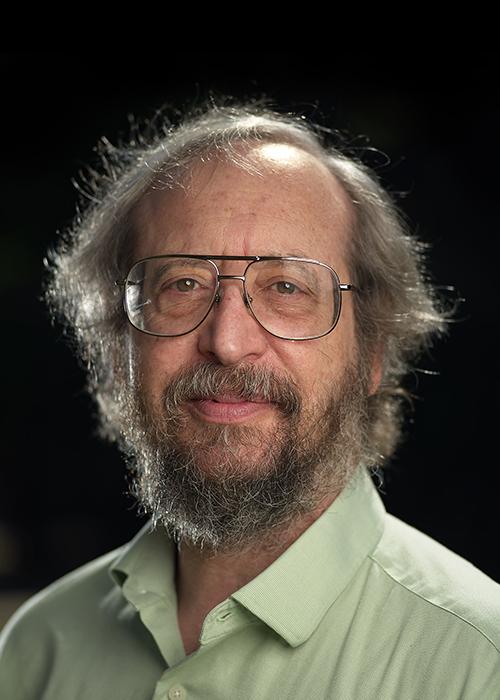 Tevian Dray合作论文数Department of Mathematics, College of Science, Oregon State University;Department of Physics, College of Science, Oregon State University2
 Joseph Amato合作论文数2Adam Fritsch合作论文数1C. K. Watson合作论文数1W. Julius合作论文数1Craig F. Bohren合作论文数1
 Alexander Blum合作论文数1John B. Kogut合作论文数1
 Daniel Kennefick合作论文数Department of Physics, Fulbright College of Arts & Sciences, University of Arkansas1Timothy D. Wiser合作论文数1
 Gerald B. Cleaver合作论文数Department of Physics;Ohio State University;Department of Physics, Ohio State University1Michael Pollot合作论文数1Matthias Schemmel合作论文数1
 Andrzej Trautman合作论文数1




