Data movement is a common performance bottleneck, and its chief remedy is caching. Traditional cache management is transparent to the workload: data that should be kept in cache are determined by the recency information only, while the program information, i.e., future data reuses, is not communicated to the cache. This has changed in a new cache design named Lease Cache. The program control is passed to the lease cache by a compiler technique called Compiler Assigned Reference Lease (CARL). This technique collects the reuse interval distribution for each reference and uses it to compute and assign the lease value to each reference. In this article, we prove that CARL is optimal under certain statistical assumptions. Based on this optimality, we prove miss curve convexity, which is useful for optimizing shared cache, and sub-partitioning monotonicity, which simplifies lease compilation. We evaluate the potential using scientific kernels from PolyBench and show that compiler insertions of up to 34 leases in program code achieve similar or better cache utilization (in variable size cache) than the optimal fixed-size caching policy, which has been unattainable with automatic caching but now within the potential of cache programming for all tested programs and most cache sizes.
With Moore’s Law ending and general-purpose processor speed plateauing, there are increasing interests and adoption of accelerators designed and built with FPGAs or SOCs. It is challenging to program the local memory of an accelerator. Past solutions are either based on scratchpad memory, which is entirely compiler managed, or on cache, which admits no direct program control. This paper proposes a new approach similar to memory allocation where a program treats local memory as a heap and controls its allocation, while the hardware manages the remaining operations, e.g. data fetch and placement. The position paper describes this collaborative solution, discusses open research questions, and presents some preliminary results.
Lease caching is a new technique that provides greater control of the cache than what is allowed in conventional caches. The simplest control is uniform lease (UL), which means that all leases are identical in length. The UL cache is prescriptive and based on allocation. In comparison, a conventional cache is reactive and based on replacement. They represent two fundamentally different approaches to cache management. This paper shows two results. First, it proves that a previous model of the LRU cache called Higher-Order Theory of Locality (HOTL) computes the miss ratio of the UL cache. Second, it shows how UL and LRU behave the same and differently through contrived examples and in the 30 benchmarks of PolyBench.
Data movement has a significant impact on program performance. For multithread programs, this impact is amplified, since different threads often interfere with each other by competing for shared cache space. However, recent de facto locality metrics consider either sequential execution only, or derive locality for multithread programs in an inefficient way, i.e. exhaustive simulation. This paper presents PLUM, a compiler solution for timescale locality analysis for parallel programs. Experiments demonstrate that the prediction accuracy is 93.97% on average. PLUM is the first tool that analyzes data locality for parallel programs during compile time; in addition, it provides an approach for efficiently studying the representative interleaving pattern for parallel executions.
Traditional caching is transparent to software but cannot utilize program information directly. With Moore's Law ending and general-purpose processor speed plateauing, there is increasing importance and interest in specialization including the interaction between the software and the cache. This paper presents Compiler Lease of cAche Memory (CLAM) which augments the interface between software and hardware and lets a compiler control cache management. The new software control enables optimization beyond what is possible in traditional memory system designs. CLAM has been implemented on a CycloneV-GT FPGA card with a RISC-V processor and the new hardware cache, and the evaluation has shown performance improvements over existing techniques in all of the 7 programs tested from the Polybench suite.
Locality analysis is important since the speed of accessing memory is slower than the speed of computing. In addition, the emerging persistent memory brings speed and endurance imbalance between reads and writes. Caching is an effective way to address these problems. To maximize cache performance, it requires understanding program locality for both cache loads and writebacks. In this dissertation, I will first introduce locality analysis based on reuse intervals, which can be measured effciently using the compiler construct dependence distance. Then, I will describe a more general method called static parallel sampling. It analyzes loop-based code by generating sampler code which is run to measure reuse intervals. It can predict precise cache-line granularity miss ratio curves for complex loops with non-linear array references and even branches. Finally, I will describe the reuse interval based locality model for writebacks, which can be analyzed using static parallel sampling.
Modern GPUs often use near memory or high-bandwidth memory, which may be managed as cache when the application data is too large to fit in the near memory. Unlike CPU caches, the near memory cache has a much larger size. A recent approach is statistical caching, which shows near optimal results when managing large memory for file caching. The prior work is ideal and not practical. This paper outlines two extensions. It first formulates a new caching algorithm called least expected use (LEU) replacement and shows, through examples, that the statistical solution automatically integrates two otherwise disparate policies. Then the paper describes a system design to implement LEU. To position the new design for discussion, the paper draws parallels with two familiar ideas, branch prediction and spectral analysis, and considers a set of opportunities and challenges of achieving statistical caching in near memory.
Locality analysis is important since accessing memory is much slower than computing. Compile-time locality analysis can provide detailed program-level feedback for compilers or runtime systems faster than trace-based locality analysis. In this paper, we describe a new approach to locality analysis based on static parallel sampling. A compiler analyzes loop-based code and generates sampler code which is run to measure locality. Our approach can predict precise cache line granularity miss ratio curves for complex loops with non-linear array references and even branches. The precision and overhead of static sampling are evaluated using PolyBench and a bit-reversal loop. Our result shows that by randomly sampling 2% of loop iterations, a compiler can construct almost exact miss ratio curves as trace based analysis. Sampling 0.5% and 1% iterations can achieve good precision and efficiency with an average 0.6% to 1% the time of tracing respectively. Our analysis can also be parallelized. The analysis may assist program optimization techniques such as tiling, program co-location, cache hint selection and help to analyze write locality and parallel locality.
Data race detection has become an important problem in GPU programming. Previous designs of CPU race-checking tools are mainly task parallel and incur high overhead on GPUs due to access instrumentation, especially when monitoring many thousands of threads routinely used by GPU programs. This article presents a novel data-parallel solution designed and optimized for the GPU architecture. It includes compiler support and a set of runtime techniques. It uses value-based checking, which detects the races reported in previous work, finds new races, and supports race-free deterministic GPU execution. More important, race checking is massively data parallel and does not introduce divergent branching or atomic synchronization. Its slowdown is less than 5 × for over half of the tests and 10 × on average, which is orders of magnitude more efficient than the cuda-memcheck tool by Nvidia and the methods that use fine-grained access instrumentation.
A problem on multicore systems is cache sharing, where the cache occupancy of a program depends on the cache usage of peer programs. Exclusive cache hierarchy as used on AMD processors is an effective solution to allow processor cores to have a large private cache while still benefitting from shared cache. The shared cache stores the "victims" (i.e., data evicted from private caches). The performance depends on how victims of co-run programs interact in shared cache. This article presents a new metric called the victim footprint (VFP). It is measured once per program in its solo execution and can then be combined to compute the performance of any exclusive cache hierarchy, replacing parallel testing with theoretical analysis. The work evaluates the VFP by using it to analyze cache sharing by parallel mixes of sequential programs, comparing the accuracy of the theory to hardware counter results, and measuring the benefit of exclusivity-aware analysis and optimization.
Persistent memory is a disruptive technology that drastically reduces memory cost and static power but introduces the problems of slow writes and limited write endurance. An effective solution is caching. However, existing cache has been designed for fast reads. It does not minimize the number of writebacks from cache to memory. In this paper, we propose a metric to quantify the write locality and a theory to analyze and optimize write locality. It includes a linear-time algorithm to predict the write-back frequency for all cache sizes. In shared cache, it predicts the number of writebacks for co-run programs based on sole-run profiling. The paper evaluates the accuracy of the prediction against cache simulation. It then uses the theory to optimize write locality in a set of co-run programs in shared cache by cache partitioning. The theory predicts that such write-locality optimization can reduce the number of writebacks by 12% to 35%, compared to uncontrolled cache sharing.
OpenCL is an open heterogeneous programming framework. Although OpenCL programs are functionally portable, they do not provide performance portability, so code transformation often plays an irreplaceable role. When adapting GPU-specific OpenCL kernels to run on multi-core/many-core CPUs, coarsening the thread granularity is necessary and thus has been extensively used. However, locality concerns exposed in GPU-specific OpenCL code are usually inherited without analysis, which may give side-effects on the CPU performance. Typically, the use of OpenCL's local memory on multi-core/many-core CPUs may lead to an opposite performance effect, because local-memory arrays no longer match well with the hardware and the associated synchronizations are costly. To solve this dilemma, we actively analyze the memory access patterns using array-access descriptors derived from GPU-specific kernels, which can thus be adapted for CPUs by (1) removing all the unwanted local-memory arrays together with the obsolete barrier statements and (2) optimizing the coalesced kernel code with vectorization and locality re-exploitation. Moreover, we have developed an automated tool chain that makes this transformation of GPU-specific OpenCL kernels into a CPU-friendly form, which is accompanied with a scheduler that forms a new OpenCL runtime. Experiments show that the automated transformation can improve OpenCL kernel performance on a multi-core CPU by an average factor of 3.24. Satisfactory performance improvements are also achieved on Intel's many-integrated-core coprocessor. The resultant performance on both architectures is better than or comparable with the corresponding OpenMP performance.
When adapting GPU-specific OpenCL kernels to run on multi-core/many-core CPUs, coarsening the thread granularity is necessary and thus extensively used. However, locality concerns exposed in GPU-specific OpenCL code are usually inherited without analysis, which may give side-effects on the CPU performance. When executing GPU-specific kernels on CPUs, local-memory arrays no longer match well with the hardware and the associated synchronizations are costly. To solve this dilemma, we actively analyze the memory access patterns by using array-access descriptors derived from GPU-specific kernels, which can thus be adapted for CPUs by removing all the unwanted local-memory arrays together with the obsolete barrier statements. Experiments show that the automated transformation can satisfactorily improve OpenCL kernel performances on Sandy Bridge CPU and Intel’s Many-Integrated-Core coprocessor.
With NVIDIA’s parallel computing architecture CUDA, using GPU to speed up compute-intensive applications has become a research focus in recent years. In this paper, we proposed a scalable method for multi-GPU system to accelerate motion estimation algorithm, which is the most time consuming process in video encoding. Based on the analysis of data dependency and multi-GPU architecture, a parallel computing model and a communication model are designed. We tested our parallel algorithm and analyzed the performance with 10 standard video sequences in different resolutions using 4 NVIDIA GTX460 GPUs, and calculated the overall speedup. Our results show that a speedup of 36.1 times using 1 GPU and more than 120 times for 4 GPUs on 1920x1080 sequences. Further, our parallel algorithm demonstrated the potential of nearly linear speedup according to the number of GPUs in the system.
OpenCL programming provides full code portability between different hardware platforms, and can serve as a good programming candidate for heterogeneous systems, which typically consist of a host processor and several accelerators. However, to make full use of the computing capacity of such a system, programmers are requested to manage diverse OpenCL-enabled devices explicitly, including distributing the workload between different devices and managing data transfer between multiple devices. All these tedious jobs pose a huge challenge for programmers. In this paper, a distributed shared OpenCL memory (DSOM) is presented, which relieves users of having to manage data transfer explicitly, by supporting shared buffers across devices. DSOM allocates shared buffers in the system memory and treats the on-device memory as a software managed virtual cache buffer. To support fine-grained shared buffer management, we designed a kernel parser in DSOM for buffer access range analysis. A basic modified, shared, invalid cache coherency is implemented for DSOM to maintain coherency for cache buffers. In addition, we propose a novel strategy to minimize communication cost between devices by launching each necessary data transfer as early as possible. This strategy enables overlap of data transfer with kernel execution. Our experimental results show that the applicability of our method for buffer access range analysis is good, and the efficiency of DSOM is high.
In this paper, we propose a framework to automatically map single-device OpenCL programs to heterogeneous multi-device platforms with performance concerns. Our framework is based on the independence of work groups which built inside the OpenCL programming model and relies heavily on the knowledge of global memory access regions of work groups. So global memory access patterns of work groups are analyzed and an abstract representation CCRwS is designed to describe the exact memory access regions of each memory access statement in the kernels. A global memory access analyzer is designed to get CCRwSs by performing static program analysis on kernel codes. Based on CCRwSs, data transfer between multiple devices and host can be fully controlled by our framework. Then a kernel code regenerator is designed to distribute the workload and perform architecture specific optimizations by code transformation. Then we tested our framework on a platform with 2 Intel E5-2650 CPUs and 4 NVIDIA Tesla C2050 GPUs. Compared with the performance on single GPU, the kernels running on all the 6 devices can achieve about 4.5x faster.
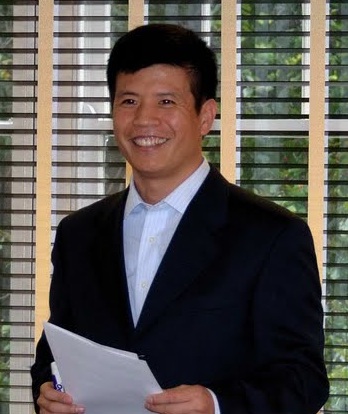 Chen Ding (丁晨)合作论文数Computer Science Department|University of Rochester11
 Fangzhou Liu合作论文数National Laboratory of Pattern Recognition;Institute of Automation;Chinese Academy of Sciences;Institute of Automation, Chinese Academy of Sciences6
 Chunyuan Zhang (张春元)合作论文数National University of Defense Technology4
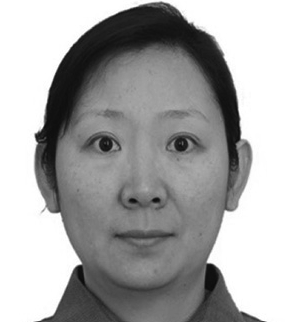 Mei Wen合作论文数Computer College, National University of Defense Technology4
 Changqing Xun合作论文数4
 Wesley Smith合作论文数University of Rochester3Dafei Huang合作论文数3Benjamin Reber合作论文数2
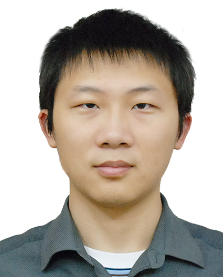 Chencheng Ye (叶晨成)合作论文数School of Computer Science and Technology, Huazhong University of Science and Technology2Hao Luo合作论文数Dept Comp Sci, Univ Rochester2Jacob Brock合作论文数University of Rochester2Dorin Patru合作论文数2
 Sreepathi Pai合作论文数University of Rochester2Ian Prechtl合作论文数1Qiang Lan合作论文数Natl Univ Def Technol, Coll Meteorol & Oceanog, Changsha 410073, Peoples R China1Nan Wu (吴楠)合作论文数College of Aerospace Science and Engineering, National University of Defense Technology1Xiaoyu Hu合作论文数1
 Hai Jin (金海)合作论文数School of Computer Science & Technology, Huazhong University of Science and Technology;Zhengzhou University1Pengcheng Li合作论文数1
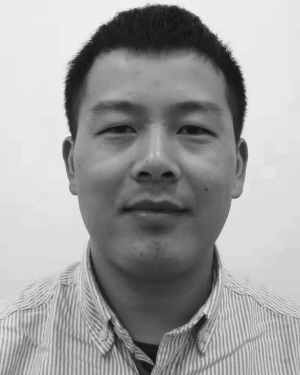 Huayou Su (苏华友)合作论文数1
 Lixuan Wang合作论文数1Chu-Cheow Lim合作论文数1
 Xing Cai合作论文数Department of High Performance Computing, Simula Research Laboratory;Department of Informatics, Faculty of Mathematics and Natural Sciences, University of Oslo1
 Eddy Z. Zhang合作论文数Department of Computer Science;College of William and Mary;Department of Computer Science|College of William and Mary1




