Deep reinforcement learning algorithms are widely used in the field of robot control. Sparse reward signals lead to blind exploration, affecting the efficiency of the manipulator during path planning for multi-axis systems at any given end-effector start and target position. To address the problem of tracking randomly located targets in three-dimensional space, this paper proposes a PPO (proximal policy optimization) algorithm with a fused reward mechanism, which enhances the tracking and guidance capabilities of the manipulator in multiple dimensions and reduces the blind randomness of the manipulator during the detection and sampling process. The fusion reward mechanism consists of four dimensions: trajectory correction reward, core area acceleration guidance reward, ladder adaptability reward, and abnormal termination penalty. Finally, a 7-degree-of-freedom Kuka manipulator is built on the PyBullet platform for simulation experiments. Experimental results show that, compared with the sparse reward mechanism, the PPO algorithm with the fused reward mechanism has a higher average success rate as high as 94.88% in task tracking, which can effectively improve the tracking efficiency and accuracy of the spatial manipulator.
Kernel Search Optimization (KSO) is characterized by insufficient accuracy in local search, which makes it difficult to achieve local optimization. Therefore, this paper proposes a Large Local Search Kernel Search Optimization (LLSKSO) to enhance the local optimization ability. LLSKSO achieves the performance improvement by introducing several strategies. First, the initial population is homogenized using the good point set mechanism. Then, the little dung beetle search mechanism of the Dung Beetle Optimizer (DBO) is introduced to enhance the local search capability of the KSO. Finally, the Cauchy-Gaussian mutation strategy is utilized to prevent the algorithm from falling into local traps. These three steps enable LLSKSO to achieve a dynamic balance between local and global search. In addition, to verify the performance and robustness of LLSKSO, comparison experiments between LLSKSO and 10 well-known algorithms are conducted on 50 benchmark test functions. From the statistical results of mean, best and variance of different algorithms, the LLSKSO algorithm outperforms the other algorithms. Finally, LLSKSO is applied to the engineering problem of carbon fiber drafting ratio optimization. Moreover, the experimental results obtained by LLSKSO yielded smaller line densities and greater strengths compared to other algorithms. LLSKSO achieves theoretical optima in 16 out of 20 high-dimensional benchmark functions, with an average CPU runtime reduced by 30% compared to baseline methods. Therefore, it can be shown that LLSKSO can be used as an effective optimization algorithm and engineering assistance.
As a new algorithm in recent years, the Kernel Search Optimization (KSO) algorithm employs kernel mapping to tackle optimization challenges, but this approach can lead to accuracy loss when transforming the objective function from lower to higher dimensions. Moreover, the mapping approximation might fail to capture the true optimal solution, particularly in complex, high-dimensional scenarios. To address these limitations, we introduce an enhanced version: the Chaotic map, Adaptive t-distribution Mutation, and Sand Cat Behavior with Spiral Search (CSTKSO) algorithm. This enhanced approach utilizes chaotic mapping for population initialization, lowering the likelihood of premature convergence. It also features Adaptive t-distribution mutation, which perturbs solution positions and dynamically adjusts the degrees of freedom parameter based on iteration progress, balancing global exploration in early stages with local exploitation later. Additionally, sand cat behavior-inspired mechanisms, including random angle selection, enable the algorithm to obtain the best results in a wide range of search optimization. We evaluated CSTKSO against established algorithms using 50 benchmark functions from the IEEE CEC for real-parameter optimization. The findings highlight the exceptional performance of CSTKSO in comparison to the original KSO and other algorithms. Furthermore, when applied to a practical economic emission scheduling problem, CSTKSO outperformed other competing algorithms, demonstrating its effectiveness in real-world applications. This enhanced algorithm addresses the shortcomings of traditional KSO while maintaining its core strengths, offering a more robust and efficient optimization tool for complex problems.
To achieve a balance between convergence and diversity, we proposed a two-stage HV-driven adaptive multi-objective evolutionary algorithm (TSAMEA). TSAMEA employs a sinusoidal decreasing parameter adjustment method to enhance exploration pace in the first stage. An adaptive parameter control mechanism utilizes historical memory pools and an HV-driven degree adjustment strategy to achieve better exploitation in the second stage. Extensive experimental data demonstrate that TSAMEA outperforms nine other compared MOEAs. The component analysis illustrates the efficacy of each component of TSAMEA. In addition, area and power optimization are now the main limitations in chip design, TSAMEA is applied to area and power optimization for Fixed Polarity Reed-Muller (FPRM) logic circuits and perform well, which further verifies the ability of the TSAMEA to solve practical problems.
The kernel search optimizer (KSO) is a recent metaheuristic optimization algorithm that is based on kernel theory, eliminating the need for hyper-parameter adjustments, and demonstrating excellent global search capabilities. However, the original KSO exhibits insufficient accuracy in local search, and there is a high probability that it may fail to achieve local optimization in complex tasks. Therefore, this paper proposes a multi-strategy enhanced KSO (MSKSO) to enhance the local search ability of the KSO. The MSKSO combines several control strategies, including chaotic initialization, chaotic local search mechanisms, the high-altitude walk strategy (HWS), and the Levy flight (LF), to effectively balance exploration and exploitation. The MSKSO is compared with ten well-known algorithms on 50 benchmark test functions to validate its performance, including single-peak, multi-peak, separable variable, and non-separable variable functions. Additionally, the MSKSO is applied to two real engineering economic emission dispatch (EED) problems in power systems. Experimental results demonstrate that the performance of the MSKSO nearly optimizes that of other well-known algorithms and achieves favorable results on the EED problem. These case studies verify that the MSKSO outperforms other algorithms and can serve as an effective optimization tool. Graphical Abstract
Integrating renewable energy sources, such as wind and photovoltaic power generation, into the power grid is crucial for sustainable power system development and mitigating pollutant emissions. However, these sources’ inherent uncertainty and randomness pose significant challenges to grid operations. Metaheuristic algorithms offer efficient solutions to optimization problems in this context and are widely employed in practice. Kernel Search Optimization (KSO) has emerged as a prominent metaheuristic algorithm due to its parameter-free nature and applicability to power dispatch problems. Nevertheless, KSO’s limited local search capabilities necessitate enhancements for improved performance. This paper introduces an enhanced variant of KSO, termed Upgraded Kernel Search Optimization (UKSO), which incorporates differential evolution techniques, including mutation, crossover, and selection mechanisms, to bolster KSO’s search capabilities and overall performance. The efficacy and feasibility of UKSO are evaluated through comprehensive testing using the CEC2017 benchmark. Comparative analysis demonstrates that UKSO outperforms other algorithms by achieving more optimal solutions. To address power dispatch challenges in the context of renewable energy sources, a Two-Time Energy Dispatch (TTED) model is proposed, leveraging a weighted summation approach to minimize total fuel costs and pollution emissions simultaneously. The application of the Prophet model, based on Bayesian fitting, facilitates accurate prediction of wind and photovoltaic power outputs. Through experimentation across small (8 and 14 units) and large (58 units) systems, the feasibility of UKSO and TTED is validated. In complex scenarios, UKSO demonstrates a 0.69% to 3.64% reduction in pollution emissions and a 0.99% to 1.23% decrease in economic costs compared to KSO under varying weight configurations. Furthermore, UKSO achieves a renewable energy generation utilization rate exceeding 90%, emphasizing its ability to iterate efficiently through complex problems and its efficacy in addressing renewable power dispatch challenges. These results highlight the practical significance of UKSO in optimizing power systems and provide valuable insights for future research and applications in this domain.
Accurate recognition of traffic lights is essential for ensuring the safety of passengers and pedestrians, especially in the context of self-driving car technology. However, traffic lights present challenges due to their small size and limited recognition accuracy. This paper proposes an enhanced version of the YOLOv5l algorithm specifically designed for traffic light recognition. First, the K-means++ clustering algorithm is employed to generate the prior frame. Second, the SiLU activation function in the basic convolution module is replaced with the adaptive Meta-ACONC activation function, significantly improving the model’s detection accuracy. Third, the coordinate attention mechanism is integrated into the trunk feature extraction network to incorporate coordinate information into the channel, thereby enhancing the network’s sensitivity to small target positions and mitigating the ambiguity caused by increased network depth. Finally, the network’s detection scale is improved by removing the original 20 × 20 large target detection head, leading to an improved accuracy and speed for detecting small targets. The proposed approach is evaluated on self-created traffic light datasets, and compared with the original YOLOv5l model; the improved YOLOv5l model achieves a 7.1% increase in mAP@0.5, reaching 83.3%, effectively meeting the requirements for traffic light detection and recognition.
Aiming at the poor robustness and adaptability of traditional control methods for different situations, the deep deterministic policy gradient (DDPG) algorithm is improved by designing a hybrid function that includes different rewards superimposed on each other. In addition, the experience replay mechanism of DDPG is also improved by combining priority sampling and uniform sampling to accelerate the DDPG’s convergence. Finally, it is verified in the simulation environment that the improved DDPG algorithm can achieve accurate control of the robot arm motion. The experimental results show that the improved DDPG algorithm can converge in a shorter time, and the average success rate in the robotic arm end-reaching task is as high as 91.27%. Compared with the original DDPG algorithm, it has more robust environmental adaptability.
Reducing pollutant emissions from electricity production in the power system positively impacts the control of greenhouse gas emissions. Boosting kernel search optimizer (BKSO) is introduced in this research to solve the combined economic emission dispatch (CEED) problem. Inspired by the foraging behavior in the slime mould algorithm (SMA), the kernel matrix of the kernel search optimizer (KSO) is intensified. The proposed BKSO is superior to the standard KSO in terms of exploitation ability, robustness, and convergence rate. The CEC2013 test function is used to assess the improved KSO's performance and compared to 11 well-known optimization algorithms. BKSO performs better in statistical results and convergence curves. At the same time, BKSO achieves better fuel costs and fewer pollution emissions by testing with four real CEED cases, and the Pareto solution obtained is also better than other MAs. Based on the experimental results, BKSO has better performance than other comparable MAs and can provide more economical, robust, and cleaner solutions to CEED problems.
Due to growing concerns over environmental protection, economic and environmentally responsible power dispatching has become a hot topic in the field of power system control. Multi-objective optimization minimizes fuel costs and pollution emissions without violating operational constraints. To solve this problem, the MOP is decomposed into individual objects via the weighted sum method, and Newton’s method is used to tackle equality constraints iteratively. To this end, a hybrid algorithm (HKSOPSO-CP) based on kernel search optimization (KSO) and particle swarm optimization (PSO) with Cauchy perturbation is proposed in this paper. An experiment with 23 CEC benchmark functions shows that HKSOPSO-CP offers better performance compared with various popular algorithms proposed in recent years. When employed to solve the IEEE standard economic emission dispatch (EED) problems with 6, 10, 40, and 110 units, the proposed HKSOPSO-CP algorithm produces results indicating a better trade-off between the objectives relating to fuel costs and emissions compared to other algorithms that have recently been reported on in the literature.
Marine Predators Algorithm (MPA) is a recent efficient metaheuristic algorithm that is enlightened by the biological behavior of ocean predators and prey. This algorithm simulates the Levy and Brownian movements of prevalent foraging strategy and has been applied to many complex optimization problems. However, the algorithm has defects such as a low diversity of the solutions, ease into the local optimal solutions, and decreasing convergence speed in dealing with complex problems. A modified version of this algorithm called ODMPA is proposed based on the tent map, the outpost mechanism, and the differential evolution mutation with simulated annealing (DE-SA) mechanism. The tent map and DE-SA mechanism are added to enhance the exploration capability of MPA by increasing the diversity of the search agents, and the outpost mechanism is mainly used to improve the convergence speed of MPA. To validate the outstanding performance of the ODMPA, a series of global optimization problems are selected as the test sets, including the standard IEEE CEC2014 benchmark functions, which are the authoritative test set, three well-known engineering problems, and photovoltaic model parameters tasks. Compared with some famous algorithms, the results reveal that ODMPA has achieved better performance than its counterparts in CEC2014 benchmark functions. And in solving real-world optimization problems, ODMPA could get higher accuracy than other metaheuristic algorithms. These practical results demonstrate that the mechanisms introduced positively affect the original MPA, and the proposed ODMPA can be a widely effective tool in tackling many optimization problems.
针对传统的PID控制器参数整定方法中存在的整体效率低、控制效果差等问题,提出了一种改进的人工蜂群算法,在标准算法的搜索方程中引入差分进化算法的变异算子,并添加自适应调整参数,提升算法的收敛速度、增强局部寻优效果的同时,平衡了算法的全局探索和局部开发能力.实验表明,改进后的算法对PID控制器的参数整定优化有明显效果.
为了控制倒立摆保持稳定状态,选取直线一级倒立摆为研究控制对象,建立直线一级倒立摆数学模型,将粒子群算法(PSO)实际应用到直线一级倒立摆智能控制系统的关键参数优化,仿真验证PSO算法优化直线一级倒立摆的动态稳定性.仿真结果表明,基于粒子群算法对直线一级倒立摆的优化控制具有更快的收敛性和更优的稳定性.
针对经典粒子群算法应用在PID控制器参数上整定的方法效果往往不佳的问题上,提出了一种改进粒子群算法的PID控制器参数整定优化设计,在粒子群的基础上加入遗传算法中的交叉算子,并将粒子群中的惯性权重因子改成动态参数,应用到PID控制器,使参数的自适应整定问题也获得了改进,快速性和稳定性也都优于经典粒子群算法的PID控制器.借助Matlab获得仿真系统的响应曲线图,根据对比得出系统性能的指标改进情况.
机器学习是一门实践需求很强的课程,但学校缺乏完善的实践教学体系和教学资源,缺少真实项目的实践过程,学生很难有效地将学习内容应用到实践过程中,学习容易陷入生涩、难懂、丧失兴趣的困境.目前,Paddle云平台在图像、文字、语音等方向的应用案例较多,且场景也在逐步扩宽.文章通过百度云平台进行机器学习实验案例研究.
In recent years, a variety of meta-heuristic nature-inspired algorithms have been proposed to solve complex optimization problems. However, these algorithms suffer from the shortcoming that multiple hyperparameters need to be set carefully. Therefore, to solve the problem, the kernel search optimization (KSO) algorithm inspired by the kernel method has been proposed. KSO can simplify the optimization process by transforming the optimization process of nonlinear function into the linear optimization process. Despite its advantage, the original KSO requires a large amount of computation, and has no powerful exploitation search, resulting in its inability to obtain more accurate results. In the present study, a local search of the hill-climbing algorithm is adopted, and the calculation of the kernel parameter is simplified to improve the original KSO. In an experiment using 50 benchmark functions, the new algorithm outperformed KSO and some well-known algorithms in accuracy and running time. Moreover, when applied in the real-world economic emission dispatch problem, the improved algorithm achieved a better performance than other algorithms compared. An online repository will support this research at https://aliasgharheidari.com.
电动汽车充换电站调度优化问题一般采用群智能优化算法求解,但现有算法存在陷入局部最优、早熟收敛等缺陷,因此提出一种改进的蚱蜢算法:采用边界反弹机制,提高算法效率;引入正余弦搜索机制,加强算法的全局搜索能力;采用Lévy飞行对粒子进行随机扰动,防止种群陷入局部最优;采用非线性收敛策略加快算法后期的收敛速度.实验结果表明,该算法在电动汽车充换电站调度优化问题上,性能优于原始蚱蜢算法以及其他现有群智能算法.
With the increasing concern over environment protection, Economic Emission Dispatch (EED) problem has received much attention. It is essentially a Multi-objective Optimization Problem, which minimizes both fuel cost and emission pollution simultaneously, as well as meets some system limits. This study transforms EED problem to a single-objective problem with weighted sum method, and then use Newton method to solve the equality constraint iteratively and introduce a common penalty function to deal with the inequality constraint. Moreover, this study tries to propose a new meta-heuristic algorithm inspired by kernel tricks to solve EED problem with no hyper parameters to be tuned. The new algorithm can map a non-linear objective function into a linear one with higher-dimension. Thus the optimization process could be transformed into a linear process, which is more likely to get the optimum solution. When applied in the 3 real-world EED cases with valve point, the new algorithm achieved a better performance compared with other algorithms in the literature.
Among qualitative direction relation models, Oriented point relation algebra (OPRA(m)) is a remarkable model for robot navigation with uncertain direction information. It has great advantages in providing powerful expressions with very limited information compared with other point-based spatial relation models. The original OPRA(m) is defined in 2D space, and its model and reasoning algorithm are found not applicable in 3D space. We proposed a novel direction relation model named OPRA3D(m) to extend the original OPRA(m) to 3D space, and presented a new reasoning algorithm on Oriented point relation algebra in three dimension (OPRA3D(m)). A further study was carried out for composition reasoning on OPRA3D(m). The proposed reasoning algorithm will deduce new information which cannot be directly detected by hardware. The experiment showed the algorithm had some practical significance, it can be applied to the Unmanned aerial vehicle (UAV) navigation and similar scenarios.
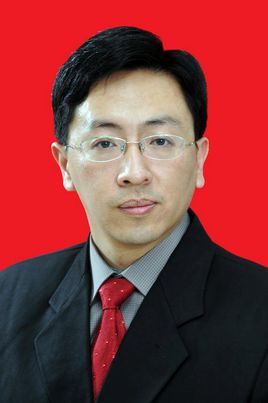 Shengsheng Wang (王生生)合作论文数College of Computer Science and Technology, Jilin University14
 Ali Asghar Heidari (阿里·阿斯加尔·海达里)合作论文数Department of Computer Science, School of Computing, National University of Singapore8
 Huiling Chen (陈慧灵)合作论文数College of Computer Science and Artificial Intelligence, Wenzhou University;Intelligent Information Systems Institute, Wenzhou University8
 Zhen-Nao Cai合作论文数3
 Long Ma合作论文数2
 Lei Liu合作论文数Coll Comp Sci, Sichuan Univ2bo zhang合作论文数1Xinsen Zhou合作论文数1ZHANG Wei (张伟)合作论文数1
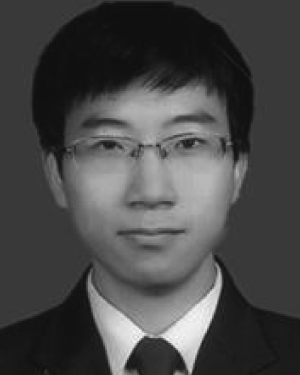 Guangyao Wang合作论文数1
 Wenzhuo Song (宋文卓)合作论文数School of Information Science and Technology, Northeast Normal University1Changji Wen合作论文数1
 Chengcheng Chen合作论文数College of Computer Science and Technology, Jilin University1
 Mingjing Wang (王名镜)合作论文数School of Data Science and Artificial Intelligence, Wenzhou University of Technology1
 Guoxi Liang合作论文数Wenzhou Polytech, Dept Informat Technol, Wenzhou 325035, Peoples R China1
 Yi Chen (陈翼)合作论文数College of Computer Science and Artificial Intelligence, Wenzhou University1
 Yudong Zhang (张煜东)合作论文数School of Informatics, University of Leicester1Li Han合作论文数1Kai Zhang合作论文数1Xinying Wang (王新颖)合作论文数College of Computer Science and Technology, Jilin University1
 Helong Yu (于鹤龙)合作论文数1Peng Du (杜鹏)合作论文数1
 Xianchang Wang (王献昌)合作论文数成都软智科技有限公司1
 Wenhui Li (李文辉)合作论文数College of Computer Science and Technology, Jilin University1
 Majdi Mafarja合作论文数Department Of Computer Science, Birzeit University1
 Xiaoqing Liu合作论文数UtopiaCompression Corporation1Zheng Yuan-Yuan合作论文数1
 Shuihua Wang (王水花)合作论文数Department of Biological Sciences, Xi'an Jiaotong-Liverpool University1Hamza Turabieh合作论文数UKM university1




