A new characterization of the conjugates of absolutely continuous operators is presented. We introduce and investigate the concept of positive p-absolutely continuous operators and show in particular that it is a true generalization of absolutely continuous operators. By quantifying the notion of positive p-absolutely continuous operators, we introduce the concept of positive (p,σ ) -absolutely continuous operators and establish the Pietsch domination/factorization theorem for it. By means of positive (p,σ ) -absolutely continuous operators, we introduce the concept of positive ((p,σ ),(q,ν )) -dominated operators and prove the famous Kwapień’s factorization theorem for it. Finally, we study the maximal properties of the classes of positive (p,σ ) -absolutely continuous operators and positive ((p,σ ),(q,ν )) -dominated operators and show that they are maximal.
In the present paper, we’ll introduce quantities measuring how far a (Schauder) basis is from being semi-boundedly complete or semi-shrinking. These quantities will be proved to be continuous at zero in a sense, which is different from the well-established quantities measuring non-bounded completeness or non-shrinkingness of a basis introduced by the authors and T. Kania in a previous work. As applications, they will be used to prove quantitative versions of the well-known dual relationships between semi-boundedly complete bases and semi-shrinking bases. We’ll also show that several natural measures of weak non-compactness are not equivalent to a natural quantity measuring weak non-null of a bounded sequence for semi-normalized bases.
The need to simplify fabrication processes and reduce costs for high-performance humidity sensors is increasingly vital, especially in fields such as healthcare and agriculture. This study introduces a simple and cost-effective approach using laser-induced graphene (LIG) on a polyimide film to create highly sensitive and fast-response flexible humidity sensors. The LIG acts as the electrode, while the porous polyimide between the interdigital LIG electrodes serves as the humidity sensing material, showing changes in electrical conductivity based on the humidity levels. The LIG humidity sensor, an ionic-conduction type, exhibits remarkable sensitivity, with a 28,231-fold increase in current as relative humidity changes from 26.1 to 90.2%. It also boasts of ultrashort response/recovery times (less than 0.5/7 s), providing significant advantages in detecting rapid and subtle humidity variations compared to a commercially available MEMS humidity sensor. We successfully demonstrated the LIG humidity sensor's capabilities in ultrafast breathing monitoring (≈174 times per minute), moisture detection of grains, and detection of sudden water pipe leakage. Due to its straightforward and cost-effective fabrication process, the LIG humidity sensor holds immense practical value for affordable, widespread use across various applications.
Microfluidics offers a versatile and promising platform for various applications in biomedical and other fields, boasting cost-effectiveness, rapid analysis time, and a compact equipment footprint. However, achieving controlled and versatile microfluidic motion within implantable devices presents a significant challenge. In this study, we propose a novel bidirectional micro-pump design that leverages two sharp-edge microcantilever arrays, driven by ultrasound, to enable selective flow direction by manipulating the ultrasound frequency. Through systematic numerical simulation, we demonstrate the feasibility of this design and further optimize its performance through comprehensive parametric analysis. This work provides valuable guidance for the practical development of sharp-edge-based acoustic micro-pumps, particularly for potential implantable applications such as controlled drug release and in vivo sampling for advanced diagnostics.
Droplet manipulation on superhydrophobic surfaces (DMSS) without conventional pipetting is an emerging liquid handling technology, which can be potentially used for diagnostic, analysis, and synthetic processes. Despite notable progress, controlling droplet motion on superhydrophobic surfaces by contactless acoustic waves is rarely reported. Herein, we report a contactless acoustic tweezer (CAT) for DMSS based on establishing ultrasonic standing wave between an ultrasound transducer (UST) and a superhydrophobic substrate to manipulate droplets without physical contact. The CAT utilizes acoustic radiation forces to trap and move droplets on superhydrophobic surfaces, which allows for precise and controllable movement of droplets by controlling the movement of the UST. Small droplets with volume less than 20 μL can be levitated in mid-air for out-plane manipulation, and large droplets with volume up to 500 μL can be trapped for in-plane manipulation. Experimental results demonstrate the versatility of the CAT for manipulating droplets with various compositions and volumes on various superhydrophobic substrates, offering a versatile and cross-contamination-free liquid handling approach for applications, including but not limited to high-throughput surface-enhanced Raman scattering.
Paper is a green and porous material that has been widely used in flexible pressure sensors due to its flexibility, renewability, and lightness. However, these sensors are often susceptible to environmental factors such as moisture and chemicals, leading to degradation or failure of their reliability for practical applications. Herein, we present a roll-to-roll lamination strategy for batch fabrication of paper-based waterproof flexible pressure sensors with good consistency based on single-walled carbon nanotube (SWCNT) coated tissue paper pieces. The pieces are sandwiched between poly-(ethylene glycol) terephthalate (PET) films with a hot melt adhesive and screen-printed electrodes, and the layers are bonded reliably using roll-to-roll lamination. This process allows for the rapid fabrication of a batch of waterproof, flexible pressure sensors with high stability over 5000 loading/unloading cycles, an ultrashort response time of 8 ms, and a wide measurement range (450 kPa). These features enable our sensor to be utilized for human physiological signal detection, motion tracking, and drowning detection. Furthermore, the process also allows for the fabrication of sensor arrays for spatial pressure mapping and real-time human-machine interaction, expanding the application field of paper-based pressure sensors. This proposed batch fabrication strategy greatly enhances the consistency and reliability of paper-based pressure sensors, demonstrating endless possibilities for paper-based pressure sensors to be used for various applications.
In this work, we propose a novel design of a microfluidic pump that can pump flow bidirectionally by changing the frequency of the external remote ultrasound. Finite element analysis (FEA) is used to analyze the feasibility of our design. The bidirectional microfluidic pumping fundamentally relies on the utilization of microcantilevers with different dimensions for achieving distinct resonance frequencies. In this way, ultrasound with different frequencies can be used to induce bidirectional acoustic streaming flow in the microchannel by selective actuation of two microcantilever arrays. The simulation presented in this work shows that the direction of pumping flow can be changed by changing the frequency of the ultrasound, which lays a strong foundation for us to develop an fully implantable bidirectional micropump for applications such as implantable drug delivery and biopsy.
Based on a characterization of upper semi-Fredholm operators due to A.Lebow and M.Schechter,we introduce and investigate a new quantity characterizing upper semi-Fredholm operators.This quantity and several well-known quantities are used to characterize bounded compact approxima-tion property.Similarly,a new quantity characterizing lower semi-Fredholm operators is introduced,investigated and used to characterize the bounded compact approximation property for dual spaces.
We introduce and investigate quantitative versions of the positive Schur property. We show, in particular, that each L 1 ( μ ) L_{1}(\mu ) -space( μ \mu σ \sigma -finite) enjoys the 1 1 -positive Schur property in the strongest possible way. By introducing a quantity measuring L L -weak non-compactness of sets in Banach lattices, we prove that the positive Schur property is always quantitative. We also show that this quantity is equal to several natural measures of weak non-compactness in abstract L L -spaces.
A Banach space X has property (K), whenever every weak* null sequence in the dual space admits a convex block subsequence (fn)n=1∞$(f_{n})_{n=1}^\infty$ so that ⟨fn,xn⟩→0$\langle f_{n},x_{n}\rangle \rightarrow 0$ as n→∞$n\rightarrow \infty$ for every weakly null sequence (xn)n=1∞$(x_{n})_{n=1}^\infty$ in X; X has property (μs)$(\mu ^{s})$ if every weak* null sequence in X∗$X^{*}$ admits a subsequence so that all of its subsequences are Cesàro convergent to 0 with respect to the Mackey topology. Both property (μs)$(\mu ^{s})$ and reflexivity (or even the Grothendieck property) imply property (K). In this paper, we propose natural ways for quantifying the aforementioned properties in the spirit of recent results concerning other familiar properties of Banach spaces.
Disjoint sequence methods from the theory of Riesz spaces are used to study measures of weak non-compactness in L 1 ( μ ) L_{1}(\mu ) -spaces. A principal new result of the present paper is the following: Let E E be an abstract M M -space. Then ω ( B ) a m p ; = sup { lim sup n → ∞ ρ B ( x n ) : ( x n ) n ⊆ B E disjoint } a m p ; = inf { ε > 0 : ∃ x ∗ ∈ E + ∗ so that B ⊆ [ − x ∗ , x ∗ ] + ε B E ∗ } a m p ; = sup { lim sup n → ∞ ρ B ( x n ) : ( x n ) n ⊆ B E weakly null } a m p ; = sup { ca ρ B ( ( x n ) n ) : ( x n ) n ⊆ ( B E ) + increasing } a m p ; = sup { lim sup n → ∞ ‖ x n ∗ ‖ : ( x n ∗ ) n ⊆ Sol ( B ) disjoint } a m p ; = sup { lim sup n → ∞ sup x ∗ ∈ B | ⟨ x ∗ , x n ⟩ | : ( x n ) n ⊆ B E disjoint } \begin{align*} \omega (B)&=\sup \{\limsup \limits _{n\rightarrow \infty }\rho _{B}(x_{n}):(x_{n})_{n}\subseteq B_{E} \operatorname {disjoint} \}\\ &=\inf \{\varepsilon >0:\exists x^{*}\in E^{*}_{+} \operatorname {so}\operatorname {that} B\subseteq [-x^{*},x^{*}]+\varepsilon B_{E^{*}}\}\\ &=\sup \{\limsup \limits _{n\rightarrow \infty }\rho _{B}(x_{n}):(x_{n})_{n}\subseteq B_{E} \operatorname {weakly}\operatorname {null} \}\\ &=\sup \{\operatorname {ca}_{\rho _{B}}((x_{n})_{n}):(x_{n})_{n}\subseteq (B_{E})_{+} \operatorname {increasing} \}\\ &=\sup \{\limsup \limits _{n\rightarrow \infty }\|x^{*}_{n}\|:(x^{*}_{n})_{n}\subseteq \operatorname {Sol}(B)\operatorname {disjoint}\}\\ &=\sup \{\limsup \limits _{n\rightarrow \infty }\sup \limits _{x^{*}\in B}|\langle x^{*},x_{n}\rangle |:(x_{n})_{n}\subseteq B_{E}\operatorname {disjoint} \}\\ \end{align*} for every norm bounded subset B B of E ∗ E^{*} .
Possible quantifications of well-known relationships among four classes of sets-relatively norm compact, limited, relatively weakly compact and weakly precompact ones, are investigated. We introduce and investigate quantitative versions of the Gelfand-Phillips property. As applications, we quantify the Phillips property and estimate possible values of the quantities measuring the property. Finally, we prove that c0 enjoys a quantitative version of the Phillips property.
In the present paper, we introduce and investigate a new class of positively p-nuclear operators that are positive analogues of right p-nuclear operators. One of our main results establishes an identification of the dual space of positively p-nuclear operators with the class of positive p-majorizing operators that is a dual notion of positive p-summing operators. As applications, we prove the duality relationships between latticially p-nuclear operators introduced by O. I. Zhukova and positively p-nuclear operators. We also introduce a new concept of positively p-integral operators via positively p-nuclear operators and prove that the inclusion map from $$L_{p^{*}}(\mu )$$ to $$L_{1}(\mu )$$ ( $$\mu $$ finite) is positively p-integral. New characterizations of latticially p-integral operators and positively p-integral operators are presented and used to prove that an operator is latticially p-integral (resp. positively p-integral) precisely when its second adjoint is. Finally, we describe the space of positively p-integral operators as the dual of the $$\Vert \cdot \Vert _{\Upsilon _{p}}$$ -closure of the subspace of finite rank operators in the space of positive p-majorizing operators. Approximation properties, even positive approximation properties, are needed in establishing main identifications.
In this note we characterize the bounded compact approximation property via Calkin representations for Banach spaces.
We investigate possible quantifications of R. C. James' classical work on bases and reflexivity of Banach spaces. By introducing new quantities measuring how far a basic sequence is from being shrinking and/or boundedly complete, we prove quantitative versions of James' famous characterisations of reflexivity in terms of bases. Furthermore, we establish quantitative versions of James' characterisations of reflexivity of Banach spaces with unconditional bases.
The present paper contributes to the ongoing programme of quantification of isomorphic Banach space theory focusing on the Hagler–Stegall characterisation of dual spaces containing complemented copies of $$L_{1}$$ . As a corollary, we obtain the following quantitative version of the Hagler–Stegall theorem asserting that for a Banach space X, the following statements are equivalent: Moreover, if X is separable, one may add the following assertion:
. The present paper contributes to the ongoing programme of quantification of isomorphic Banach space theory focusing on the Hagler–Stegall characterisation of dual spaces containing complemented copies of L 1 . As a corollary, we obtain the following quantitative version of the Hagler–Stegall theorem asserting that for a Banach space X the following statements are equivalent:
In the present paper, we introduce a new concept of positive p-majorizing operators as a dual notion of positive p-summing operators and generalize the concept of majorizing operators introduced by Schaefer (Isr J Math 13:400–415, 1972). We introduce the concept of positive (p, q)-dominated operators and prove a positive version of the famous Kwapień’s factorization theorem for (p, q)-dominated operators via positive p-majorizing operators. We also introduce the notion of disjoint p-summing operators which is a new larger class of operators than positive p-summing operators and use it to characterize the Radon–Nikodým property. Finally, we investigate the maximal properties of these four classes of operators and prove that they are maximal in corresponding sense.
In this article, sheath gas is introduced to design a novel multinozzle spinneret to improve the productivity of uniform nanofibers. The sheath gas in laminar flow provides an additional stretching force to overcome the mutual interferences among the nozzles, thus the simultaneous ejection of multiple jets is promoted. In addition, the sheath gas also contributes to the decrease of the diameter and the diameter distribution range of nanofibers. With the constraint of sheath gas, the productivity of nanofibers is 0.618-0.712g h (-1), which is about 30-50 times as high as that from traditional electrospinning. The dynamic properties of the gas-liquid surface are investigated as well. A bead-on-strain model based on Maxwell theory is built up to study the motion and rheology behaviors of multiple jets, and the simulation results verify the experimental results well. The proposed method will accelerate the industrial applications of uniform electrospun nanofibrous membrane. (c) 2019 Wiley Periodicals, Inc. J. Appl. Polym. Sci. 2019, 136, 47574.
We prove that c0 and C(K) , where K is a dispersed compact Hausdorff space, enjoy a quantitative version of the Bessaga–Pełczyński property. We also prove that l1 possesses a quantitative version of the Pełczyński property. Finally, we show that L1(μ) has a quantitative version of the Rosenthal property for any finite measure μ.
 Bentuo Zheng合作论文数University of Memphis, University of Memphis ^12
 Lei Li (李磊)合作论文数Department of Mathematics, School of Mathematical Sciences, Nankai University8
 Yingbin Ruan (阮颖彬)合作论文数福建师范大学数学与信息学院8
 Tomasz Kania合作论文数Inst Math & Comp Sci, Jagiellonian Univ5
 William B. Johnson合作论文数Department of Chemistry, College of Science, Texas A&M University5
 Wei Zhou (周伟)合作论文数Department of Mechanical and Electrical Engineering, School of Aeronautics and Astronautics, Xiamen University5
 Sirui Liu合作论文数4
 Yu Xie (谢瑜)合作论文数Pen-Tung Sah Institute of Micro-Nano Science and Technology, Xiamen University4
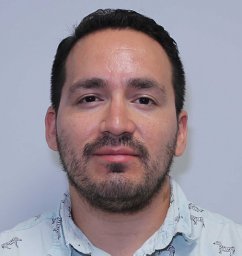 Javier Alejandro Chávez-Domínguez合作论文数4
 Belacel Amar合作论文数Lab Pure & Appl Math, Laghouat Univ3Lican Zheng合作论文数2Chongjie Jiang合作论文数2WANG Jincheng (王锦成)合作论文数2
 Rui Chen合作论文数2
 Chen Zhang合作论文数2Ya-Shu Wang合作论文数2Qing Meng (孟庆)合作论文数2
 Tao Luo (羅濤)合作论文数Department of Mathematics, City University of Hong Kong2He Xi合作论文数1Wenliya Luo合作论文数1Gongfa Yuan (袁公发)合作论文数1Xiang Wang (王湘)合作论文数1Li Rui-Rui合作论文数1Jiaxin Jiang合作论文数1
 Zhijie Huan合作论文数1
 Songyue Chen (陈松月)合作论文数Department of Mechanical and Electrical Engineering, School of Aerospace Engineering, Xiamen University1Risheng Wang (王日生)合作论文数School of Mathematical Sciences, Nankai University;The Key Laboratory of Pure Mathematics and Combinatorics, Ministry of Education, Nankai University1
 Jianyi Zheng (郑建毅)合作论文数Department of Mechanical and Electrical Engineering, Xiamen University1
 Yancheng Wang (汪延成)合作论文数School of Mechanical Engineering, Zhejiang University1
 Yifang Liu (刘益芳)合作论文数Pen-Tung Sah Institute of Micro-Nano Science and Technology, Xiamen University;School of Aerospace Engineering, Xiamen University1
 Rui Zhou (周锐)合作论文数Department of Mechanical and Electrical Engineering, Xiamen University1
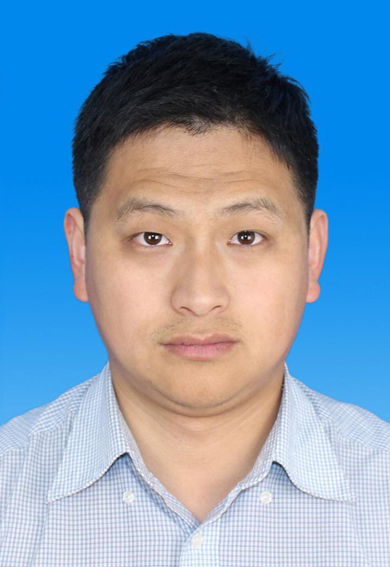 Gaofeng Zheng (郑高峰)合作论文数Pen-Tung Sah Institute of Micro-Nano Science and Technology, Xiamen University1Ju Myung Kim合作论文数1
 Wendi Gao (高文迪)合作论文数School of Instrument Science and Technology, Xi'an Jiaotong University1
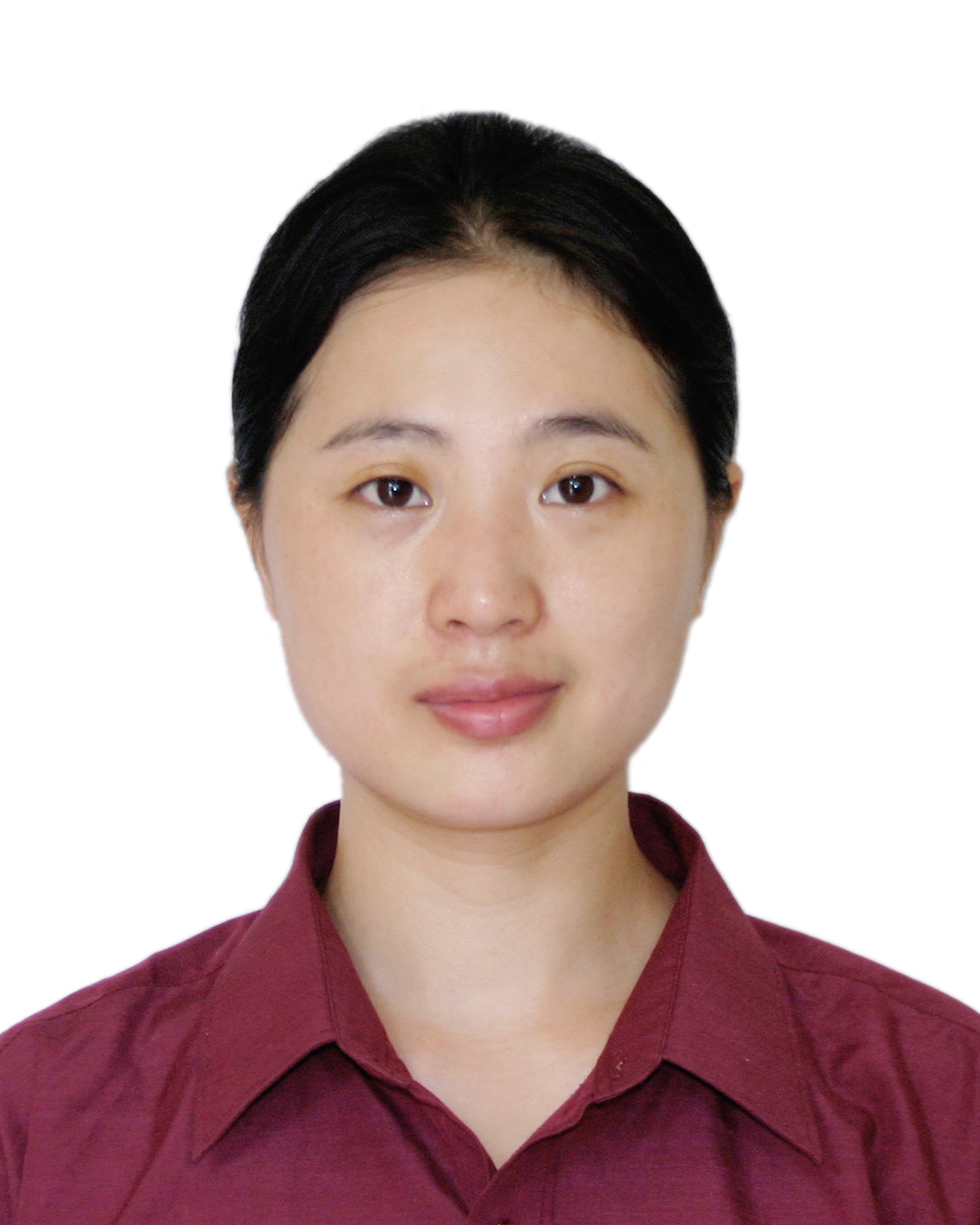 Juan Liu (柳娟)合作论文数Pen-Tung Sah Institute of Micro-Nano Science and Technology . Xiamen University1
 Wenwang Li (李文望)合作论文数厦门大学机电工程系;厦门理工学院机械工程系1




