Shrimp and prawn are two closely related animals that have been successfully reared in farm operations. Due to the unique growth characteristics of these animals the technology, production facilities, and cultivation practices for shrimp and prawn are quite different. The uncertainty in shrimp farming arises from volatile market prices, variable growth rates, and changing survival rates. Farmed shrimp in the United States constitute a very small fraction of the total shrimp market, so prices received by farmers vary with the world price. Shrimp farmers can improve growth and mortality rates by controlling environmental growing conditions and selecting for shrimp genetics. The policy recommendations maximize expected net revenues. Although uncertainty is captured by the model, the recommendations assume that the farmer is neutral with respect to the risk.
In the 1990's, Little Fire Ants (LFAs) found its way to the island of Hawaii, most likely traveling with a shipment of potted plants from Florida. These plants were subsequently sold to consumers along the east coast of the Island, along with Little Fire Ant colonies living in the potting medium. LFA is now thriving and continues to spread. Fifteen years after the initial detection in 1999, LFA has spread to over 4000 locations on the island of Hawaii and has been found in isolated locations on Kauai, Maui, and Oahu Islands. Current efforts are expected to contain the infestations on the other islands but significant additional investment is needed to halt the rapid spread of LFA on the island of Hawaii.Increased management expenditures can suppress infestations; reduce spread between sectors; and decrease long-term management costs, damages, and stings.An immediate expenditure of $8 million in the next 2-3 years plus follow-up prevention, monitoring, and mitigation treatments will yield $1.210-billion in reduced control costs, $129 million in lowered economic damages, 315 million fewer human sting incidents, and 102 million less pet sting incidents over 10 years.Over 35 years, the benefits include $5.496 billion in reduced control costs, $538 million less economic damages, 2.161 billion fewer human sting incidents, and 762 million fewer pet sting incidents. (C) 2015 Published by Elsevier B.V.
Resource managers in South Florida are aware that coastal and marine ecosystems provide food, recreation, and a quality of life that are highly-valued by humans. Estimates of economic values in Florida, such as willingness-to-pay for a day of coral reef snorkeling or the change in this value from a change in coral cover, are not updated in a timely manner or are not available at all. Usually these studies are "baseline studies" that provide a snapshot of economic values under existing economic and environmental conditions. Therefore, to be useful to ecosystems management, human dimension (HD) economic indicators that are relatively easy to measure each year must be identified. In addition, they must be combined with a conceptual model that links these indicators to the ecosystem services; their relevant economic values; the HD non-economic metrics of well-being; and the quality and/or quantity of the environmental and ecologic attributes associated with the ecosystem service. Carefully selected HD economic indicators together with ecological, environmental, and non-economic human dimensions indicators can provide a rich source of information for managing the long term conservation and use of coastal and marine ecosystems.In this paper, we specify criteria for selecting HD economic indicators that measure the change in demand for ecosystem services resulting from changes in the quality or quantity of the environmental attributes that comprise the service. We assessed a suite of candidate metrics and arrived at a final set of HD economic indicators for further evaluation. These HD economic indicators are the percentage change from year to year in: (1) coastal park visitation; (2) number of registered recreational boats; (3) pounds of commercial seafood landed; (4) number of live marine organisms landed; and (5) dollar value of insured flood damage claims paid.We illustrated the use of these HD economic indicators with an empirical example for the Florida Keys and Dry Tortugas where the indicators are measured over a one year period. The changes were then scored and the scores were assigned a stop light rating of: green for good (or increasing), yellow for fair (or stable), and red for poor (or decreasing). Our empirical illustration of HD economic indicators offers a first step in developing metrics to rate the status of Florida's coastal and marine ecosystem services. The next steps are to propose a full suite of candidate HD economic indicators and metrics; final selection of HD economic indicators and their integration into the conceptual model; annual calculation of these indicators and their evaluation; and environmental/ecosystem assessment. (C) 2014 Elsevier Ltd. All rights reserved.
Three major approaches have been effective in a number of settings: (1) statistical modeling of species distributions, (2) detection by remote sensing, and (3) enabling citizen scientists to better locate high-priority species and sites. All can be made more effective and complement one another within a well-designed geospatial information framework. Essential information includes good digital base maps, including at least elevation, major landforms, and waterways; human infrastructure (roads, buildings, and facilities); natural habitats; land use categories; soils and geology; and climate variables such as rainfall and temperature patterns. In the United States, downloadable GIS (geographic information14.1 Introduction ........................................................................................................................ 175 14.2 Predictive modeling of invasive plants .......................................................................... 177 14.3 Types of predictive modeling .......................................................................................... 178 14.4 Applications and considerations of ecological niche modeling to invasive plants .. 182 14.5 Remote sensing of invasive plants .................................................................................. 186 14.6 Applications and considerations of remote sensing to invasive plants ..................... 187 14.7 Future directions of remote sensing to invasive species ............................................. 195 14.8 Summary ............................................................................................................................. 195 Acknowledgments ...................................................................................................................... 196 References ..................................................................................................................................... 197system) datasets addressing all of these elements are available from national libraries (e.g., Geospatial One Stop-http://geo.data.gov) and from similar services offered by states, universities, libraries, and an increasing number of commercial organizations, sometimes but not always displaying greater local detail.
This whitepaper defines the terms Driver and Pressure and identifies the sets of Drivers and Pressures used by the MARES project to describe the South Florida coastal marine ecosystem. This set may change during the course of the project and if so updates to this whitepaper will track these changes. This update incorporates the results of review and comments received beginning with the All PIs meeting in August 2011 and continued through a poll of the project membership conducted in September 2011.
Invasive plants can have ecological impacts and cause economic harm particularly when recreational opportunities are lost. While the value of nature-related tourism has been assessed, little is known about the effect of invasive plants on recreational choices. This study uses non-market valuation techniques for the first time to quantify the net benefit of managing invasive plants in upland areas. We surveyed 1436 Florida residents to determine their preferences for state parks using discrete choice experiment questions with various levels of invasive plants and other attributes that impact visitation. Results imply that residents would be willing to pay $5.41 per-visit to reduce the coverage of invasive plants, $3.72 to improve facilities, $3.73 to increase the diversity of native plant species, and $6.71 to increase the diversity of native animal species. Using score variables to capture interaction effects, demographic variables were found to influence the marginal willingness-to-pay for invasive species control by −$1.13 to +$0.97 per visit. Those who have taken action against or are more knowledgeable about invasive species were also found to influence a respondent's willingness to pay (+$2.47 and +$0.83, respectively). Respondents who consider invasive species to be beneficial (e.g., since many species were imported for their esthetics) would be willing to pay an additional $0.80 per visit to a park with increased coverage. Using annual attendance data from 115 Florida state parks, we calculated statewide willingness-to-pay to manage invasive plants in upland parks. Park users would be willing to spend $89.4 million annually to reduce the level of invasive plants in the parks, which provides a baseline for evaluating control programs. Since current levels of funding ($32 million annually) are insufficient to control invasive plants, additional management may be warranted.
Using a bio-economic model of zebra mussels ( Dreissena polymorpha ), we examine the expected economic value of prevention, control and eradication alternatives for the freshwater mussel in Lake Okeechobee (Florida, USA). We include two emerging technologies for zebra mussel (ZM) control: (1) a natural pesticide called Zequanox, and (2) hot wash stations at boat ramps. We employ water management district data, user data collected via a phone survey, and mitigation expenditures from infested locations elsewhere to estimate the potential damage from the introduction of zebra mussels in Florida. Methods used include static cost transfer estimation, econometric cost estimation, and stochastic-dynamic simulation. We use our bio-economic model to compare costs and risks with and without the emerging technologies. We also consider the impact of technology adoption rates by anglers, management policy efficacy, and opportunity costs associated with ZM control. Results indicate that, without investment in prevention, there is a very high probability that Florida waterways will be infested with zebra mussels by year 2025, and expected environmental damages and management costs are high. Slow response due to poor detection methods or insufficient control efforts will lead to a moderate probability of a significant infestation. Rapid reaction and enhanced prevention efforts are expected to greatly reduce the probability of ZM infesting Lake Okeechobee by 2025, and to generate much higher expected net benefits.
Adams DC, Bucaram S, Lee DJ, Hodges AW. 2010. Public preferences and values for management of aquatic invasive plants in state parks. Lake Reserv Manage. 26: 185-193.Alien invasive plants (AIP) significantly impact the ecology of natural areas and nature-based recreation, yet control programs are chronically underfunded. This study examined Florida residents' willingness-to-pay (WTP) to control aquatic AIP in river and lake state parks through entrance fees. We used a method commonly applied in the nonmarket valuation literature, but not previously applied to AIP, and found that residents have a high WTP to control AIP and are willing to support control programs through entrance fees. In 2007, we surveyed 1299 Florida residents to estimate the impact of AIP on state park recreation. The survey included conjoint choice questions to establish the impact of several park attributes on respondents' economic utility or welfare: abundance of AIP, entrance fees, park facilities, abundance of native plant species, and abundance of native animal species. Using entrance fees as a payment vehicle, we estimated that the typical Florida resident has a per-visit WTP of $6.15 to reduce AIP coverage, $4.41 to improve park facilities, $3.81 to increase the abundance of native plants, and $4.99 to increase the abundance for native animals. We used annual attendance data from 63 river and lake state parks to calculate statewide WTP to control AIP and found that local residents are willing to spend $12.26 million/yr, and all users are willing to spend $35.01 million/yr to keep AIP from becoming "numerous and dense" in the 63 parks. This far outweighs the $26 million/yr that the state is currently spending in all natural areas, including state parks.
This paper evaluates the effect of trade liberalization on global efficiency, equity, and the environment using global welfare, welfare redistribution, and carbon emission as indicators. A static, computable general equilibrium trade model with explicit representation of agricultural production and energy use is used to simulate a series of new scenarios in which 1997 baseline import tax and export subsidy trade barrier equivalents are scaled back. Findings indicate that with trade liberalization agricultural output declines, energy use increases, and carbon emissions rise. Global welfare rises revealing an overall increase in efficiency; however, gains to poorer nations come at the expense of richer nations. An increase in the use of polluting inputs such as coal in developing countries suggests poorer nations will risk environmental degradation with the lowering of trade barriers.
1. This is EDIS document FE662, a publication of the Food and Resource Economics Department, Florida Cooperative Extension Service, Institute of Food and Agricultural Sciences, University of Florida, Gainesville, FL. Published August 2006. Reviewed August 2009. Please visit the EDIS web site at http://edis.ifas.ufl.edu. 2. Donna J. Lee, Associate Professor, and Anafrida Bwenge, Graduate Research Assistant, Food and Resource Economics Department, Florida Cooperative Extension Service, Institute of Food and Agricultural Sciences, University of Florida, Gainesville, FL.
Public conservation forestlands protect natural resources, provide wildlife habitat, and service a multi-billion dollar recreation industry. Invasive upland plants (IPs) threaten to dramatically reduce the flow of goods and services from these lands. In the late 1990s, a Florida (USA) state program began combating IPs on public conservation lands. By 2007, the program had controlled roughly 1/3 of the 1.5 million IP-infested acres, primarily due to a surge in expenditures that began in 2001 and peaked in 2005. This study evaluates the effectiveness and efficiency of the program by simulating the costs and benefits of IP control through 2016 under five feasible policy alternatives: (I) Do nothing, (II) Maintenance control, (III) 2001-2004 level (of program spending), (IV) 2005 level, and (V) Maximum net present value. To evaluate the policies, we construct a bio-economic model that is parameterized using observations of IP coverage and data from 11 state regions. Given the uncertain nature of IP spread, we simulate the policies' economic impacts under two plausible spread rates. Simulation results indicate that the program's recent efforts are highly effective generating up to $865.1 million in present value net benefits through 2016 - but less efficient than more costly, front-loaded spending that can generate up to 4.37 times more net benefits. (C) 2009 Elsevier B.V. All rights reserved.
Biscayne Bay is a subtropical estuarine ecosystem in South Florida. The Bay serves as a nursery for Atlantic reef fish and provides critical habitat for a variety of species including 31 animals listed as endangered, threatened and "special concern." Note-worthy are the American crocodile, Atlantic green turtle, Atlantic hawksbill turtle, Cape Sable seaside sparrow, Florida panther, West Indian manatee, and Wood stork. Rapid development in the Miami-Dade area has substantially altered the Bay and its coastline. This study quantifies the economic and environmental benefit from a decade of Biscayne Bay restoration projects.
We estimated the economic benefits resulting from controlling soybean aphid infestation by using a multi-regional competitive dynamic equilibrium model. Results indicate that the reduction of soybean production resulting from a soybean aphid infestation is largely absorbed by reducing soybean exports, due to the higher price elasticity of export demand compared to domestic demand. Producer benefits resulting from controlling soybean aphids would increase by between $949 million and $1.623 billion in ten years under various scenarios. Results also suggest that it is economically more efficient to control soybean aphids when the rate of intrinsic growth is relatively lower, the supply price elasticity of soybean acreage is relatively more elastic, and insecticide treatment costs per acre are lower. However, if the discovery of the gene Rag-1 (TF04048) leads to new cultivars that withstand the soybean aphid, our estimates will overestimate the actual damages. Even so, our analysis demonstrates that it is critical to control soybean aphids early in their infestation cycle to avoid a rapid increase in damages.
Dominant users of Lake Okeechobee water resources are agricultural producers and recreational anglers These uses will be directly affected, should the lake become infested with zebra mussels. We employ a probabilistic bioeconomic simulation model to estimate the potential impact of zebra mussels on consumptive water uses, recreational angling, and wetland ecosystem services under alternative public management scenarios. Without public management, the expected net economic impact from zebra mussels is –$244.1 million over 20 years. Public investment in prevention and eradication will yield a net expected gain of +$188.7 million, a superior strategy to either prevention or eradication alone.
FE-693, a 5-page illustrated fact sheet by Donna J. Lee, Damian C. Adams, and Frederick J. Rossi, reports results from a 20-year simulation model on the economic impacts of public investment in prevention and eradication of this bio-fouling organism which is expected to reach Florida in the near future, with particular attention to the effect on Lake Okeechobee. Includes references. Published by the UF Department of Food and Resource Economics, August 2007.
This paper describes a dynamic computable general equilibrium model developed to examine the value of wildlife recreation in the state of Florida. Growth and volatility in wildlife watching, fishing and hunting are simulated and used to determine the impact on gross state product. A scenario replicating the impact of the terrorist attacks of 11 September 2001 is examined. Results estimate the present value of losses from 2001 to 2010 could be between US$10 and US$80 billion.
The probability of a severe infestation ranges from 2% to 98% depending on investment in monitoring, prevention, and response technology. Given the estimated potential for economic damages, preliminary results indicate that prudent investment in prevention and early response net a present value net return of $10 million over 20 years.
 Damian C. Adams合作论文数Food and Resource;Economics Department;University of Florida;Economics Department, University of Florida13
 Sherry L. Larkin合作论文数Department of Food and Resource Economics, University of Florida12
 Charles M. Adams合作论文数10J. Walter Milon合作论文数Resource Economics Department;Institute of Food and Agricultural Sciences;University of Florida;Institute of Food and Agricultural Sciences, University of Florida9Robert L. Degner合作论文数5
 Frederick Rossi合作论文数5PingSun Leung合作论文数Dept Nat Resources & Environm Management, Univ Hawaii Manoa4
 William K. Nuttle合作论文数Eco-Hydrology4Janaki R.R. Alavalapati合作论文数Department of Forestry Virginia Tech 313 Cheatham Hall (mail code: 0324) Blacksburg, VA 240613Anafrida N. Bwenge合作论文数3
 Glenn Schaible合作论文数3Casper Vanderwoude合作论文数2michael motoki合作论文数2
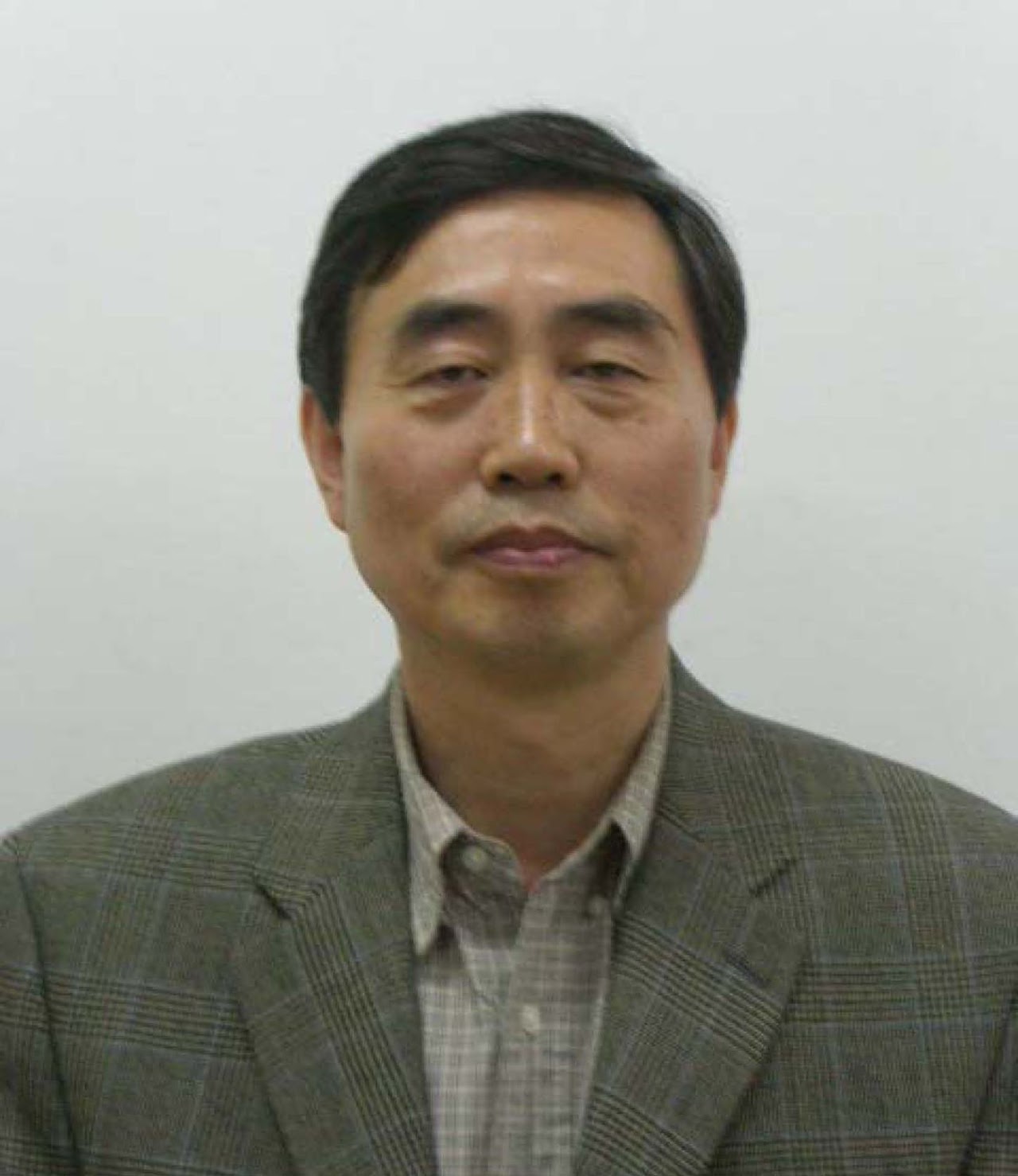 Choong Sun Kim合作论文数Department of Physics, Yonsei University2
 Joseph N. Boyer合作论文数Southeast Environmental Research Center;Florida International University;Southeast Environmental Research Center, Florida International University2
 Santiago J Bucaram合作论文数Food and Resource;Economics Department;University of Florida;Economics Department, University of Florida2
 Ariel Dinar合作论文数Department of Environmental Economics and Policy, School of Public Policy, University of California, Riverside2
 Sharon D. Hutchinson合作论文数2
 Alan W. Hodges合作论文数University of Florida;Food & Resource Economics Department;Food & Resource Economics Department, University of Florida2Miami-Dade County合作论文数2Marissa C. Garcia合作论文数2Ronald M. Gordon合作论文数1vernon r leeworthy合作论文数1Michael T. Olexa合作论文数1Cf Kiker合作论文数1Bm Dale合作论文数1Anafrida B. Wenge合作论文数1Christopher M. Adams合作论文数1
 Frank E. Marshall合作论文数1
 David K Loomis合作论文数1
 Hugh R. Bigsby合作论文数Lincoln University - Pennsylvania1Gilliam David合作论文数1Kenneth Banks合作论文数1Pamela J Fletcher合作论文数1
 Doria Gordon合作论文数Environmental Defense Fund;Department of Biology, University of Florida1
 Miguel A. Mariño合作论文数Department of Biological and Agricultural Engineering, University of California, Davis;Department of Land, Air and Water Resources, University of California;Department of Civil and Environmental Engineering, University of California, Davis1Jero Calafat合作论文数1Thomas N. Lee合作论文数1
 Richard E. Howitt (Richard Howitt)合作论文数Department of Agricultural and Resource Economics, University of California, Davis1
 Edward Evans合作论文数1
 Utpal Vasavada合作论文数United States Department of Agriculture1
 Edward A. Evans合作论文数Department of Chemical engineering, University of Akron1Jian Zhang合作论文数1
 Christopher R. Kelble合作论文数Rosenstiel School of Marine and Atmospheric Sciences;University of Miami;Rosenstiel School of Marine and Atmospheric Sciences, University of Miami1Stuart T. Nakamoto合作论文数Department of Biosystems Engineering;Department of Food Science and Human Nutrition;Department of Biosystems Engineering|Department of Food Science and Human Nutrition1Doria R. Gordon合作论文数1Thomas P. Carsey合作论文数1
 Bernhard Riegl合作论文数Oceanographic Center, Nova Southeastern University1Marshall A Martin合作论文数University of Indianapolis1




